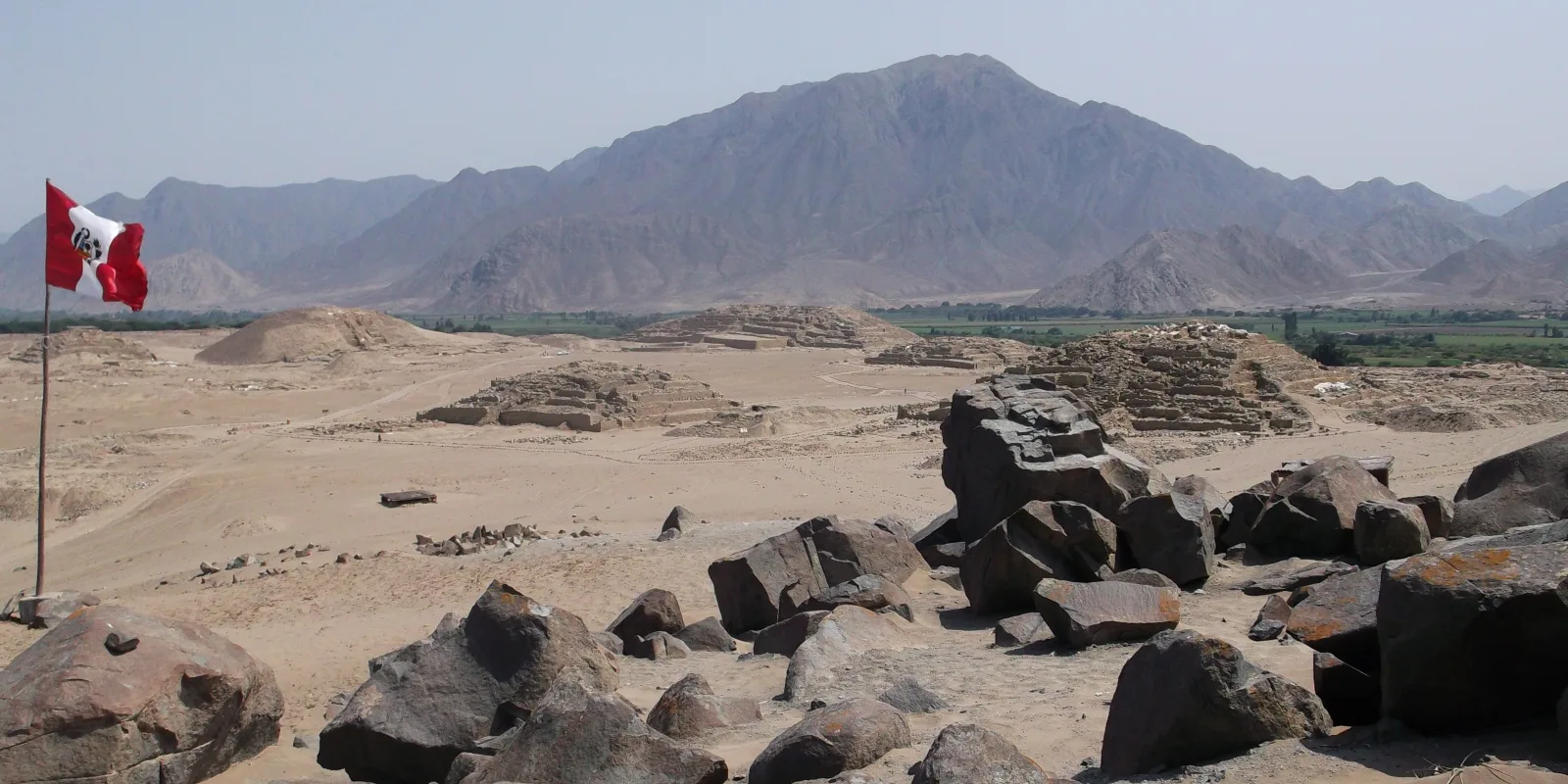
Caral
PERU / BARRANCA / NORTE CHICO
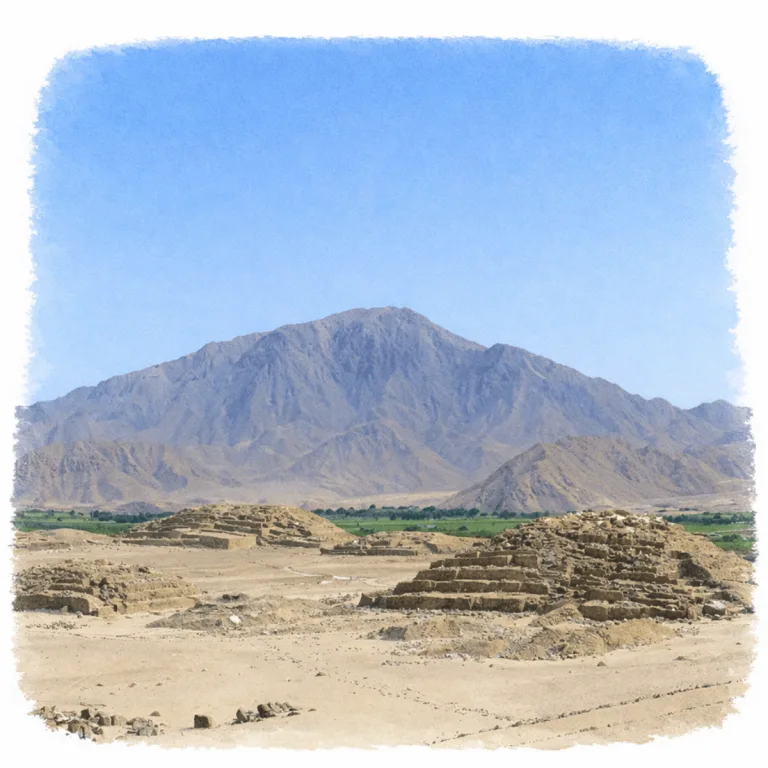
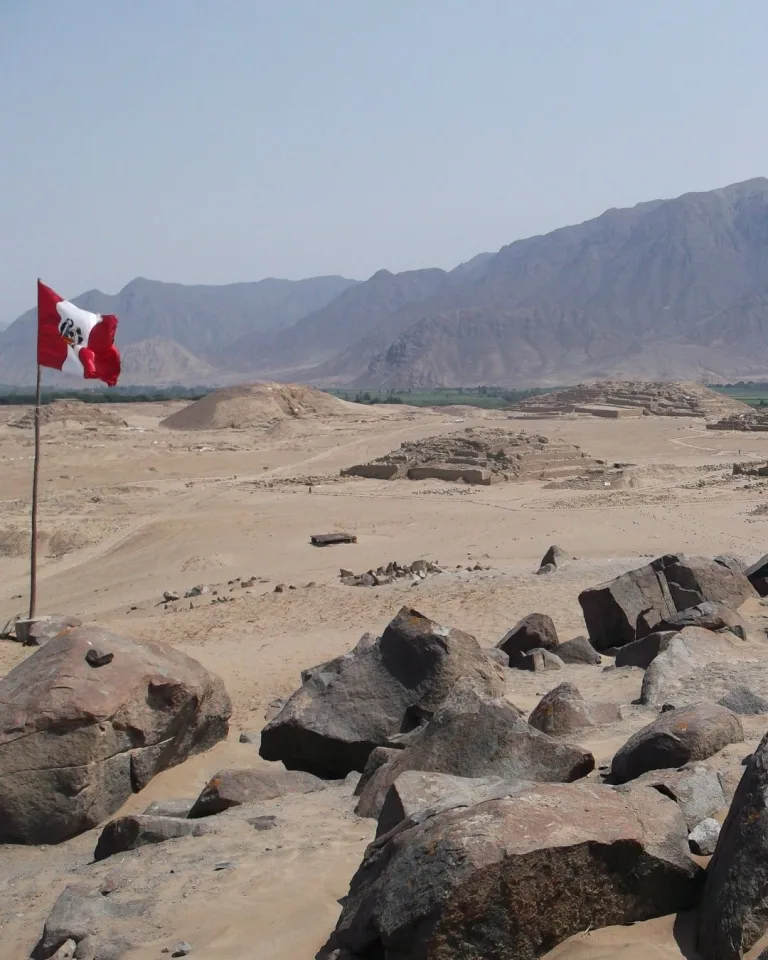
Above the Supe Valley desert terraces, Caral organizes monumental platform pyramids and sunken circular courts, where one of the earliest urban centers in the Americas structured ceremonial life without ceramics or warfare.
| Name | Caral |
| Civilization | Norte Chico |
| Location | Supe Valley, Barranca Province, Peru |
| Elevation | 350 meters (1,148 feet) |
| Years Active | c. 2600–2000 BCE |
| Primary Resources | Cotton, gourds, anchovies, reeds |
| Site Type | Sacred city and ceremonial complex |
| Key Highlights | Great Pyramid, sunken circular plazas, ancient quipus |
| UNESCO | Sacred City of Caral-Supe |
| Entry Fee | 11 PEN (~$3 USD) |
| Best Time to Visit | Dry season (May–October), early morning |
| Field Visit | Visited & photographed by Lost Ruins of the Americas |
Unique Features of the Caral Archaeological Site
- Architectural Highlights: Monumental pyramids, sunken plazas, stepped terraces
- Notable Artifacts: Quipus, bone instruments, irrigation channels
- Natural Surroundings: Desert valley between Andes and Pacific
- Comparative Notes: The oldest city in the Americas; predates Mesoamerican civilizations
Location & Access
- Nearest Town: Caral (Supe Valley)
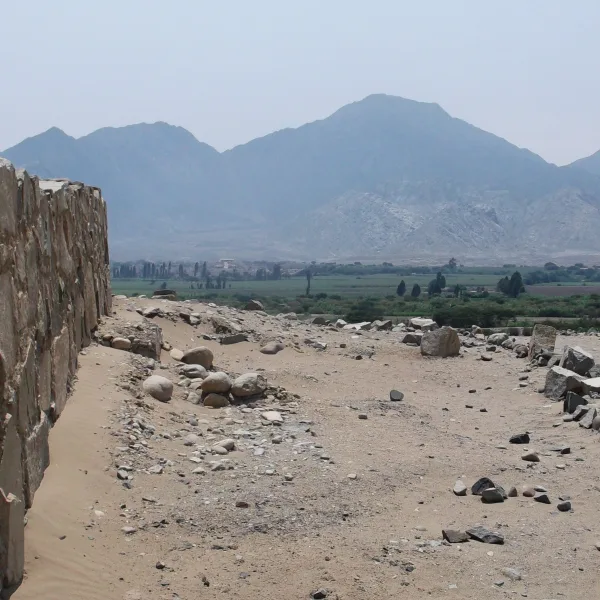
- Directions: From Barranca, take a combi toward the town of Caral. Confirm return times before departure, as schedules can be irregular. From town, it’s a 30-minute walk through cornfields along the Río Supe to reach the archaeological zone.
- Peru Ministry of Culture: Caral
- Opening Hours: 10:00 AM – 4:00 PM
- Entry Fees: 11 PEN (~$3 USD)
- Facilities: Visitor center, restrooms, local guides available
- Accessibility: Moderate – long walk and exposure to sun
- Pro Tip: There is no shade at the site. Bring ample water and sun protection.


Highlights to Help You Understand Your Visit
What you’ll see at Caral is subtle but extraordinary. This is where cities began in the Americas.
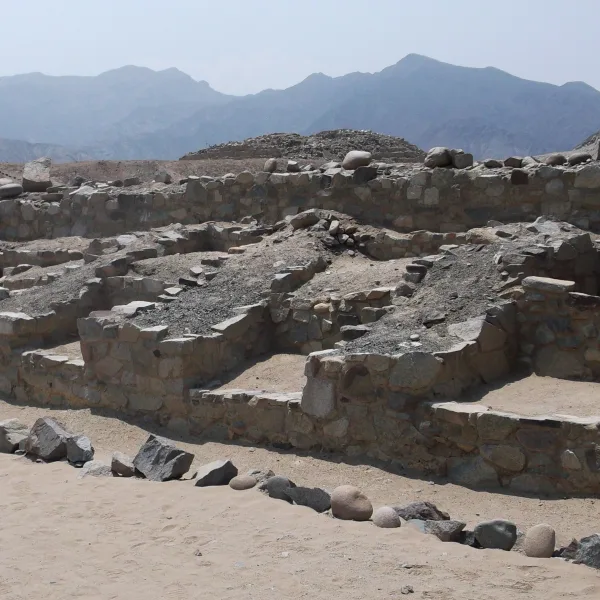
- Flat-topped pyramids: Built for ceremony, not burial. Their open summits staged visible ritual drama.
- Sunken circular plazas: Designed to amplify sound and create sacred space. These were part stage, part memory vessel.
- Absence of pottery: Life here predated ceramics. Look for gourd fragments and woven remains instead.
- Geometric alignment: Buildings mirror each other across central axes. This was cosmic design, not chaos.
- No walls or weapons: Caral tells a story of order without force. It was a civilization structured by trade and ritual.
- Scale without metal: Every platform was built by hand, stone by stone, with no wheels or beasts of burden.
Key Structures of the Caral Ruins
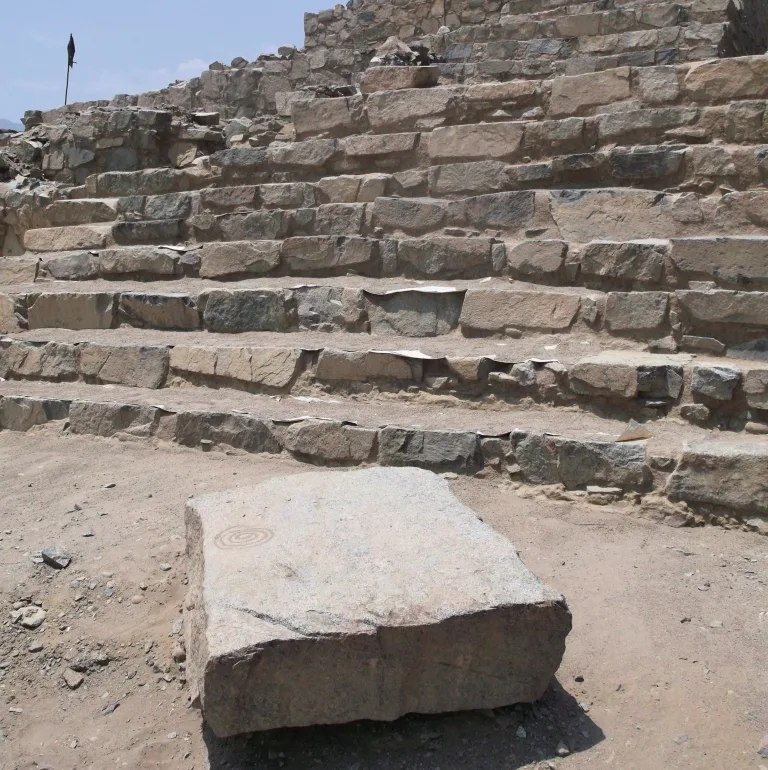
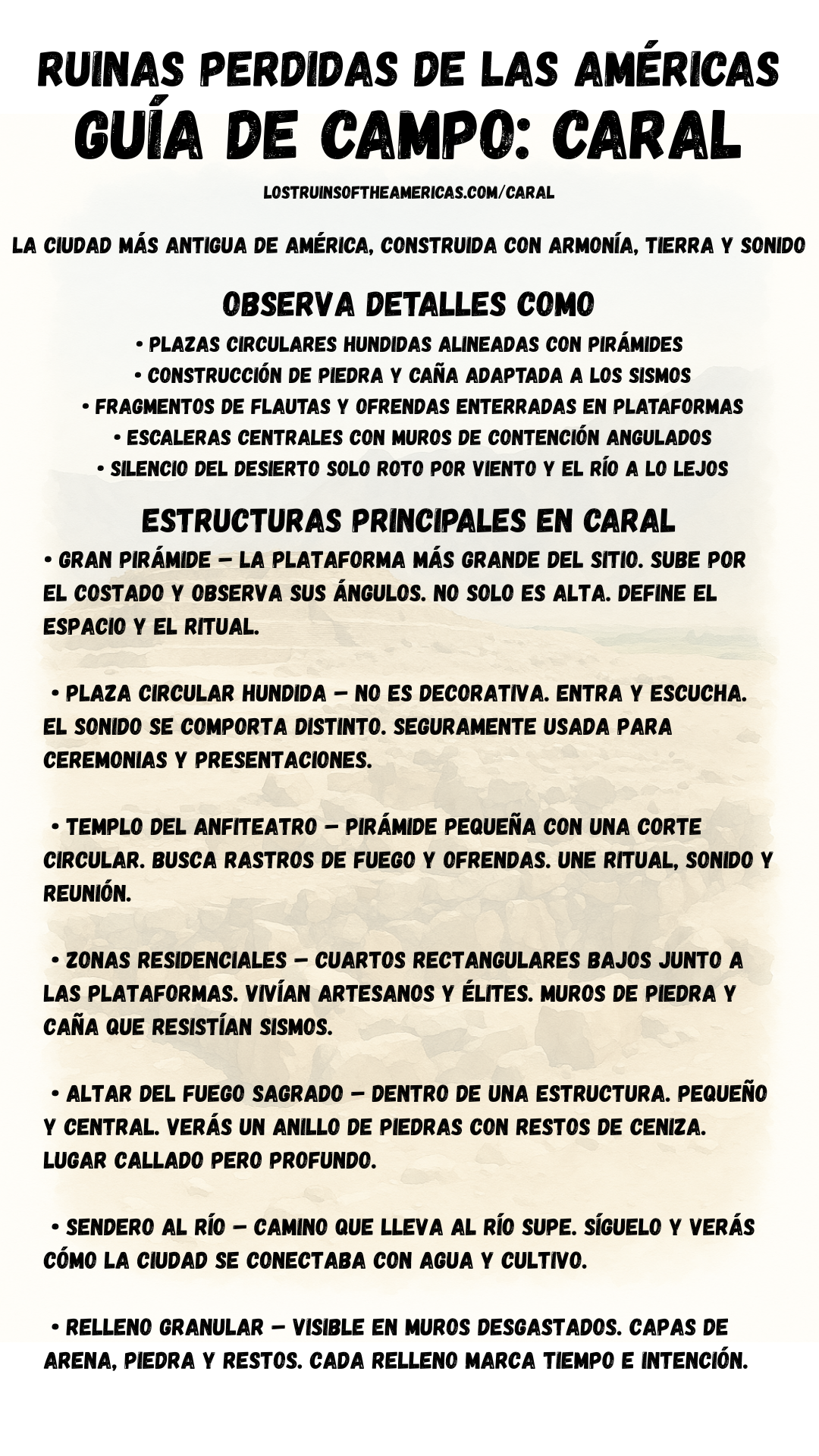
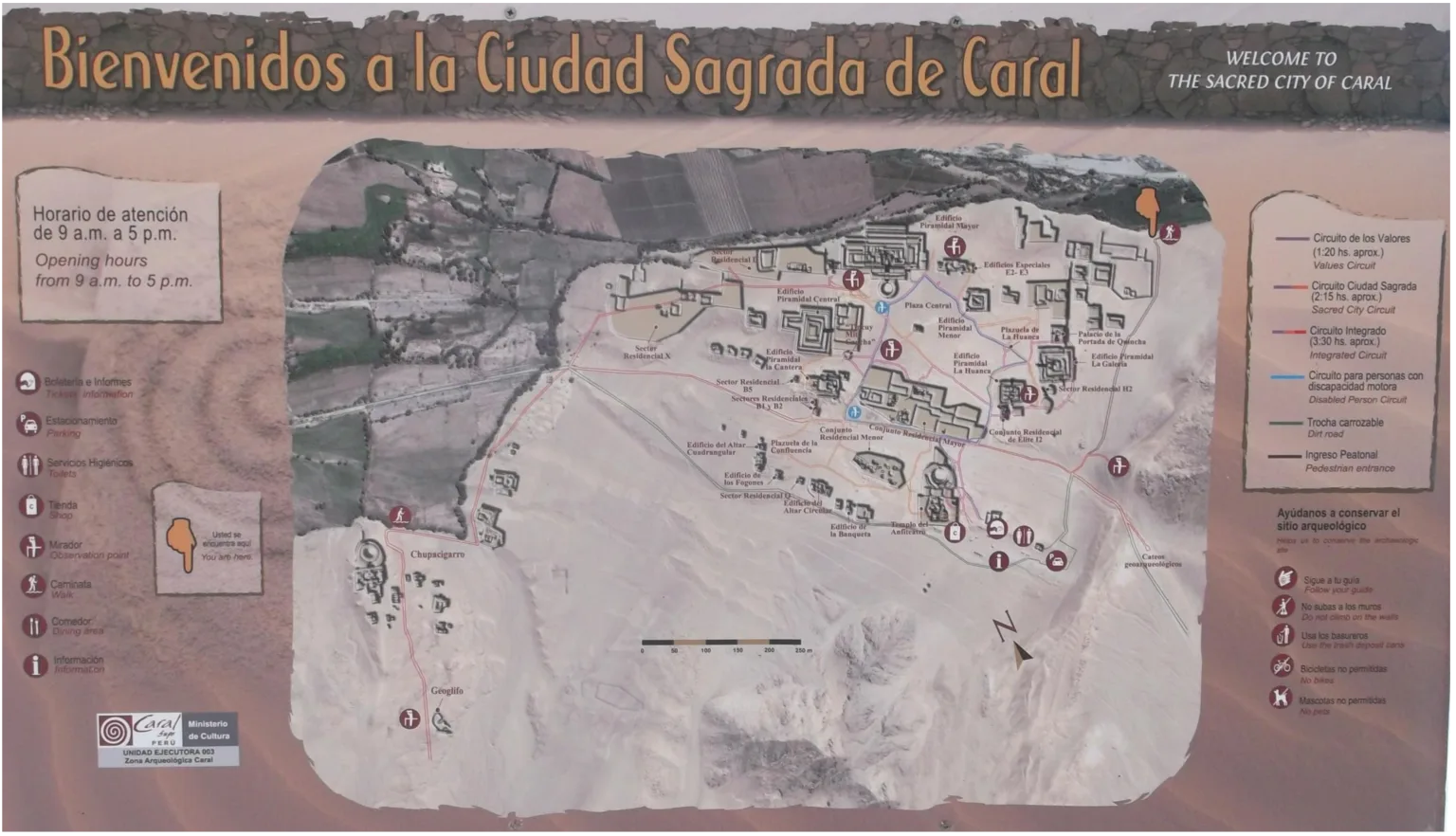
- Great Pyramid (Pirámide Mayor): The tallest and most imposing platform in Caral, likely reserved for high-status rituals, public events, and astronomical observations. A staircase and multiple tiers suggest hierarchical access.
- Sunken Circular Plazas: Found in front of the major pyramids, these sunken spaces were used for communal gatherings, performance rituals, and possibly fire or music ceremonies. Their acoustic design hints at coordinated social events.
- Amphitheater Temple: A semi-circular stepped platform thought to be used for musical performances or public oration. Located near a residential elite sector, it may have served both political and ceremonial roles.
- Temple of the Sacred Fire (Templo del Fuego Sagrado): A smaller platform containing burnt offerings and signs of sustained ritual activity. Believed to have housed a long-burning ceremonial flame.
- Residential Complexes of Elite Sectors: Multi-room compounds such as the Conjunto Residencial de Elite 12 and Conjunto Residencial Mayor, likely housed administrators, priests, and ritual specialists who managed trade, offerings, and governance.
- Administrative Galleries and Altar Rooms: Long, narrow structures such as the Edificio del Altar Circular and Edificio de la Banqueta suggest specialized functions, possibly linked to storage, planning, or elite decision-making.
- Quipu Storage Halls: Designated rooms believed to have held quipu, knotted strings used for accounting or calendrical data. These were some of the earliest record-keeping centers in the Andes.
- Geoglyph and Sacred Access Route: South of the main ceremonial core lies the Chupacigarro geoglyph and viewing area, marking an intentional processional entry path that may have held symbolic meaning for pilgrims and visitors.
History and Legends
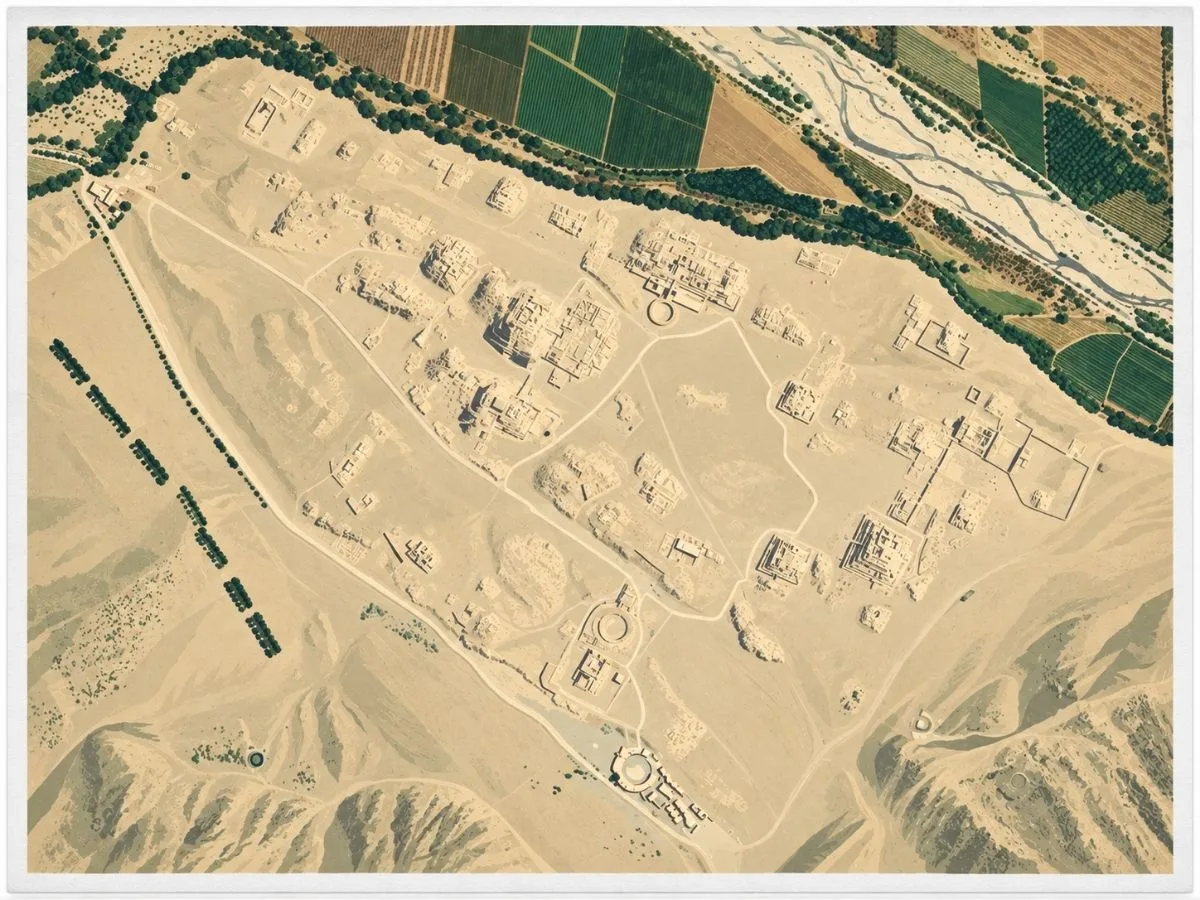
A dry terrace above the Supe River became the center of one of the earliest large-scale urban societies in the Americas. Caral developed between about 3000 and 1800 BCE, during the Late Archaic period, when pottery had not yet become part of everyday life on this stretch of the Peruvian coast. The city stood roughly 23 kilometers inland from the Pacific, above a narrow green valley where irrigation agriculture could support permanent settlement. Caral was not alone. Monumental centers appeared throughout the Supe Valley, but Caral became its most highly developed and complex center, with major pyramidal buildings, residences, plazas, and ceremonial spaces spread across the desert terrace.
Its largest buildings grew through repeated rebuilding. Stone walls contained enormous fills of rock carried in woven fiber bags known as shicras, allowing older platforms to be buried inside larger ones as construction continued. Six major pyramidal structures dominated the city, several paired with sunken circular plazas that would become a recurring feature of later Andean ceremonial architecture. The Great Pyramid rose beside one of the principal gathering spaces, while the Temple of the Amphitheater combined another circular plaza with platforms and enclosed rooms. Residential compounds occupied the spaces around these monuments, with larger and more carefully finished houses concentrated near the principal public buildings.
Caral’s inland population depended on relationships extending from the irrigated valley to the Pacific coast. Farmers cultivated cotton, squash, beans, sweet potatoes, and other crops, while marine foods, especially anchovies and sardines, reached the city from coastal communities. Cotton was especially important because it supplied fiber for clothing, bags, and the fishing nets used along the coast. Materials from much farther away also reached the Supe Valley, showing connections toward the highlands, tropical forests, and northern coast. Caral’s monumental center was supported by a network that joined farmers, fishing communities, craft specialists, and settlements spread well beyond the city itself.
Experiences Around Caral
Caral sits in the Supe Valley, where irrigated fields run between dry desert hills before the river reaches the Pacific.
Barranca adds the coastal side of the trip: walk the beaches around Puerto Chico, head up to the Cristo Redentor lookout above Cerro Colorado, and stop for ceviche or seafood seasoned with local arnaucho chile.
Farther south, Albufera de Medio Mundo offers boat rides, birdwatching, and reed-working traditions around a long coastal wetland used by migratory birds.
Ceremony occupied some of Caral’s most carefully built spaces. At the Temple of the Amphitheater, archaeologists found 32 transverse flutes made from pelican and condor bone and decorated with human and animal designs. Other instruments included cornets and panpipes, giving music a visible place in public gatherings more than four thousand years ago. Fire altars, offerings, and repeatedly remodeled temples show that ceremonial activity helped organize life within the city. A knotted-cord object recovered at Caral has also been interpreted as an early quipu, suggesting that forms of information recording later associated with the Andes may already have been developing here.
During Caral’s final centuries, severe environmental changes began disrupting the system that had supported the Supe Valley centers. Drought formed part of the crisis, while major El Niño events brought destructive flooding, sand into agricultural land, and changes along the coast that damaged both farming and marine resources. By about 1800 BCE, the great buildings at Caral were no longer being maintained and the city had been abandoned. Communities reorganized elsewhere in the region, including at Vichama closer to the coast, where later reliefs have been interpreted as recording drought, hunger, and the return of water. Caral itself saw only limited later occupation around its edges, leaving its pyramids and circular plazas largely undisturbed after the society that built them shifted elsewhere.
How to Get There & Where to Go Next
How to Visit Caral
– Step-by-step access to the site –
- Lima to Barranca — 3.5 – 4 hr bus via Panamericana Norte.
- Combi to Caral town — 45 min, ask for the archaeological zone route.
- Walk 30 minutes from town — follow a dirt road along the Río Supe through cornfields.
- Arrive at the visitor center — guided tours are available onsite.
Tips: Flights are faster but buses can save money and run overnight. Bring water and snacks — the site is broad and has minimal facilities inside.
Nearby Ruins You Can Visit
These ancient Andean sites share Caral’s legacy of ceremonial complexity, environmental adaptation, and early social organization. They are echoes from the roots of civilization itself.


Huaca de la Luna – Moche religious center with vivid murals and towering adobe temples below Cerro Blanco.

Cerro Sechín – Stone reliefs carved with figures and severed heads line its walls, revealing one of Peru’s earliest and most striking ceremonial traditions.


Download Field Guide
Español
English
Traveler Tips
- What to Bring: Hat, sunscreen, water, snacks
- Best Time to Visit: Morning during dry season
- Nearby Attractions: Supe Valley towns and community-run museums
- Safety Notes: Confirm transport schedules before arrival
- Climbing Restrictions: Climbing is not permitted due to fragile adobe construction
Elsewhere in the Americas…
As Caral rose along the Peruvian coast, early societies in Mesoamerica were beginning to form ceremonial centers and shape the cultural roots of later civilizations:

Early village societies in the Valley of Oaxaca were cultivating maize and laying the foundation for the later rise of Monte Albán.
In the Gulf Coast lowlands, early ancestors of the Olmec were gathering near fertile river systems, forming the region’s first ceremonial sites.
Insider Explorer Advice
Stay as close to the ruins as your budget allows. From the town of Caral, it’s about a 30-minute walk along a winding path through cornfields and past the Río Supe. Arriving early is worth it. You’ll likely have the site to yourself. The ruins are massive, and though worn by centuries of wind and dust, their shape and scale still command awe. There is no shade, and climbing is restricted to preserve the ancient mudbrick. Bring everything you need for sun and solitude. This is a journey into the very beginning of the Americas.
Summary: Caral is where it all began. It is a sacred desert city built of sand, ceremony, and silence, marking the oldest chapter of human civilization in the Americas.