
Ogden-Fettie Mounds
USA / ILLINOIS / HOPEWELL

On a low terrace beneath the Dickson Mounds bluff, Ogden-Fettie preserves a great 15-foot earthwork and the remnants of a thirty-mound Havana Hopewell cemetery within a broader ceremonial landscape.
| Name | Ogden-Fettie Mounds |
| Civilization | Havana Hopewell tradition, Middle Woodland |
| Location | Fulton County, Illinois, United States |
| Elevation | Approximately 466 feet (142 meters) |
| Years Active | Middle Woodland period, approximately 150 BCE to 150 CE |
| Primary Resources | Fish, game, freshwater mussels, wild plants, native crops, and timber |
| Site Type | Burial mound cemetery and possible enclosure complex |
| Key Highlights | Great Ogden Mound, surviving cemetery, crescent arrangement, pentagonal ditch trace |
| INT Airport | General Wayne A. Downing Peoria International Airport (PIA) |
| Entry Fee | Free |
| Best Time to Visit | Tuesday through Saturday, paired with Dickson Mounds Museum |
| Field Visit | Visited & photographed by Lost Ruins of the Americas |
Unique Features of Ogden-Fettie Archaeological Site
- Great Ogden Mound: A 15-foot earthwork anchoring the surviving cemetery.
- Thirty-Mound Crescent: Roughly thirty burial mounds once curved across the terrace.
- Log-Lined Passage: A timber-and-matting corridor led into the central tomb.
- Pentagonal Ditch Trace: Aerial evidence suggests a ten-acre ditch enclosing five central mounds.
Location & Access
- Nearest Town: Lewistown, Illinois, approximately 4 miles northwest of the site.
- Directions: From Lewistown, take Illinois Route 97 south and follow signs toward North Dickson Mounds Road. Continue to the separate Ogden-Fettie access on the lower terrace below the bluff
- From Dickson Mounds: Continue to the Ogden-Fettie access on the southern portion of the museum grounds, less than a mile from the museum.
- Official Site Authority: Illinois State Museum, Dickson Mounds
- Opening Hours: The outdoor grounds are available during daylight hours. Dickson Mounds Museum is open Tuesday through Saturday, 9:00 AM to 4:30 PM.
- Entry Fees: Free admission.
- Facilities: Limited parking and a mowed grass trail at the mound field, with restrooms and visitor facilities at Dickson Mounds Museum.
- Accessibility: The route crosses grass and uneven ground without a paved path.
- Pro Tip: Visit the museum first, then carry its archaeological context into the mound field below the bluff.
Highlights to Help Understand Your Visit
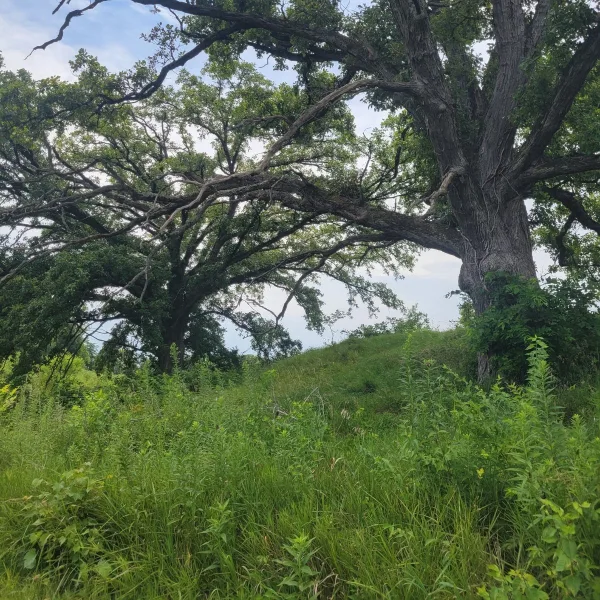
Ogden-Fettie survives as a fragmented cemetery, where the remaining mounds reveal only part of the original landscape.
- Read the Gaps: Open ground between the surviving mounds marks areas where cultivation erased smaller earthworks.
- Reconstruct the Crescent: The scattered mounds once formed part of a curved cemetery containing about thirty earthworks.
- Use the Bluff for Scale: Dickson Mounds above the valley helps place the cemetery within the wider Illinois River landscape.
- Expect Hidden Features: The probable pentagonal enclosure is known mainly through aerial evidence and is difficult to distinguish at ground level.
Key Structures of the Ogden-Fettie Ruins
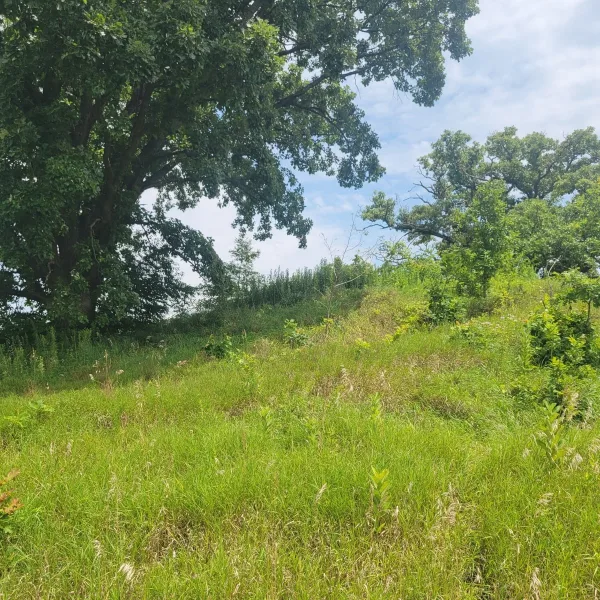
- Great Ogden Mound: The principal surviving earthwork rises about 15 feet above the terrace and anchors the reduced cemetery. Excavation revealed a log-and-matting-lined passage inside the mound leading to a central tomb with crematory basins and a prominent burial placed on a red-painted fiber mat.
- Crescent Mound Group: Roughly 30 burial mounds once curved across the terrace, though cultivation has erased or flattened many.
- Pentagonal Enclosure Ditch: Aerial photographs trace a probable five-sided ditch around roughly ten acres of the central mound group, but the feature remains unexcavated.
- Surviving Smaller Mounds: Low burial mounds remain visible across the terrace, showing that the cemetery extended well beyond the Great Ogden Mound.
- Central Mortuary Complex: A log-and-matting-lined passage led into a tomb containing crematory basins and a prominent burial placed on a red-painted fiber mat.
History and Legends
By about AD 100, Middle Woodland communities had established a village and burial ground on a low terrace near the meeting of the Spoon and Illinois rivers. This was one of several major Havana tradition centers clustered within a short stretch of the central Illinois Valley. The nearby waterways and wetlands offered fish, mussels, game, plants, and fertile ground, while the terrace provided a stable place for houses, gatherings, and burials above the seasonally flooded bottomlands. Some pottery may place the beginnings of activity even earlier, near the transition from the Early Woodland period.
The complex eventually contained around thirty mounds arranged across the terrace, with the largest, known as the Ogden Mound, rising about 15 feet. Several central mounds and part of the settlement lay within a broad pentagonal ditch or depression enclosing roughly ten acres. Its exact purpose has never been firmly established. The mounds themselves grew through repeated acts of construction. People built timber-lined tombs, placed the dead inside, roofed the chambers, and carried earth over them. Later burials and additions could enlarge the same mound over generations.
Ogden-Fettie was not only a cemetery. Pottery recovered near the great mound points to large gatherings connected with mound construction and burial ceremonies. Many vessels were heavily decorated, and the wide variety of designs suggests that people from different communities brought their own pottery to shared feasts. Objects placed with the dead reveal connections reaching far beyond the immediate valley. Excavators found copper implements, pearl and shell beads, hundreds of grizzly bear canine teeth, a stone platform pipe, an unusual gorget, and a 25-pound piece of lead. These materials were gathered into the mound through exchange, travel, and relationships linking communities across much of eastern North America.
Experiences Around Ogden-Fettie Mounds
The ruins are only part of the story. Wooded bluffs, backwater lakes, and farm fields spread across the Illinois River valley.
–
Emiquon National Wildlife Refuge restores part of the river’s former floodplain, with shallow lakes and marshes used by herons, pelicans, and migrating waterfowl.
–
Lewistown’s Oak Hill Cemetery inspired the hill in Edgar Lee Masters’s Spoon River Anthology, with a self-guided route connecting graves linked to characters in the poems.
In 1928, Marion and Ernest Dickson tunneled into the Ogden Mound and encountered an ancient passage supported by light logs and matting. It led toward the central tomb, where they found crematory basins containing the burned remains of many people. Nearby, a man had been laid on a red-painted fiber mat with an exceptional group of burial objects, including copper, beads, bear teeth, lead, and a platform pipe. University of Chicago archaeologists studied Ogden-Fettie and other nearby sites during the 1930s, helping establish the central Illinois Valley as one of the most closely examined Middle Woodland landscapes in the Midwest.
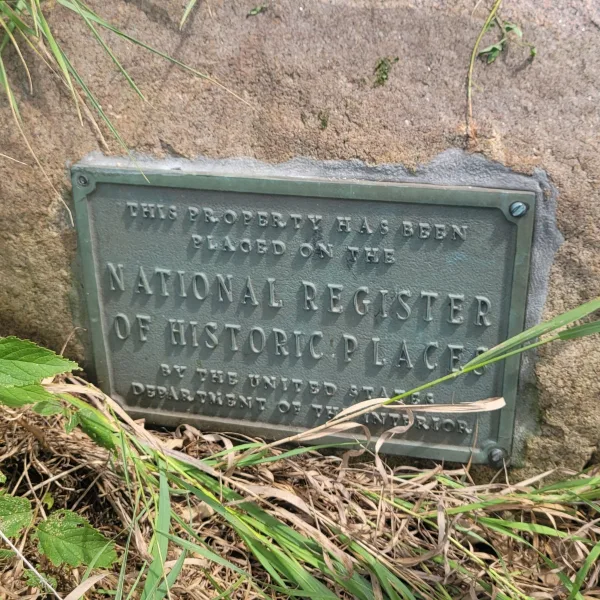
Cultivation gradually leveled many of the smaller earthworks, leaving the great Ogden Mound and only a few companions clearly visible. The site was added to the National Register of Historic Places in 1972 and is now preserved on the grounds of the Illinois State Museum at Dickson Mounds. Continued study of pottery, old excavation records, and museum collections has changed how Ogden-Fettie is understood. What once appeared mainly as a burial mound group now looks like a place where scattered communities repeatedly assembled, shared food, buried their dead, and raised one of the largest ceremonial landscapes in the Illinois River valley.
How to Get There & Where to Go Next
How to Visit Ogden-Fettie Mounds
Step-by-step access to the site
- Arrival Airport: Fly into General Wayne A. Downing Peoria International Airport.
- Drive Southwest: Follow US-24 and Illinois Route 78/97 toward the Havana and Dickson Mounds area, allowing approximately one hour.
- Begin at the Museum: Visit the galleries and collect current guidance for the outdoor archaeological sites.
- Continue South: Drive the short distance from Dickson Mounds to the Ogden-Fettie access on the lower terrace.
- Walk the Site: Follow the mowed grass path to and around the surviving mounds.
Tip: Choose a dry day, since the grass route can remain soft after rain.
Nearby Ruins You Can Visit
These sites extend the story of mound construction and settlement along the Illinois and Mississippi river valleys.

Albany Mounds: Prairie and woodland trails cross one of Illinois’s largest surviving Havana Hopewell mound groups.

Dickson Mounds: A bluff-top museum and archaeological complex interpreting later cemeteries, villages, and 12,000 years of regional history.

Rockwell Mound: A monumental Havana Hopewell earthwork covering nearly two acres inside a public park in Havana.
Traveler Tips
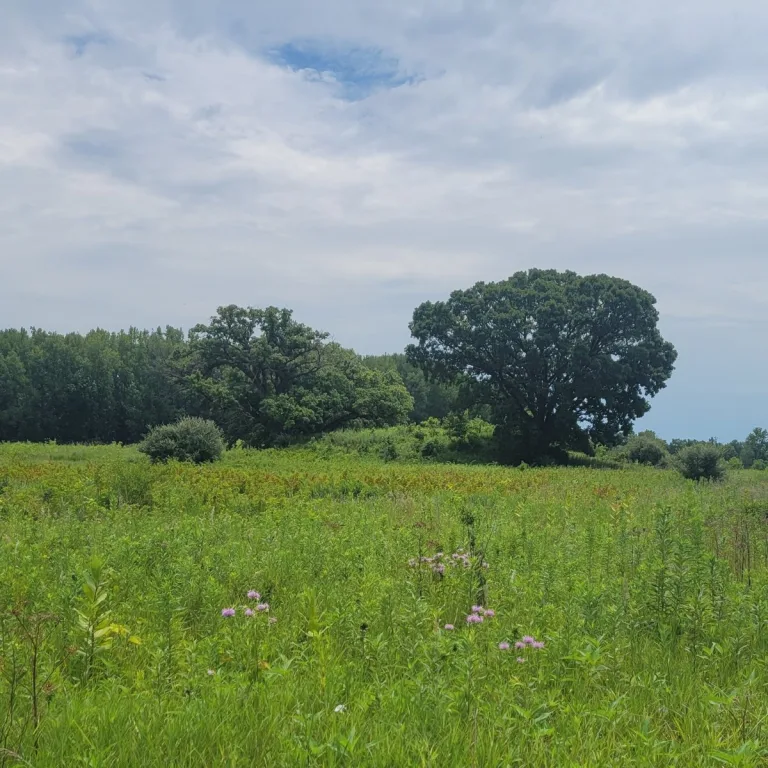
- What to Bring: Water, sun protection, insect repellent, and shoes suitable for uneven grass.
- Best Time to Visit: Spring and fall offer cooler temperatures and clearer mound profiles.
- Trail Conditions: The route is mowed but remains uneven and may be damp after rain.
- Facilities: Use the museum restrooms and visitor facilities before driving to the mound field.
- Photography: Morning or late-afternoon light makes the low earthworks easier to distinguish.
Elsewhere in the Americas…
While Ogden-Fettie’s Havana Hopewell community built mounds in Illinois, ceremonial centers were developing across Mexico and South America.

At Cholula in central Mexico, builders enlarged ceremonial platforms that became the foundation of the Great Pyramid.

At El Infiernito in Colombia, highland communities arranged stone alignments and ceremonial ground across the Monquirá Valley.

At Huaca de la Luna in northern Peru, early Moche builders raised adobe platforms beneath the slopes of Cerro Blanco.
Insider Explorer Advice
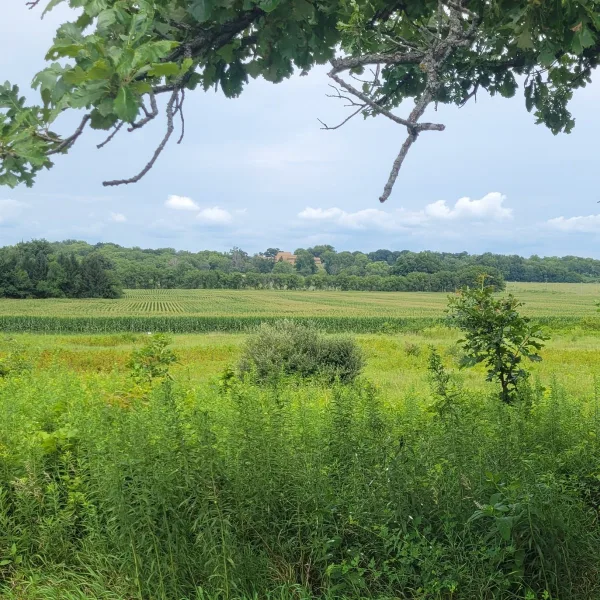
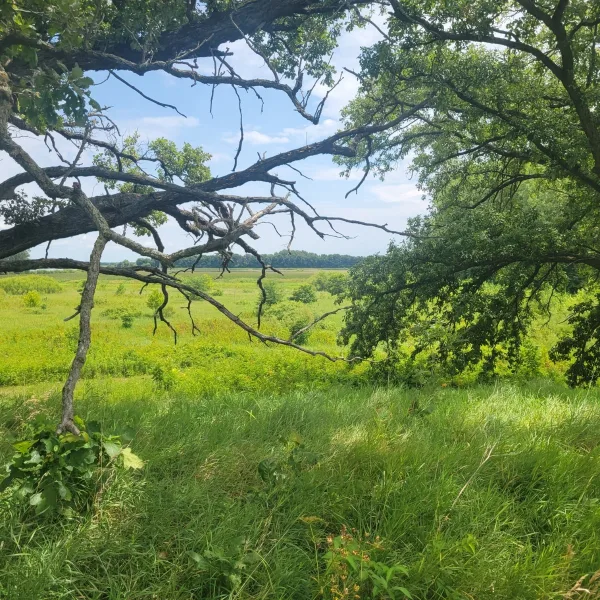
Ogden-Fettie is best visited immediately after Dickson Mounds. The short drive descends from the museum bluff to a quiet field where a mowed path leads toward and around the surviving earthworks. From the trail, look back toward the museum above the valley. That view holds the site together: the cemetery occupied the lower terrace, the village spread nearby, and the bluff rose behind them. With little development between the path and the mounds, the relationship between settlement, burial ground, floodplain, and higher ground remains unusually direct.
Summary: Ogden-Fettie preserves a fragmented Havana Hopewell cemetery where surviving earthworks, erased mounds, and a quiet terrace reveal only part of a much larger ceremonial landscape.