
Xochitécatl
MEXICO / PUEBLA
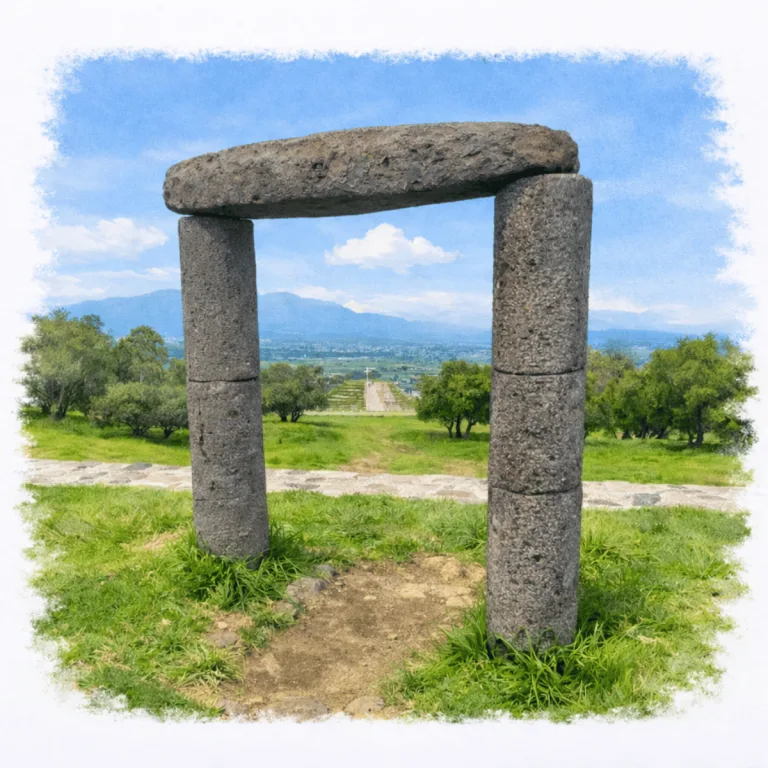
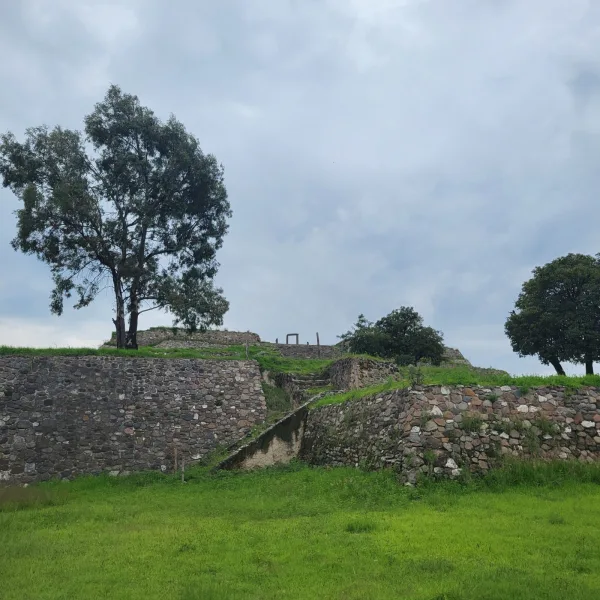
On a volcanic dome above the Puebla-Tlaxcala Valley, Xochitécatl centers a ceremonial hilltop, where the Pyramid of Flowers and surrounding plazas define a ritual complex beneath volcano-lined horizons.
| Name | Xochitécatl |
| Civilization | Preclassic Tlaxcalan communities, later Olmec-Xicalanca |
| Location | Puebla-Tlaxcala Valley, Nativitas Municipality, Tlaxcala, Mexico |
| Elevation | 2,370 m (7,776 ft) |
| Years Active | c. 800 BCE to 100 CE; reoccupied c. 650 to 900 CE |
| Primary Resources | Volcanic stone, clay, obsidian, shell, greenstone |
| Site Type | Fertility ceremonial center with astronomical alignments |
| Key Highlights | Spiral Pyramid, carved water basin, panoramic views, figurine offerings |
| INT Airport | Puebla International Airport (PBC) |
| Entry Fee | 105 MXN national or resident; 210 MXN foreign visitor |
| Best Time to Visit | Morning or clear afternoons |
| Field Visit | Visited & photographed by Lost Ruins of the Americas |
Unique Features of the Xochitécatl Archaeological Site
- Spiral Pyramid: One of Mesoamerica’s only round pyramids, likely used in fertility or astronomical ceremonies.
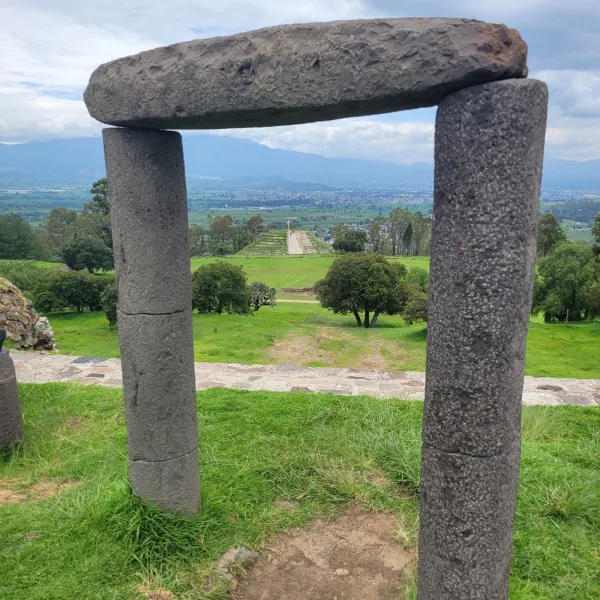
- Volcanic Views: Unmatched sightlines toward Popocatépetl, Iztaccíhuatl, and La Malinche volcanoes from all major structures.
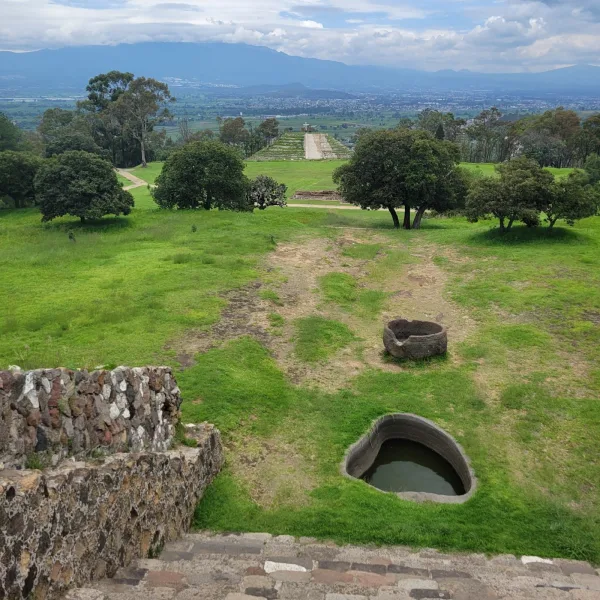
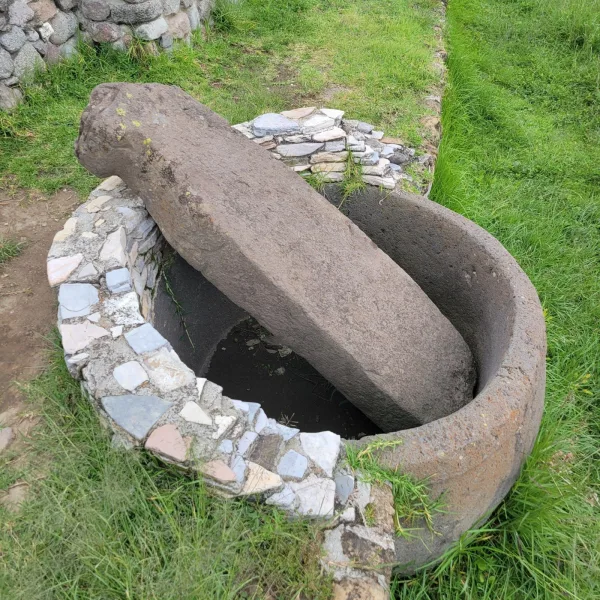
- Stone Water Basin: A carved ceremonial basin located at the base of the Great Platform. This is a rare ritual feature.
- Figurine Offerings: Thousands of female figurines unearthed in offerings, many linked to birth, fertility, and cosmic cycles.
- Dual Site Access: Easily paired with Cacaxtla’s famed murals. Both ruins are accessed with the same ticket.
Location & Access
- Nearest Town: San Miguel Xochitecatitla, Tlaxcala
- Directions: From Puebla, follow Highway 150D northwest toward San Martín Texmelucan. Exit toward Xalmimilulco, continue to San Miguel Xochitecatitla, then follow signs up the paved access road to Xochitécatl. Allow approximately 50 to 70 minutes by car.
- Official Website: INAH Zona Arqueológica de Cacaxtla-Xochitécatl
- Opening Hours: 9:00 AM to 5:00 PM, with last access at 4:00 PM.
- Entry Fees: 105; 210 MXN for foreign visitors. Admission covers both Xochitécatl and Cacaxtla, including their site museums.
- Facilities: Small museum, restrooms, shaded benches
- Accessibility: Partial. The museum and entrance facilities are accessible, but the hilltop ruins include slopes, steps, terraces, and uneven stone surfaces.
- Pro Tip: Visit on a clear day and bring binoculars. The volcano views are incredible from the upper platforms.
Highlights to Help Understand Your Visit
Xochitécatl isn’t just about monuments. It is about how earth, cosmos, and fertility shaped every layer of its design. Here are a few key things to notice as you explore:
- Built for the Sky: Most structures face outward, not inward. They were designed to engage with surrounding volcanoes, stars, and seasonal alignments more than with internal plazas.
- Spiral as Symbol: The round pyramid isn’t just unusual. Its spiral form may mimic birth cycles, water flow, or cosmic movement. Walk it like a path, not a staircase.
- Feminine Offerings Everywhere: Clay figurines unearthed on-site depict women, mothers, and flowers. This suggests a matrilineal or fertility-centered ceremonial role.
- Ritual without Crowds: The small scale and limited access points suggest this wasn’t a city for thousands. It was sacred ground, possibly reserved for elite or seasonal use.
- Two Sites, One Message: Xochitécatl and Cacaxtla share infrastructure but serve different functions. One is spiritual, the other political. The climb between them is part of the ritual.

Key Structures of the Xochitécatl Ruins
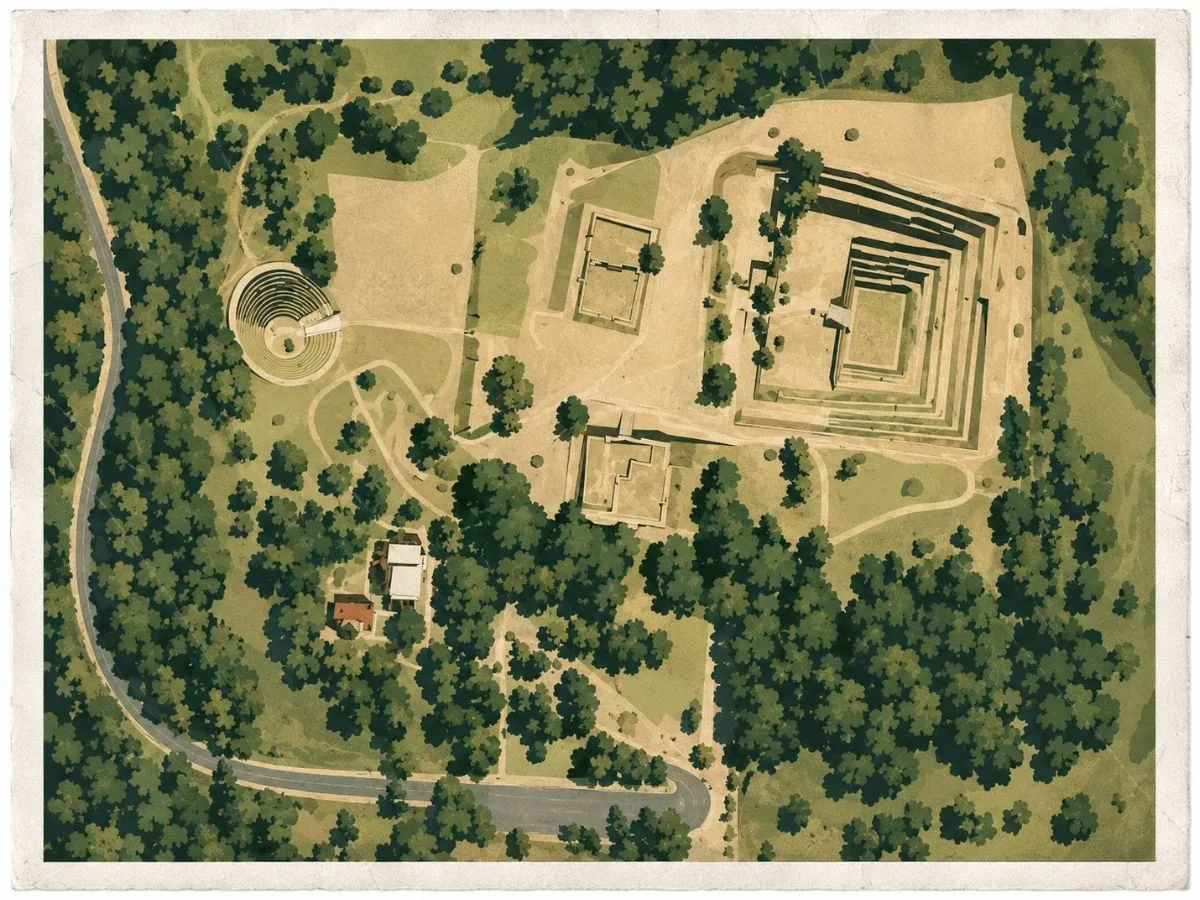
- Central Ceremonial Plaza: A broad summit plaza organizes the four principal monuments around a shared ritual core.
- Pyramid of the Flowers: The site’s largest monument preserves a central stairway, columns, lintels, female figurine offerings, and thirty burials, almost all infants.
- Monolithic Basins: Basins 1 and 2 stood before the Pyramid of the Flowers, while Basin 3 occupied the upper Serpent Building.
- Spiral Building: A truncated-cone monument adapted to the natural slope, where ceramic offerings and human burials were recovered.
- Serpent Building: A rectangular southern platform with three construction phases, carved sculptures, ceramics, and evidence of specialized obsidian work.
- Platform of the Volcanoes: A later stuccoed platform with talud-tablero traces and stairways opening to the east and west.
History and Legends
Long before empires rose in Central Mexico, Xochitécatl stood as a sacred hilltop site shaped by fire and devotion. Established around 800 BCE, it was inhabited by Formative-period peoples who chose its volcanic ridge for spiritual observance. The Spiral Pyramid, now its most iconic monument, rises in unorthodox form. It is round, stepped, and symbolically potent. It likely functioned as a ceremonial center for fertility rites tied to the cosmos, female deities, and agricultural renewal.
Excavations have revealed that Xochitécatl was less a residential city and more a place of pilgrimage and ritual. Archaeologists discovered caches of clay figurines beneath the plaza floor, hundreds of them depicting women, mothers, birth scenes, and floral symbols. These offerings, carefully buried in ritual fashion, suggest that Xochitécatl may have served as a shrine to the divine feminine or a ceremonial arena for matrilineal communities.
Later in its history, during the Classic period (c. 200–750 CE), the nearby site of Cacaxtla became a political and artistic power, famed for its vivid murals. Rather than being abandoned, Xochitécatl was re-integrated into this new cultural framework. The residents of Cacaxtla maintained and even rebuilt parts of Xochitécatl, using its legacy to legitimize their authority by connecting with older sacred traditions. This was a move seen often in Mesoamerican political strategy.
Experiences Around Xochitécatl
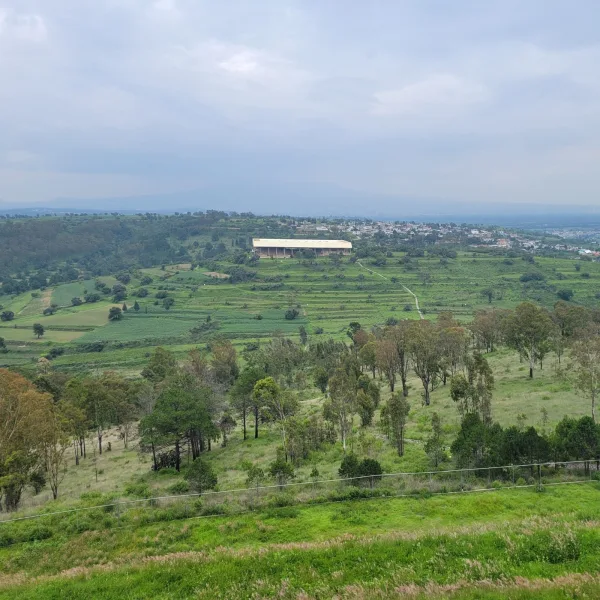
The ruins are only part of the story. Cultivated fields spread across the Puebla–Tlaxcala Valley, with Popocatépetl, Iztaccíhuatl, and La Malinche shaping the horizon.
–
In nearby San Miguel del Milagro, visit the Santuario de San Miguel Arcángel, a long-standing pilgrimage church associated with a sacred spring.
–
In Tlaxcala, see Desiderio Hernández Xochitiotzin’s murals inside the Palacio de Gobierno, where sweeping scenes trace the region’s Indigenous and colonial history.
Today, the site remains active in memory and ceremony. Local visitors still ascend the Spiral Pyramid to offer prayers, admire the view, or contemplate ancient alignments. Its stone basin at the foot of the main pyramid remains mysterious. It is a carved relic of unknown origin, yet deeply symbolic. And through it all, the goddesses of earth and sky seem to linger. Their presence is felt in every breeze that sweeps across the mountaintop.
How to Get There & Where to Go Next
How to Visit These Xochitécatl
– Step-by-step access to the site –
- CDMX to Puebla: Take an ADO or AU bus from TAPO station, approx. 2 hours 30 minutes.
- Puebla to Nativitas: Local bus from CAPU station toward San Miguel del Milagro, approx. 1 hour.
- Nativitas to Site: Mototaxi or short uphill walk from Cacaxtla gate, 10 to 15 minutes.
Tips: Arrive early for clear views. The same ticket grants access to both Cacaxtla and Xochitécatl.
Nearby Ruins You Can Visit
These highland ceremonial centers reflect the shifting power, cosmology, and urban experimentation that followed the fall of Teotihuacan.

Cacaxtla – Known for vivid murals and elite palaces, this site likely absorbed Xochitécatl’s legacy to project new regional power..
Cholula – A massive multi-layered ceremonial complex that grew into one of the longest continuously inhabited cities in the Americas.

Cantona – A sprawling highland city of obsidian trade and ritual plazas, built with volcanic stone and unmatched urban planning.
Traveler Tips
- Wear sturdy shoes, the site is built on a steep incline and stairs are worn and exposed.
- Bring water and sun protection, there’s minimal shade, especially at midday.
- Visit both Xochitécatl and Cacaxtla together, public transport from Puebla makes it an easy combo trip.
- Allow 45–60 minutes on site and 20–30 minutes for the small but rich museum.
- Ask staff about recent findings, ongoing digs occasionally yield newly interpreted artifacts.
Elsewhere in the Americas…
At Xochitécatl, monumental architecture and ritual life took shape in central Mexico, as other early centers emerged across the Americas.
In the Andes, Chavín de Huántar developed carved stone temples, ritual spaces, and religious imagery.

On Peru’s coast, Sechín tood out for carved stone walls, ceremonial architecture, and early expressions of elite power.

On Peru’s south coast, the Nazca Lines expressed ritual and symbolic meaning through vast geoglyphs across the desert.
Insider Explorer Advice
Catch a local bus from outside Puebla’s CAPU station toward Cacaxtla. The same road serves Xochitécatl, but reaching the archaeological entrance requires a long uphill walk from the roadside drop-off, so extra time and water are essential. Allow time for the excellent on-site museum, whose clay figurines and ceremonial objects provide important context for the hilltop complex. Then climb the Pyramid of the Flowers, where the upper platform opens broad views across the Puebla-Tlaxcala Valley toward the surrounding volcanoes.
Summary: Xochitécatl is a mountaintop mystery. Part fertility sanctuary, part volcanic observatory, and fully alive with ancient feminine force.