
Uxmal
MEXICO / YUCATAN / MAYA
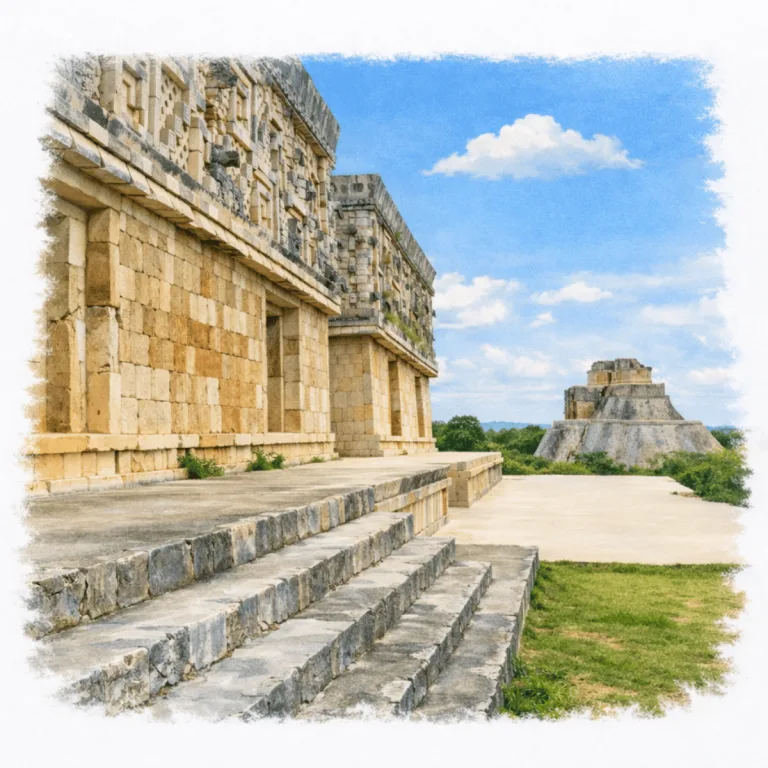
On a limestone rise in the Puuc region, Uxmal layers broad terraces, vaulted chambers, and mosaic stonework around the towering Pyramid of the Magician.
| Name | Uxmal |
| Civilization | Maya |
| Location | Puuc Route, Santa Elena Municipality, Yucatán, Mexico |
| Elevation | 30–50 m (100–160 ft) above sea level |
| Years Active | c. 600 to 1000 CE |
| Primary Resources | Limestone, lime plaster, stored rainwater, agricultural goods |
| Site Type | Puuc ceremonial capital |
| Key Highlights | Pyramid of the Magician, Nunnery Quadrangle, Governor’s Palace |
| INT Airport | Mérida International Airport (MID) |
| UNESCO | Pre-Hispanic Town of Uxmal |
| Entry Fee | 262 MXN national; 566 MXN foreign visitor; 105 MXN Yucatán resident |
| Best Time to Visit | November to March, weekday at opening |
| Field Visit | Visited and documented by Lost Ruins of the Americas |
Unique Features of the Uxmal Archaeological Site
- Puuc Style: Uxmal is the best-preserved example of Puuc architecture. Stacked masks, stone latticework, and mythic mosaics.
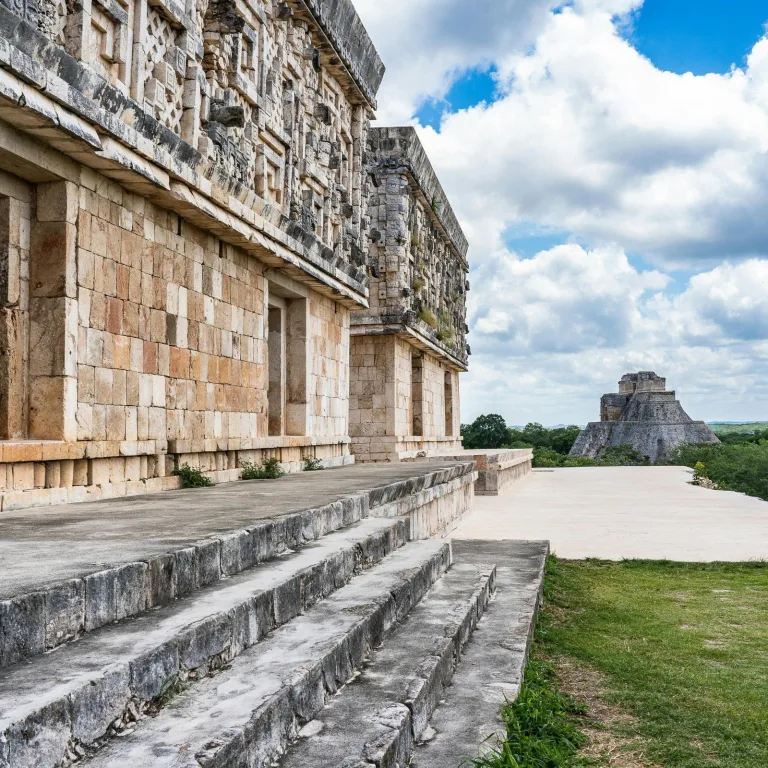
- Glowing Stone: Puuc masonry responds to sunlight. Early and late light makes the façades shimmer with dimension.
- Chultunes: With no natural wells, Uxmal used domed cisterns to harvest and store rainwater from platforms and roofs.
- Less Crowded: Majestic like Chichén Itzá but easier to explore and linger in peace.
Location & Access
- Nearest Cities: Santa Elena, Yucatán, approximately 15 kilometers south of the archaeological zone.
- Directions: From Mérida, follow Federal Highway 261 south toward Muna and Santa Elena. Uxmal is approximately 80 kilometers by road from central Mérida. Direct bus or colectivo from Merida or Campeche to main entrance
- Official Website: INAH, Zona Arqueológica de Uxmal.
- Opening Hours: Monday to Sunday, 8:00 AM to 4:00 PM, with last access at 3:00 PM
- Entry Fees: Federal admission is 105 MXN, plus a CULTUR fee of 157 MXN for Mexican nationals or 461 MXN for foreign visitors. Yucatán residents are exempt from the state fee during 2026 with proof of address.
- Facilities: Site museum, restrooms, café, parking, information desk, shop, medical assistance, and guided visits.
- Accessibility: Partial. The visitor complex and portions of the central route are accessible, but uneven limestone surfaces, slopes, and steps limit access elsewhere.
- Puuc Route Sites: Kabah, Sayil, Xlapak, Labná
- Pro Tip: Arrive at opening and allow at least two hours. Climbing is no longer permitted, so follow the complete ground-level circuit through the major ceremonial groups.
Highlights to Help Understand Your Visit
Uxmal is more than a collection of temples, it’s a sacred landscape shaped by alignment, story, and silence. These insights help reveal what the stonework is trying to say.
- Friezes as Storylines: Look up. The upper façades are where the action is. Repeating symbols, glyph bands, and masks form silent narratives of rain, rulership, and renewal.
- Chaac Everywhere: The long-nosed rain god appears in clusters, often stacked in rows. In this dry land, water was life, and divine presence had to be visible.
- Two Worlds, One Wall: Puuc structures divide space visually. Smooth lower blocks, detailed upper mosaics. This split hints at layers of meaning: earth below, spirit above.
- Hidden Hydraulics: Beneath plazas and platforms lie chultunes, domed cisterns engineered to harvest every drop of rain. Uxmal’s survival depended on what was buried, not built.
- Symmetry with Intention: The site layout isn’t random. Lines of sight, stairways, and platform heights create a ceremonial flow that mirrors cosmology. Movement here meant something.
Key Structures of Uxmal
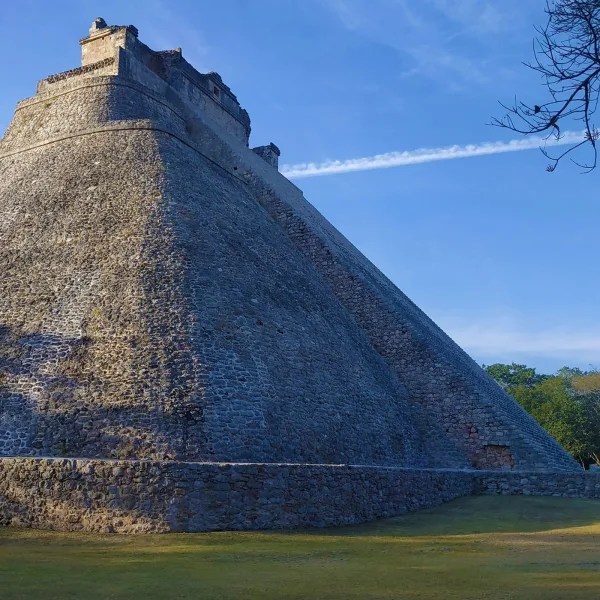
- Pyramid of the Magician: The site’s most iconic structure, this steep elliptical pyramid was built in five phases atop earlier temples. Its unusual oval base and towering profile make it unique in the Maya world. Chaac masks line the stairways, and the temple at the top marks both ritual and cosmic significance.
- Nunnery Quadrangle: A formal complex of four finely decorated buildings surrounding a central plaza. Despite the colonial nickname, it likely served elite ceremonial or administrative functions. The upper façades are covered in latticework, glyphs, and Chaac masks, each side featuring distinct symbolic programs.
- Governor’s Palace: A long, elevated building on a massive platform, known for its 98-meter frieze of mosaic ornamentation. The palace features over 100 carved masks of Chaac and astronomical alignment with the rise of Venus. A jaguar throne sits at the front, a symbol of elite rule and cosmic authority.
- Great Pyramid: A broad, partially restored pyramid on the northern edge of the site. Though less visually striking than the Magician’s Pyramid, its summit temple and elevated views suggest important civic or ritual use.
- House of the Turtles: A smaller but finely detailed temple decorated with a repeating turtle motif. Turtles symbolized water and earth in Maya cosmology. Appropriate for a site that depended entirely on rainwater collection.
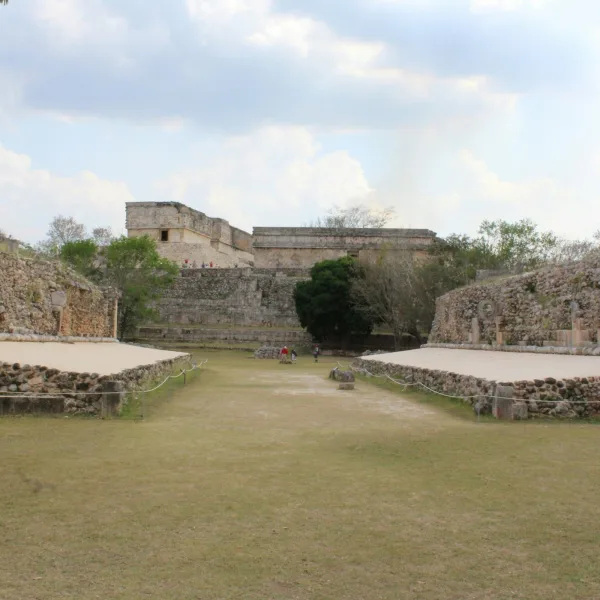
- Ballcourt: Compact and flanked by stone markers, the ballcourt sits between the Pyramid of the Magician and the Nunnery. Relief carvings and glyphs suggest it was more than sport. It likely served ritual and political functions tied to sacrifice and legitimacy.
- Chultunes: Bottle-shaped cisterns built below patios and plazas across the site. These domed underground chambers collected rainwater from rooftops and channels, a critical innovation in the dry Puuc environment, and still visible at multiple points during your visit.

History and Legends
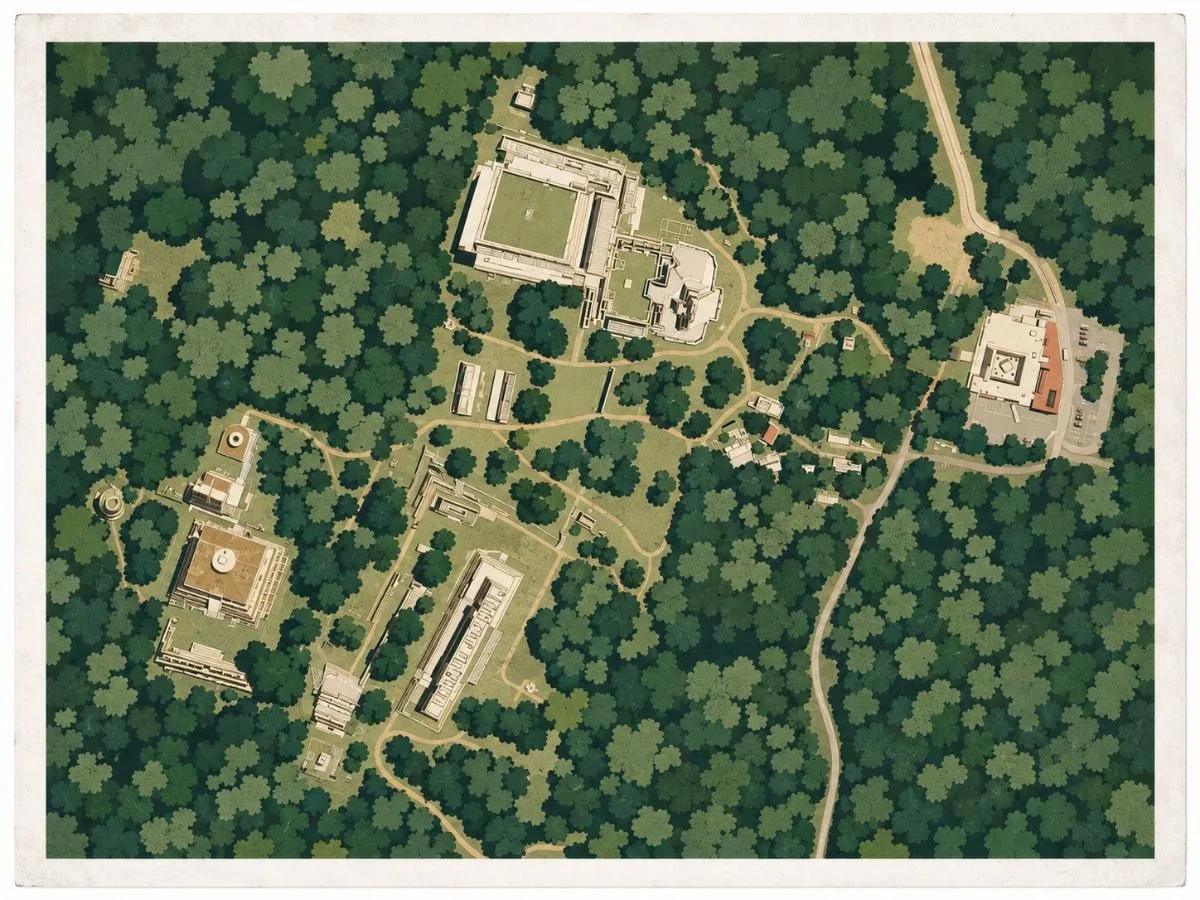
Uxmal, whose name is commonly interpreted as “Thrice Built,” was a dominant political and ceremonial capital in the Puuc region, or Puuc Route, of the Yucatán Peninsula. It rose to prominence around 600 CE and remained active into the 10th century, flourishing as a hub of engineering, spirituality, and elite Maya power.Unlike many other Maya centers that clustered near natural water sources like cenotes, Uxmal is remarkable for its adaptation to an arid landscape. It relied entirely on sophisticated rainwater harvesting systems. Chultunes (stone-lined underground cisterns) and wide stone platforms were carefully designed to collect and store water for the dry months, allowing Uxmal to support a dense population and complex religious life.
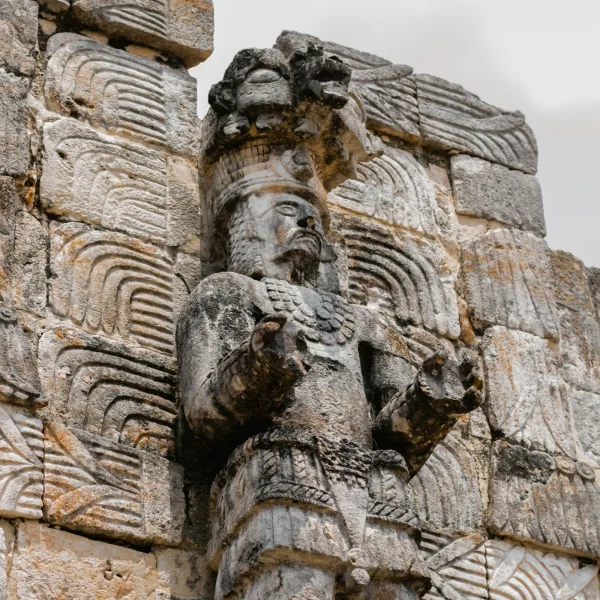
Architecturally, Uxmal is considered the apex of the Puuc style, a regional design characterized by smooth lower walls, elaborately carved upper façades, repetitive stone mosaics, and the omnipresent image of the rain god Chaac. Dozens of Chaac masks, with their long curved snouts and fierce expressions, line the corners and rooftops of Uxmal’s most sacred buildings.The iconography here is neither accidental nor simply ornamental. Each frieze and glyph tells stories of lineage, rainfall, and celestial movements. The Palace of the Governor, for instance, aligns astronomically with the rise of Venus, a planet associated with warfare and divine cycles in Maya cosmology.
Uxmal’s power appears to have extended through alliances rather than conquest. Epigraphic evidence links it to other Puuc cities like Kabah and Sayil. The “White Road” (sacbé) connecting Uxmal to Kabah still exists today, an ancient elevated causeway that once served as both pilgrimage path and trade route.
Experiences Around Uxmal
The ruins are only part of the story. Low limestone hills and dry forest shape this part of southern Yucatán, with small Maya towns scattered through the Puuc countryside.
In Santa Elena, join a traditional cooking workshop to prepare pollo pibil, sikil pak, and hand-pressed tortillas, cooking the meal in an underground pib.
Across from Uxmal, Choco-Story follows cacao from pod to chocolate, with tastings, cacao gardens, a meliponary, and workshops for making your own chocolate.
By the 10th century, Uxmal began to decline, likely the result of environmental stress, political shifts, and regional instability. Unlike other centers that were violently abandoned or absorbed into new regimes, Uxmal faded with a kind of architectural dignity. The ceremonial core was preserved, and for centuries the local Maya communities continued to revere the site. Even the Spanish, upon arrival, were awed by Uxmal’s majesty, though they repurposed much of its stone.
Layered on top of historical understanding is the enduring legend of Uxmal’s magical origins. According to Maya oral tradition, the city was raised by a dwarf who hatched from an egg and was raised by a witch. The dwarf, gifted with intelligence and divine purpose, challenged a tyrannical king and proved his worth by constructing the Pyramid of the Magician overnight. The story is deeply symbolic: suggesting creation, wisdom over power, and a supernatural link between rulers and builders. The pyramid itself, with its unusual elliptical base and five construction phases, seems to embody that legend, standing out as unique among Maya pyramids.
To walk Uxmal today is to step into an architectural narrative, one told in stone alignment, carved masks, and silent symmetry. The more you know before you arrive, the more vividly Uxmal speaks.
How to Get There & Where to Go Next
How to Visit Uxmal
– Step-by-step access to the site –
- Start in Cancún: Ride the Tren Maya west to Mérida – roughly 4.5 hours.
- From Mérida: Take a second-class bus or colectivo to Uxmal – about 90 minutes.
- Drop-off at entrance: Most routes arrive directly at the archaeological zone gate.
Tips: Check Tren Maya schedules in advance. Early departures from Cancún offer the best timing for same-day access to Uxmal.
Nearby Ruins You Can Visit
Labná is one of several ceremonial sites along the Puuc Route sites connected by raised roads and shared stonework traditions that echo across the region’s forested landscape.

Kabah – Known for its façade of hundreds of rain god masks and a monumental causeway to Uxmal.

Xlapak – A quiet ceremonial compound surrounded by jungle, with beautifully preserved Puuc friezes in miniature scale.
Sayil – Features a three-level palace and long forest paths once tied to the sacred road system.
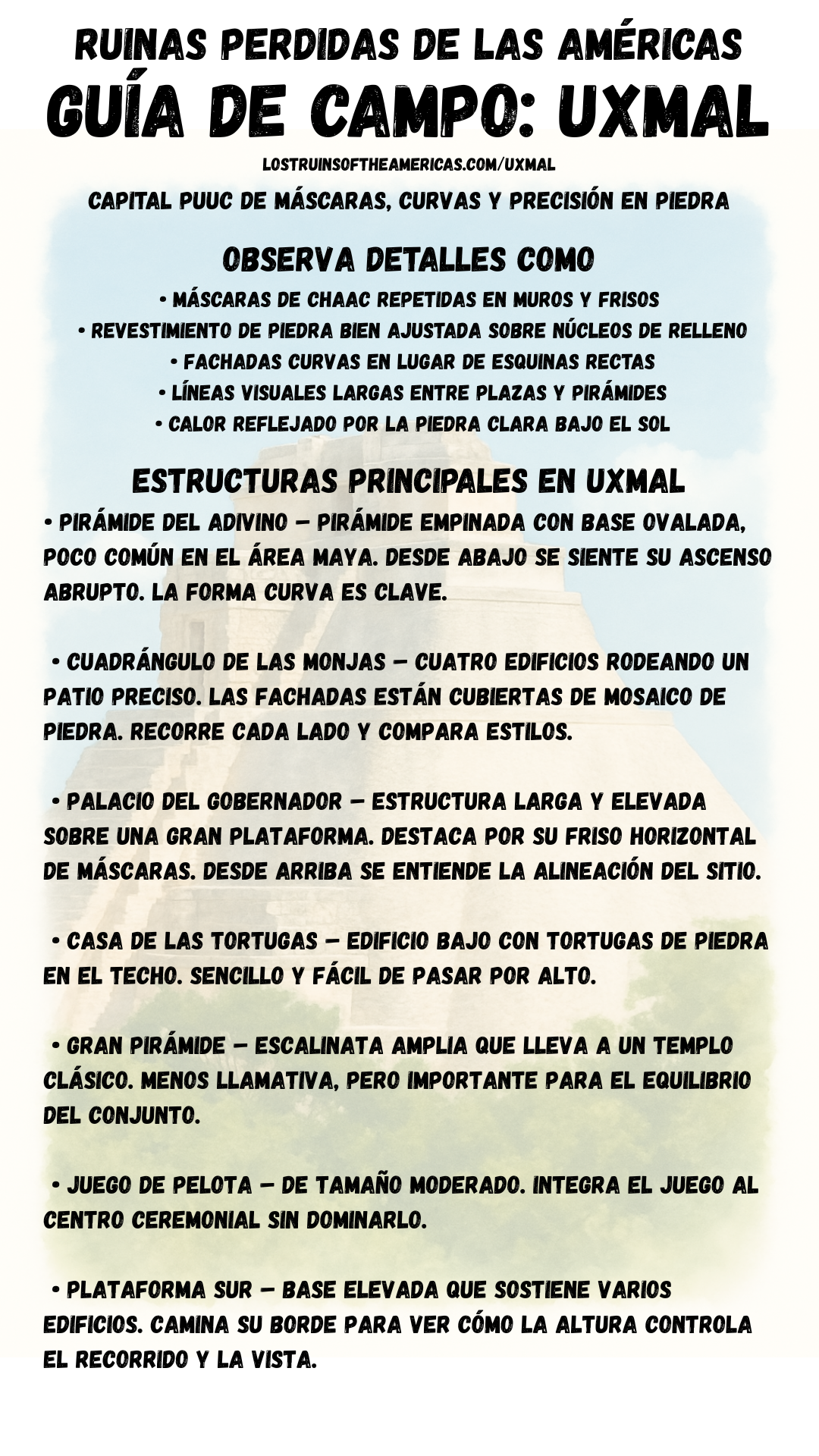
Download Quick Guide
Español
English

Traveler Tips
- Best light is at opening or late afternoon. Avoid midday heat
- Bring water and sunscreen. Open exposure, few shaded spots
- Check if sound-and-light show is running in the evenings
- Allow 2–3 hours to enjoy the entire site with pauses
- Combine with nearby sites like Kabah or the Choco-Story Museum
Elsewhere in the Americas…
While Uxmal and the Puuc region flourished in the northern Maya lowlands, powerful cultures were shaping sacred landscapes across the Americas:

In Peru Nazca artists continued carving geoglyphs and constructing ritual sites tied to water and pilgrimage.


In the Mississippi Valley, Towosahgy was emerging as a fortified Mississippian town, with earthen mounds, a plaza, and palisades.
Insider Explorer Advice
Uxmal rewards preparation. A little research into Puuc architecture goes a long way. You’ll start spotting meaning in every mask, frieze, and shadow line. The Nunnery Quadrangle alone has enough symbolism to occupy an hour if you let it. This isn’t a site about climbing. It’s about clarity. Early light on the Magician’s Pyramid feels choreographed. Take your time looping the site. Details hide high on façades, and many of the best carvings are quiet until seen twice. Bring binoculars if you’re a glyph reader, and pause often.Uxmal is rarely crowded and often still. Let that quiet work in your favor. Stand under the turtle frieze and just listen. Wind, birds, stone..
As the anchor of the Puuc Route, Uxmal sets a high bar for the intricate stonework and architectural harmony found throughout the region. Heading to Kabah, Xlapak, Labná or Sayil next? Let Uxmal be your baseline. It sets the tone and the standard.
Summary: Uxmal is the sacred Puuc Route city of symmetry. A story told in shadows, carvings, and the golden glow of Puuc stone.