The Maya Civilization:
Masters of Time and Stone
Maya World
The jungle doesn’t forget. Buried beneath the canopies of southeastern Mexico and Central America, entire cities once pulsed with ritual, astronomy, and royal power. Temples pierced the sky. Kings mapped time across stelae. Priests watched the stars like farmers watched the rain.
This was the world of the Maya. A civilization so advanced in its understanding of time, space, and kingship that we’re still unraveling its code. And unlike many of their neighbors, the Maya never truly disappeared. They shifted, fragmented, and survived.
Today, millions of Maya descendants still speak the languages of their ancestors and walk the same valleys and mountains their kings once ruled.

Civilization Snapshot
| Region | Southeastern Mexico, Guatemala, Belize, western Honduras, and El Salvador |
| Timeframe | ~2000 BCE – 1500s CE (peaked ~250–900 CE) |
| Capital / Major Cities | Tikal, Calakmul, Palenque, Copán, Chichén Itzá, Uxmal |
| Peak Population | 10–15 million during the Classic Period (~700 CE) |
| Language(s) | Mayan language family (30+ living dialects) |
| Known For | Hieroglyphic writing, calendar systems, astronomy, monumental architecture |
| Cultural Relatives | Olmec, Zapotec, Teotihuacan, Toltec |
| UNESCO Sites | Tikal, Copán, Chichén Itzá, Palenque, Uxmal, Quiriguá |
Why Visit the Maya World
The ruins are only part of the story. From Guatemala’s highlands to Belize and the Yucatán, jungle, reef, and mountains meet living tradition.
Swim in limestone cenotes, hike cloud forests where Maya languages are spoken, browse markets for textiles and cacao, and join village festivals.
Base in Antigua Guatemala or Mérida for museums and historic streets. For nature, head to the Riviera Maya or Lake Atitlán.
The Maya world is where history, landscape, and tradition remain inseparable, a place where time still moves in cycles.
Origins in the Lowlands and Highlands
Long before stone cities and towering pyramids, the roots of Maya civilization were already taking hold. Around 2000 BCE, early farming communities spread across the Pacific coast, the Guatemalan highlands, and the lowlands of Chiapas and Belize. People cultivated maize, beans, squash, and cacao, forming the foundation of the Maya diet and ritual life.
By 1000 BCE, the first ceremonial centers appeared at Cuello in Belize, Nakbé, and El Mirador in the Petén jungle. These early cities were not simple villages. They had raised platforms, causeways aligned to celestial paths, and plazas designed for ritual gatherings. Even in these beginnings, the Maya were thinking in cosmic terms, building their world as a reflection of the heavens.
Before them stood cultures that helped shape what would come. The Olmecs of the Gulf Coast influenced art and belief, while highland societies experimented with writing, jade carving, and organized agriculture. Out of these exchanges, the Maya emerged with a vision that blended innovation, memory, and sacred geometry.

Who Were the Maya?
The Maya were not one empire but a network of kingdoms bound by language, belief, and cycles of sacred time. Across southern Mexico, Guatemala, Belize, Honduras, and El Salvador, they built a civilization defined by knowledge, artistry, and spiritual precision.
Their world revolved around cycles. Every city was part of a living calendar, tuned to the movement of the sun, moon, and stars. The Maya calculated eclipses centuries in advance and tracked Venus as a ritual marker, building observatories where priests watched the heavens to guide kings and farmers.
They spoke dozens of related languages that are still heard across the region today. From the forests of Petén to the highlands of Chiapas, the Maya wrote in hieroglyphic script, carved royal history on stone stelae, and painted books on bark paper. These writings reveal a people who joined science with sacred practice, seeing no divide between earth and sky.
Maya life sought balance. Farmers renewed the soil through rotating milpas, artisans shaped jade and obsidian into offerings, and rulers presided over rites intended to sustain cosmic order. Every pyramid, palace, and plaza reflected sacred geometry aligned to celestial events, turning architecture into a living map of the universe.
To understand the Maya is to step into a world where time itself was a sacred force, and where numbers, stories, and monuments invited people to read the turning of the ages in stone.


Cities of Power and Ceremony
Across the forests and hills of Mesoamerica, the Maya built cities that reflected both earthly order and the movement of the heavens. These were not merely places to live. They were ceremonial landscapes where kings ruled through ritual and time itself was measured in stone.
From about 250 CE, Maya civilization entered an age of remarkable growth. Monumental cities rose across the lowlands, each ruled by dynasties that traced their power to divine ancestors.
- Tikal rose in the Guatemalan jungle with temples towering more than 200 feet above the canopy.
- Calakmul challenged it, commanding vast networks of allies across the southern lowlands.
- Copán and Quiriguá produced stelae covered in some of the longest hieroglyphic texts in the Americas, recording lineages, rituals, and battles in stone.
- Palenque crafted graceful palaces and temples, including the Tomb of Pakal the Great, a masterpiece of art and cosmic symbolism.
- Inland cities like Uxmal and Caracol refined architectural and political systems that spread across the region.
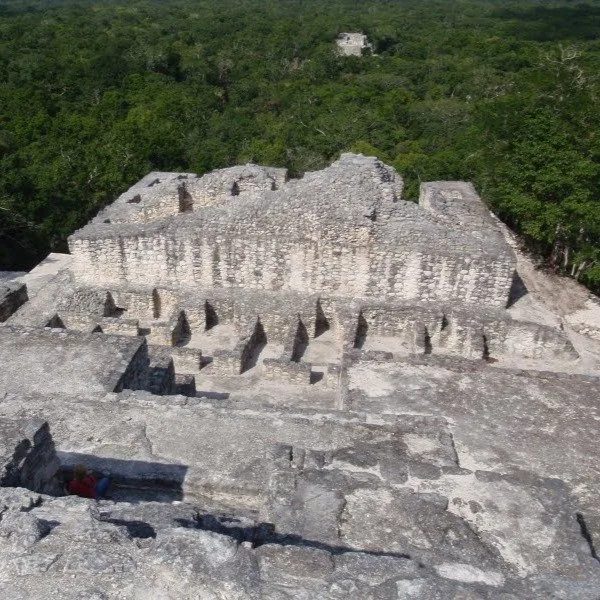


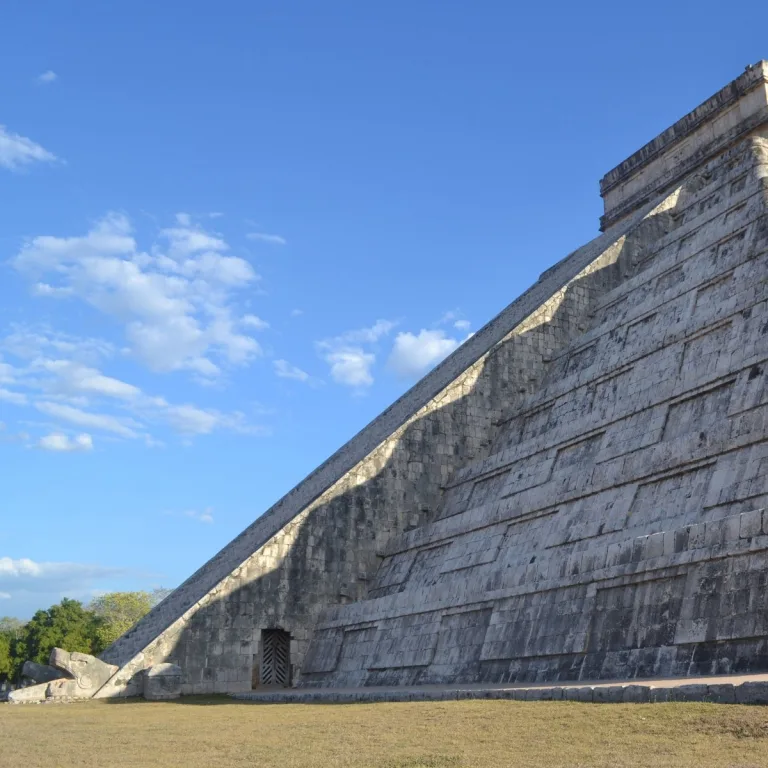
As centuries passed, new powers emerged in the north. Chichén Itzá became the culmination of Maya design and astronomy, blending older knowledge with new influences from the Toltec world. Its temples and plazas were aligned to celestial events, and the Temple of Kukulkan still demonstrates precise solar engineering as light and shadow form a serpent along its stairway during the equinox. Chichén Itzá stood as the last great synthesis of Maya achievement, linking the ancient cities of the south with the world that endured into the Postclassic age.
The Maya world was never a single empire. It was a constellation of kingdoms, each with its own calendars, rituals, and ambitions. Rulers were seen as mediators between humans and gods, responsible for maintaining the balance that held the universe together. Every monument and inscription reflected this belief that power was sacred and that time itself was divine.
South of Chichén Itzá, the Puuc hills became a final center of Maya creativity. Cities such as Uxmal, Kabah, Sayil, Labná, and Xlapak shared a distinctive architectural style of finely cut stone mosaics and ornate façades. Linked by ancient causeways known as sacbeob, these cities formed what is now called the Puuc Route, a chain of temples and palaces that represents the last great flowering of Maya art and urban design.
Religion and the Sacred Cosmos
Maya religion shaped every part of life. It explained the stars above, the soil below, and the forces that moved between them. The world was seen as a living structure made of three layers: sky, earth, and the underworld. Each realm was connected by sacred points of passage. Every ritual, temple, and act of kingship existed to keep those realms in balance.
Key beliefs included:
- World trees that joined the realms, often symbolized by the ceiba tree or rising temple stairways.
- Caves and cenotes seen as entrances to the underworld, known as Xibalba.
- Bloodletting rituals in which rulers offered their own blood to open portals to the divine.
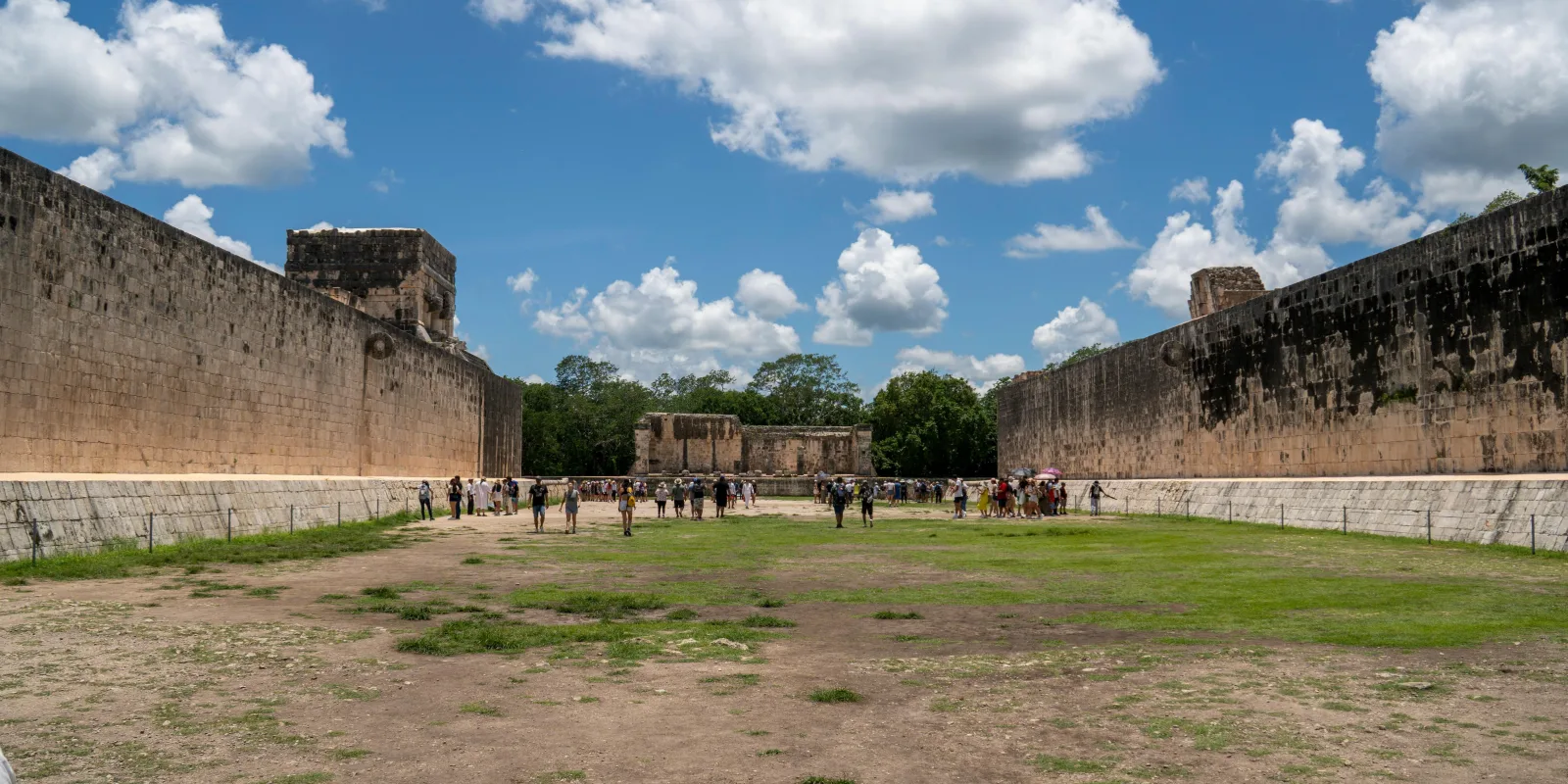
- Ballgames that reenacted cosmic struggles between light and shadow, life and death.
The Maya worldview was not built for comfort. It was built for equilibrium. Maintaining that sacred balance through calendar, ceremony, and sacrifice was the responsibility of kings and priests who acted as mediators between humanity and the gods.


Writing and the Long Count
The Maya developed one of the most advanced writing systems of the ancient world. Their script combined logograms and phonetic glyphs to record everything from royal lineages to astronomy and ceremony. Every inscription was both history and prayer, carved to fix divine order in time.
Their calendars were equally complex.
- The 260-day ritual calendar (Tzolk’in) guided divination and religious life.
- The 365-day solar calendar (Haab’) governed agriculture and civic affairs.
Together, they created the Calendar Round, a repeating cycle of 52 years that measured the rhythm of generations.
To reach beyond that cycle, the Maya used the Long Count, a system that measured time in vast spans reaching back to creation itself. Some stelae record events billions of days from the beginning of their era, a reminder that the Maya measured not only human time but cosmic time.
Their mastery of mathematics and astronomy made this possible. The Maya were among the first to use a true zero, building a base-20 numerical system that allowed precise calculation of celestial cycles. In observatories such as Caracol at Chichén Itzá and Uaxactun in Guatemala, they charted the movement of the sun, moon, and planets with remarkable accuracy, aligning temples and rituals to the pulse of the heavens.

Work, Trade, and Daily Life
Trade bound the Maya world together. Rivers, jungles, and mountain passes became arteries of exchange that moved both sacred and practical goods between cities. Through these routes, markets and alliances flourished, giving rise to a shared economy that reached from the Pacific to the Caribbean.
Common trade goods included:
- Obsidian from the highlands of Guatemala
- Salt from coastal flats and lagoons
- Cacao used as currency and in ritual drink
- Textiles, jade, shells, feathers, incense, and pigments
Farming sustained everything. Maya communities grew maize, squash, and beans using terraced fields, milpas, and wetland systems. The economy rested on agriculture, yet the wealth of rulers came from tribute and long-distance trade that enriched the ceremonial centers.
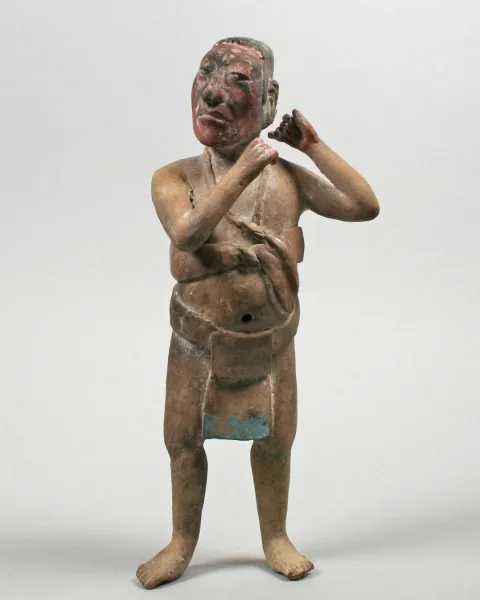
Daily life followed the rhythm of work and ritual. Families lived in thatched-roof houses arranged around small courtyards. Women ground maize for tortillas and prepared cacao, while men farmed, crafted tools, or traded goods at local markets. Children learned weaving, pottery, and language traditions that tied each household to the wider community. Music, dance, and feasting marked seasonal festivals, keeping faith and labor in harmony.

Maya and the Wider Mesoamerican World
The Maya world was never isolated. Jungle kingdoms and highland cities were part of a vast web of civilizations linked by commerce, diplomacy, and belief. Through these routes, both goods and ideas moved across ancient Mesoamerica, shaping a shared world of ritual, power, and exchange.
- Teotihuacan: At its height around 400 CE, this central Mexican superpower influenced Maya politics and trade. Tikal’s Stela 31 depicts a Teotihuacan figure, and artifacts of obsidian and incense burners reveal long-distance exchange between the two regions.
- Olmecs: Though separated by centuries, the Maya inherited sacred symbols such as jaguar deities, world trees, and ballcourts that first appeared along the Gulf Coast.
- Toltecs: In the Postclassic period, cities like Chichén Itzá displayed Toltec influence through feathered serpents, warrior columns, and the cult of Kukulkan. Trade in salt, cotton, and metal goods flowed along the same routes as these shared ideas.
- Zapotecs and Mixtecs: These highland neighbors maintained calendar systems, trade routes, and ritual diplomacy that connected Oaxaca and the Maya lowlands through tribute, marriage alliances, and artistic exchange.
The Maya were not passive participants in this network. They shaped the flow of commerce and culture alike, exporting jade, cacao, textiles, and sacred knowledge across the region. Every trade route carried more than goods; it carried stories, symbols, and alliances that bound Mesoamerica together. Through these connections, the Maya stood at the heart of one of the world’s most enduring cultural mosaics.

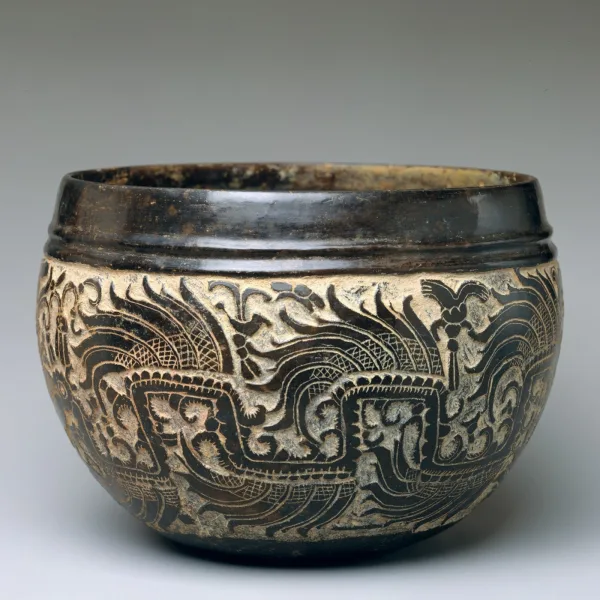

Survival After Collapse
Between 800 and 900 CE, many Classic Period cities declined across the Maya lowlands. The causes remain debated. Some regions faced prolonged drought and agricultural stress, while others fractured under dynastic rivalry and internal warfare. Populations shifted, monuments were left unfinished, and royal lineages disappeared from the record.
Yet the Maya did not vanish. In the centuries that followed, new centers rose across the Yucatán and the highlands. Cities such as Chichén Itzá, Uxmal, and Mayapán built on older traditions while developing new alliances and trade networks that reached deep into Central America. Religious texts such as the Popol Vuh preserved sacred history and reinterpreted it for a changing world.
When the Spanish arrived, Maya culture was already in motion, adapting and enduring. The final independent Maya kingdom, Tayasal, resisted conquest until 1697, more than two centuries after the fall of the Aztecs. The Maya world continued through language, ritual, and memory, carrying its ancient order into the present day.
The Maya Today
Across Guatemala, Mexico, Belize, and Honduras, the Maya world is still alive. More than six million people speak over thirty Mayan languages and continue ancestral traditions of farming, weaving, healing, and ceremony. These practices give rhythm to daily life and connect each generation to the same cycles of sun, rain, and renewal that guided their ancestors.
In towns and villages, daykeepers keep the sacred calendar, counting the passage of time through ritual observance. Ceiba trees stand in community plazas just as they once stood at the center of the cosmos. Markets fill with color and sound, carrying echoes of the ancient cities where trade and ritual were part of the same order.
The Maya world has changed but never ended. Its strength rests in continuity, in the ability to preserve language, craft, and faith across centuries of change. The civilization that once measured eternity in stone now endures through the people who still shape their lives by the balance of earth, sky, and time.


Museums that Explore the Maya World
Across Mesoamerica, museums preserve the legacy of the ancient Maya through their sculpture, hieroglyphic writing, architecture, and finely crafted art. Visiting these collections reveals how deeply Maya ideas of time, balance, and sacred order continue to shape the region today.
- Museo Popol Vuh (Guatemala City, Guatemala) – Features an exceptional collection of Maya pottery, sculptures, and codex-style vessels, along with displays that explore Maya mythology, writing, and cosmology.
- Museo Nacional de Arqueología y Etnología (Guatemala City, Guatemala) – Houses one of the world’s largest collections of Maya artifacts, including stelae from Tikal, ceramics, jade ornaments, and exhibits tracing Maya culture from Preclassic to Postclassic times.
- Museo de Sitio de Palenque (Chiapas, Mexico) – Located beside the ruins of Palenque, this museum showcases carved panels, painted stucco, and jewelry from the royal tomb of Pakal the Great.
- Museo Regional de Yucatán “Palacio Cantón” (Mérida, Mexico) – Exhibits artifacts from across the Yucatán Peninsula, including pieces from Chichén Itzá, Uxmal, and other major Maya centers.
- Museo Maya de Cancún (Quintana Roo, Mexico) – Presents monumental sculpture and household artifacts excavated from sites across the Maya Lowlands, alongside a lush outdoor display of stelae and temple fragments.
- Museo de Antropología (Villahermosa, Mexico) – Highlights the connection between the Maya and their Olmec predecessors, featuring jade, obsidian, and stone carvings that trace regional exchange networks.
- Maya Exploration Center (MEC) – An educational organization based in Palenque, Chiapas, offering online resources and field programs focused on Maya archaeology, astronomy, and mathematics.
Maya Ruins You Can Visit
- Balamkú – one of the finest Maya stucco friezes, royal imagery, ceremonial power, and traces of original paint.
- Becán – A fortified center with deep defensive moats and impressive structures that defined regional power.
- Bonampak – Famous for vibrant murals that capture Maya life, ceremony, and warfare in vivid detail
- Caracol – A vast Maya capital deep in Belize’s forest, with the towering Caana palace complex and ancient causeways linking its plazas.
- Calakmul – Deep in the Petén jungle, this massive city rivaled Tikal and held sway over the Maya lowlands for centuries
- Chichén Itzá – Sacred cenotes, pyramid precision, and Toltec-influenced carvings define this northern Yucatán icon
- Chacchobén – Broad temple stairways rise through the forest, where pyramids and the raised Acropolis reveal a Maya city inland from the Costa Maya coast.
- Chicanná – A compact elite compound known for its monster mouth façade and refined Río Bec stonework.
- Coba – Sprawling jungle site with ancient causeways and one of the tallest Maya pyramids in the Yucatán
- Copán – Artistic stonework, hieroglyphic stairways, and sculpted stelae reveal dynastic history in lush Honduran hills
- Ek Balam – A walled Maya capital where elaborate stucco figures and enormous monster jaws frame a royal tomb high on the Acropolis.
- El Meco – Coastal Maya port north of Cancún where El Castillo rises above a compact plaza of columned public buildings facing Isla Mujeres
- El Rey – Maya settlement in Cancún’s Hotel Zone, with a long causeway linking plazas, columned halls, residential platforms, and a temple pyramid
- Kabah – Ceremonial Puuc site linked to Uxmal, decorated with hundreds of Chaac masks across its palace
- Labná – Classic Puuc site known for its intricate mosaic arch, palace complex, and ceremonial causeways
- Palenque – Temples and tombs tucked into misty Chiapas jungle, famed for the legacy of King Pakal and Maya cosmology
- San Miguelito – Forested Maya settlement behind the Maya Museum, with Palacio Chaak, painted rooms, and a temple pyramid
- Sayil – Expansive Puuc palace site with multi-story halls, jungle sacbe, and royal architecture in elegant decay
- Tikal – Towering temples rise above jungle canopy in this vast city once at the heart of Classic Maya power in Guatemala
- Tulum – Seaside fortress perched above turquoise Caribbean waters, once a coastal Maya trading hub
- Uxmal – Masterpiece of Puuc architecture, with ornate facades and the striking Pyramid of the Magician
- Xlapak – Small, peaceful ruin in the Puuc hills featuring a compact yet elegant Maya palace
- Xpuhil – Three-tower temple and compact Rio Bec layout that highlights stylized upper tiers.
- Xunantunich – Hilltop Maya center above the Mopan River, with broad plazas and giant stucco friezes decorating El Castillo.
- Yaxchilán – Riverside jungle kingdom known for its carved lintels and powerful dynastic history
Discover Related Civilizations
- Olmecs — Early influence on Maya writing, ritual, and kingship
- Teotihuacan — Major trade partner and ideological influencer during the Classic Period
- Toltecs — Later influence on post-Classic sites like Chichén Itzá
- Zapotecs — Cultural contemporaries and neighbors in Mesoamerican development