
Chan Chan
PURU / TRUJILLO / CHIMÚ
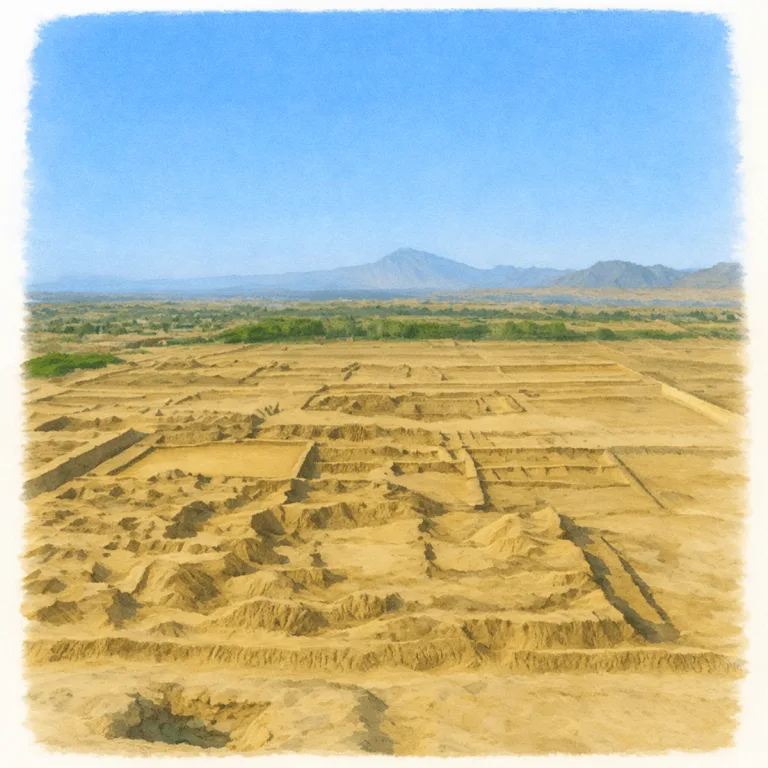
Along Peru’s arid north coast, Chan Chan organizes vast adobe-walled compounds, where high-relief friezes of marine life line corridors within the largest adobe city in the world.
| Name | Chan Chan |
| Civilization | Chimú |
| Location | Between Trujillo and Huanchaco, Peru |
| Years Active | c. 900 – 1470 CE |
| Primary Resources | Adobe, gold, silver, marine goods |
| Site Type | Capital city and ceremonial complex |
| Key Highlights | Palace compounds, frieze walls, ceremonial pool, labyrinthine corridors |
| UNESCO | Chan Chan Archaeological Zone |
| Entry Fee | 15 PEN (~$4 USD) |
| Best Time to Visit | Morning or late afternoon |
| Field Visit | Visited & photographed by Lost Ruins of the Americas |
Unique Features of the Chan Chan Archaeological Zone
- Adobe City Walls: Massive earthen walls define enclosed palace compounds.
- Carved Friezes: Marine motifs show fish, birds, waves, and sea life.
- Ciudadelas: Nine elite compounds structured Chimú power and restricted access.
- Urban Scale: One of the largest adobe cities in the ancient Americas.
Location & Access
- Nearest Town: Trujillo or Huanchaco
- Directions: From Trujillo, go to Avenida España near Óvalo Grau to catch a colectivo or microbus toward Huanchaco. Ask the driver to drop you at Chan Chan.
- Opening Hours: 9:00 AM – 4:00 PM
- Entry Fees: 15 PEN (~$4 USD)
- Facilities: Visitor center, restrooms, museum, interpretive paths
- Accessibility: Moderate, paths are sandy but mostly flat
- Pro Tip: Combine with Huaca Arco Iris and Huaca Esmeralda, both accessible by taxi or foot from the same area.

Highlights to Help You Understand Your Visit
Chan Chan isn’t a maze. It’s a message.
What looks like erosion and repetition is actually power, planning, and symbolism baked into adobe
- Walls That Talk: The frieze panels aren’t decoration, they’re ideology. Look for nets, waves, and fish themes as clues to the Chimú’s worldview and coastal economy.
- Control Through Corridors: Narrow, winding paths weren’t accidental, they slowed movement and heightened the ritual feel of entry. Power was spatial here.
- Compounds as Time Capsules: Each palace was built for one ruler and then sealed. You’re not walking through a city. You’re moving across eras.
- Nothing is Random: From reservoir placement to door width, everything at Chan Chan reflects order, hierarchy, and restriction. Freedom wasn’t part of the plan.
- Desert Doesn’t Mean Dead: Adobe melts with time, but this city was once alive with sound, color, water, and ceremony. Try to see beneath the silence.

Key Structures of the Chan Chan Ruins
- Palacio Nik An (Tschudi Palace): The most fully restored and accessible citadel, Nik An offers ceremonial courtyards, royal burial platforms, frieze-lined corridors, and a reflective pool. Designed for elite ritual use, its layered rooms and sculpted motifs exemplify Chimú state power.
- Ceremonial Pool: A large sunken rectangle at the heart of Nik An, lined with adobe and once filled with water. Interpreted as a purification site, a mirror for celestial events, or an offering basin tied to Chimú water worship.
- Labyrinthine Corridors: Narrow adobe passageways guide visitors through successive plazas and chambers. These paths were designed to restrict movement and create ritual procession routes, heightening ceremonial drama.
- Frieze Walls: Dozens of decorative panels carved in bas-relief, depicting stylized fish, birds, waves, and geometric netting. These motifs reflect the Chimú’s maritime culture and their cyclical worldview rooted in tides and seasonal migration.
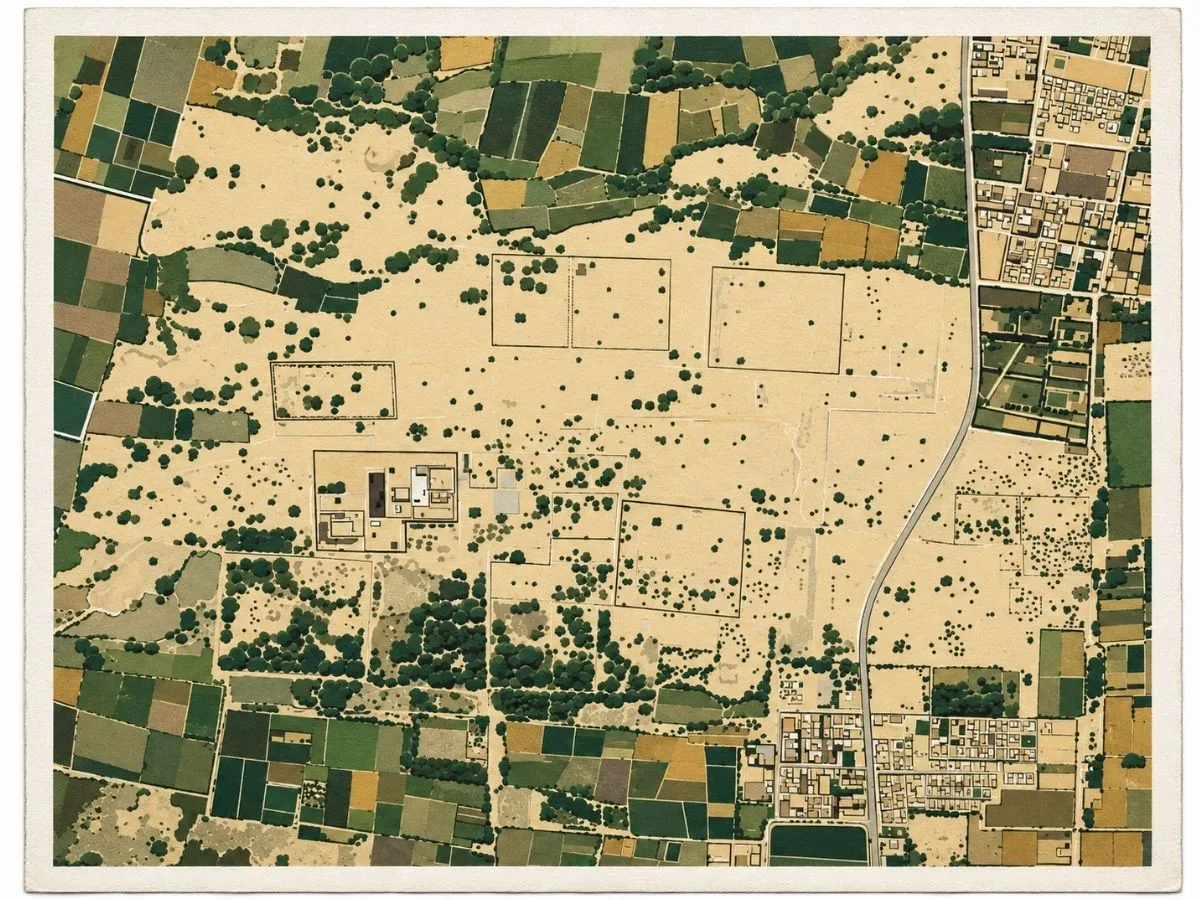
- Walled Citadels: Chan Chan was composed of nine major palace compounds, each an autonomous urban unit with residential, ceremonial, storage, and administrative areas. These include the Gran Chimú complex, Laberinto, and Squier, still under partial excavation.
- Administrative Galleries: Long adobe halls with raised platforms and small chambers. These were likely used to collect, record, and distribute tribute from across the empire. Some contain clay seals and counting tokens.
- Storage Corridors (Audiencias): U-shaped and keyhole-shaped enclosures interpreted as controlled-access storage units for state resources — food, textiles, or ceremonial goods.
- Perimeter Walls and Entryways: Monumental enclosures over 10 meters high surrounded each palace. These were marked with narrow, bend-entry doorways that limit view and movement, reinforcing the elite nature of these compounds.
- Chan Chan Site Museum: Located near the main entrance, the museum houses original frieze fragments, Chimú ceramics, goldwork replicas, burial reconstructions, and detailed site models. A must-stop before walking the ruins.


History and Legends
Chan Chan rose in the 10th century CE as the capital of the Chimú Empire. This coastal civilization inherited the legacy of earlier cultures like the Moche and Sicán. Built on the northern desert plain between the Pacific and the Andes, the city quickly became a hub of administration, ceremony, and elite control. At its height, Chan Chan governed a kingdom stretching over 1,000 kilometers of coastline, uniting valleys, trade routes, and tribute networks under its adobe walls.
The city’s design reflects this central authority. Nine large palace compounds, each likely built by and for a single ruler, anchor the city. Within them, restricted pathways, ritual pools, and sealed storehouses reflect a tightly regulated society. Beneath the formality was a vibrant artistic culture. The frieze carvings of waves, nets, birds, and fish evoke not only a marine cosmology, but also a system of coded meaning. Water, flow, and cyclicality were sacred themes across Chimú belief.
Chan Chan’s roots run deep into Peru’s past. Chimú artisans inherited iconography from the Moche, their predecessors in the Moche Valley, and absorbed architectural principles from the Sicán/Lambayeque region to the north. The city’s urban plan, modular, ceremonial, and hierarchical, echoes earlier temples like Ventarrón and Sechín, but on a far grander scale. Their metallurgy, too, expanded on Moche innovations, producing fine gold, silver, and copper pieces rivaled only by the Inca who came after.
Experiences Around Chan Chan
Chan Chan sits between Trujillo and the Pacific, in a dry coastal landscape shaped by irrigated valleys and the sea.
–
In Huanchaco, watch fishermen launch their caballitos de totora, take a surf lesson, and stay for ceviche along the beachfront.
–
Trujillo is worth exploring on foot around the Plaza de Armas, with stops inside Casa de la Emancipación and Casa Urquiaga for painted courtyards, period rooms, and the city’s colonial and independence-era history.
But it was the Inca who ended Chan Chan’s independence. Around 1470 CE, after years of resistance, the Chimú capital fell to Inca expansion. The Inca respected the site’s power. Accounts suggest they attempted to replicate some of its organizational structure in their new coastal holdings. Yet the city’s decline had begun. Spanish conquistadors would later marvel at its size and complexity, though pillaging and erosion would take their toll.
Today, Chan Chan survives not only as a city of sand and walls, but as a symbol of ancient sovereignty on the Peruvian coast. Restoration efforts continue, and only a fraction of the site has been fully uncovered. Its scale is humbling, its silence profound. A buried capital of the sea peoples, still holding its breath beneath the desert sun.
How to Get There & Where to Go Next
How to Visit Chan Chan
Step-by-step access to the site
- Lima to Trujillo: 1.5 hr flight or 9–10 hr bus.
- Taxi to Óvalo Grau: ~20 min from airport or city center.
- Combi toward Huanchaco: 10 min to Chan Chan, another 10 min to Huanchaco.
- Ask for the Chan Chan stop: it’s along the main road.
Tips: Site closes at 4 PM and is closed Mondays. Arrive by 2 PM for both museum and ruins.
Nearby Ruins You Can Visit
These coastal temples and cities mirror Chan Chan’s adobe architecture, ceremonial planning, and legacy of Chimú and Moche power. Remnants of a vast desert civilization still rising from the sand.

Huaca del Sol – One of the largest adobe pyramids in the Americas, built by the Moche for elite rule and ritual.

Huaca de la Luna – Moche religious center with vivid murals and towering adobe temples below Cerro Blanco.

Huaca Arco Iris – A Chimú ceremonial temple with bold adobe friezes just a short walk from Chan Chan itself.

Download Field Guide
Español
English


Traveler Tips
- Wear sturdy shoes. Sandy ground and long walking paths are the norm.
- Visit early or late to avoid heat. Shade is minimal across the complex.
- Frieze photography is allowed but no touching. Guards may ask if you get close.
- The Nik An complex is the only one open to the public. Give it time, it’s bigger than it looks.
- Bring water. Limited access to vendors near the entrance.
Elsewhere in the Americas…
As the Chimú built adobe cities on the Peruvian coast, other civilizations across North America were also reaching powerful cultural peaks:
In the Mississippi Valley, Kincaid Mounds developed as a Mississippian center in Illinois with platform mounds, a central plaza.


In the Maya world, cities like Chichén Itzá and Kabah thrived as major centers of trade, ritual, and political authority.
Insider Explorer Advice
Chan Chan sits between Trujillo and Huanchaco and is easily reached by combi or bus. In Trujillo, head to Avenida España near Óvalo Grau and ask the driver to drop you at the ruins. The city itself is underrated and a good base, but if you’re looking for a laid-back beach town with surf lessons and sunset walks, stay in Huanchaco. The ruins are vast, sharply marked, and quiet. You can spend hours tracing friezes and climbing through adobe corridors in the largest mud city ever built. Much has been restored, but more waits below the sand.
Summary: Chan Chan is the desert’s last great capital. A labyrinth of empire carved in earth and salt wind.