
Chichén Itzá
MEXICO / / YUCATÁN / MAYA
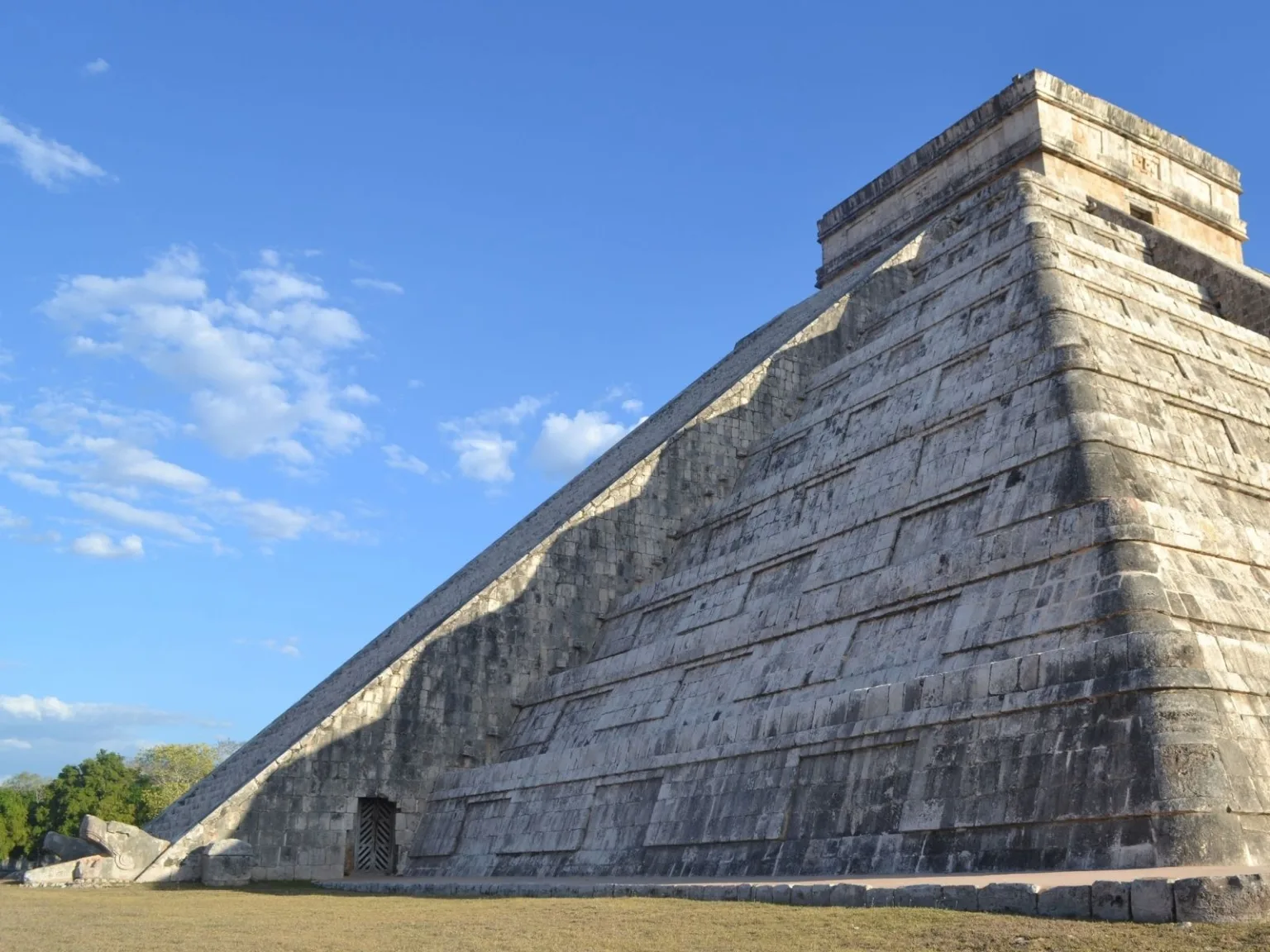
Across a cleared limestone plain, Chichén Itzá aligns its stepped pyramid to equinox light, where the descending serpent shadow along El Castillo marks one of the most precise astronomical displays in the Maya world.
| Name | Chichén Itzá |
| Civilization | Maya / Toltec |
| Location | Tinum Municipality, Yucatán, Mexico |
| Elevation | 20 – 50 m (66 to 164 ft) |
| Years Active | c. 525–1200 CE |
| Primary Resources | Limestone, obsidian, jade, salt |
| Site Type | Urban ceremonial center with regional capital functions |
| Key Highlights | El Castillo, Sacred Cenote, Observatory, Ballcourt |
| INT Airport: | Mérida International Airport (MID) |
| UNESCO | Pre-Hispanic City of Chichén-Itzá |
| Entry Fee | 310 MXN for Mexican visitors; 697 MXN for foreign visitors |
| Best Time to Visit | Early morning or late afternoon |
| Field Visit | Visited and documented by Lost Ruins of the Americas |
Unique Features of the Chichén Itzá Archaeological Site
- El Castillo: Also known as the Temple of Kukulkan, this stepped pyramid functions as a solar calendar and equinox marker.
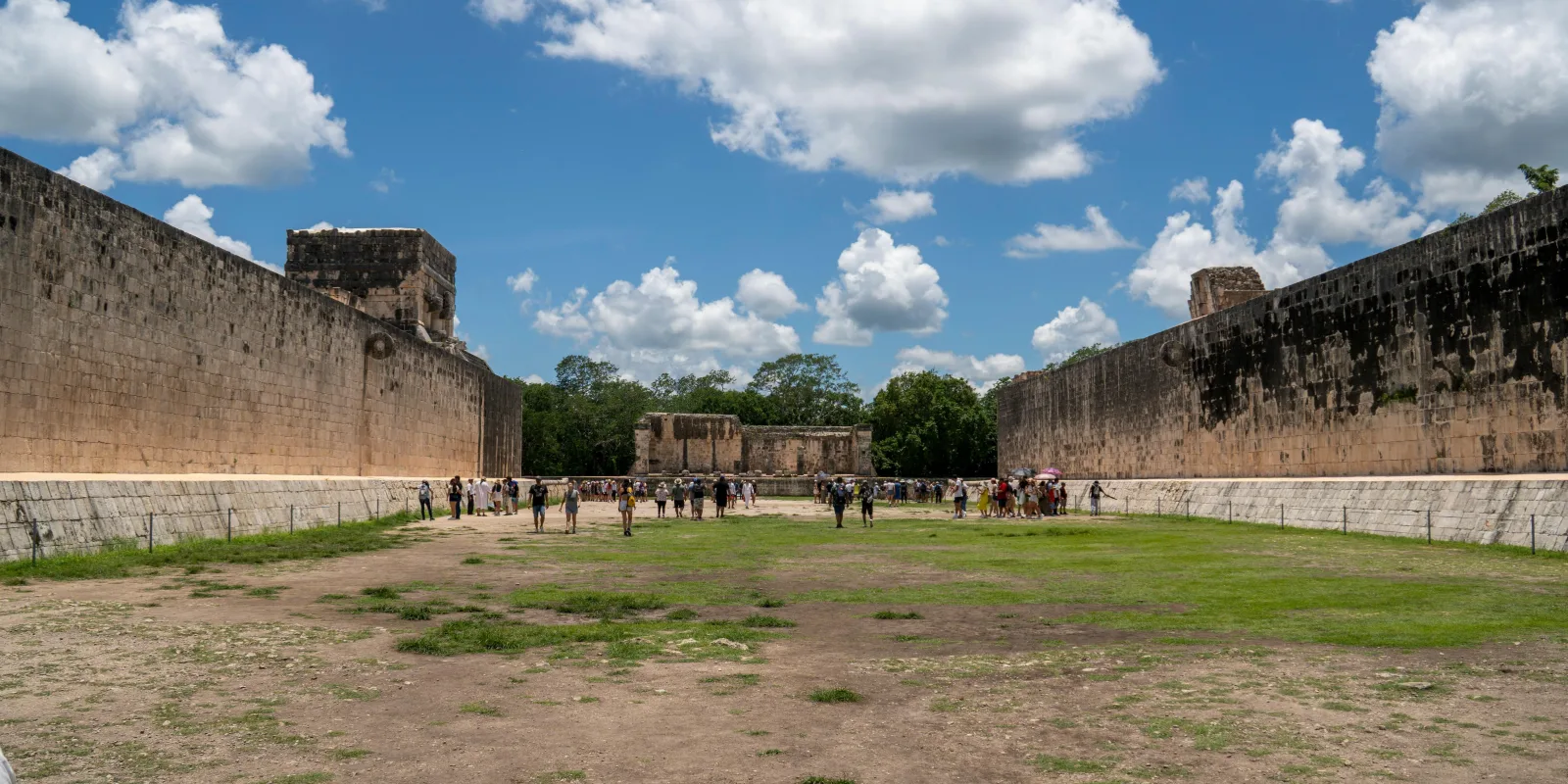
- The Great Ballcourt: The largest and most acoustically perfect ballcourt in Mesoamerica, with walls 8 meters high and carvings of ritual sacrifice.
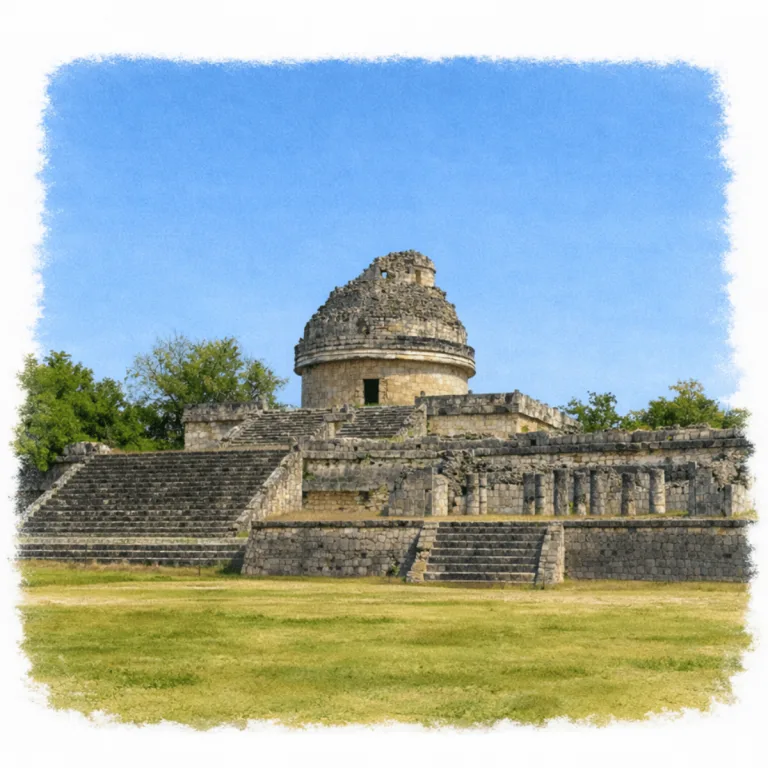
- The Observatory (“El Caracol”): A circular tower aligned with Venus and solstice movements, used for celestial tracking.
- Cenote Sagrado: A massive sinkhole used for offerings and sacrifice, with recovered gold, jade, and human remains.
- Temple of the Warriors & 1000 Columns: A militaristic plaza built with Toltec influence, showcasing jaguar thrones and feathered serpents.
Location & Access
- Nearest Town: Pisté, approximately 2 kilometers from the archaeological zone.
- Directions: From Mérida or Cancún, follow Federal Highway 180 toward Pisté, then continue to the Centro de Atención a Visitantes. Valladolid is about 45 minutes away by road.
- Official Website: INAH Zona Arqueológica de Chichén Itzá.
- Opening Hours: Monday through Sunday, 8:00 AM to 4:00 PM. Last entry is at 3:00 PM.
- Entry Fees: One integrated ticket costs 310 MXN for Mexican visitors and 697 MXN for foreign visitors.
- Facilities: Visitor center, Gran Museo, parking, lockers, restrooms, guide services, shops, and food service.
- Accessibility: Partial, with broad routes through the main northern group but uneven stone and longer paths in other sectors. Multilingual signage.
- Pro Tip: Set navigation for the Centro de Atención a Visitantes, not the former entrance. All public access now passes through the CATVI complex.
Highlights to Help Understand Your Visit
Chichen Itza was designed to impress both the eye and the cosmos. Every stone, shadow, and axis reflects a deeper message about power, time, and belief.
- A City of Calculated Awe: Structures are precisely placed to align with celestial events, creating shadow effects and solar markers that reinforced Maya cosmology.
- Sound as Architecture: The layout amplifies sound. From the Ballcourt’s echo effects to the clap that mimics a bird call at El Castillo, it guides ritual and performance.
- Movement with Intention: Pathways direct foot traffic toward major ceremonial spaces, creating a controlled experience of power as you pass through plazas and gates.
- Cosmology in Stone: Many temples reflect dualities. Underworld and sky, sun and Venus, life and death are encoded through iconography and design to express Maya belief systems.
- Hidden Underworlds: Sacred cenotes and subterranean chambers lie beneath the surface, forming a ritual geography invisible to casual visitors but vital to the site’s function.
Key Structures of the Chichén Itzá Ruins
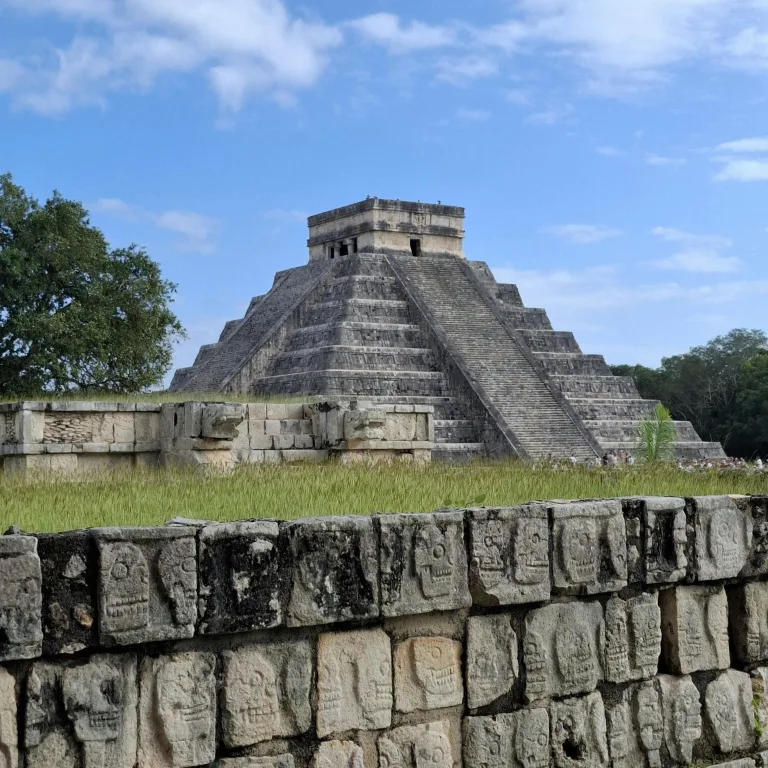
- El Castillo (Temple of Kukulkan): The iconic pyramid stands 24 meters tall and encodes the Maya calendar with 365 steps. Its equinox shadow creates a serpent descending the stairs, a fusion of astronomy, myth, and political theater.
- Great Ballcourt: Measuring 168 meters long, it is the largest in Mesoamerica. Acoustic design creates perfect echoes; reliefs show decapitation scenes, reinforcing the game’s role as ritual drama tied to death, rebirth, and elite spectacle.
- Temple of the Warriors: A stepped pyramid fronted by carved warrior columns, jaguar thrones, and a chacmool altar. Likely used for military and ceremonial functions, it merges Maya cosmology with Toltec aesthetics.
- Group of the Thousand Columns: A vast colonnaded plaza connected to the Temple of the Warriors. It may have supported a large roofed structure used for civic gatherings, elite rituals, or markets. Its true function remains debated.
- El Caracol (Observatory): A rare circular tower with windows aligned to Venus and solstice events. Its architectural form is unique in Maya sites and reflects deep knowledge of astronomy and ritual timing.
- Las Monjas (The Nunnery Complex): Despite the Spanish name, this was a Maya palace compound with Puuc-style mosaics and multiple rooms. Likely served administrative and residential purposes tied to elite governance.
- Cenote Sagrado: A 60-meter-wide sinkhole used for offerings and human sacrifice. Divers have recovered jade, gold, and skeletal remains — a watery portal to the underworld and divine exchange.
- Tzompantli (Skull Platform): A low carved platform near the Ballcourt, covered in depictions of skulls. Inspired by central Mexican traditions, it served as a visual reminder of sacrifice and authority.
- Akab Dzib: Meaning “Mysterious Writing,” this rectangular building contains glyphs of unknown meaning. It may have housed scribes or officials. Its purpose remains enigmatic.
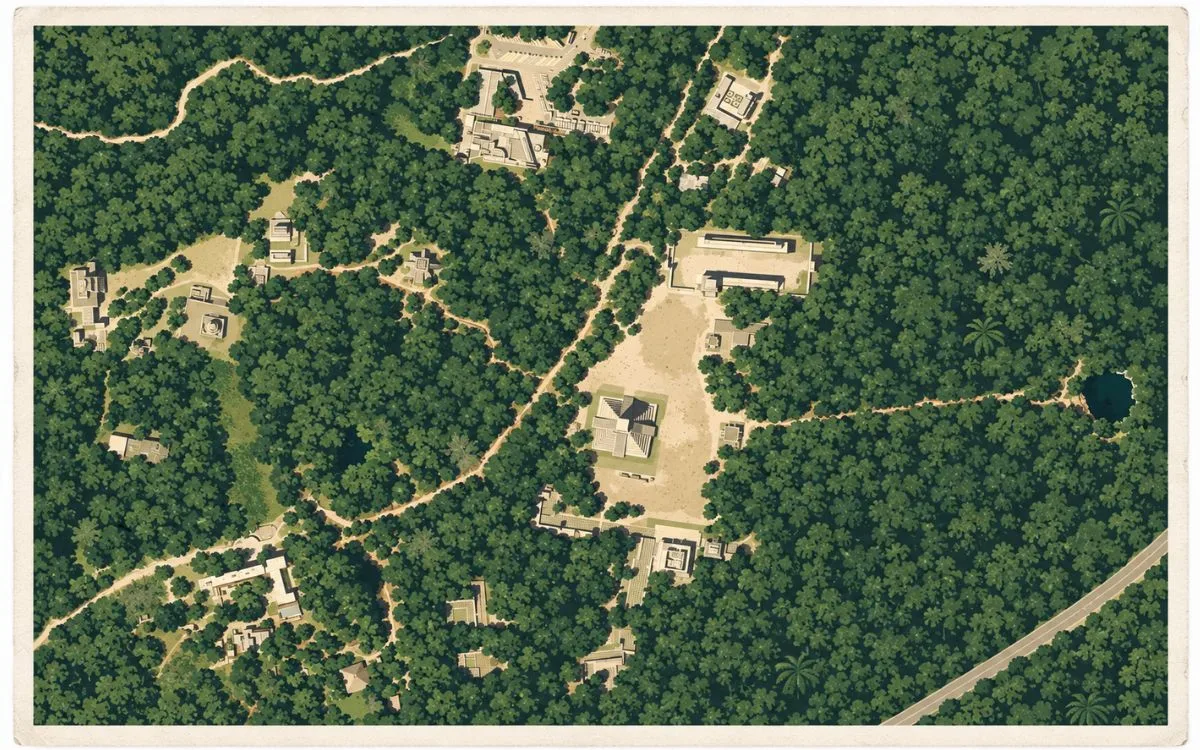
History and Legends
Chichén Itzá was never meant to be hidden. Unlike jungle cities swallowed by vines, this vast urban complex was deliberately constructed on open ground, a sacred canvas visible to the heavens. Founded sometime in the Late Classic period (c. 600 CE), Chichén Itzá evolved into one of the most powerful and cosmopolitan centers in ancient Mesoamerica. Situated in the limestone-flat Yucatán Peninsula, its name means “At the Mouth of the Well of the Itza,” referencing the nearby Sacred Cenote and the Itza people who controlled the city at its peak.
The city’s origin is intertwined with shifting power after the decline of cities like Calakmul and the fragmentation of the Classic Maya world. Into this vacuum rose Chichén Itzá, not just as a city-state, but as a regional capital that absorbed ideas, art, and influence from far-flung civilizations. Between 900 and 1200 CE, it rose to dominance through trade, war, and ideology, constructing iconic monuments like El Castillo and the Temple of the Warriors. These structures fused Maya traditions with Toltec aesthetics, suggesting either conquest, alliance, or both.
Political power at Chichén Itzá was not held by kings alone. Instead, it appears a ruling council or “multepal” system may have governed, possibly to unify diverse populations of Maya, Itza, Toltec, and others. This is reflected architecturally in the variety of design styles seen across the site, from the Puuc-inspired facades of Las Monjas to the militaristic columns in the Group of the Thousand Columns. These choices signal not just influence, but deliberate ideological synthesis. They position Chichén Itzá as a bridge between Maya tradition and the statecraft of central Mexico.
Trade routes radiated outward from Chichén Itzá like spokes from a cosmic wheel. Goods such as obsidian from central Mexico, jade from the Motagua Valley in Guatemala, and even shells from the Caribbean found their way here. Chichén Itzá’s port at Isla Cerritos gave it access to maritime commerce across the Gulf. These networks helped the city flourish economically while spreading its influence across the Yucatán and beyond. Inscriptions and codices hint at connections to Cobá, Ek Balam, and even faraway Tula, the Toltec capital, which may have sent architects, priests, or emissaries to co-govern or collaborate.
Cosmos, Sacrifice, and Legacy
Chichén Itzá’s centerpiece, El Castillo (the Temple of Kukulkan), reflects the city’s deep astronomical knowledge. Every spring and fall equinox, thousands of visitors gather to witness the “Descent of the Serpent”, a shadow-play caused by the pyramid’s precise geometry. As the sun sets, triangular shadows ripple down the staircase, forming the body of Kukulkan, the feathered serpent deity, until it appears to connect with a serpent head at the base. This effect, carefully calculated over generations, reflects the Maya’s mastery of solar cycles and architecture’s capacity to encode cosmological events in stone.
Beyond the pyramid, Chichén Itzá is a testament to its creators’ celestial literacy. The round tower of El Caracol, the site’s observatory, has windows aligned with Venus’s appearance points, a planet the Maya tracked obsessively for both agricultural and ritual reasons. Its movement was thought to signal war, fertility, and divine favor. Alignments in other structures, like the orientation of ballcourts and temples, reflect solstice points and lunar phases, suggesting Chichén Itzá was less a city and more a living calendar designed for ceremony, governance, and divination.
It was also a city of sacrifice. The Sacred Cenote, a massive sinkhole on the site’s northern edge, served as a portal to the underworld. Excavations have revealed human remains primarily elite youth and captives, along with jade, obsidian, gold, and rubber offerings. These acts were not purely violent but part of a cosmology where the gods demanded reciprocity. Rain, crops, and divine favor all required blood. The cenote, with its mirrored surface and unseeable depth, symbolized the Maya belief that water led to Xibalba, the world beneath ours.
By the 13th century, Chichén Itzá began to decline. The reasons are complex. Shifting trade routes, ecological pressures, political rivalry with Mayapán, and internal strife all likely contributed. Its temples, including El Castillo and the Ballcourt, were not toppled, but activity slowed and eventually ceased. Pilgrims and travelers continued visiting for centuries, but the city’s political heart had faded. When the Spanish arrived in the 16th century, they found it largely abandoned, though still deeply revered by local Maya.
Legends persist. Some say Kukulkan will rise again when the shadow-serpent touches the cenote. Others speak of a still-hidden tomb beneath El Castillo, filled with jade masks and crystal skulls. The cenote’s depths remain partly unexplored and some divers have vanished, others claim to have seen statues and staircases beneath the waterline. Whether truth or tale, Chichén Itzá’s myths echo its ancient function: a city where the veil between worlds was thin, and where every stone served the stars.
Today, Chichén Itzá is one of the most visited ruins on Earth, and for good reason. Its scale, symmetry, and symbolism can’t be overstated. But its true value lies beneath the surface. Understanding even a fragment of its history transforms the experience from a bucket-list photo stop into a spiritual encounter. El Castillo isn’t just a pyramid. It’s a conversation between the Earth and sky. The Ballcourt isn’t just an arena. It’s a stage where gods once played. And the Sacred Cenote isn’t just a hole in the ground, it’s a reflection of belief, fear, hope, and the eternal search for balance between human and divine.
When you walk Chichén Itzá’s avenues, you’re not just walking through ruins. You’re moving through time, myth, science, and sovereignty. For the Maya, stone was not passive, it remembered. Chichén Itzá remembers. And if you arrive early, walk slowly, and look skyward, it may still speak.
Experiences Around Chichén Itzá
The ruins are only part of the story. Around Chichén Itzá, cenotes are one of the defining features of the Yucatán landscape and one of the best additions to the day.
–
A swim at Yokdzonot paired with zip-lining, rappelling, or a cooking workshop focused on dishes such as panuchos and poc chuc.
–
Walking Valladolid’s Calzada de los Frailes to the Convent of San Bernardino de Siena makes an easy half-day, with Cenote Zací and a plate of Valladolid longaniza fitting naturally into the same outing.
How to Get There & Where to Go Next
How to Visit Chichén Itzá
Step-by-step access to the site
- Depart from Cancún: Board the Tren Maya heading west toward the “Chichén Itzá” station (approx. 2.5–3 hours).
- Arrive at Chichén Itzá station: Take a short taxi or shuttle (10–15 min) to the site entrance.
- Buy tickets: Purchase entry at the gate (INAH + state fee) before 4:00 PM.
Tips: Arrive early to avoid crowds. Confirm train schedules in advance as service times may vary.
Nearby Ruins You Can Visit
These ruins share Chichén Itzá’s architectural precision, ritual focus, and Maya-Toltec legacy. Echoes of an empire written in shadow, stone, and stars.


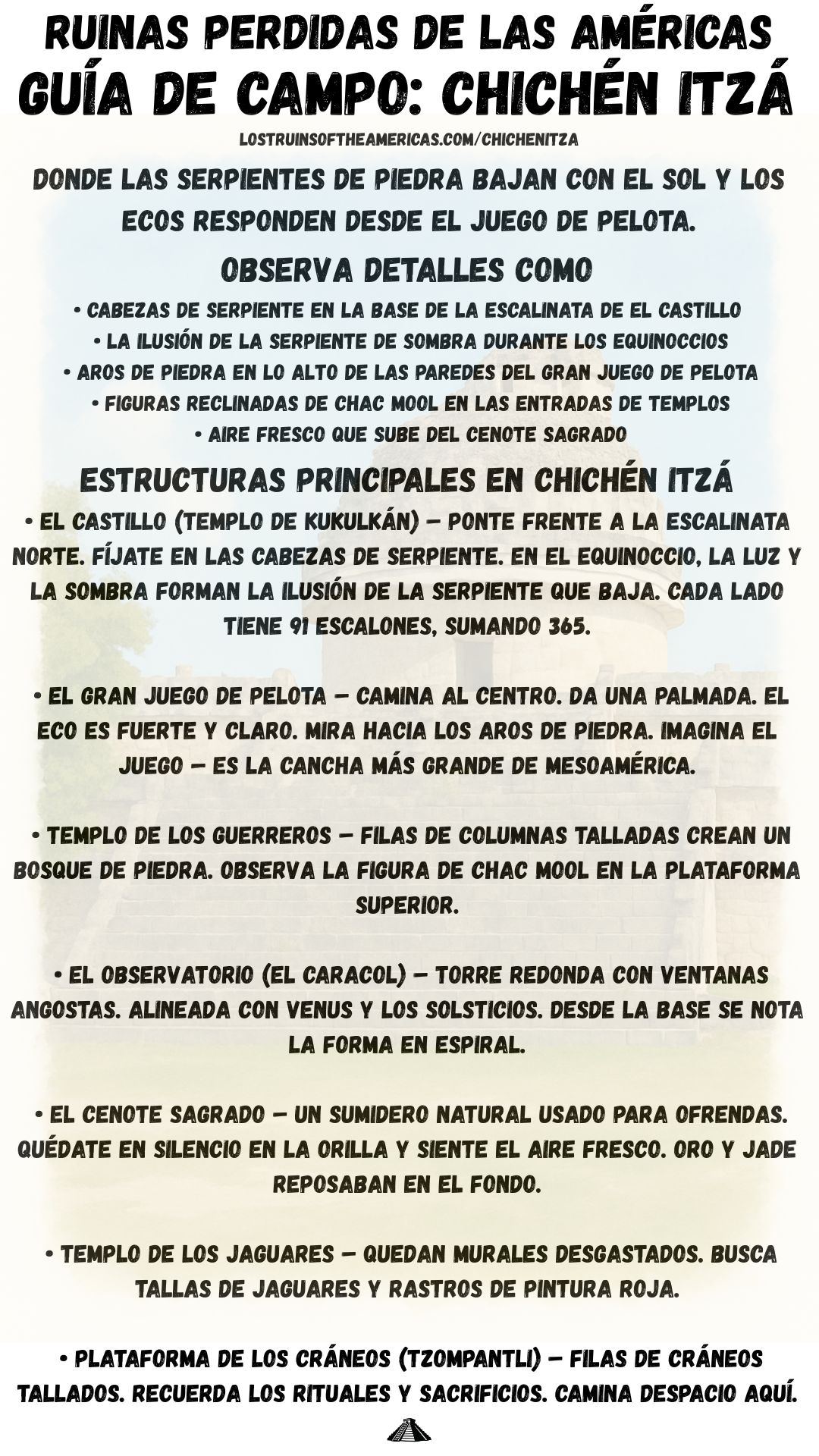
Download Field Guide
Español
English
Traveler Tips
- Arrive early or late: The site opens at 8:00 AM. Get in before the tour buses or come near 4:00 PM when the light turns golden and crowds thin out.
- Stay nearby: Book a few nights in Pisté or at one of the eco-lodges near the gate. This allows you to explore the site at different times and at your own pace.
- Hydrate and shade up: The Yucatán heat can be brutal. Bring water, sunscreen, and a hat. There is little natural cover.
- Read before you go: Knowing the basic layout, mythology, and astronomical alignments makes the ruins come alive. You will spot details others walk past.
Elsewhere in the Americas…
As Chichén Itzá rose to prominence in the northern Yucatán, other great cultures of the Americas were shaping sacred landscapes, trade routes, and regional centers.

Kuélap, a mountaintop stronghold of the Chachapoya, stood above Peru’s cloud forests with massive limestone walls and circular dwellings.

In the Mississippi Valley, the Mississippians were building Cahokia, where mounds, plazas, and processional space rose at monumental scale.
Insider Explorer Advice
Chichén Itzá isn’t just accessible. It’s almost too accessible. That’s why staying nearby is such a game-changer. While day-trippers flood the gates mid-morning, early risers and those lingering near closing time experience a whole different site. Quieter, more spacious, more profound. Make a plan before you arrive: know where El Caracol is, walk the full Ballcourt length, and stand still to hear the famous echoes bounce perfectly off stone. Having even a basic grasp of the city’s alignment with the sky changes everything. Suddenly, these aren’t just stones. They’re instruments, calendars, mirrors of myth. Show up informed and leave transformed.
Summary: Chichén Itzá rewards knowledge and patience. Come early. Stay late. Learn the stars. Let stone teach you what time forgot.