
Chalcatzingo
MEXICO / MORELOS / OLMEC INFLUENCE
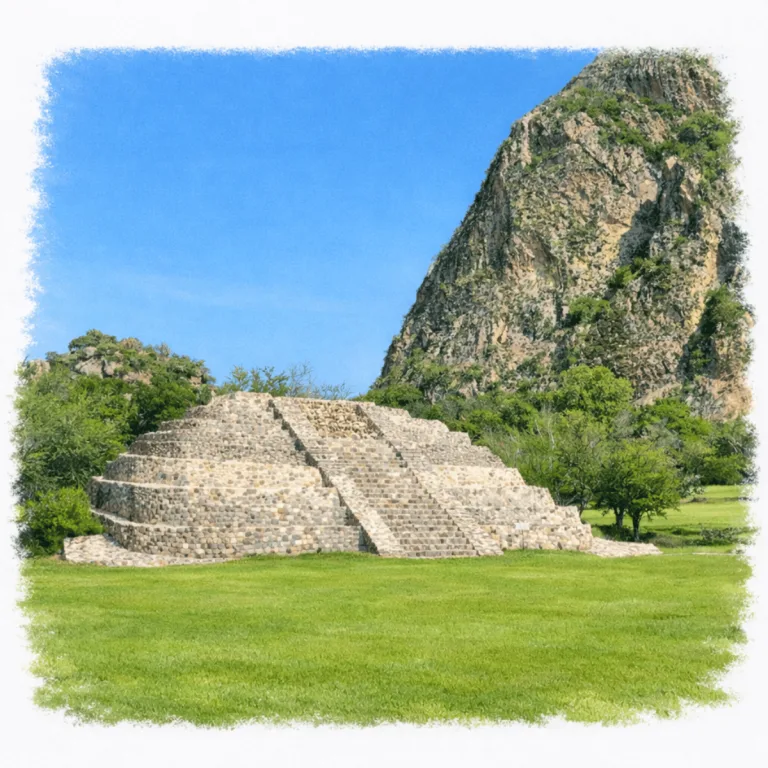
Against a terraced hillside, Chalcatzingo organizes carved boulders and ceremonial platforms, where monuments like El Rey anchor ritual activity tied to water, fertility, and elite authority.
| Name | Chalcatzingo |
| Civilization | Olmec-influenced (Middle Preclassic) |
| Location | Chalcatzingo, Morelos, Mexico |
| Elevation | 1,370 meters (around 4,495 feet) |
| Years Active | ~700–500 BCE |
| Primary Resources | Maize, water, ritual iconography |
| Site Type | Ceremonial and residential center |
| Key Highlights | Olmec-style bas-reliefs, mountain backdrop |
| Entry Fee | ~ 100 Pesos |
| Best Time to Visit | Dry season; early to mid-morning |
| Field Visit | Visited & photographed by Lost Ruins of the Americas |
Unique Features of the Chalcatzingo Archaeological Site
- Architectural Highlights: Bas-reliefs carved into rock faces, some of the earliest monumental art in Mesoamerica
- Notable Artifacts: “El Rey” bas-relief, throne-like carvings, and Monument 9 (repatriated)
- Comparative Notes: Rare Olmec-style iconography in a highland setting, unlike coastal ceremonial centers
Location & Access
- Nearest Town: Chalcatzingo
- Directions: From Cuautla, catch a bus to Jonacatepec across the street from the Monumento al Niño Artillero, near the main bus stations. From there, take a mototaxi to the ruins. Returning, walk 20 minutes to Chalcatzingo town and grab a mototaxi back to Jonacatepec, then flag a bus to Cuautla.
- INAH: Chalcatzingo
- Opening Hours: 9:00 AM – 5:00 PM
- Entry Fees: ~ 100 pesos
- Facilities: Basic bathrooms at entrance, minimal signage
- Accessibility: Easy to moderate compact layout with some uneven terrain
- Pro Tip: Visit in the morning when sunlight hits the carvings best, and bring your own water.
Highlights to Help Understand Your Visit
This site speaks through its terrain and stonework. Look closely, and patterns of belief and power begin to emerge:
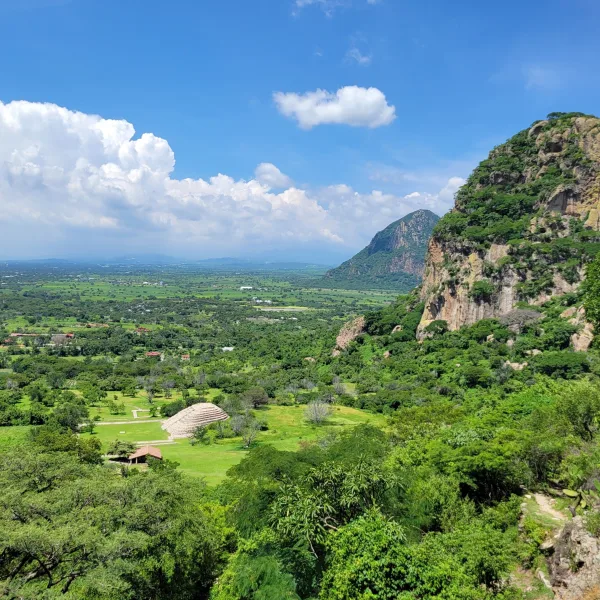
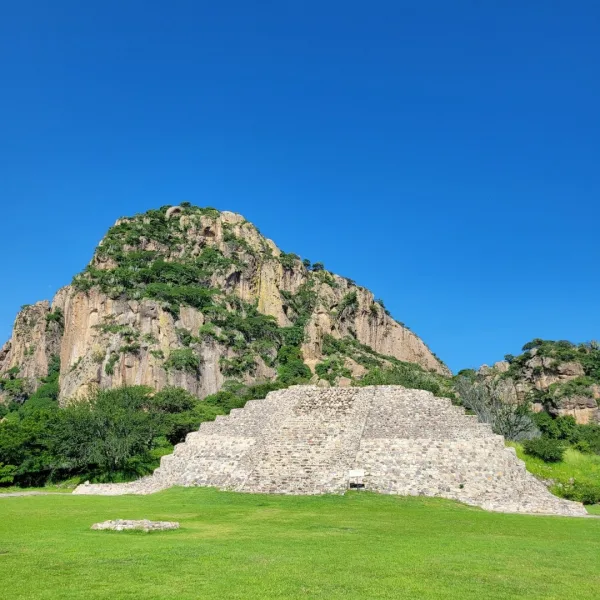
- The Mountain Is Part of the Site: Cerro Chalcatzingo isn’t just a backdrop. The reliefs carved into its flanks made the landscape itself ceremonial.
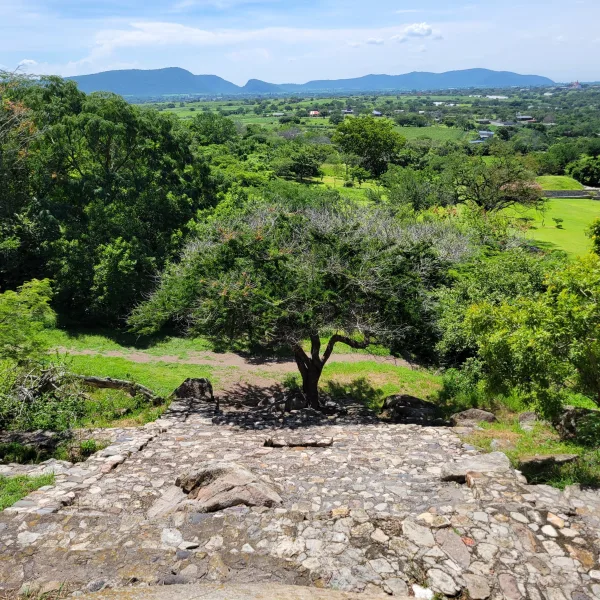
- Carvings That Face the Valley: Many bas-reliefs are placed to look outward, not inward, possibly projecting ritual power across the land.
- “El Rey” Isn’t Alone: Don’t stop at the famous panel. Nearby carvings echo similar motifs, forming a visual narrative as you walk.
- Platforms, Not Pyramids: This isn’t a pyramid site. The low platforms suggest performance or offering, not monumental ascent.
- Wind and Rain Symbols: The curving lines and swirling elements may represent forces of nature, common in Olmec iconography, especially related to fertility and rulership.
Key Structures of the Chalcatzingo Ruins
- El Rey Relief (Monument 1): A seated figure within a stylized cave mouth, surrounded by curling motifs interpreted as rain, wind, or breath. This may represent a ruler communing with divine forces. It is the most recognizable carving at the site.
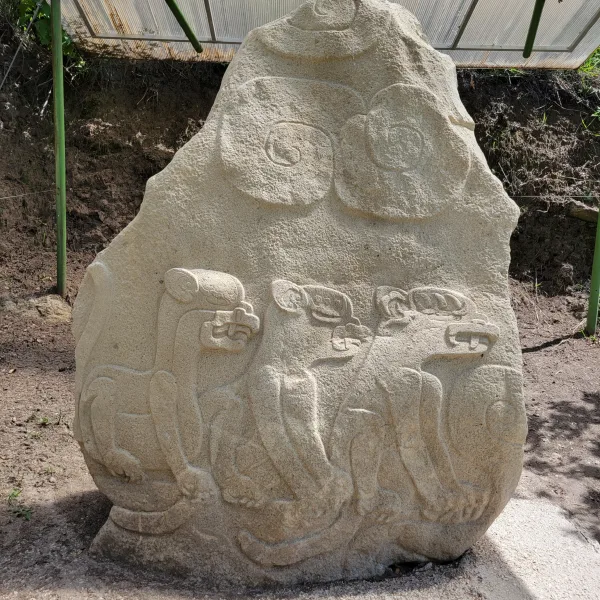
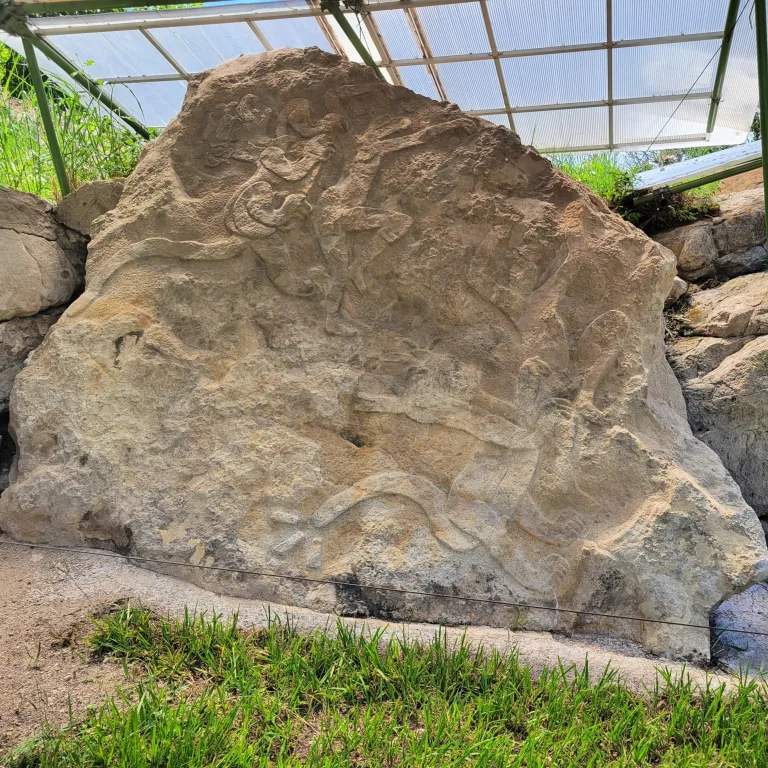
- Monument 9 (“Earth Monster”): A massive Olmec-style bas-relief showing a zoomorphic creature, often identified as a portal between worlds. The carving was looted in the 1960s and repatriated to Mexico in 2021. It originally stood near the base of the mountain.
- Monuments 2–5 (Relief Corridor): Carvings positioned along the natural rock face on the eastern slope of Cerro Chalcatzingo. These panels depict ritual scenes, procession lines, and supernatural beings, forming a visual sequence possibly linked to rainfall and fertility rites.
- Altar Platform A: An elevated, rectangular stone platform likely used for ceremonial display or elite gatherings. Its position near the core mounds suggests civic-ritual importance.
- Structure 4: A low mound near the center of the site, interpreted as a small temple or residence for an elite family. Its flattened summit may have supported a perishable structure.
- Structure 7: Distinguished by access ramps and its placement within the plaza zone. The structure’s orientation and visibility suggest use in public ceremony or seasonal ritual.
- Group I Complex: The central civic-ceremonial area, made up of interconnected terraces, staircases, and low pyramidal platforms. This was the social and political heart of the site.
- Cerro Chalcatzingo: The mountain itself is considered an active ritual landscape. Its natural cliffs were carved with reliefs and symbolically framed as sacred portals or divine places.
History and Legends
Long before Teotihuacan or Tenochtitlán rose to power, the valley below the mountains of eastern Morelos was home to a sacred highland community known today as Chalcatzingo. Active around 700–500 BCE, this site stands out not for its size, but for its extraordinary stone carvings. These are among the earliest known examples of monumental art in Mesoamerica, heavily influenced by the distant Olmec civilization.
Chalcatzingo’s most iconic features are the bas-reliefs carved into the face of the surrounding cliffs. The most famous of these is known as El Rey, “The King,” which depicts a seated figure inside a stylized cave or temple, surrounded by curving motifs believed to represent wind, water, or spiritual forces. Some interpret it as a ruler, others as a rain deity or shaman mid-ritual. Regardless, its style unmistakably mirrors the iconography of La Venta and other Gulf Coast Olmec centers. This makes Chalcatzingo a vital clue in how Olmec culture spread or influenced highland societies.
The site itself is modest in size, consisting of ceremonial platforms, small plazas, and stone altars. But the surrounding landscape, especially the towering Cerro Chalcatzingo, adds immense spiritual presence. The mountain likely functioned as a cosmic symbol, tying the site to both the heavens and the underworld, and shaping local mythologies still whispered in nearby villages.
Unlike the lush lowland jungles of traditional Olmec heartlands, Chalcatzingo is framed by open skies and dry highland winds. The contrast makes its stonework even more mysterious: How did this art form arrive here? Were these visitors, emissaries, or locals with adopted beliefs?
By the time major urban centers emerged in central Mexico, Chalcatzingo had declined. Its influence faded, but its carvings remained untouched. Lasting messages in stone. Today, those messages remain surprisingly well-preserved, etched into the rock as a testament to a culture that blended Olmec cosmology with local highland tradition.
Experiences Around Chalcatzingo
The ruins are only part of the story. Chalcatzingo sits in eastern Morelos, where sugarcane fields, dry forest, and steep volcanic hills shape the landscape.
The Ruta Zapata makes an excellent day through the region, linking Anenecuilco, where Emiliano Zapata was born, with the ex-hacienda at Chinameca where he was killed and his former headquarters in Tlaltizapán.
Cuautla adds markets, local food, and historic sites tied to the city’s long role in Morelos’s independence and revolutionary struggles.
In 2023, Mexico successfully repatriated one of the most significant pieces looted from the site: Monument 9, also called the “Earth Monster.” This 2,500-year-old, one-ton bas-relief had been missing for decades and was considered one of the country’s most sought-after artifacts. Its return from the U.S. marked a major cultural victory and helped re-center attention on Chalcatzingo’s artistic and spiritual legacy.
Chalcatzingo may not draw the crowds, but for anyone interested in the origins of sacred art, Olmec reach, or mountaintop myth, it’s a must-see. It’s where the past whispers, not in grandeur, but in line, form, and shadow.
How to Get There & Where to Go Next
How to Visit Chalcatzingo
Step-by-step access to the site
- From Puebla: Take a bus to Cuautla from CAPU terminal or 4 Poniente (approx. 2 hr).
- From Cuautla: Catch a local bus to Jonacatepec (30–40 min).
- Final leg: Ride a mototaxi from Jonacatepec directly to Chalcatzingo ruins (10–15 min).
- Return: Walk 20 minutes to Chalcatzingo town, then reverse the same steps back to Puebla.
Tips: Buses from Puebla to Cuautla run frequently. Bring cash and sun protection, services at the site are very limited.
Nearby Ruins You Can Visit
Chalcatzingo’s sacred art and Olmec echoes resonate through nearby sites that also blend mountain symbolism, early ceremonial life, and elite ritual purpose.

Tepozteco – A hilltop shrine to the god of pulque, perched above cliffs and pilgrimage routes.

El Tlatoani – A little-known summit site with panoramic views and lingering highland mythos carved in stone.

Cholula – The Great Pyramid masks a layered ceremonial past. Sacred mountains built by human hands.
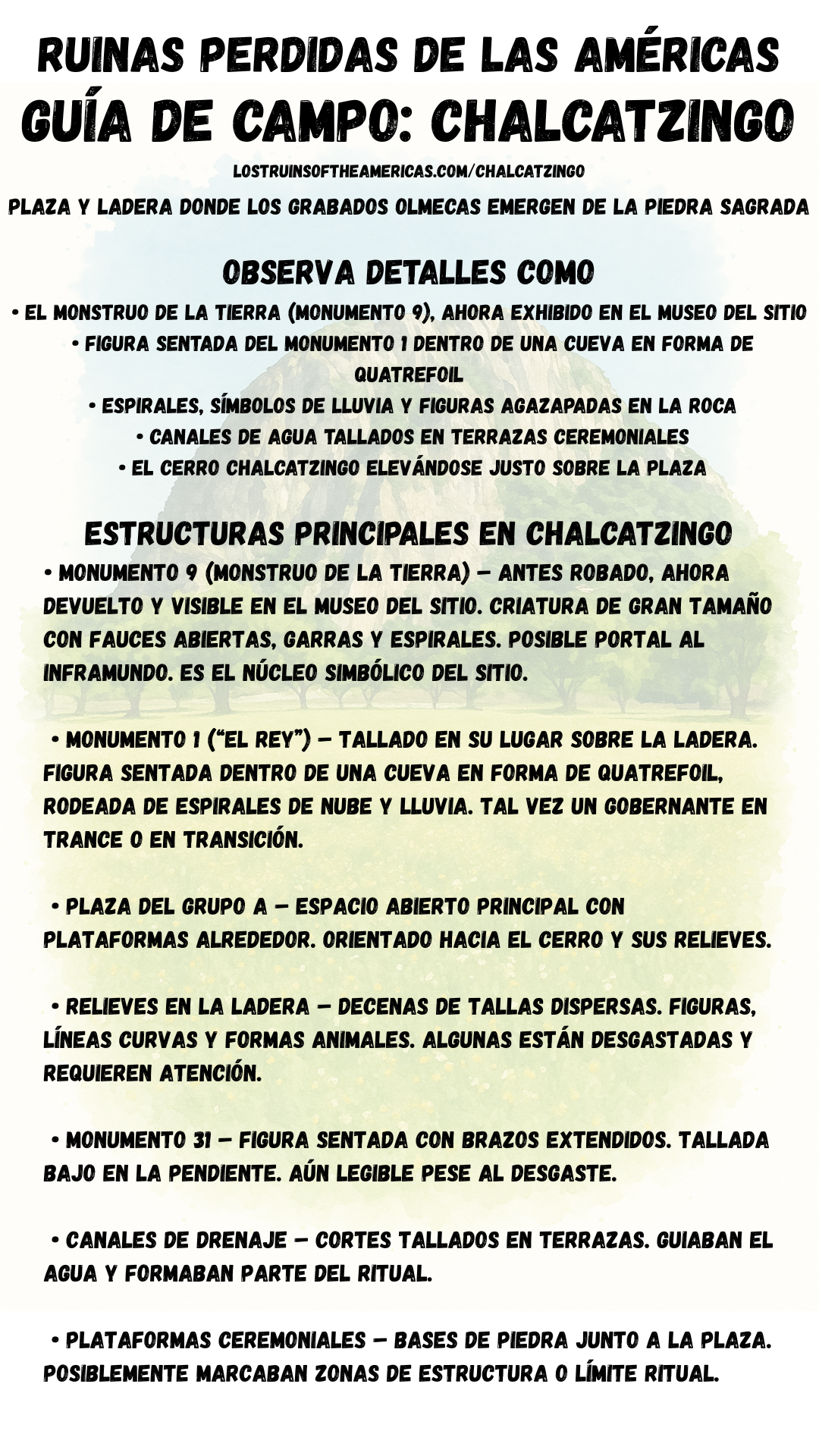
Download Quick Guide
Español
English

Traveler Tips
- What to Bring: Water, sun protection, and sturdy shoes
- Best Time to Visit: Morning light highlights the carvings best
- Nearby Attractions: Rutas Zapata museums and memorials in Cuautla
- Safety Notes: Exposed terrain; plan for sun and bring supplies with you
Elsewhere in the Americas…
As Chalcatzingo’s sacred carvings took form in central Mexico, early Andean cultures were establishing their own monumental traditions:

Chavín de Huántar reached its peak in Peru’s highlands, where stone temples and underground passages supported a powerful ceremonial cult.

The Norte Chico civilization built early urban centers like Caral, demonstrating large-scale planning and ceremonial architecture.

Sechín displayed violent bas-reliefs of warriors and severed limbs, carved into the façades of its megalithic temple complex.
.
Insider Explorer Advice
Chalcatzingo rewards the prepared traveler. Though quiet and often overlooked, the site offers a smooth visit for those starting from Cuautla. Buses to Jonacatepec depart from the area near the Niño Artillero monument, with mototaxis available onward to the ruins. On return, visitors can walk 20 minutes to Chalcatzingo town, catch a mototaxi back to Jonacatepec, and flag a passing bus to reach Cuautla. Morning light casts striking shadows across the valley and bas-reliefs, making early visits ideal for photography and observation. Due to limited signage, it’s worth bringing a printed guide to the carvings or studying their placements in advance. For those with extra time in the area, the nearby Ruta Zapata starts in Cuautla and offers a compelling historical detour that complements the deeper time scale of Chalcatzingo.
Summary: Chalcatzingo blends Olmec art with highland energy, and now, with the return of its iconic Monument 9, it offers even more reason to explore its quiet beauty.