
Hovenweep
USA / UTAH / ANCESTRAL PUEBLOAN
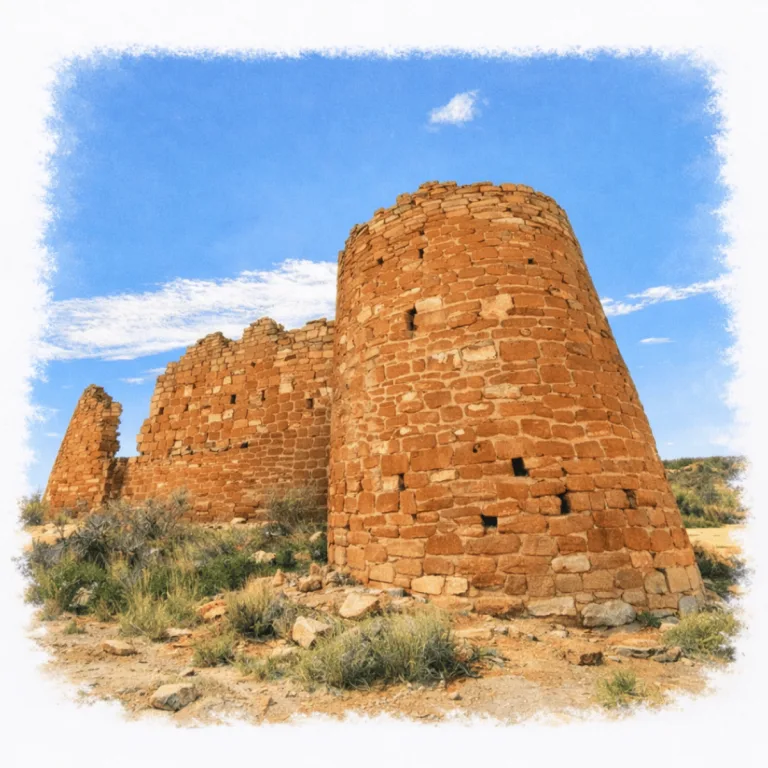
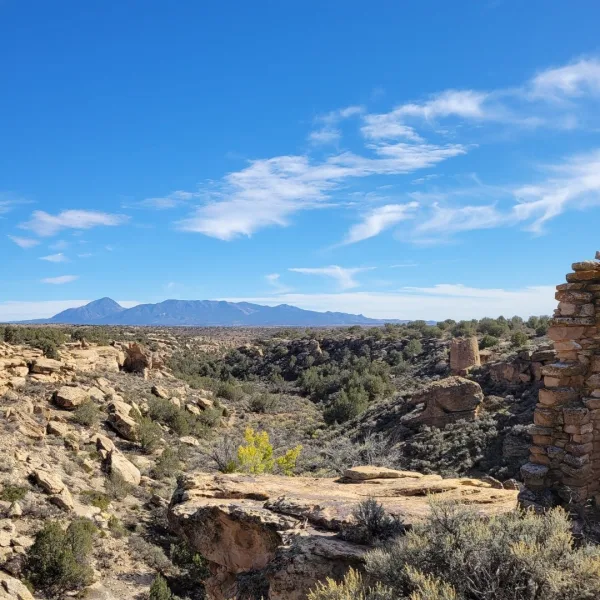
Across a broken canyon terrain, Hovenweep positions stone towers on rim edges and canyon heads, where elevated construction overlooks intermittent streams below.
| Name | Hovenweep |
| Civilization | Ancestral Puebloan |
| Location | Utah–Colorado border, USA |
| Elevation | 5,200 ft (1,585 m) above sea level |
| Years Active | c. 900 – 1300 CE |
| Primary Resources | Sandstone, water catchments, dryland farming |
| Site Type | Multi-village tower settlement |
| Key Highlights | Hovenweep Castle, Rim Trail, panoramic vistas |
| Entry Fee | $10 per person |
| Best Time to Visit | Spring and fall |
| Field Visit | Visited and documented by Lost Ruins of the Americas |
Unique Features of the Hovenweep National Monument
- Clustered Settlements: Six major ruin groups (Square Tower, Holly, Horseshoe, Hackberry, Cutthroat, and Cajon) form a connected network across the mesas.
- Canyon-Edge Design: Towers and rooms are built directly on cliffs and boulders, blending natural rock with precise masonry.
- Expert Masonry: Finely shaped sandstone blocks and chinking stones create walls that remain plumb after centuries.
- Water Control Systems: Reservoirs and checkdams capture scarce rainfall, showing a high level of environmental engineering.
- Cultural Crossroads: The architecture bridges influences from both Mesa Verde and Chaco Canyon while retaining its own local character.
Location & Access
- Nearest Town: Bluff, Utah and Cortez, Colorado
- Directions: From Bluff, drive 45 miles east via US-191 and UT-262. From Cortez, follow US-491 to Pleasant View, then County Road BB south.
- National Monument Site: Hovenweep National Monument
- Opening Hours: 8:00 AM – 5:00 PM
- Entry Fee: $20 per private vehicle, $15 per motorcycle, or $10 per person (pedestrian/bicyclist) as of 2026, valid for 7 days. Camping costs $20 per night, with discounts available for senior or access passes. Entrance is free for children 15 and under
- Facilities: Visitor center, museum, restrooms, picnic area, campground
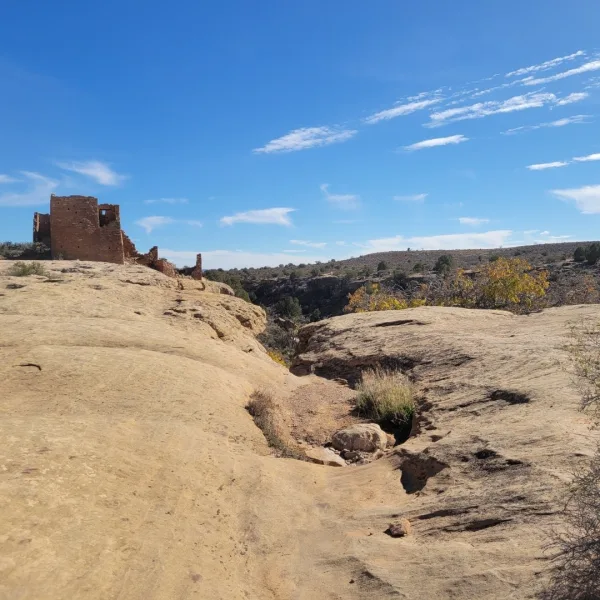
- Accessibility: Rim Trail mostly flat. Rocky sections can be avoided by returning the same way
- Pro Tip: Camp at Hovenweep for sunrise light and quiet evenings
Highlights to Help Understand Your Visit
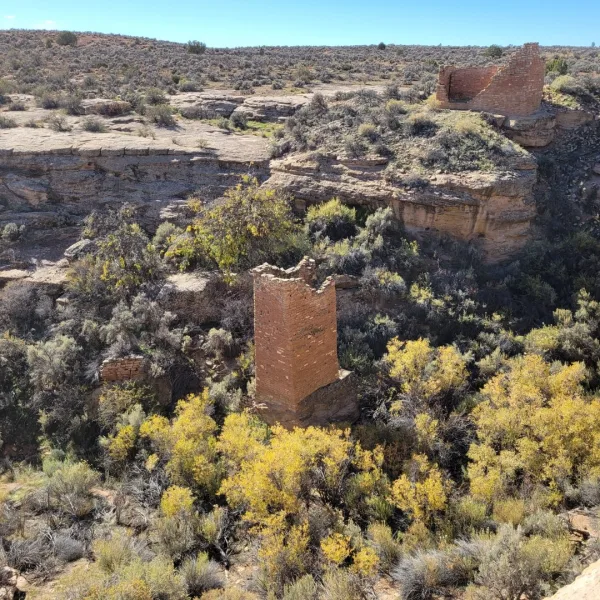
These towers and canyons reveal how Ancestral Puebloan builders adapted to isolation, water scarcity, and shifting alliances at the edge of the Mesa Verde world.
- A Network on the Frontier: Hovenweep sat between Mesa Verde and Chacoan worlds, linking scattered farming communities through shared architecture and ritual practice.
- Towers with Purpose: Round, square, D-shaped, and irregular towers framed sightlines, guarded resources, and marked important spaces.
- Mastery of Stone: Fitted sandstone blocks and small chinking stones show masonry built for strength, insulation, and endurance.
- The Power of Water: Springs, runoff, check dams, and canyon-head seeps shaped where people farmed, stored food, and built.
- Defensive or Ceremonial: Elevated towers and limited access suggest protection, status, and sacred space working together.
- A Changing World: Drought, pressure, and cultural transformation helped draw Pueblo communities toward the Rio Grande and Hopi mesas.
Key Structures of Hovenweep
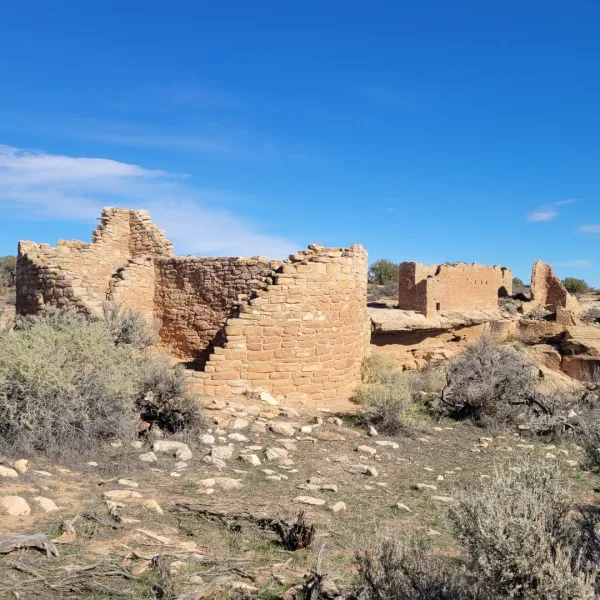
- Hovenweep Castle: The site’s most prominent ruin, a rectangular multistory structure perched along the canyon rim. Its thick walls and commanding view suggest a combination of ceremonial, defensive, and storage functions. Masonry precision here reflects the same craftsmanship seen at Mesa Verde and Chaco Canyon.
- Square Tower: Rising dramatically from a sandstone boulder in the canyon below, this slender tower demonstrates exceptional balance and design. Its position allows wide visibility across the valley, possibly used for signaling or astronomical observation.
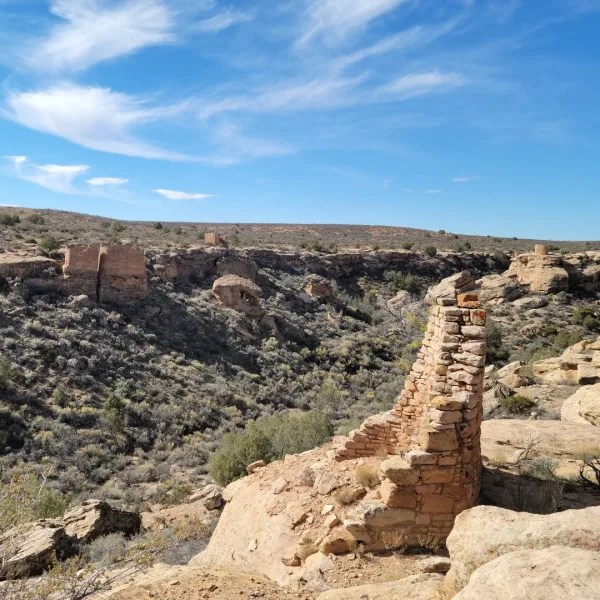
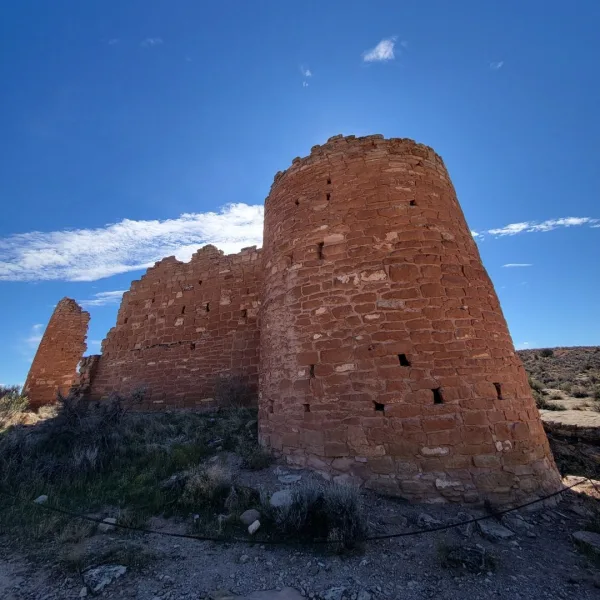
- Twin Towers: Two circular towers built so close their walls nearly touch. The pairing may represent a social or ceremonial duality, symbolizing cooperation between family groups or clans that shared control of this part of the settlement.
- Eroded Boulder House: Constructed against a collapsed sandstone mass, this dwelling merges natural rock forms with human masonry. It shows how Ancestral Puebloan builders adapted architecture to the terrain while maintaining structural stability and access to nearby seeps.
- Rimtop Reservoir: A carefully engineered depression bordered by stonework, used to collect and store seasonal rainwater. This feature reveals an advanced understanding of hydrology in a dryland environment, critical for survival and agriculture.
- Checkdams: Low masonry walls built across small drainages near habitation areas. They slowed runoff, trapped sediment, and created pockets of fertile soil for farming. These subtle features illustrate the ingenuity of water management across the Hovenweep system.
History and Legends
Hovenweep was once a constellation of Ancestral Puebloan communities stretched across the mesas and canyon rims of the Colorado Plateau. Its occupation began around 900 CE as small clusters of pithouses and farmsteads overlooking shallow drainages and seasonal water sources. Over the next two centuries, population grew steadily, and by the late 1100s the inhabitants began constructing the finely built towers and masonry villages that define the site today.
The Square Tower Group, now the monument’s centerpiece, reflects this era of coordinated design and communal effort. Builders placed multistory towers on rim edges, within canyon alcoves, and atop isolated boulders. Each structure was carefully oriented to the surrounding landscape and to the paths of the sun. These towers were not simple fortifications. They embodied both protection and ceremony, symbols of cooperation, spiritual observation, and social organization during a period of environmental strain.
Construction styles show clear ties to Mesa Verde and Chaco Canyon yet express a distinct local identity. Thick sandstone walls, neatly chinked joints, and formal kivas reveal both shared knowledge and creative adaptation. The precision of the masonry, especially at Hovenweep Castle and Square Tower, suggests specialized builders and a community capable of long-term coordination.
Experiences Around Hovenweep
The ruins are only part of the story. Sagebrush, juniper, and sandstone canyons spread across this remote corner of the Four Corners.
In Bluff, walk through Bluff Fort Historic Site, where reconstructed cabins and wagons trace the 1880 Hole-in-the-Rock expedition that established the town.
From nearby Sand Island, float the San Juan River through sandstone cliffs and cottonwood-lined banks, with stretches of easy whitewater along the way.
Oral histories among modern Pueblo peoples recall this region as part of ancestral migrations that linked many sacred landscapes across the Southwest. Towers are remembered as watchful presences, marking water sources, celestial alignments, or transitions in the movement of clans. Their enduring visibility on the horizon may have served as both guideposts and guardians.
By the late 1200s, drought and social upheaval across the Four Corners region led to widespread migrations toward the Rio Grande Valley and the Hopi Mesas. The people of Hovenweep followed this broader pattern, leaving behind a landscape of silence and stone.
Today, the towers stand as enduring witnesses to ingenuity and belief. In the stillness of Little Ruin Canyon, the wind moves through doorways where voices once echoed. The site remains part of living memory for the descendants who still honor it.
How to Get There & Where to Go Next
How to Visit Hovenweep
Step-by-step access to the site
- From Las Vegas: Drive southeast on US-160 and US-191 for about 6 hours (roughly 370 miles).
- Gateway Town: Continue to Blanding, Utah, the nearest base for supplies and lodging.
- Final Stretch: Follow UT-262 and County Road 213 for about 45 minutes to reach the Hovenweep Visitor Center.
- On Site: The Square Tower Group trail loop takes about 1 hour on foot, with short detours to nearby overlooks.
Tips: Check the official site for seasonal hours; plan to combine your visit with the on-site museum for full contex.
Nearby Ruins You Can Visit
In the sandstone canyons of the Four Corners, these nearby ancestral sites reveal the shared traditions and regional connections of the ancient Pueblo world.

Five Kiva Pueblo – A compact alcove village centered on five ceremonial kivas in the canyonlands of the Four Corners.

Mesa Verde – Towering cliff dwellings and painted kivas that illustrate the architectural evolution and enduring spirituality of Ancestral Puebloan life.

Lowry Pueblo – A compact village with a Great Kiva, showing how community and ceremony blended in Chaco’s northern sphere.
Traveler Tips
- Begin at the museum and visitor center for maps and historical context
- The loop trail is mostly level, but some sections may require stepping over rocks
- Carry water. None is available on the trail
- Campground is first-come, first-served and makes a great base for exploring
- Spring and fall provide the best weather. Summer can be very hot with no shade
Elsewhere in the Americas…
While the towers of Hovenweep rose along the canyon rims of the Four Corners, other civilizations across the Americas were reaching their own cultural heights.



In Colombia’s Sierra Nevada, Ciudad Perdida rose through stone terraces and stairways shaped by Tairona builders.
Insider Explorer Advice
Walk the loop slowly and return the way you came if needed. The afternoon sun lights up the towers in warm relief. Stand back from the edge and scan across the canyon. Each structure reveals a new angle with every few steps. The campground is peaceful and perfectly placed for early morning and late evening visits. Use Hovenweep as your base to explore the lesser-known outliers. You will not need to rush.
Summary: Hovenweep’s towers are more than architecture. They are a landscape of memory, still watching the canyon below in patient silence.