
Lowry Pueblo
USA / COLORADO / ANCESTRAL PUEBLOAN
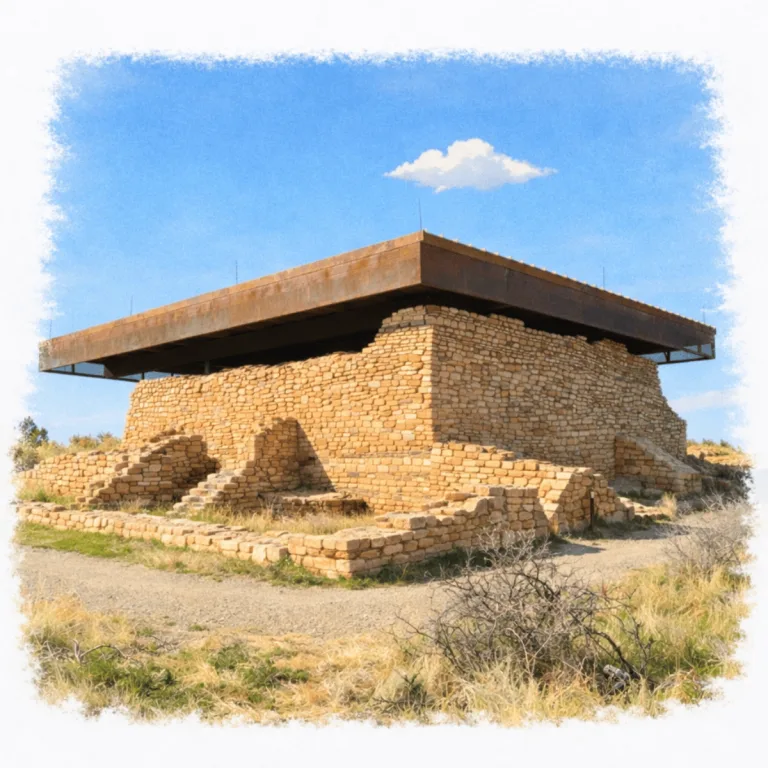
On a low rise above the Montezuma Valley, Lowry Pueblo arranges a compact block of masonry rooms around a central Great Kiva, where a tower anchors one of the most complete community layouts in the northern San Juan region.
| Name | Lowry Pueblo |
| Civilization | Ancestral Puebloan |
| Location | Montezuma County, Colorado, USA |
| Elevation | 6,726 feet (2,050 meters) above sea level |
| Years Active | c. 1060 – 1220 CE |
| Primary Resources | Adobe, sandstone, wooden beams |
| Site Type | Residential and ceremonial outlier |
| Key Highlights | Interior access, preserved Great Kiva, protective roof |
| Entry Fee | Free |
| Best Time to Visit | Late spring to early fall |
| Field Visit | Visited and documented by Lost Ruins of the Americas |
Unique Features of the Lowry Pueblo Archaeological Site
- Regional Hub Placement The pueblo stands at the northern edge of the Mesa Verde cultural sphere. Its position marks a wider zone of influence across the Colorado Plateau.
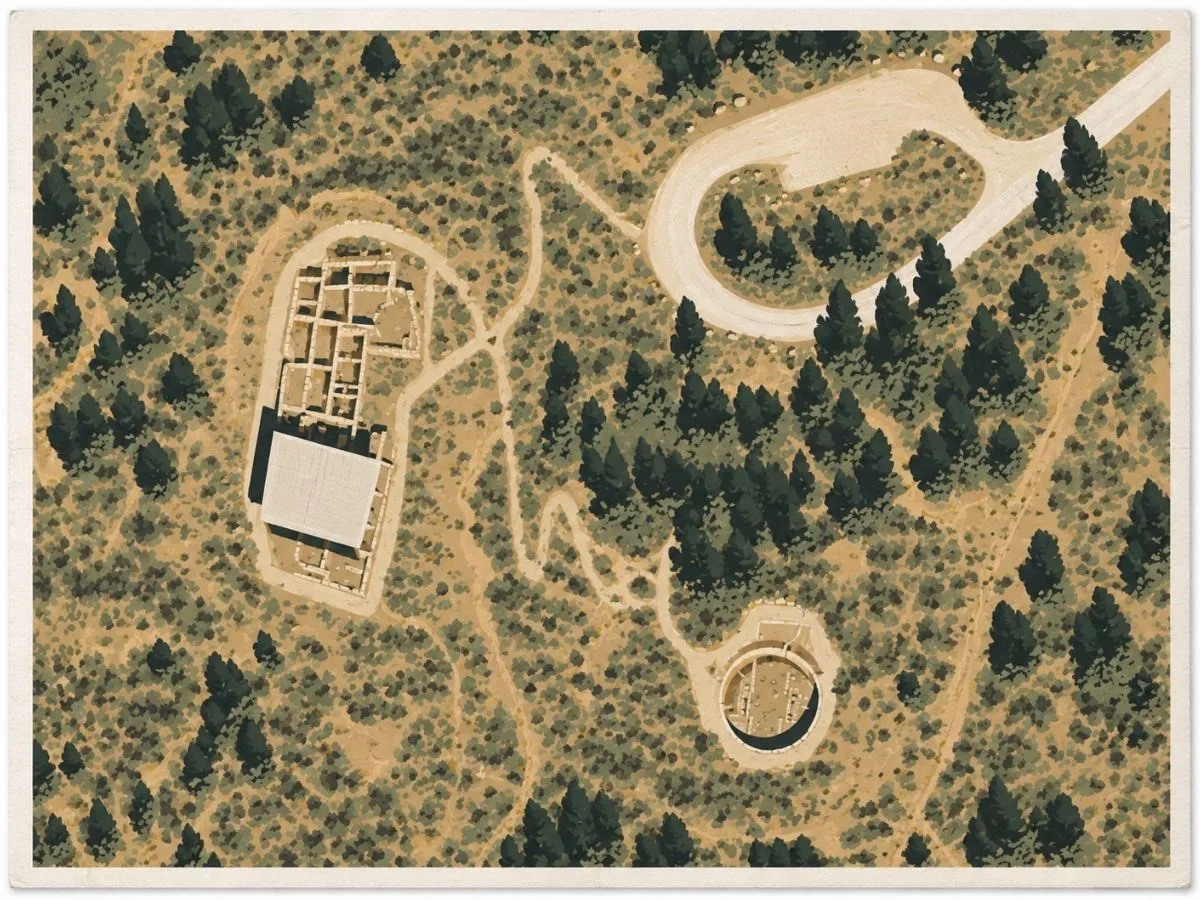
- Integrated Village and Ceremony The alignment of the roomblock with the Great Kiva shows a community where household life and ritual activity remained closely linked.
- Evidence of Long Occupation Multiple wall lines and construction phases reveal continuous rebuilding that reflects generations of family adaptation.
- Blend of Masonry Styles Shaped sandstone blocks combined with local rubble show skilled work balanced with practical use of nearby materials, a common trait in outlying villages.
Location & Access
- Nearest Town: Pleasant View, Colorado
- Directions: From Cortez, head north on US-491, then turn west on County Road CC to BLM Road N. Follow signs to Lowry Pueblo.
- Managed By: Bureau of Land Management (BLM)
- Opening Hours: Dawn to dusk
- Entry Fee: Free
- Facilities: Parking, shaded picnic area, interpretive signs
- Accessibility: Fully accessible with short gravel path and level walkways
- Pro Tip: The drive through farmland gives a strong sense of place before you arrive. Bring water, since there are no services nearby.
Highlights to Help Understand Your Visit
These points help frame what you are looking at before you explore the rooms and the Great Kiva.
- Look at the masonry The walls combine shaped sandstone blocks and local rubble. This mix shows both skill and adaptation to available materials.
- Notice how the rooms cluster The layout reflects family groups living close together. Passageways between rooms follow practical daily movement rather than formal design.
- Stand near the Great Kiva Its size and placement signal community gatherings. The relationship between the kiva and the room block shows how ceremony linked to everyday life.
- Follow the roofline supports Beam sockets and wall scars hint at the height and shape of ancient ceilings. These clues help reconstruct how the space once felt.
- Observe the setting around the village The open landscape provided farming areas and clear lines of sight. The location was chosen for both community needs and regional connections.
Key Structures of the Lowry Pueblo Ruins
- Main Roomblock Central residential cluster built with shaped sandstone and rubble core walls. Original doorways and wall lines remain visible under the protective shelter. The layout reflects multi family living with rooms arranged around shared circulation paths.
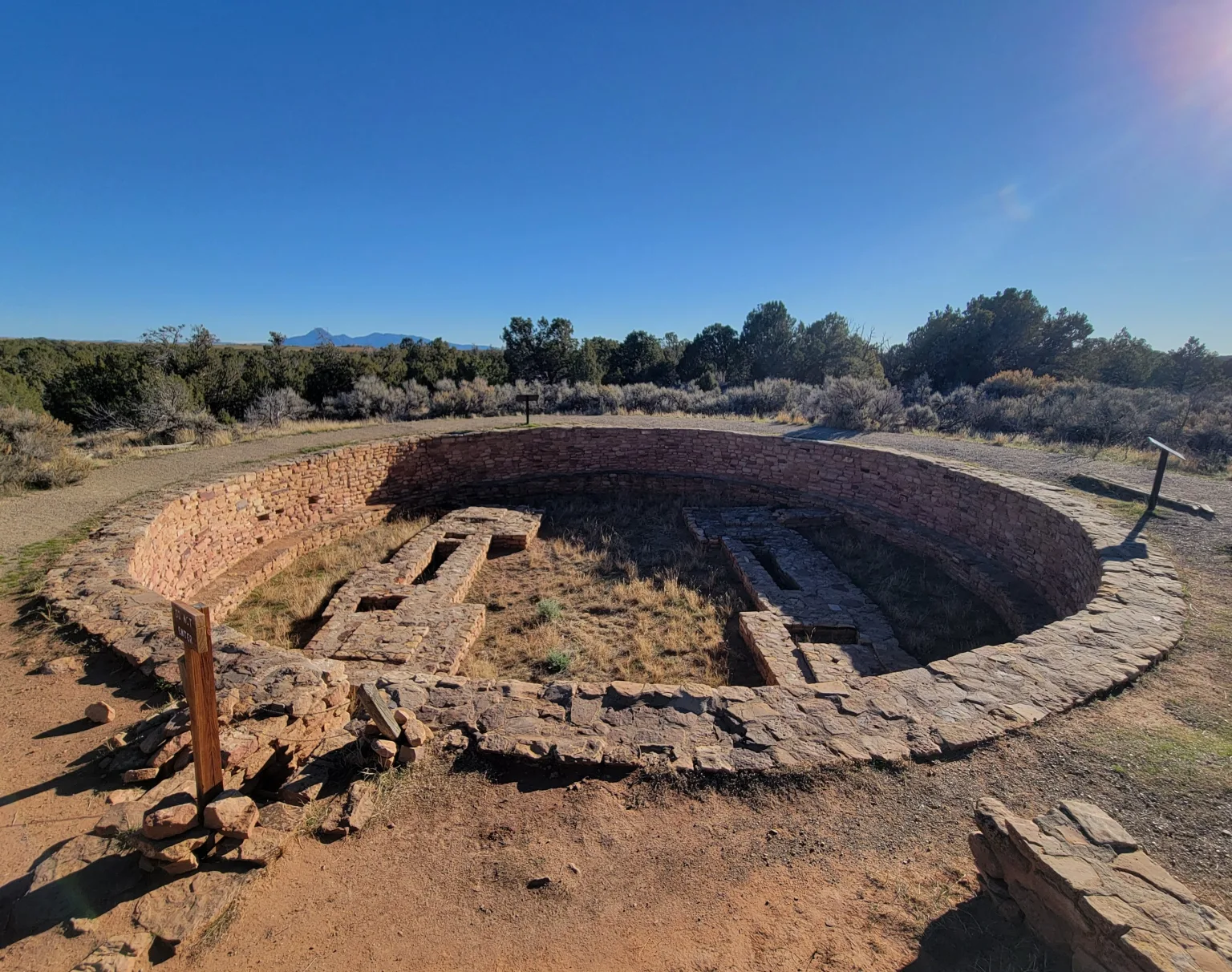
- Great Kiva Large circular ceremonial chamber set slightly apart from the roomblock. The deep interior, bench features, and central floor elements point to community gatherings and ritual activities that involved the wider settlement.
- Entry Ramp A sloped access that rises directly to the pueblo platform. Its placement shows controlled entry into the village and offers a clear approach to the main living spaces.
- Ventilation Shafts Narrow openings built into the kiva and roomblock walls to circulate fresh air. These features are still visible and demonstrate the community’s understanding of airflow in enclosed masonry spaces.
- Corner Rooms Small chambers tucked along the outer edges of the pueblo. Their restricted size suggests use for storage, staging, or support functions tied to daily household work.
History and Legends
Lowry Pueblo began around 1060 CE on the Great Sage Plain of southwestern Colorado, where Ancestral Puebloan farmers had already lived for generations. The new pueblo was built partly over houses belonging to an earlier community. At first Lowry was small, with only a few rooms and a kiva, but it grew quickly. Within roughly twenty-five years, builders carried out six episodes of construction and remodeling, adding rooms while changing masonry styles and reorganizing the settlement. Eventually the pueblo stood two or three stories high, with rooftop entrances, small T-shaped doorways, and a long western wall that had no ground-level entrance.
Some of Lowry’s earliest masonry looks strikingly similar to buildings at Chaco Canyon, more than a hundred miles to the south. Builders laid narrow sandstone slabs in patterned courses, used small chinking stones, and sometimes alternated bands of lighter and darker rock. Lowry is now recognized as one of the northern great houses connected with the wider Chacoan world, although the nature of that connection is uncertain. Most pottery found at the site belongs to local Northern San Juan traditions, and later construction shifted toward local block masonry. The architecture therefore records strong Chacoan influence without showing that Lowry was simply a colony directed from Chaco Canyon.
The clearest sign that Lowry served people beyond a single household is the Great Kiva, begun around 1086 CE a short distance from the main room block. At roughly 47 feet across, it was one of the largest communal structures in the region. Four massive roof beams once rested on masonry platforms inside, while entry may have been through a roof opening or through rooms on the north side. The building was repaired and altered through Lowry’s history, with tree-ring dates showing work continuing into the 1160s. Its scale suggests that gatherings here could draw people from communities scattered across the surrounding plain for ceremonies, exchange, and other shared events.
Life inside the pueblo left another unusually vivid trace in Kiva B. Its plastered walls carried a painted mural of bold stepped geometric designs that once surrounded people gathering below ground. Lowry continued expanding between about 1085 and 1170, eventually reaching roughly 40 rooms, eight smaller kivas, and the Great Kiva. Around forty people may have lived in the main pueblo itself, while related households and smaller settlements occupied the countryside around it. Corn, beans, and squash grew in the wind-deposited soils of the Great Sage Plain, and much of daily work took place on rooftops and in open areas east of the main building rather than inside its small rooms.
Lowry remained occupied for about 165 years, but its last generations lived through a period when communities across the northern San Juan region were changing where and how they lived. By the early 1200s, the final families had left the pueblo and moved south and east. They left behind a settlement that had been repeatedly rebuilt rather than frozen in a single architectural plan, from its first cluster of rooms to the Chaco-influenced great house, painted kivas, and enormous communal kiva. The movement away from Lowry was part of a larger Pueblo history of migration and community reorganization, not the disappearance of its people. Descendant Pueblo communities continue to maintain ancestral and cultural ties to the wider landscape in which Lowry stands.
Experiences Around Lowry Pueblo
The ruins are only part of the story. Sagebrush, pinyon-juniper woodland, and open farmland spread across the high plateau below the Abajo Mountains.
–
In Dolores, visit the Galloping Goose Railroad Museum to see restored Galloping Goose No. 5, built in 1933 to carry passengers, mail, and freight along the Rio Grande Southern.
–
Nearby, follow the Dolores River Trail through cottonwoods and riverside meadows, with easy access to the water and views toward the wooded foothills.
How to Get There & Where to Go Next
How to Visit Lowry Pueblo
Step-by-step access to the site
- Start in Las Vegas NV Take I 15 north then I 70 east. Plan for 5 to 6 hours.
- Turn south at Crescent Junction Follow US 191 toward Monticello. About 1 hour and 30 minutes.
- Continue to Cortez Stay on US 491 east. About 1 hour and 30 minutes.
- Final stretch Drive north on US 491 then County Road CC. About 30 minutes.
Tips: Services thin out after Monticello. Fill up there or in Cortez before heading to the site.
Nearby Ruins You Can Visit
These Ancestral Puebloan sites share Lowry Pueblo’s masonry traditions, settlement patterns, and ceremonial architecture. Each place reveals another part of the cultural story found on the Colorado Plateau.

Hovenweep – Tower settlements with precise stonework that mirror the engineering skills seen at Lowry Pueblo.

Mesa Verde – Towering cliff dwellings and painted kivas that illustrate the architectural evolution and enduring spirituality of Ancestral Puebloan life.

Escalante Pueblo – A hilltop village with a readable stone plan that shows how space was organized.
Traveler Tips
- There are no services nearby. Bring water, snacks, and a map
- The site is often empty. Weekday visits offer full solitude
- Flat walkways and ramps make the site accessible for most
- Interpretive signs are placed at key points. Allow time to read them
- Combine with a visit to nearby Painted Hand or Hovenweep for a full day
Elsewhere in the Americas…
While Lowry Pueblo linked farming communities on the Colorado Plateau, other centers across the Americas were shaping their own landscapes of power and belief:



In the Colombia, the Muisca site of El Infiernito aligned stone columns for seasonal observation and ritual practice.
Insider Explorer Advice
The drive to Lowry is part of the experience. Winding through patchwork farmland with mountain backdrops, it builds a sense of transition. Once at the site, take your time walking inside. The light through narrow doorways, the texture of the walls, and the view across the field toward the Great Kiva combine to create something deeply grounding. Even if the site is small, it rewards attention and stillness. Let it speak quietly, without rush.
Summary: Lowry Pueblo stands quietly but with presence. Its preserved walls and ceremonial heart offer a window into the daily and spiritual life of those who once shaped the land around it.