
Los Paredones
PERU / NAZCA / INCA
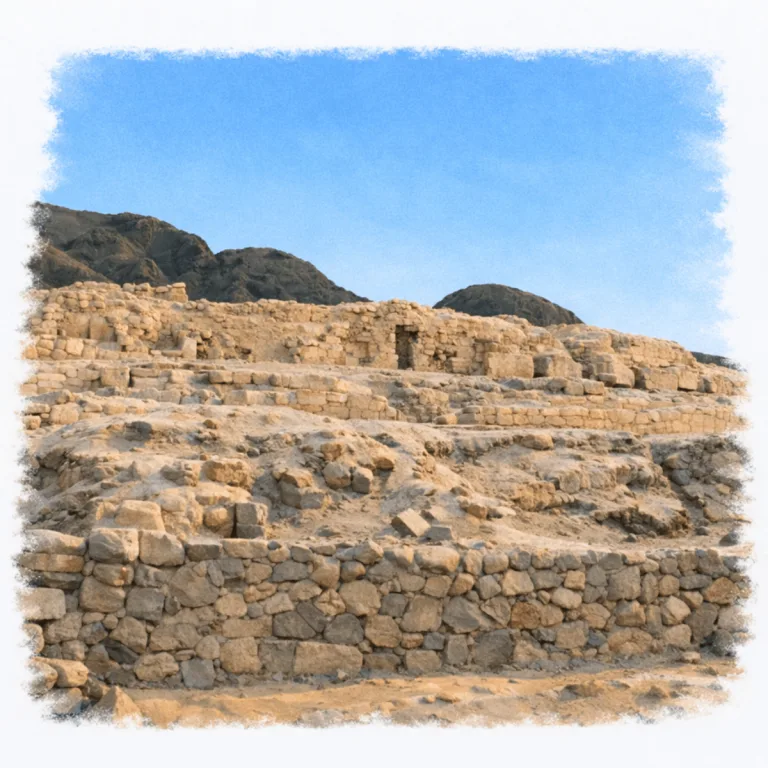
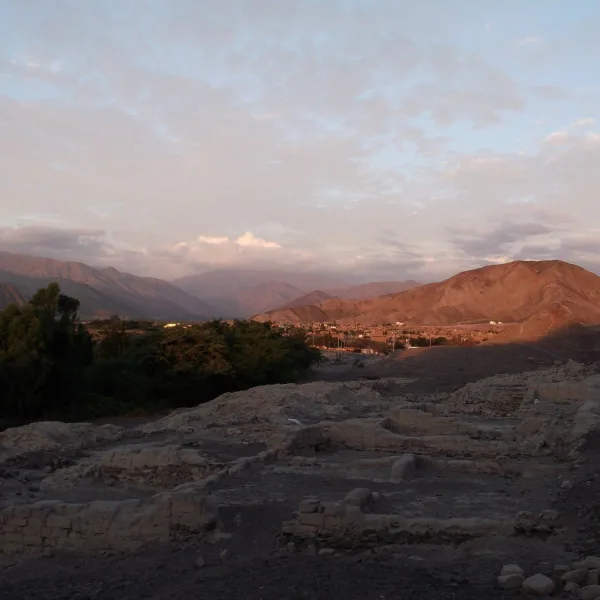
Across a desert landscape outside Nazca, Los Paredones organizes walled enclosures into a planned compound, where straight-edged adobe construction marks imperial Inca design.
| Name | Los Paredones |
| Civilization | Nasca, Wari, Ica-Chincha, Inca |
| Location | Nazca, Peru |
| Elevation | 624 m (2,047 ft) |
| Years Active | 500 CE to 1530s CE |
| Primary Resources | Volcanic stone, adobe, irrigated crops, regional exchange |
| Site Type | Administrative and ceremonial complex |
| Key Highlights | Elevated desert views, trapezoidal doors, imperial Inca architecture |
| INT Airport: | Jorge Chávez International Airport (LIM) |
| Entry Fee | S/10 adult, S/5 child |
| Best Time to Visit | Morning or late afternoon (April–October) |
| Field Visit | Visited & photographed by Lost Ruins of the Americas |
Unique Features of the Los Paredones Ruins
- Highland Meets Desert: Inca masonry blends stone and adobe, showing adaptation to the arid Nazca environment.
- Ushnu Platform: A raised structure used for state rituals and announcements overlooks the valley floor.
- Administrative Layout: Walled compounds and narrow passages reflect control, not ceremony.
- Valley-Facing Design: Structures align with movement routes and viewsheds, not processional space.
- Grounded vs. Abstract: Offers physical Inca presence in contrast to the nearby Nazca Lines’ mysterious scale.
Location & Access
- Nearest Town: Nazca, Peru
- Directions: Just 2 km east of town; walkable in ~30 minutes or take a 5-minute mototaxi ride
- Access Road: Clearly marked local roads with signs leading up from the main highway
- Opening Hours: 8:00 AM to 5:30 PM
- Entry Fee: Free or covered by local cultural ticket (check at museum)
- Facilities: Basic signage, guided-service availability, photography access, and nearby services in Nazca or Vista Alegre
- Accessibility: Easy to moderate; short walking distances, exposed desert conditions, and uneven stone and earth surfaces
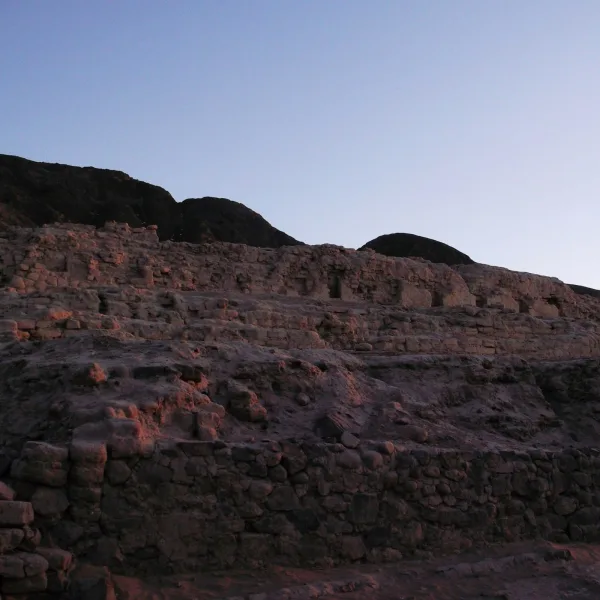
- Pro Tip: Time your visit for golden hour. The desert light and views from the terraces are unforgettable

Highlights to Help Understand Your Visit
Though modest in scale, Los Paredones offers subtle clues about Inca presence and purpose in this desert outpost.
- A Distant Outpost: The site’s location far from the Inca heartland shows how deep imperial control extended, even into the arid Nazca Valley.
- Adobe and Stone Together: Look closely at the walls. Their blend of adobe with finely set stones reveals both adaptation and continuity with highland techniques.
- The Ushnu Platform: A raised ceremonial platform faces outward across the valley. These were used for announcements, rituals, and projecting state authority.
- Trapezoidal Niches: Signature Inca architectural details like trapezoidal niches can still be seen, marking spaces of importance and aligning with Andean design philosophy.
- No Ornamentation: Unlike earlier Nazca ceremonial sites, this compound is functional. It was meant for administration, not spectacle. That difference is a statement of intent.
Key Structures of Los Paredones
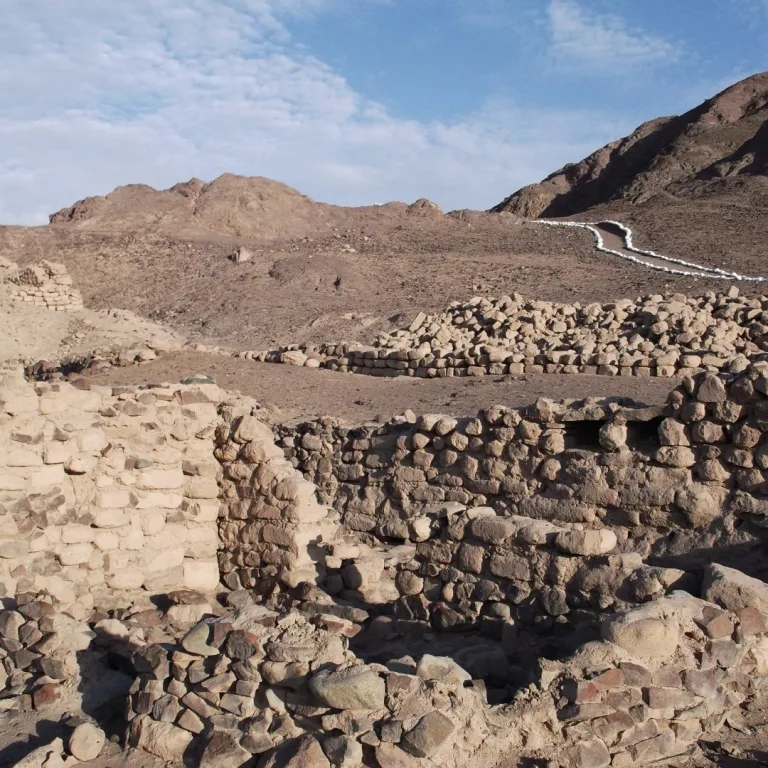
- Main Administrative Hall: A large rectangular adobe structure believed to have housed officials or served ceremonial functions. Notable for its preserved wall alignments and sightlines toward the desert basin.
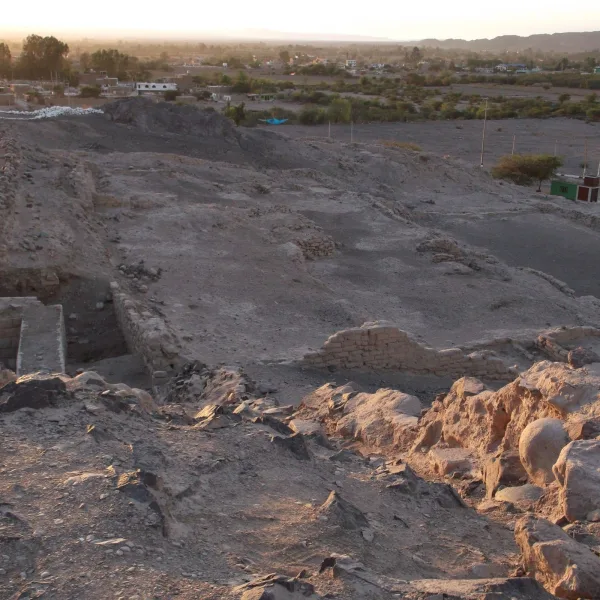
- Viewpoint Platform: Elevated terraces that overlook the Nazca valley. These may have been used for solar observation or administrative surveying of the trade routes below.
- Storage Quarters (Qolqas): Enclosed rooms along the southern edge of the site, likely used to store agricultural goods and resources moving between highland and coastal zones.
- Perimeter Walls: The “paredones” themselves, thick adobe walls that define the site’s edges. Some sections show classic Inca trapezoidal doorways, while others appear more defensive or ritual in nature.
- Sun-Gated Entrance: A narrow entrance framed by trapezoidal thresholds that aligns closely with afternoon sunlight during equinox periods — possibly used for ritual procession or solar marking.
- Inner Courtyard Complex: A series of interconnected open spaces, possibly used for administrative gatherings, ritual offerings, or civic management. Foundations reveal advanced adobe stabilization techniques.
How to Get There & Where to Go Next
How to Visit Los Paredones
– Step-by-step access to the site –
- Depart Lima – Take a bus to Nazca (8–9 hrs)
- Arrive in Nazca – Buses drop off near the town center, walkable to most hotels
- Head east – Walk toward the airport along Avenida de la Cultura (20 min)
- Reach site – Los Paredones sits just before the airport entrance, on the left side of the road
Tips: There is no shade at the ruins. Bring water, go early, and combine with a visit to the nearby Nazca Lines tower if desired.
Nearby Ruins You Can Visit
In the arid desert around Nazca, ancient cultures left behind both mysterious geoglyphs and Inca-era structures. These are layered traces of different visions across the same land.

Nazca Lines – Massive animal and geometric figures etched into the desert, only visible from the air — one of the world’s greatest archaeological enigmas.

Vilcashuamán – A major Inca administrative center built atop older Wari foundations, with a well-preserved Temple of the Sun and trapezoidal plaza.

Pachacamac – A massive pilgrimage site near Lima where coastal and highland cultures converged — echoing the spiritual purpose of the lines.


History and Legends
The monumental ruins of Los Paredones are Inca, but the ground beneath them had already been used for centuries before imperial builders arrived in the Nasca Valley. Pottery from the site reaches back to the Late Nasca period, around 400 to 600 CE, and later Ica-Chincha material shows continued activity before the Inca occupation. Much of this earlier evidence comes from an extensive cemetery beneath and around the later complex. When the Inca incorporated the valley during the fifteenth century, they chose this already important place at the foot of the rocky hills south of present-day Nasca and transformed it into a major provincial center.
Its position connected two very different landscapes. The coastal branch of the Qhapaq Ñan ran through the Nasca region, while another route climbed east from the valley toward the highlands of Lucanas, Vilcashuamán, and ultimately Cusco. Los Paredones stood where imperial officials could oversee movement between the desert coast and the Andes. The sixteenth-century chronicler Pedro Cieza de León knew the valley as Caxamalca de la Nasca and described great Inca buildings and numerous storehouses there. Those deposits belonged to a larger system for concentrating supplies, labor, and tribute along roads that tied the southern coast into the empire.
The Inca made their authority visible in the buildings themselves. Most coastal construction used adobe, but Los Paredones contains unusually fine Cusco-style stonework, one of the comparatively rare examples of imperial ashlar masonry on the Peruvian coast. In Sector V, builders set the walls of the Gran Recinto, measuring roughly 20 by 26 meters, directly onto the natural rock in places. It connected with a curved structure known as the Torreón, whose carefully fitted masonry recalls prestigious construction in Cusco. Elsewhere, rectangular adobe walls rose over stone foundations and earlier masonry. Double-jamb and trapezoidal openings marked important passages, while a kallanka, storage buildings, and a probable acllawasi divided administrative, residential, and ceremonial activity across the complex.
Experiences Around Los Paredones
The ruins are only part of the story. Bare desert hills rise above the irrigated Nazca Valley, where green fields cut sharply through the dry southern coast.
–
See the Nazca Lines from the air, where the hummingbird, monkey, spider, and immense geometric figures spread across the desert pampa.
–
East of town, hike Cerro Blanco, a massive dune rising above the valley, with long sand slopes used for sandboarding.
Los Paredones was therefore neither a simple roadside tambo nor an isolated fortress. It was a planned imperial center imposed onto a valley with a much older local history. The Inca reused coastal materials and labor while inserting architectural forms associated with state authority. Even within the complex, construction changed over time. Adobe buildings were added above finely cut stone walls, and some passages were narrowed or controlled as rooms were reorganized. In one residential sector, archaeologists found evidence that restricted entrances and structures were deliberately closed during abandonment, suggesting that at least part of the complex was formally shut down rather than simply left open when imperial control ended.
Spanish conquest brought that administrative system to an end, but Caxamalca de la Nasca remained a recognizable place in the sixteenth century. Cieza could still describe its Inca storehouses in 1553. Several decades later, the Jesuit José de Acosta recorded a local tradition from Caxamalca in which a great hill of sand among rocky hills had been regarded as an ancient huaca. When he asked what divinity people found there, he was told that the wonder was the sand hill itself, rising where the surrounding hills were stone. The account does not identify that hill with one surviving building at Los Paredones, but it preserves something the Inca walls alone cannot show. The administrative center stood within a Nasca landscape whose older sacred places and local traditions continued to be remembered after the empire that built Paredones was gone.
Traveler Tips
- Walk from Nazca town or take a short mototaxi ride
- Bring a hat, sunscreen, and water. The site is fully exposed
- Wear sturdy shoes. The terrain is loose and slightly steep
- No facilities on-site; go prepared
- Combine with Nazca Lines observation tower for a complete local circuit
- Recent conservation efforts have restored portions of the walls and improved site access
Elsewhere in the Americas…
While Los Paredones stood near the Nazca region of southern Peru, other cultures across the Americas were shaping their own ceremonial and architectural traditions:

The Aztecs Empire ruled central Mexico from Tenochtitlan, a city of temples, markets, and canals.


Near present-day St. Louis, the Mississippian center of Cahokia built massive earthen mounds and ceremonial complexes.
Insider Explorer Advice
When visiting the Nazca Lines, it’s worth stopping by Los Paredones for a grounded Inca counterpoint. You can walk or take a mototaxi from town, it’s close, easy, and unexpectedly expansive. The ruins feel larger than expected once you’re inside, and everything is well marked. What really stands out is the view. From here, the whole desert basin opens up. It’s a great place to watch the sunset after a day spent flying above it. The Inca knew how to place things for effect, and Los Paredones is proof.
Summary: Los Paredones is a quiet Inca station with a commanding desert view. A small ruin with big perspective.