
Zaachila
MEXICO / OAXACA / ZAPOTEC
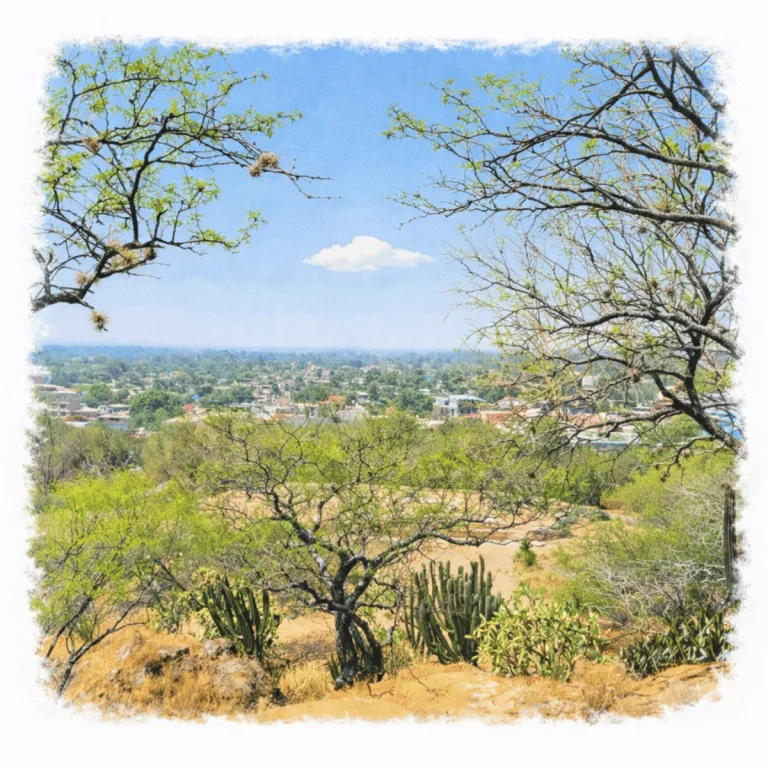
Behind the church and Thursday market in Oaxaca’s southern valley, Zaachila opens onto painted tomb chambers, where Mixtec offerings and Zapotec burial walls survive beneath the modern town.
| Name | Zaachila |
| Civilization | Zapotec, with later Mixtec influence |
| Location | Villa de Zaachila, Central Valleys of Oaxaca, Mexico |
| Elevation | 1,520 m (4,990 ft) above sea level |
| Years Active | 1500 BCE to 1521 CE, with principal political importance after 850 CE |
| Primary Resources | Maize, ceramics, alluvial farmland, regional trade goods |
| Site Type | Postclassic capital, religious center, and elite funerary complex |
| Key Highlights | Tombs 1 and 2, stucco reliefs, funerary offerings, El Cerrito ceremonial core |
| INT Airport | Oaxaca International Airport (OAX) |
| Entry Fee | 80 MXN national; 145 MXN foreign visitor |
| Best Time to Visit | Thursday market day |
| Field Visit | Visited & photographed by Lost Ruins of the Americas |
Unique Features of the Zaachila Archaeological Site
- Elite Tombs: Painted stucco, carved figures, and rich offerings mark high-status burials.
- Zapotec-Mixtec Fusion: Funerary art and objects preserve both cultural traditions.
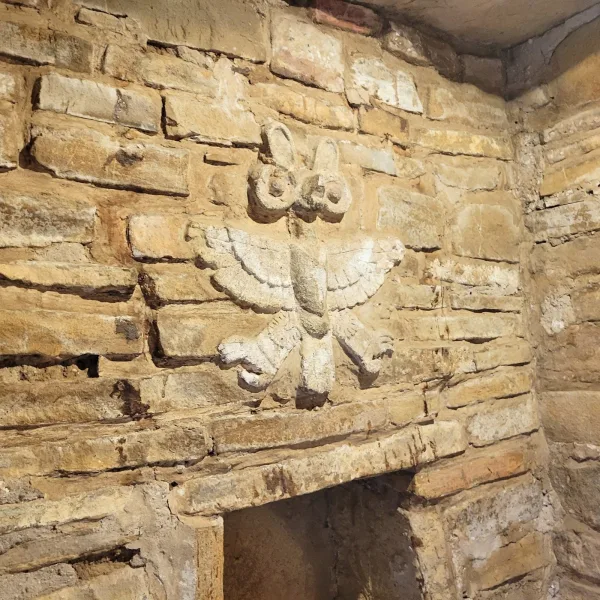
- Death Imagery: Human figures, animals, and owls appear across the tomb reliefs.
- Precious Offerings: Gold, greenstone, shell, and polychrome ceramics accompanied elite burials.
- Post-Monte Albán Power: Zaachila became a major Zapotec center after the older capital declined.
Location & Access
- Nearest City: Villa de Zaachila; the archaeological zone stands near the center of the modern town.
- Directions: Take a colectivo from southeast of the Benito Juárez Market. It’s a short ride (~25 min) to Zaachila town. From there, walk uphill behind the main church to find the entrance.
- Official Website: INAH Zona Arqueológica de Zaachila
- Opening Hours: Thursday to Sunday, 10:00 AM to 4:00 PM.
- Entry Fees: 80 MXN for Mexican nationals; 145 MXN for foreign visitors.
- Facilities: Basic restrooms, small interpretive signage
- Accessibility: Partial. The archaeological core is compact, but uneven ground, mound slopes, and stairways into the tombs restrict full access.
- Pro Tip: Go on Thursday to experience the bustling open-air market before heading up to the calm of the ruins.
Highlights to Help Understand Your Visit
Zaachila reveals its meaning gradually, through tomb walls, sloping ground, and the market bustle below. These insights will help shape what you see as you walk.
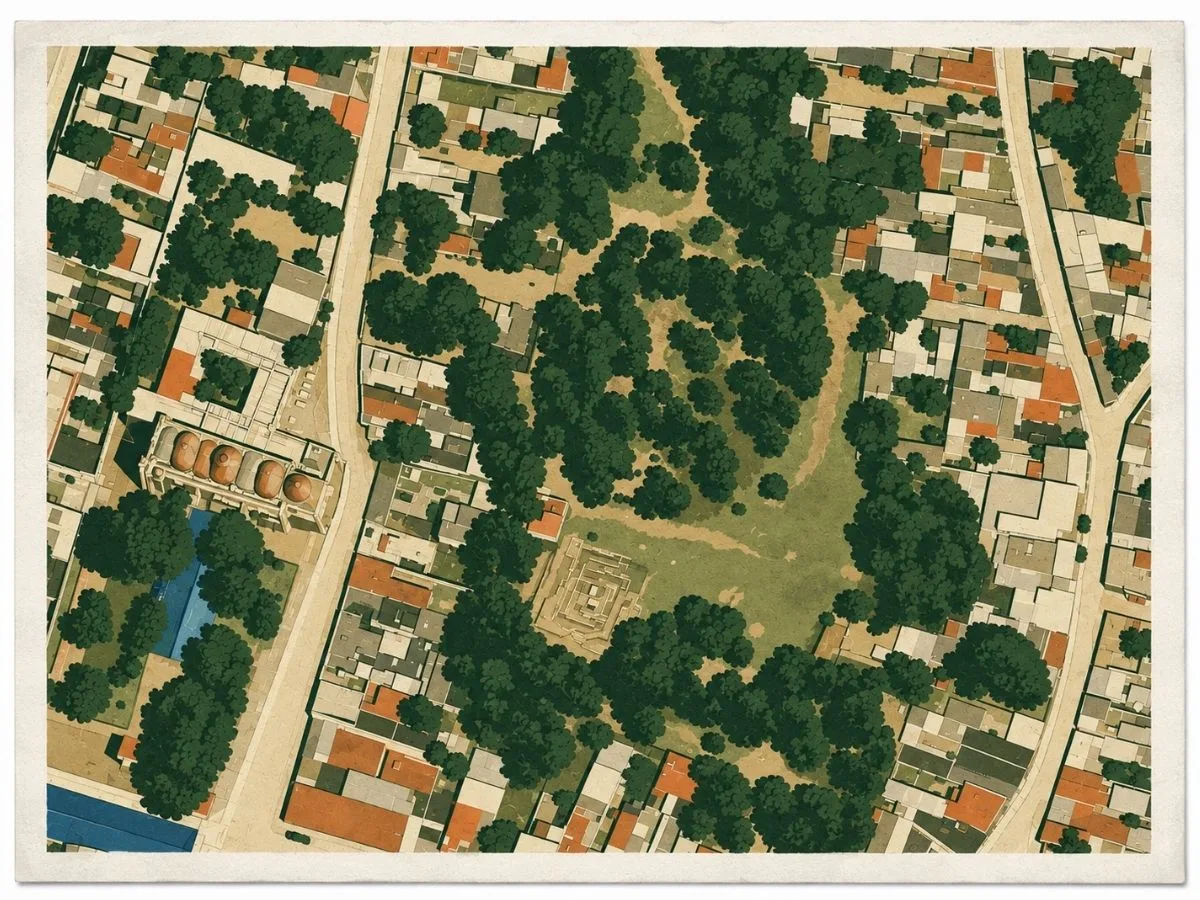
- A Hill with Layers: The site’s central mound isn’t just a platform. It’s a burial chamber, civic stage, and symbolic high ground in one compact space.
- Burials Beneath Stone: If a tomb is open, note the low doorways and carved details. These weren’t just graves. They were coded messages of power, ancestry, and ritual continuity.
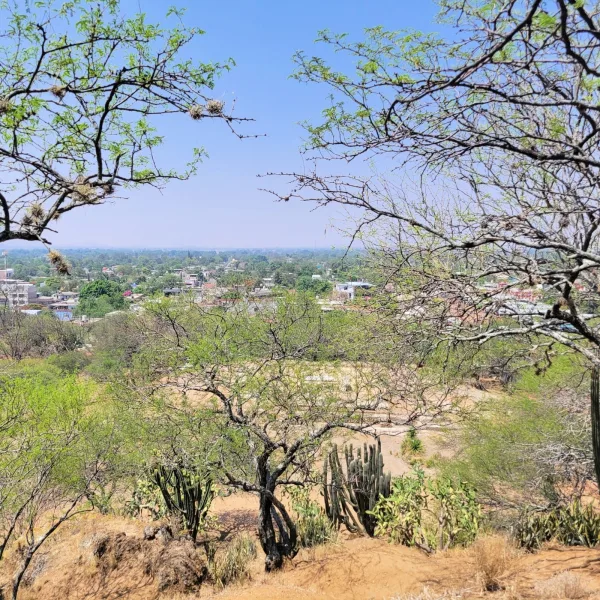
- Eyes on the Valley: From the top, look outward. You’re standing where leaders once surveyed their domain. The landscape below was as much part of their control as the tombs themselves.
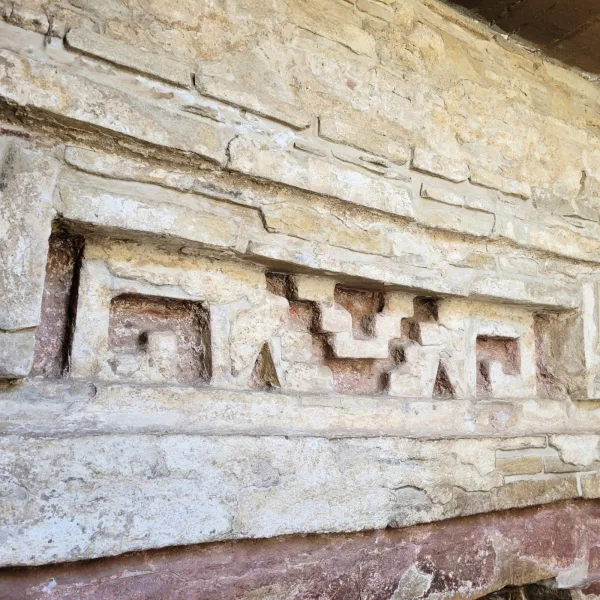
- Signs of Two Cultures: Some motifs inside the tombs suggest a Mixtec touch over Zapotec foundations. Watch for geometric reliefs or iconography that hint at this layered identity.
- Church and Market Below: The modern structures that crowd the base, colonial church, Thursday tianguis, aren’t distractions. They’re continuity. This hill has drawn people for centuries.
Key Structures of the Zaachila Ruins
- Main Platform: A large, steep-sided mound believed to be the ceremonial and funerary core of Zaachila’s ruling elite.
- Tomb 1: Features carved stone entrances and preserved painted chambers, likely used for elite Zapotec burials.
- Tomb 2: Another burial chamber excavated beneath the mound, noted for its stone corridor and mural remnants.
- Stone Wall Remains: Partial defensive or terrace walls visible on the eastern slope of the site.
- Colonial Church: Though not part of the ruins, the adjacent church provides a visual juxtaposition of indigenous and colonial occupation.
History and Legends
Zaachila was among the last strongholds of the Zapotec civilization and played a critical role during the Postclassic period of Mesoamerican history. Located just outside the modern city of Oaxaca, it rose in political importance following the decline of Monte Albán, likely serving as a regional capital by the 13th century CE.
The city is best known for its impressive tombs, discovered beneath the central mound. These tombs, constructed with carefully carved stone chambers and believed to contain elite Zapotec rulers, showcase continuity in funerary traditions long after Monte Albán’s fall. Some murals inside the tombs still show remnants of red, yellow, and black paint. Preservation has been limited by environmental exposure and looting in earlier decades.
Zaachila’s strategic location placed it at the crossroads of Zapotec and Mixtec cultures. As regional dynamics shifted, the city eventually came under partial Mixtec influence, especially evident in some artistic styles found in the burial offerings. However, even under this influence, the Zapotec presence and traditions remained distinct.
Experiences Around Zaachila
The ruins are only part of the story. The southern Oaxaca Valley spreads between cultivated fields, agave, and low dry mountains.
At the Mercado Gastronómico, try barbacoa de rollo, memelas, tejate, and other dishes tied closely to Zaachila’s local food traditions.
Nearby San Bartolo Coyotepec is known for barro negro; step into a family workshop to see clay shaped by hand, burnished with simple tools, and fired to its characteristic black finish.
By the time of the Spanish arrival in the 16th century, Zaachila was still inhabited. Spanish chroniclers noted the importance of the area and its vibrant markets. These traditions continue today. The town of Zaachila now thrives as both a modern Zapotec community and a heritage site where weekly markets and festivals reflect ancient continuity.
Legends tell of more tombs still hidden beneath the hill and surrounding neighborhoods. Many locals believe the site is only partially uncovered. While excavation continues slowly, the mystery of Zaachila, its rulers, rituals, and buried past, remains potent for those who wander the narrow trail behind the church.
How to Get There & Where to Go Next
How to Visit Zaachila
– Step-by-step access to the site –
- Start in Oaxaca City: Head to the southeast side of Mercado Benito Juárez.
- Take a colectivo: Shared taxis to Zaachila leave frequently (~25–30 min ride).
- Walk to the ruins: From town center, go uphill behind the church (~5 min).
- Look for the entrance: It’s discreet, near the side of the church property.
Tips: Go on Thursday to pair your visit with Zaachila’s market, one of the liveliest in the region.
Nearby Ruins You Can Visit
These ruins share ceremonial roots, elite tomb architecture, and Zapotec political legacy. Perfect for extending your understanding of this region’s power centers.

Yagul – Cliffside tombs, fortress walls, and panoramic views just minutes from Mitla.

Monte Albán – Ancient Zapotec capital perched above Oaxaca. Once the center of valley life and power.
Mitla – A sacred site etched with symbols, built to last long after the Zapotec kings fell.
Traveler Tips
- Visit on a Thursday: This is Zaachila’s famous market day, when the whole town comes alive, pair it with your ruins visit for the full experience.
- Wear sturdy shoes: You’ll walk uphill from the town center and follow a dirt path around the church to access the site.
- Ask about the tombs: The attendant may open one for you if asked, a highlight not always offered unless you show interest.
Elsewhere in the Americas…
While Zaachila’s tombs were being carved in the Oaxaca Valley, powerful cities and empires were shaping the sacred and political landscapes of the Andes:



Ollantaytambo expressed Inca power with terraces, storehouses, and monumental stonework in the Sacred Valley.
Insider Explorer Advice
If you’re staying in Oaxaca City, head to the southeast of Benito Juárez Market early in the morning. Colectivos to Zaachila leave frequently and take about 30–40 minutes. Try to arrive before 10 AM, especially on Thursday, when the town’s sprawling market is in full swing. It is one of the largest and most authentic in the region. After exploring the market, look for the church on the hill, and follow the path to the side. The entrance is discreet but well-marked. The top platform offers surprisingly peaceful shade and views back over the town. Be sure to ask the attendant if you can enter the tomb. We were lucky; she kindly unlocked it, offering a brief but unforgettable glimpse inside.
Summary: Zaachila offers a layered, living glimpse into Zapotec heritage. From Ancient tombs beneath the mound to the vibrant market streets just below.