
Pachacamac
PERU / LIMA / LIMA, WARI, YCHSMA, INCA
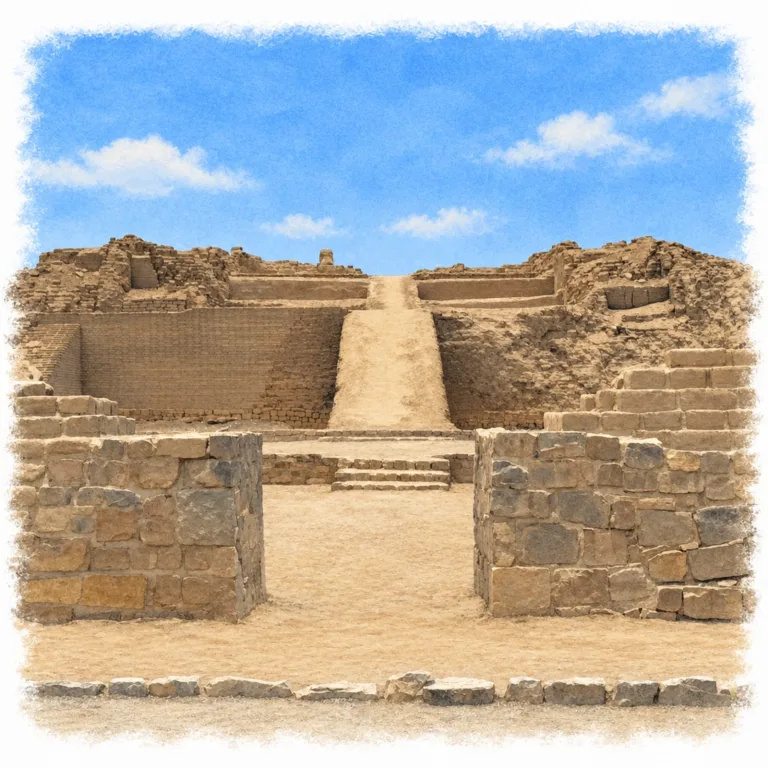
On a desert bluff above the Lurín Valley, Pachacamac spreads across temples, ramps, and plazas, where coastal pilgrims once crossed long distances to consult one of ancient Peru’s most influential oracles.
| Name | Pachacamac |
| Civilization | Lima, Wari, Ychsma, Inca |
| Location | Lurín Valley, Lima Region, Peru |
| Elevation | About 50 m (164 ft) |
| Years Active | c. 200 BCE – 1533 CE |
| Primary Resources | Adobe, marine exchange, valley agriculture, pilgrimage traffic |
| Site Type | Oracle sanctuary and pilgrimage center |
| Key Highlights | Temple of the Sun, Painted Temple, pyramids with ramps, on-site museum |
| INT Airport | Jorge Chávez International Airport (LIM) |
| Entry Fee | S/15 adults; S/5 higher-education students; S/1 ages 3–17; museum included |
| Best Time to Visit | Morning, especially in the cooler months from May to October |
| Field Visit | Visited and documented by Lost Ruins of the Americas |
Unique Features of the Pachacamac Archaeological Site
- Major Coastal Oracle: One of the most important pilgrimage sanctuaries on Peru’s coast.
- Painted Temple: A rare surviving reminder that color once shaped the ceremonial experience here.
- Temple of the Sun: The site’s dominant high point, with sweeping views over valley and coast.
- Pyramids with Ramps: A defining Ychsma architectural pattern spread across the sanctuary.
- On-Site Museum: Essential for understanding Pachacamac’s long sequence, ritual objects, and sacred role.
Location & Access
- Nearest City: Lurín, on Lima’s southern outskirts, Peru.
- Directions: Antigua Panamericana Sur km 31.5. From central Lima, follow the Panamericana Sur to the Conchán exit, then continue along the Antigua Panamericana Sur to the museum entrance.
- Official Website: Museo y Santuario Arqueológico de Pachacamac.
- Opening Hours: Tuesday–Saturday, 9:00 AM–5:00 PM; Sunday, 9:00 AM–4:00 PM. Ticket sales close 30 minutes earlier; closed Mondays.
- Entry Fees: S/15 adults; S/5 accredited higher-education students; S/1 ages 3–17. Museum and archaeological site included; guided tours cost extra.
- Facilities: Site museum, restrooms, shop, cafeteria, patios, and guide service
- Accessibility: Museum wheelchairs cannot enter the archaeological grounds. Free electric-cart assistance is available Tuesday–Friday for older visitors and visitors with disabilities, arranged at the ticket office.
- Pro Tip: The site is broad and exposed. Arrival early in the day matters more here than at many city ruins.
Highlights to Help Understand Your Visit
This sanctuary is best understood as a place of movement, pilgrimage, and controlled access rather than a single monumental plaza.
- Pilgrimage Before Empire: Pachacamac mattered long before the Inca arrived. Its power came from the oracle and the steady flow of visitors seeking answers here.
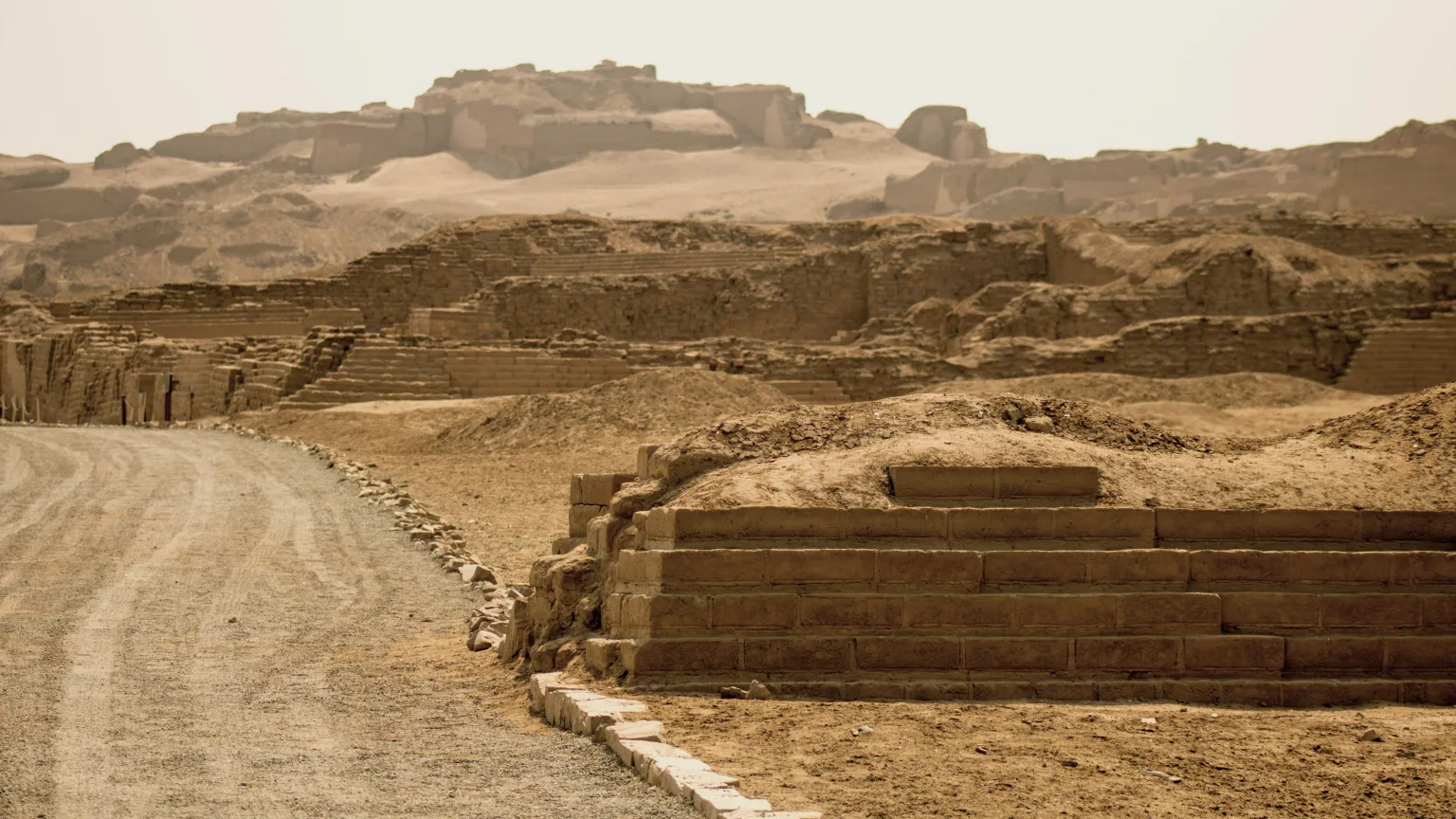
- Adobe as Monument: Much of the site rises from earth-toned adobe rather than dressed stone, revealing an architectural logic built on mass, slope, and platform.
- Color Still Matters: The Painted Temple shows that Andean ceremonial space was once shaped by murals and pigment, not bare adobe alone.
- Height Signals Authority: The Temple of the Sun dominates because elevation was part of the message, tying valley, coast, and movement into one ritual field.
- Pyramids with Ramps: These repeated forms reveal how the Ychsma organized elite, administrative, and ceremonial space across a broad urban landscape.
Key Structures of Pachacamac
- Temple of the Sun: Built during the Inca period, this commanding stepped mass crowns the sanctuary and remains its strongest panoramic point. Its height projected imperial authority across the valley, coast, and ceremonial core below.
- Painted Temple: A stepped adobe temple closely tied to the cult of Pachacamac, known for surviving traces of painted walls. It remains one of the clearest reminders that the sanctuary was once shaped by color as well as mass and form.
- Old Temple of Pachacamac: The earliest monumental core of the site, linked to the Lima tradition and built with small adobe units on a rocky rise. Its position and construction mark the deep antiquity of the sanctuary before later Ychsma and Inca expansion.
- Acllawasi: The House of the Chosen Women, added under Inca rule, reflects the empire’s ritual presence within an older sacred center. It shows how Pachacamac was absorbed into imperial religion without losing its older prestige.
- Plaza of the Pilgrims: This major Inca-era open space formalized arrival, gathering, and ceremonial movement. It helped organize how large numbers of visitors entered and experienced the sacred city.
- Pyramids with Ramp 1, 2, and 3: Strong examples of the Ychsma architectural system, these compounds use superimposed platforms and central ramps to control access and movement. They help define the site as a broad urban and ceremonial landscape rather than a single temple complex.
- Taurichumpi Building: An important Inca administrative structure that shows how the empire inserted itself into an established sacred city. Its presence reflects supervision, logistics, and political oversight within the sanctuary.
- Adobitos Complex: One of the earliest sectors on the circuit, this area is associated with Lima construction techniques and the site’s long developmental depth. Its small adobe units distinguish it from the later monumental phases built above and around it.
History and Legends
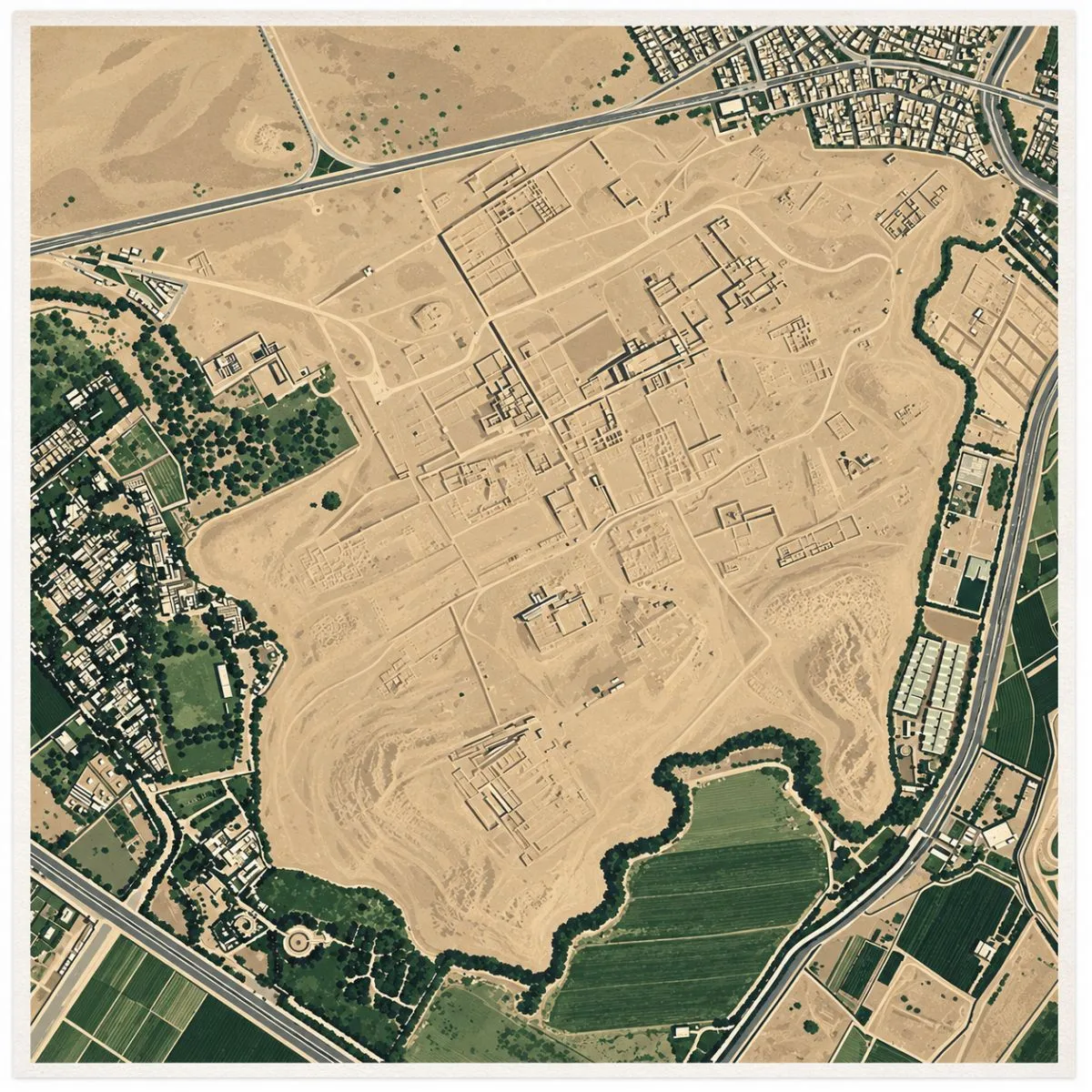
At the edge of the Lurín Valley, where irrigated fields meet the coastal desert and the Pacific lies only a few kilometers away, Pachacamac grew around a sacred place used for well over a thousand years. Occupation at the sanctuary reaches back to roughly 200 BCE, but the first major monumental buildings appeared under the Lima culture after about 200 CE. Their Old Temple rose in adobe near the highest part of the sanctuary, establishing a ceremonial core that later societies would continue to rebuild around rather than replace. Pachacamac’s importance was still largely regional at this stage, tied to communities living along the central coast and drawing food and water from the Lurín Valley.
That changed during the Wari period, beginning around 650 CE. Pachacamac developed into a pilgrimage center whose oracle attracted visitors from far beyond the central coast, and the Painted Temple became closely associated with the deity at the center of that cult. Its stepped adobe walls were once covered with red, yellow, black, white, and other pigments, while a cemetery at its foot received hundreds of carefully wrapped dead. The famous wooden Idol of Pachacamac, more than two meters tall and carved with a dual figure above felines, serpents, birds, plants, and other beings, dates between about 760 and 876 CE. It was probably the cult image later described by the Spanish. Tradition held that Pachacamac could shake the earth with a movement of his head. He was considered so dangerous to approach directly that even priests were said to enter his presence backward rather than look upon him face to face.
After Wari political influence receded, the sanctuary did not lose its importance. Between about 1100 and 1470, the Ychsma transformed much of Pachacamac into the sprawling ceremonial and administrative center visible today. They raised numerous pyramids with ramps, large adobe compounds reached through walled courtyards and inclined passages, while streets divided the sanctuary into controlled sectors. Pilgrims moved through entrances and along formal routes toward the inner temples, and temporary camps developed outside the second wall. The Ychsma phase gave Pachacamac much of its urban scale, with temples, cemeteries, storerooms, administrative buildings, and spaces for the crowds who arrived to consult the oracle.
The Inca incorporated the Lurín Valley into their empire around 1470, but they did not suppress Pachacamac. They absorbed its prestige into the imperial system. According to colonial accounts, Tupac Yupanqui ordered the construction of the great Temple of the Sun on the most commanding height in the sanctuary. The Inca also built the Acllawasi, where chosen women lived and worked, and laid out the Plaza of the Pilgrims, an immense gathering space with an ushnu, stone-lined water features, and rows of adobe pillars. Imperial roads connected Pachacamac both with the coastal Qhapaq Ñan and with a route running inland toward the highlands. The old oracle continued to receive pilgrims, but the Inca inserted their own temples, officials, and ceremonial spaces around it, placing an ancient coastal cult inside the political geography of Tawantinsuyu.
That arrangement lasted until 1533. While Atahualpa was being held at Cajamarca, Hernando Pizarro rode to Pachacamac in search of treasure promised as part of the Inca’s ransom. Spanish accounts describe him forcing his way into the sanctuary of the oracle, pulling down the cult image, and placing a Christian cross over the temple. The attack struck directly at an institution that had survived Lima, Wari, Ychsma, and Inca rule. Pachacamac did not become empty overnight, and Andean religious practices continued in the surrounding region despite colonial attempts to suppress them. But the destruction of the oracle’s sanctuary in 1533 broke the political and ceremonial system that had drawn pilgrims to this patch of desert coast for more than a millennium.
Experiences Around Pachacamac
The ruins are only part of the story. The Lurín Valley opens between dry coastal hills and irrigated farmland before meeting the Pacific south of Lima.
–
Stop in Lurín for pan con chicharrón, with fried pork, sweet potato, salsa criolla, and bread, a breakfast closely associated with the district.
–
When winter mist turns the hills green, hike the Lomas de Lúcumo through seasonal vegetation, rock formations, and viewpoints over the valley.
How to Get There & Where to Go Next
How to Visit Pachacamac
Step-by-step access to the site
- From historic Lima: Take a taxi to Museo Pachacamac, Antigua Panamericana Sur km 31.5, Lurín (60–90 minutes, depending on traffic).
- By public transport: Take the Metropolitano Regular C south from Jirón de la Unión to Matellini.
- Connect toward Villa El Salvador: Take the Villa El Salvador feeder to Supro, then cross the pedestrian bridge toward Universidad Científica del Sur.
- Bus to the museum: Board route 8510 toward San Bartolo and ask for Museo Pachacamac. Allow roughly 2–3 hours for the full public transport journey.
Tip: Specify Museo Pachacamac when arranging transport; the archaeological site is separate from Pachacamac town. Arrange a return pickup if traveling by taxi.
Nearby Ruins You Can Visit
Around Lima, several other adobe and ceremonial sites help place Pachacamac within the wider ritual and political landscape of Peru’s central coast.

El Paraíso: A much earlier ceremonial complex in the Chillón Valley that shows deep preceramic roots in coastal monument building.

Huaca Pucllana: A major Lima culture huaca in Miraflores that helps frame Pachacamac’s early adobe-building world.

Huallamarca: A compact adobe pyramid in Lima that preserves the city’s long tradition of elite ceremonial architecture.
Traveler Tips
- Bring water, a hat, and strong sun protection. Shade is extremely limited
- Allow time for the museum. It adds context and helps the adobe architecture read clearly.
- Expect a large site rather than a single compact monument.
- Do not expect mural color everywhere, but pay close attention when painted surfaces or fragments appear.
- The Temple of the Sun is the visual high point, save enough energy for the climb and the panoramic views.
Elsewhere in the Americas…
During Pachacamac’s long Ychsma and Inca florescence, other major centers across the Americas were also refining how power, ritual, and urban space could be made visible.

Near the Mississippi River, Mississippian builders raised Cahokia around immense earthen mounds and broad plazas, with Monks Mound overlooking a city supported by surrounding farming communities.


Beneath Colorado’s sandstone cliffs, Ancestral Puebloan communities built Mesa Verde villages with closely fitted stone rooms, open courtyards, and circular kivas tucked into deep natural alcoves.
Insider Explorer Advice
Start with the museum, where the carved wooden idol of Pachacamac gives a face to the oracle that drew pilgrims to the sanctuary. Outside, allow time for the long walk between the buildings and pauses in the exposed grounds. Save energy for the climb to the Temple of the Sun. From above, the view brings the sanctuary’s layout together, with the Lurín Valley, desert, and Pacific stretching beyond its walls. The museum explains why people came here; the walk reveals the scale of the place built to receive them.
Summary: Pachacamac endures as Peru’s great coastal oracle city, where adobe pyramids, sacred routes, and the high Temple of the Sun still hold together a landscape built for pilgrimage.