
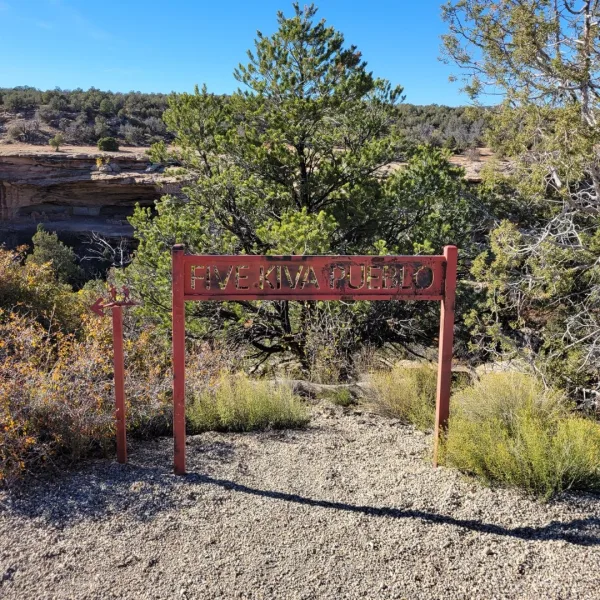
Five Kiva Pueblo
USA / UTAH / ANCESTRAL PUEBLOAN
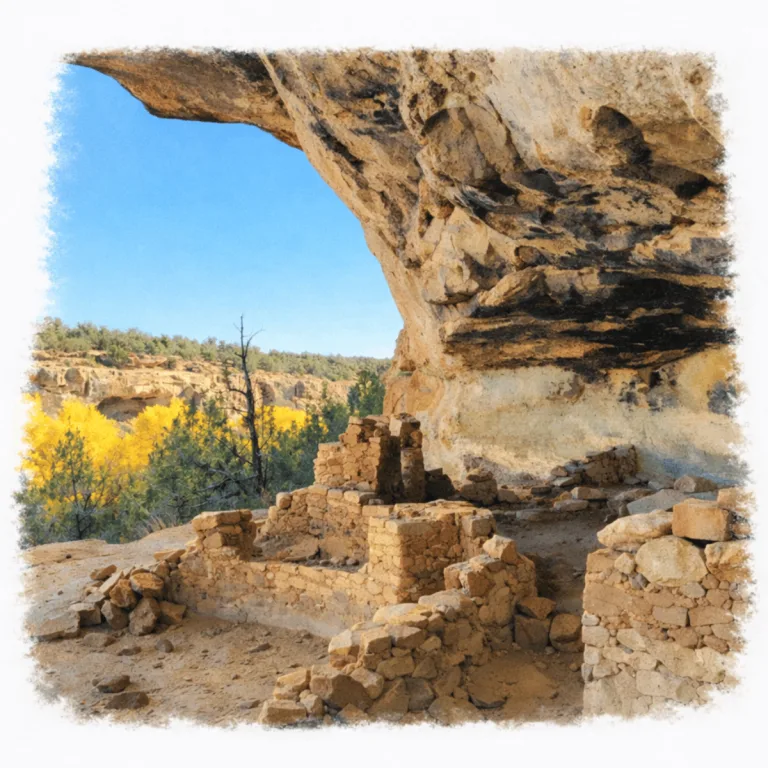
Tucked within a sheltered canyon alcove above the valley floor, Five Kiva Pueblo clusters five circular kivas into a single compact site, where multiple ceremonial chambers are built side by side within a protected cliffside setting.
| Name | Five Kiva Pueblo |
| Civilization | Ancestral Puebloans |
| Location | Near Blanding, Utah |
| Elevation | 5,635 and 5,783 ft (1,717 to 1,763 m) above sea level |
| Years Active | c. 1100 to 1300 CE |
| Primary Resources | Sandstone masonry, piñon and juniper timber, dryland agriculture |
| Site Type | Alcove settlement with multiple kivas and room blocks |
| Key Highlights | Kiva cluster, alcove setting, valley views, preserved masonry |
| Entry Fee | No fee at trailhead |
| Best Time to Visit | Spring and fall or early evening for softer light |
| Field Visit | Visited & photographed by Lost Ruins of the Americas |
Unique Features of Five Kiva Pueblo
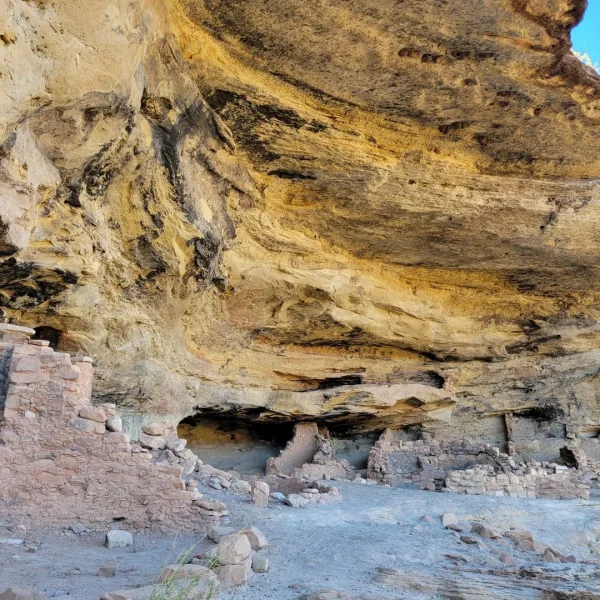
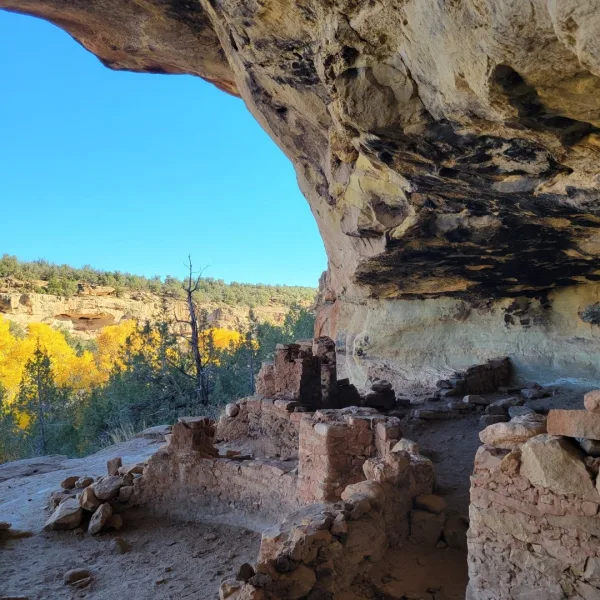
- Alcove Placement: Built beneath a natural rock overhang that shelters rooms and kivas and defines the site’s setting.
- Five Kivas: A dense grouping of circular ceremonial structures preserved within a compact footprint.
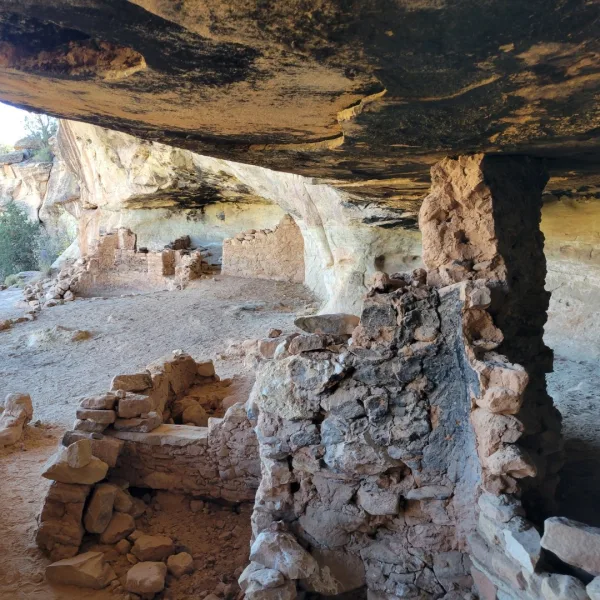
- Preserved Masonry: Visible wall sections showing carefully placed sandstone blocks and stable construction.
- Compact Room Clusters: Residential rooms tightly grouped around the kivas, making the layout easy to follow.
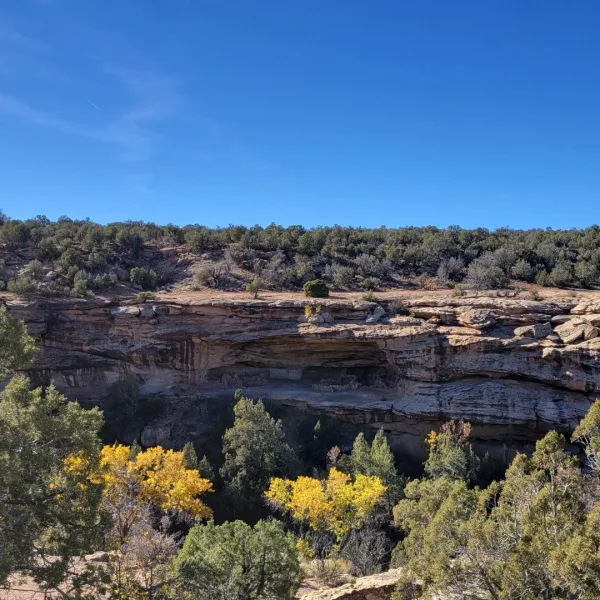
- Canyon and Valley Views: Elevated alcove position overlooking nearby drainage corridors and surrounding benches.
Location & Access
- Nearest Town: Blanding, Utah
- Trailhead: A short drive west of Blanding with small pullout parking near the canyon rim
- Directions: From Blanding, drive south on US-191. Turn west onto Ruin Road for about 1.7 miles to parking area at the canyon rim.
- Opening Hours: Day use only
- Entry Fees: None
- Facilities: No services. Bring water and supplies
- Trail Conditions: Moderate twenty minute hike into and out of the canyon with some uneven surfaces
- Accessibility: Not accessible for wheelchairs or strollers
- Pro Tip: The final climb into the alcove offers the best view. Take your time and watch footing on loose stone
Highlights to Help Understand Your Visit
Five Kiva Pueblo compresses ceremonial rooms, household space, and canyon shelter into a small alcove above Westwater Creek.
- Five Kivas in One Alcove: The repeated round rooms make ceremony the clearest organizing feature. This was not simply a tucked-away shelter, but a small pueblo built around ritual space.
- Architecture Shaped by the Ledge: The alcove controlled the site’s layout. Rooms, walls, and open space had to fit the rock shelf rather than a broad village plan.
- Ceremony Above the Canyon Floor: The kivas sit within the alcove setting instead of open ground. Their placement shows how Pueblo builders adapted sacred architecture to canyon terrain.
- Domestic Life Close to Ritual Space: Living and storage rooms stand close to the kivas. The site keeps household activity, food storage, and ceremony in a tight architectural relationship.
- Landscape as Protection: Westwater Creek, canyon shade, and the enclosing rock walls made the location practical. The setting provided water access, shelter, and a measure of concealment.
Key Structures of Five Kiva Pueblo
- Kiva Cluster: Several circular ceremonial chambers are built directly into the alcove floor. Their close spacing suggests shared ritual use within a single community rather than separation by family or status.
- Room Blocks: Rectangular masonry rooms line the rear of the alcove, forming compact residential blocks. These spaces likely supported storage, food preparation, and daily domestic life tied closely to the ceremonial core.
- Alcove Bench Areas: Flat working surfaces along the alcove were used for tool making, food processing, and shared tasks. These benches reflect how limited space was adapted for multiple functions.
- Masonry Retaining Walls: Low stone walls along the alcove edge stabilized living surfaces and reduced erosion. Their placement shows deliberate shaping of the alcove into a usable architectural platform.
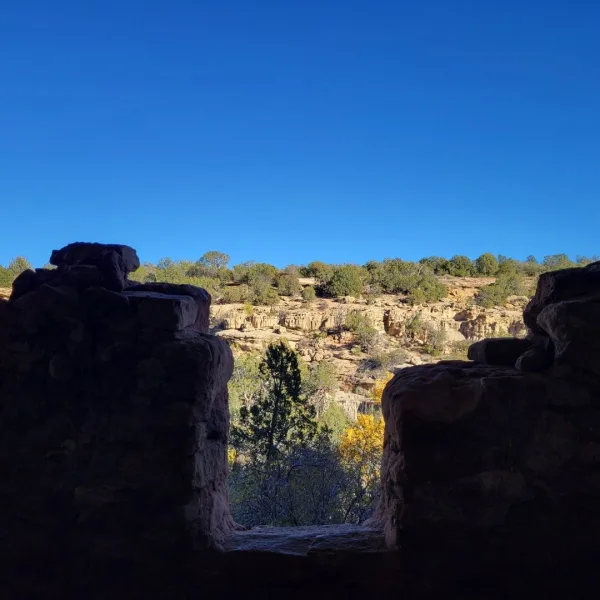
- Approach Trail Overlook: The natural vantage point near the site provides a wide view down the valley. It likely served both practical and observational purposes, linking the pueblo visually to surrounding land and movement corridors.
History and Legends
Five Kiva Pueblo lies within a canyon system shaped by seasonal water and long term human use. The people who settled here were part of the larger Ancestral Puebloans world that stretched across the mesas and plateaus of the Four Corners region. Communities in this area often established sites near alcoves and spring fed drainages where access to water, shelter, and arable land supported small populations. The alcove at Five Kiva Pueblo offered protection from wind and sun, which helped preserve the masonry foundations that remain visible today.
The number of kivas at the site suggests a socially active settlement that may have served extended families or multiple household groups. Kivas were central spaces for ceremony, teaching, story, and shared decision making. Many original kivas throughout the region remain unexcavated out of respect for descendant communities, and those that have been opened for study are often filled again to ensure their protection. The visible outlines at Five Kiva Pueblo offer clues to the structure and use of these important spaces without disturbing them.
Masonry rooms along the alcove wall show how families organized their living areas. Stone courses indicate rooms for storage and household activity, with exterior spaces used for cooking, tool making, and daily tasks. Pottery fragments and other materials found in similar alcove sites across the region point to a community that took part in local trade networks and shared cultural traditions with nearby villages.
Experiences Around Five Kiva Pueblo
The ruins are only part of the story. Sagebrush and juniper cover the high plateau around Blanding, with the Abajo Mountains rising to the north.
At the Nations of the Four Corners Cultural Center, walk among reconstructed Navajo, Ute, Paiute, Hispanic, and pioneer homesteads that reflect the different communities of southeast Utah.
The Dinosaur Museum shifts much farther back in time, with fossilized skin, eggs, skeletons, footprints, and life-size dinosaur models from the Four Corners and beyond.
By the late 1200s many settlements in the region shifted or were abandoned as communities reorganized, moved to new areas, or followed changing social and environmental patterns. Five Kiva Pueblo fits within this broader history. Today the site remains a quiet alcove above a small canyon, visited by hikers who come to reflect on the lives lived here and to walk among the masonry and kiva outlines that still shape the slope.
How to Get There & Where to Go Next
How to Visit Five Kiva Pueblo
Step-by-step access to the site
- Las Vegas, NV Drive northeast via I 15 and US 89 to Cortez, Colorado, about 7 to 8 hours.
- Cortez, CO Continue west toward Canyons of the Ancients National Monument, about 20 minutes.
- Monument Roads Follow signed BLM dirt roads to the trailhead, 10 to 20 minutes depending on conditions.
- Trail Access Short walk from parking to the site, roughly 15 minutes on uneven ground.
Tips: Dirt roads can become impassable after rain or snow. Check conditions in Cortez and carry water, sun protection, and a map.
Nearby Ruins You Can Visit
These Ancestral Puebloan sites reveal how communities balanced ceremony, defense, and daily life across the canyonlands of the Four Corners region.

Hovenweep – Multi story towers and rim edge pueblos reflect defensive planning and changing social conditions in the late Pueblo period.

Edge of the Cedars – A major pueblo and museum complex that preserves architecture, artifacts, and the broader story of Ancestral Puebloan life.

Sand Canyon Trail – Cliff dwellings and masonry rooms line a deep canyon, showing how villages adapted to terrain, water, and protection.
Traveler Tips
- Bring water since there are no services at the trailhead
- Expect a moderate twenty minute hike with uneven footing and a small stream crossing
- Wear shoes with good grip for the climb into the alcove
- Avoid touching or entering any walls or kiva outlines
- Late afternoon light often provides the best view down the valley
Elsewhere in the Americas…
While communities at Five Kiva Pueblo organized daily life around ceremony and shared space, other regions of the Americas were developing along very different paths during the same centuries.



In the Andes, the Chachapoya built Kuélap as a fortified center with massive stone walls and circular dwellings.
Insider Explorer Advice
The short hike from the trailhead passes through a narrow canyon and crosses a small stream before rising toward the alcove. The approach gives a clear sense of how the location was chosen for shelter and visibility. As you step toward the kiva cluster the valley below becomes visible, creating a strong sense of place. Many visitors combine this stop with Edge of the Cedars earlier in the day. The museum provides context and the hike offers a direct experience of the landscape. Respect for the site is essential, so stay on the path and leave only footprints in the dirt.
Summary: Five Kiva Pueblo offers a brief but powerful walk into an alcove settlement where kivas and masonry still shape the slope. Its quiet setting and clear view down the valley make it a rewarding end to a day of exploring the region.