
Kuélap
PURU / AMAZONAS / CHACHAPOYA
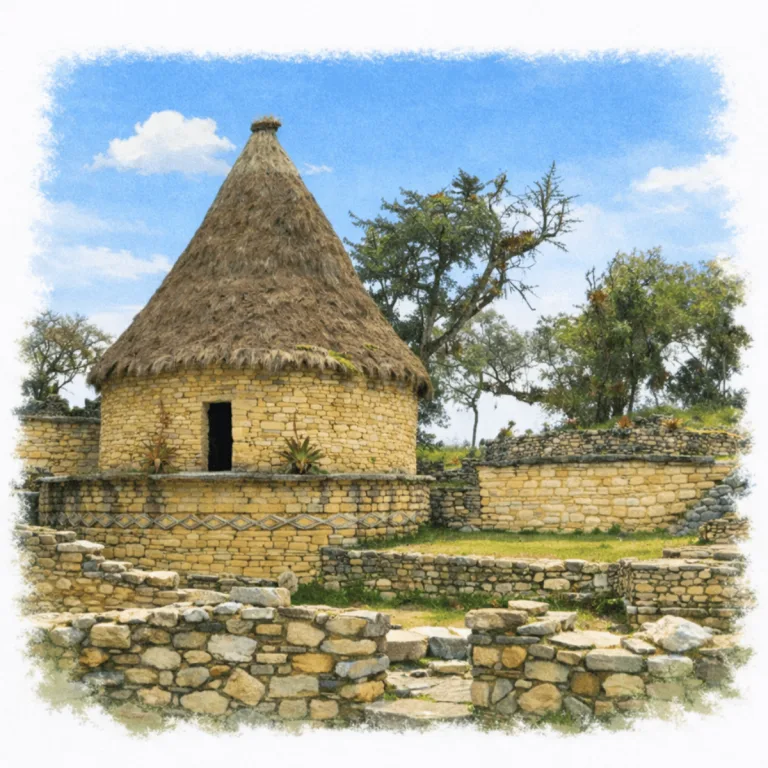
Along a high ridge above the Utcubamba Valley, Kuélap encloses hundreds of circular stone structures within massive perimeter walls, where elevated fortifications define one of the most imposing settlements of the Americas.
| Name | Kuélap |
| Civilization | Chachapoya |
| Location | Tingo District, Luya Province, Amazonas, Peru |
| Elevation | 3,000 meters (9,842 feet) |
| Years Active | 500 – 1570 CE |
| Primary Resources | Limestone, maize, cloud forest timber |
| Site Type | Walled political, ceremonial, administrative, and residential center |
| Key Highlights | El Tintero, Torreón, frieze-decorated dwellings |
| INT Airport | Capt FAP José A. Quiñones Gonzales INT Airport (CIX), Chiclayo |
| UNESCO | Chachapoyas sites of the Utcubamba Valley |
| Entry Fee | S/20 national, resident, or CAN; S/30 foreign visitor |
| Best Time to Visit | Dry season (May–September), early morning |
| Field Visit | Visited & photographed by Lost Ruins of the Americas |
Unique Features of the Kuélap Archaeological Site
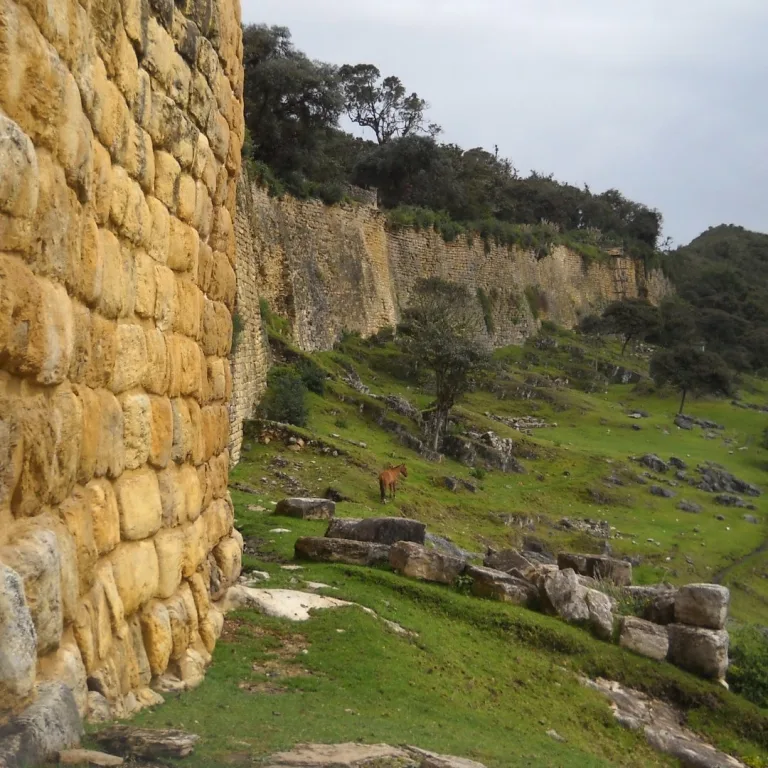
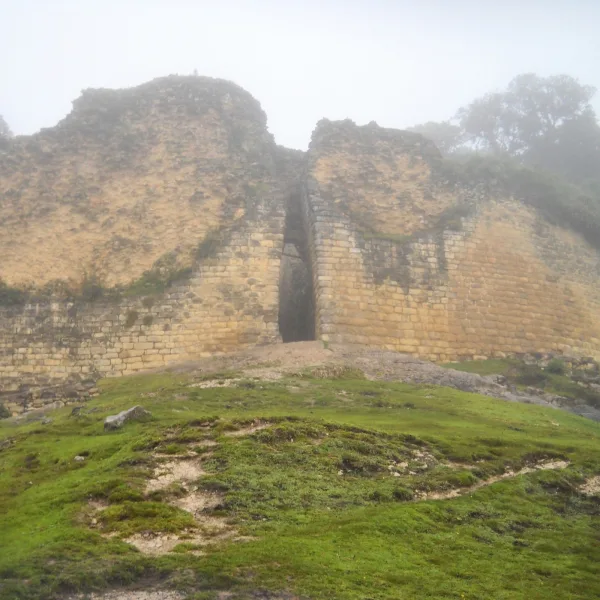
- Massive Perimeter Walls: Towering limestone walls, some over 20 meters high, enclose the complex with precision stonework.
- Trapezoidal Entrances: Narrow gateways designed for controlled access, enhancing defensive security.
- El Tintero: Inverted conical structure likely used for ceremonial or astronomical functions.
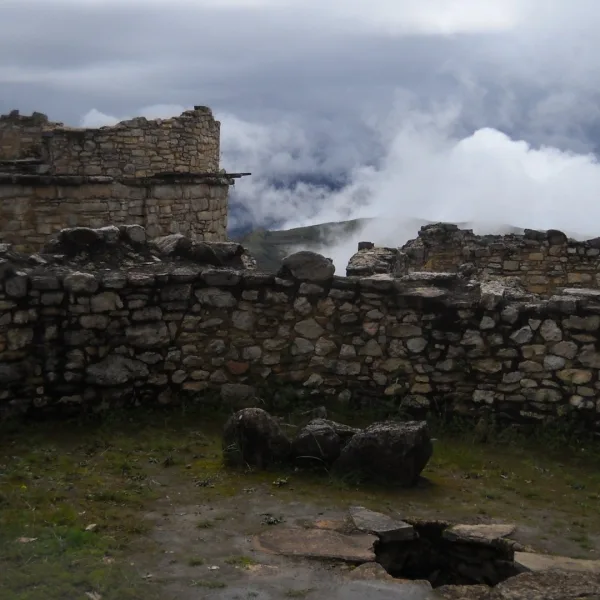
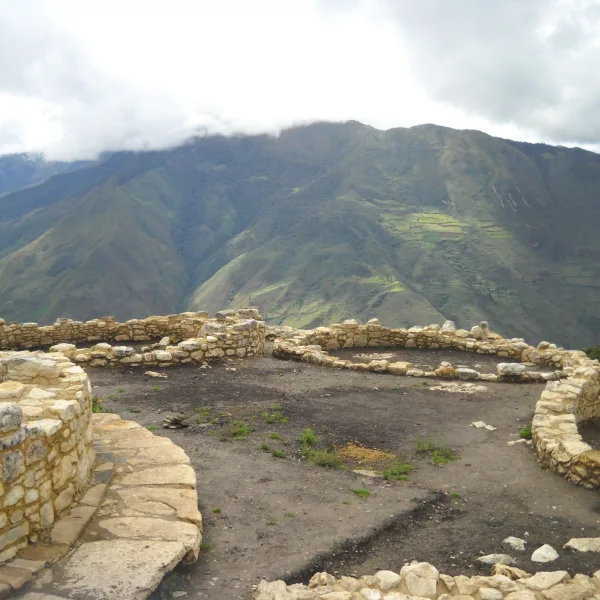
- 360° Views: The site’s summit offers sweeping views over cloud forest valleys and shifting mountain weather.
Location & Access
- Nearest Town: Nuevo Tingo, Amazonas
- Directions: Chachapoyas, travel approximately 50 kilometers to Nuevo Tingo. From the Telecabinas station, continue by shuttle bus and cable car to La Malca, then walk 30 to 40 minutes to the llaqta entrance. Allow about two hours from Chachapoyas.
- Official Website: Ministry of Culture, Kuélap.
- Opening Hours: Tuesday to Sunday, 8:00 AM to 5:00 PM. Entry to the llaqta follows the time printed on the ticket.
- Entry Fees: S/20 for Peruvians, foreign residents, and citizens of the Andean Community; S/30 for other foreign visitors. The Telecabinas return fare is S/26.50.
- Facilities: La Malca visitor center, restrooms, interpretation points, rest areas, and craft sales.
- Accessibility: Partial. A shorter llaqta circuit is designed for visitors with limited mobility, but the approach from La Malca still requires a 30 to 40 minute walk.
- Pro Tip: Weather shifts quickly, bring layers. Mornings offer better views and fewer crowds.
Highlights to Help You Understand Your Visit
Look closely. Kuélap isn’t just built for defense. It is built for memory, mystery, and control.
- Architecture of Inclusion and Exclusion: Narrow gateways and limited entry points suggest more than security. They shaped who could enter, how, and when. This was a controlled experience.
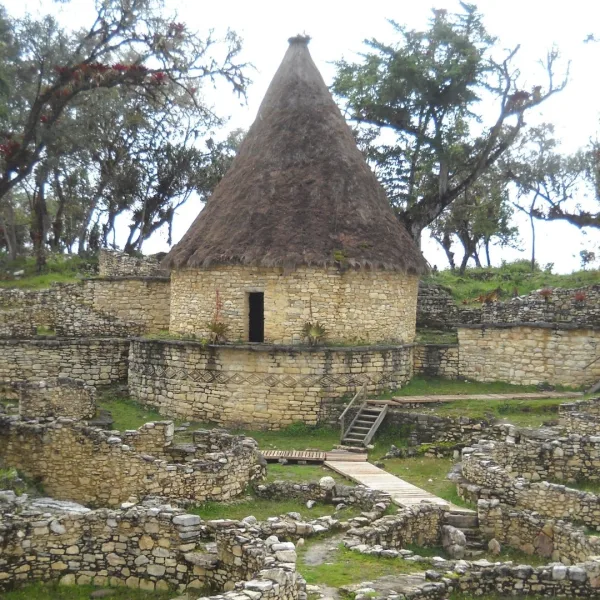
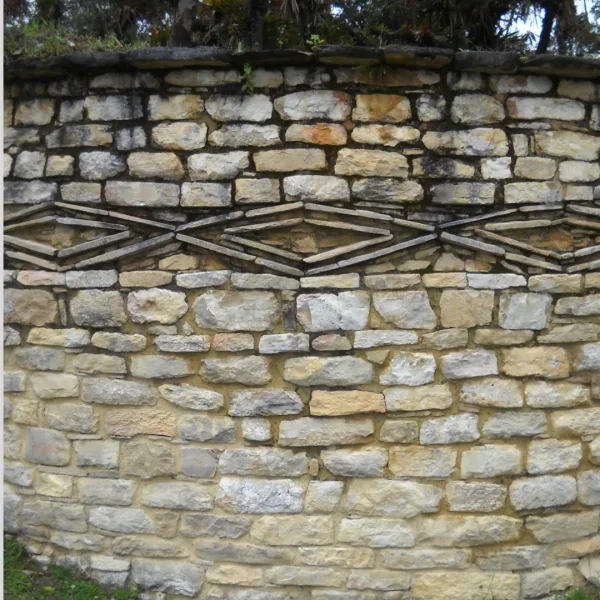
- Roundhouses With Meaning: Over 400 circular structures fill the space. These are not random. Many are decorated with frieze patterns that likely marked clan identity or social status.
- The Platform Isn’t Flat: Kuélap rises in tiers, with higher sections likely reserved for elites. Movement within the site was vertical as well as horizontal. Elevation reflected hierarchy.
- Hidden Burials, Visible Power: Subterranean crypts beneath houses hint that the dead remained part of daily life. This was a city of the living and the ancestors.
- Stone That Breathes Water: Look for subtle drainage channels. This place was engineered to endure heavy rain without crumbling. That kind of foresight speaks to serious permanence.
- More Than a Fortress: From a distance, Kuélap looks defensive. Up close, its ceremonial alignments, decorative walls, and tombs suggest it was just as spiritual as it was strategic.
Key Structures of the Kuélap Ruins
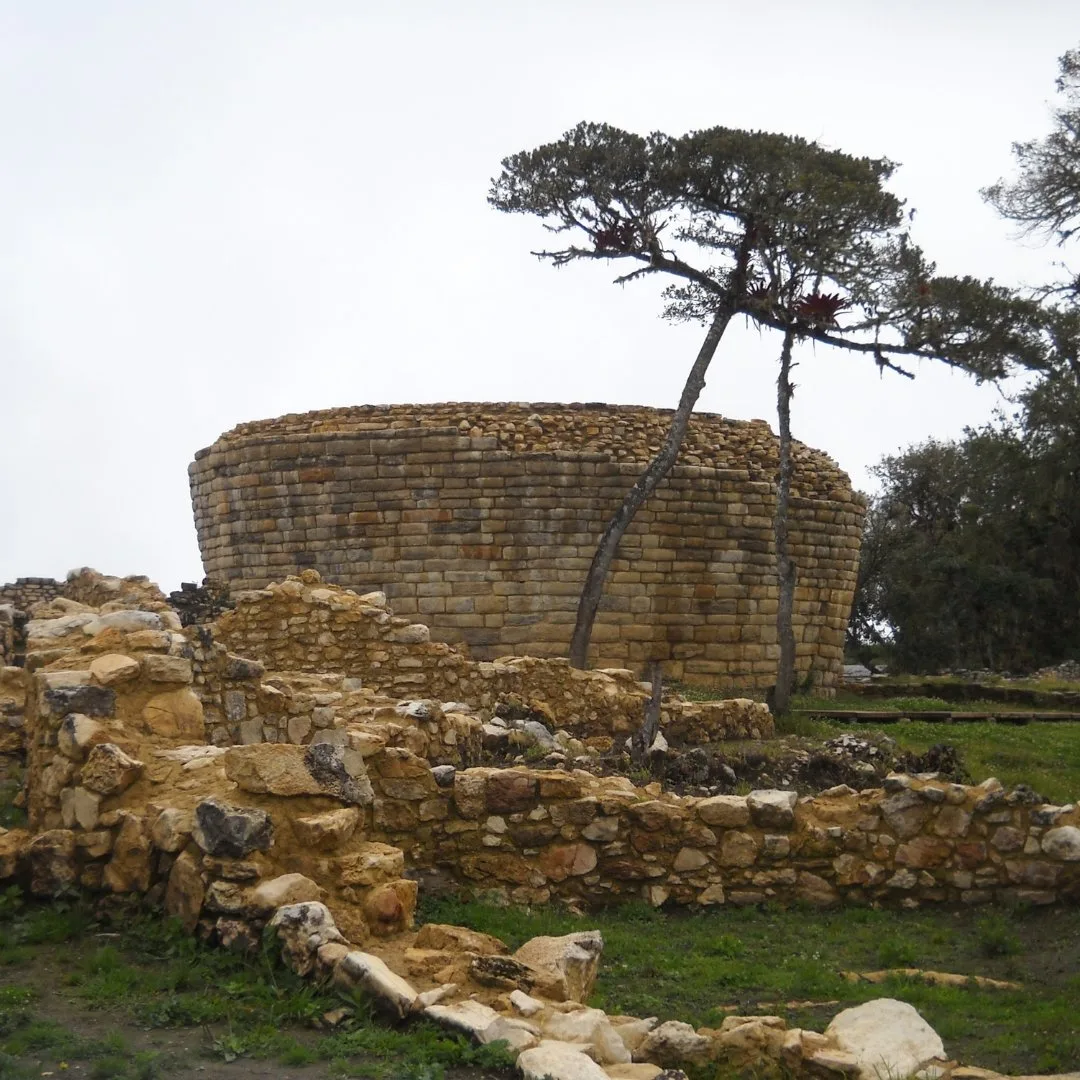
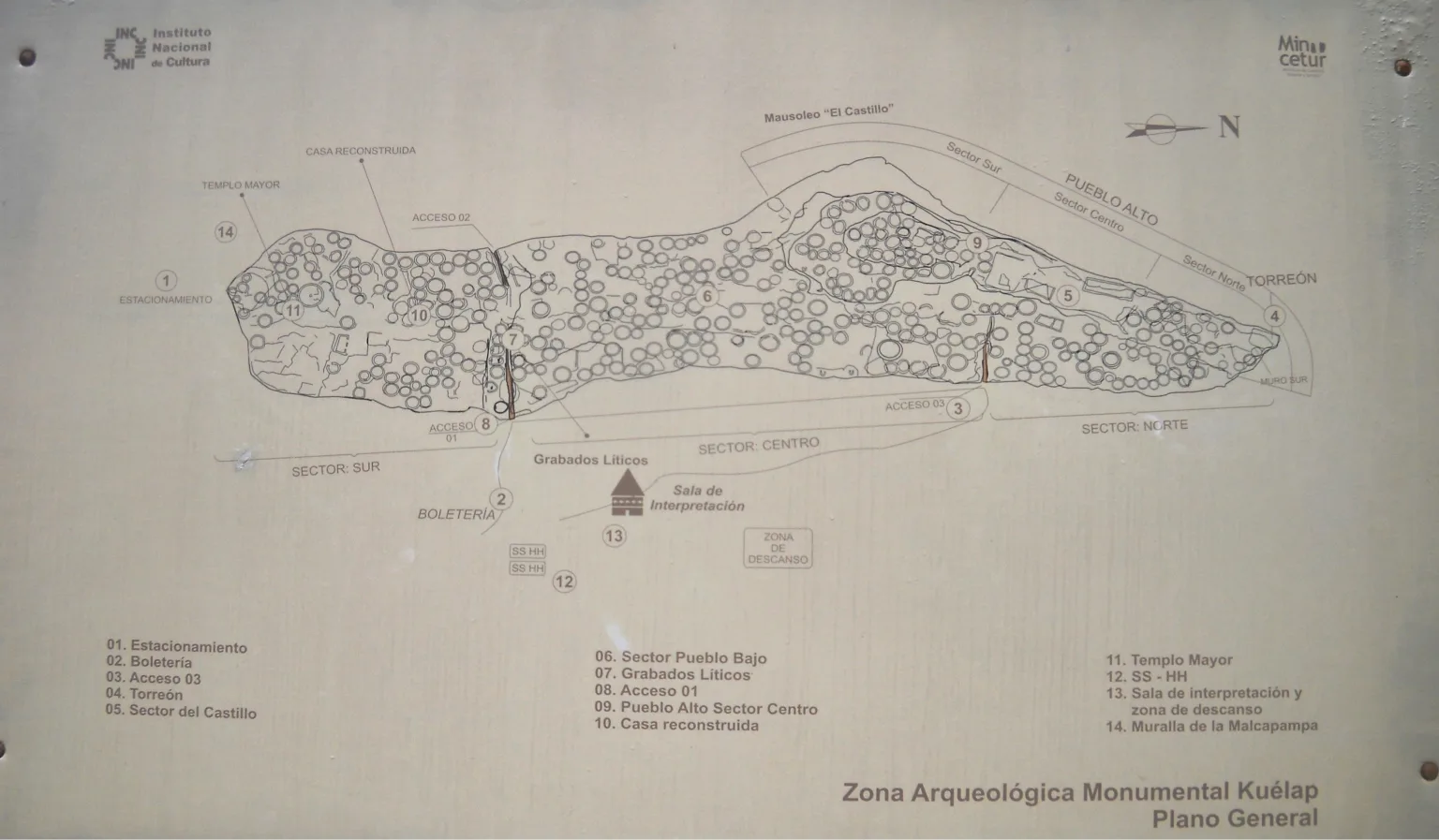
- El Tintero: A 5.5-meter-high inverted cone-shaped tower interpreted as ceremonial or astronomical in function due to its unusual geometry.
- El Torreón: Defensive watchtower standing 7 meters tall at the northern edge of the site; offers wide views over the Utcubamba Valley.
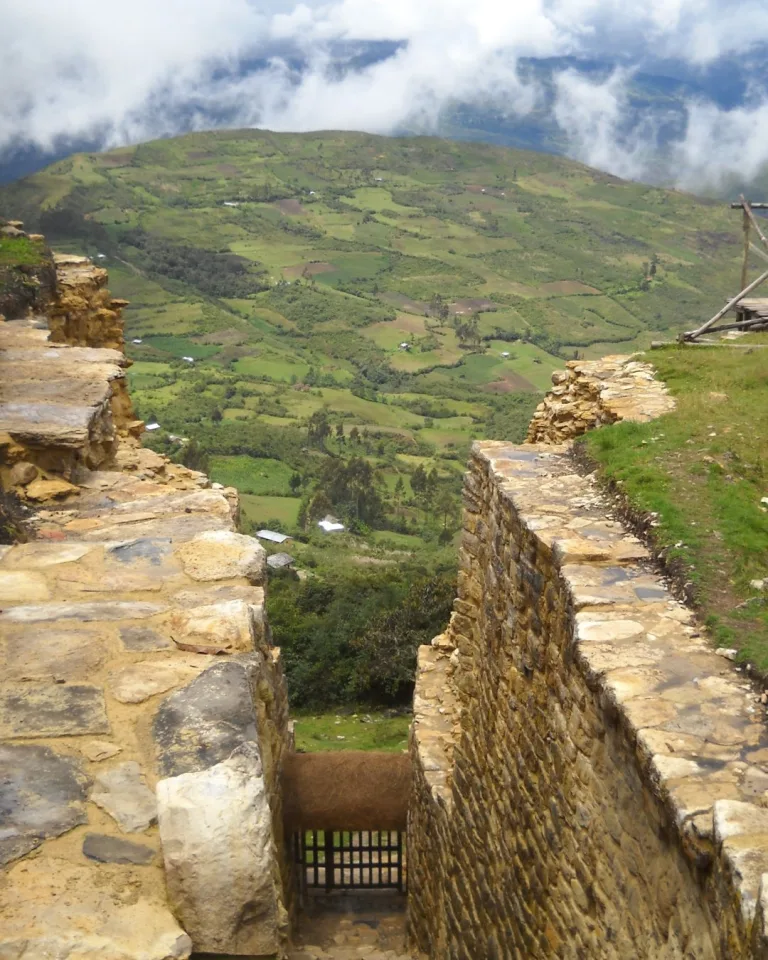
- Main Gateway: A narrow, inward-sloping passage with a funnel design, intended to limit entry and reinforce security during access.
- South Entrance: A secondary trapezoidal access point near the lower plaza, designed for controlled movement and symbolic separation.
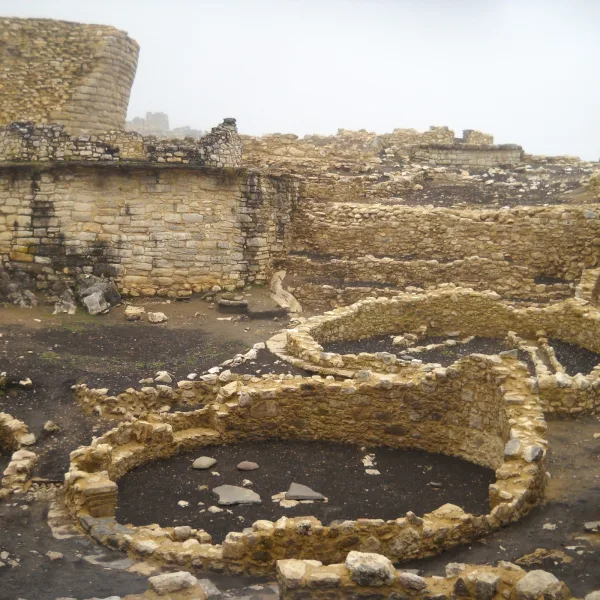
- Frieze Dwellings: Over 400 circular houses constructed with stone masonry, many decorated with zigzag and rhomboid patterns — thought to signify clan affiliations or status.
- Subterranean Burial Chambers: Located beneath some dwellings, these small crypts are believed to have housed ancestral remains as part of domestic ritual life.
- Southern Sector: Elevated platform likely used for elite residence or ceremonial activity; includes tightly packed architectural foundations and enclosed corridors.
- Upper Citadel Zone:
- North Platform: Terraced base supporting elite compounds or administrative spaces with thicker walls and restricted access.
- Western Wall Lookouts: Strategic projections in the wall enabling surveillance down canyon slopes and over key access paths.
- Lower Plaza: Open communal area in the southern section of the site, possibly used for gatherings, rituals, or market functions.
- Drainage Channels: Integrated stone-cut water conduits designed to manage rainfall and prevent erosion within the walled compound.
History and Legends
Long before the Spanish arrived in the Andean highlands, the Chachapoya people established Kuélap as a center of ritual, defense, and elite residence. Construction began around 500 CE, placing the site’s foundation well before the expansion of the Inca Empire. Positioned along the upper slopes of the Utcubamba Valley, Kuélap served both as a refuge and as a visible symbol of Chachapoya identity. It was a fortress of high stone rising from the cloud forest canopy.
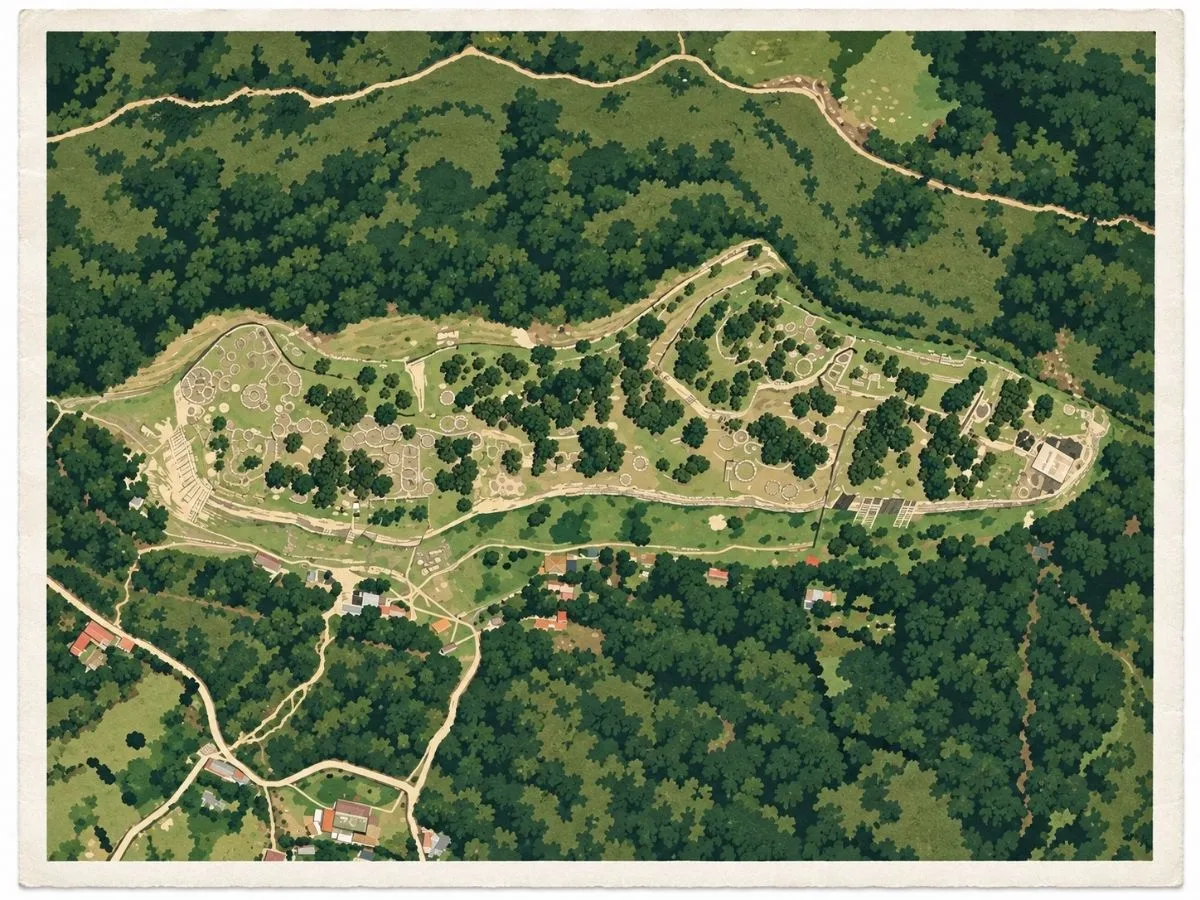
The Chachapoya civilization, loosely organized and fiercely autonomous, occupied a swath of territory across northern Peru. While not an empire in the centralized sense, their network of settlements, burial sites, and cliff tombs reflected a deeply rooted spiritual system and a capacity for engineering in difficult terrain. Kuélap became the architectural crown of this system, enclosed within limestone walls over 20 meters high and housing more than 400 circular dwellings within its bounds.
Unlike the Inca, who built rectangular structures and organized cities around rigid plans, the Chachapoya favored circular dwellings and organic spatial layouts. Yet the two cultures would meet. By the late 15th century, Inca forces under Tupac Inca Yupanqui advanced into Chachapoya territory. Resistance was fierce and sustained. Spanish chroniclers later referred to the Chachapoya as one of the most defiant peoples encountered by the Inca. Eventually, the region was absorbed into the Inca administrative system, though integration remained superficial in many areas.
Who were the Chachapoya?
The Chachapoya were a highland culture of northern Peru who flourished from around 800 CE until the Inca expansion in the late 1400s. Living along the eastern Andes in cloud forest regions, they built stone settlements on ridges and mountaintops, often surrounded by steep terrain and dense vegetation. They are known for circular architecture, cliffside tombs, and distinctive funerary traditions, including sarcophagi placed on high ledges. By the time the Inca arrived, the Chachapoya were already established across a wide region, and their legacy remains visible at sites like Kuélap.
Following the arrival of the Spanish in the 1530s, Chachapoya communities found themselves caught in a new struggle. Some allied with the Spaniards to fight the Inca. Others retreated deeper into the forest. There are no direct Spanish accounts of Kuélap in use during this period, suggesting that the site may have already been abandoned or reserved for ceremonial function only. Oral traditions collected centuries later spoke of a place in the clouds where the “ancestors stood watch,” hinting at Kuélap’s lingering presence in regional cosmology.
Kuélap was formally rediscovered in 1843 by Juan Crisóstomo Nieto, a local judge from Chachapoyas who visited the site and documented its scale and fortifications. Throughout the 20th century, archaeological expeditions slowly mapped and partially restored sections of the walls, gateways, and ceremonial spaces. Excavations confirmed the presence of subterranean burial vaults, elite compounds, and defensive structures that were unlike anything seen in neighboring regions.
Restoration efforts have continued into the 21st century, challenged by the site’s elevation (nearly 3,000 meters above sea level), frequent rainfall, and seismic vulnerability. In recent years, structural damage to the southern wall has led to partial closures and new stabilization programs. The Peruvian government and local communities remain invested in preserving Kuélap as both a national heritage site and a sacred place still echoing with the voices of its builders.
Experiences Around Kuélap
The ruins are only part of the story. Kuélap rises above the Utcubamba Valley, where steep farmed slopes and cloud forest separate the site from Chachapoyas.
In Chachapoyas, visit the Sala de Exhibición Gilberto Tenorio Ruiz for Chachapoya ceramics, stone tools, and funerary bundles, then walk up to Pozo Yanayacu, a historic spring above the center.
At Cocachimba, hike through farmland and cloud forest to the base of Gocta Waterfall, where the lower cascade drops from a sheer green cliff.
How to Get There & Where to Go Next
How to Visit Kuélap
– Step-by-step access to the site –
- Fly or bus to Jaén, in northern Peru.
- Shared taxi or bus to Chachapoyas (~4 hours).
- Taxi or colectivo to Nuevo Tingo (~1 hour).
- Take the cable car to the summit station (20 minutes).
Tips: The cable car is closed on Mondays. Jaén flights are fastest. Consider overnighting in Chachapoyas or Tingo for best light and access.
Nearby Ruins You Can Visit
These highland sites share Kuélap’s world of stone fortresses, misty ridgelines, and bold resistance against powerful empires.
Chavín de Huántar – A much older ceremonial hub, but its sacred architecture may have shaped ideas that echoed into Chachapoya lands.

Marcahuamachuco – Massive walls and hilltop enclosures built by a northern highland culture that may have influenced Chachapoya engineering.

Cerro Miraflores – A narrow-ridge fortress with panoramic views, once guarding the Huamachuco highlands from a windswept perch.
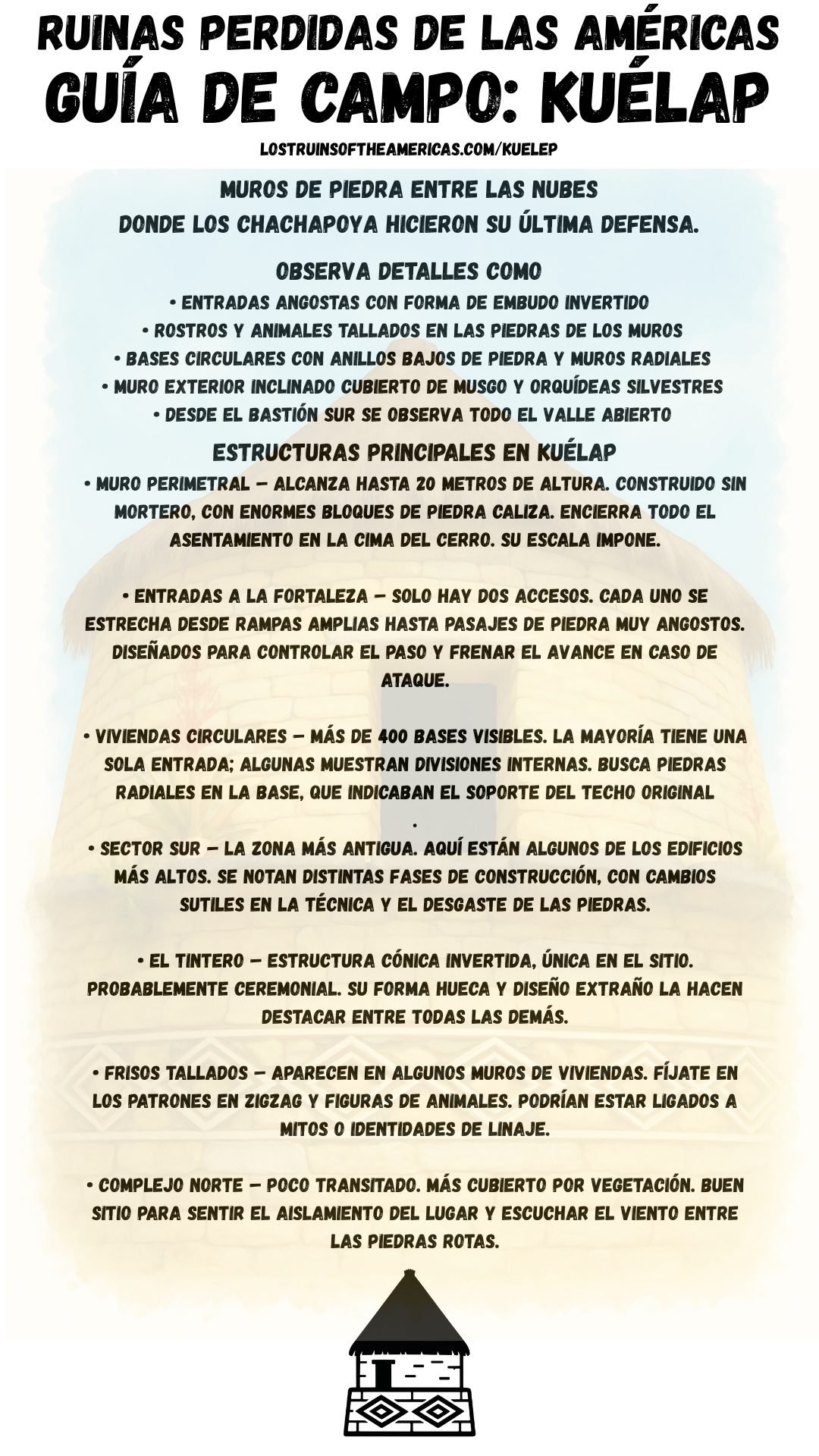
Download Quick Guide
Español
English
Traveler Tips
- Arrive early to avoid clouds rolling in and to enjoy quieter trails.
- Layered clothing is essential, expect sun, wind, and rain within hours.
- Sturdy shoes recommended, paths are uneven, especially near entrances.
- Food and water should be packed ahead; limited options at La Malca.
- Photography is best mid-morning, when light cuts through mist for dramatic views.
Elsewhere in the Americas…
While Kuélap stood as a fortified Chachapoya stronghold in the cloud forests of northern Peru, other regions across the Americas saw powerful cities and cultures shaping their own landscapes:

To the north, Ancestral Puebloans built stone villages at Lowry Pueblo and Hovenweep, gathering in great kivas across the Colorado Plateau.
In Oaxaca, Monte Albán remained a ceremonial and administrative center, with Danzante carvings and tombs reflecting a complex Zapotec society.

Insider Explorer Advice
From Chachapoyas, take a combi to Nuevo Tingo. The ride takes 1.5 to 2 hours depending on stops. At the station, buy a roundtrip cable car ticket, which includes a shuttle van to La Malca and a 15-minute gondola ride across the canyon. From the drop-off, it’s a 30 to 40 minute uphill walk to the site. The path is clear, but the incline can still test your pace. Time and patience matter. For those who have made the journey from Chachapoyas, it is worth staying a night or two in Nuevo Tingo to take it all in without rushing.
At the summit, the scale of Kuélap unfolds. The entrance cuts through a narrow stone breach. It is a channel into silence. From above, views extend in every direction, shifting with light and cloud. Inside the walls, dozens of circular stone structures stand as ancient dwellings with low entrances and elevated niches. These form a tight, clustered city in the sky. Many are marked with crisp geometric friezes carved into the stone: zigzags, chevrons, and bands that speak a visual language all their own. It feels designed not just for function, but for meaning.
Summary: Kuélap is not a northern Machu Picchu. It is something else. It is older, quieter, and no less profound for those who make the effort.