
Edge of the Cedars
USA / UTAH/ ANCESTRAL PUEBLOAN
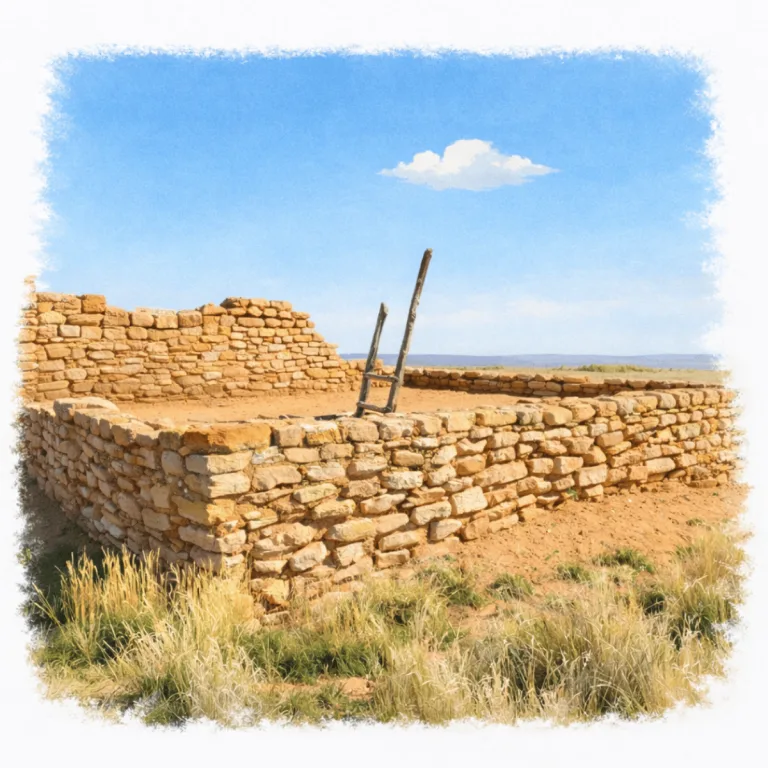
On a sandstone ridge above the San Juan River, Edge of the Cedars centers a towering kiva within a community of masonry rooms, where ceremonial architecture anchors one of the largest Ancestral Puebloan settlements in the region.
| Name | Edge of the Cedars Museum and Site |
| Civilization | Ancestral Puebloans |
| Location | Blanding, Utah |
| Elevation | 6,047 to 6,184 feet (1,843–1,885 meters) above sea level |
| Years Active | c. 700 to 1300 CE |
| Primary Resources | Stone masonry, local agriculture, regional trade networks |
| Site Type | Museum and archaeological village with reconstructed kiva |
| Key Highlights | McCaw feather sash, extensive artifact collection, working conservation labs, enterable kiva |
| Entry Fee | Standard state museum admission |
| Best Time to Visit | Spring and fall or anytime during museum hours |
| Field Visit | Visited & photographed by Lost Ruins of the Americas |
Unique Features of the Edge of the Cedars Archaeological Site
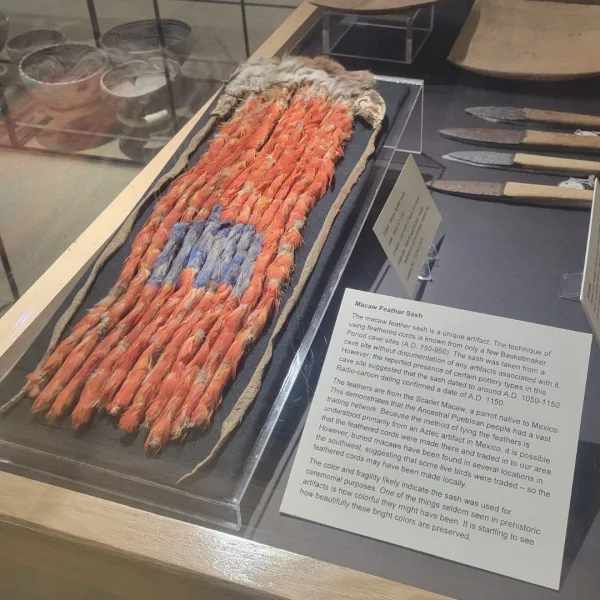
- McCaw Feather Sash: A rare artifact that demonstrates how far reaching trade networks once were across the ancient Americas.
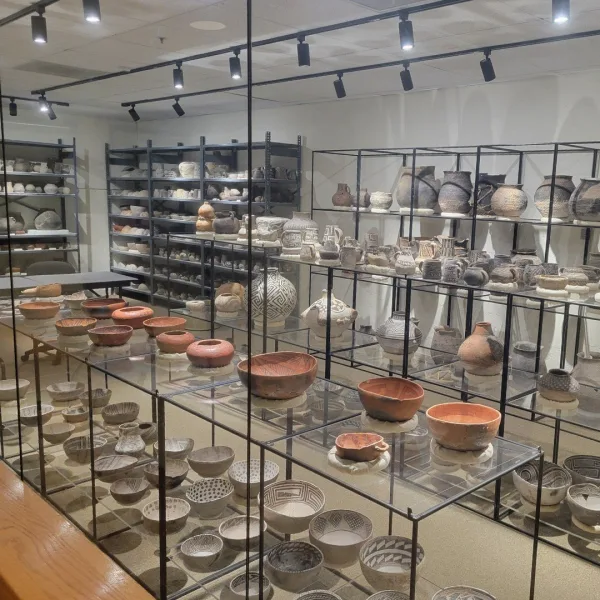
- Extensive Artifact Displays: The museum houses one of the largest public collections in the region with pottery, tools, weaving, and ceremonial items.
- Conservation Viewing: Visitors can sometimes watch specialists working on artifacts through glass windows in the lab area.
- Outdoor Archaeological Site: A preserved village area sits beside the museum with visible foundations and interpretive signs.
- Reconstructed Kiva: The highlight of the outdoor exhibit is a full scale reconstructed kiva with a ladder visitors may climb to enter.
Location & Access
- Nearest Town: Blanding, Utah
- Directions: Easily reached inside Blanding along Edge of the Cedars Drive with clear signage from the main roads.
- Managing Agency: State of Utah and Edge of the Cedars State Park Museum
- Opening Hours: Standard museum schedule with seasonal adjustments
- Entry Fees: State museum admission required
- Facilities: Restrooms, museum exhibits, bookstore, viewing areas, and an outdoor archaeological village
- Accessibility: Museum areas are accessible. Outdoor site pathways are short and manageable.
- Pro Tip: Plan time for both the museum galleries and the outdoor kiva since each offers a different experience.
Highlights to Help Understand Your Visit
A few key points will help frame what you see inside the museum and at the pueblo outside.
- A Cultural Crossroads. The museum sits within a region where Ancestral Puebloan, Fremont, and later Navajo histories intersected. This blend shapes the artifact collections and the stories they tell.
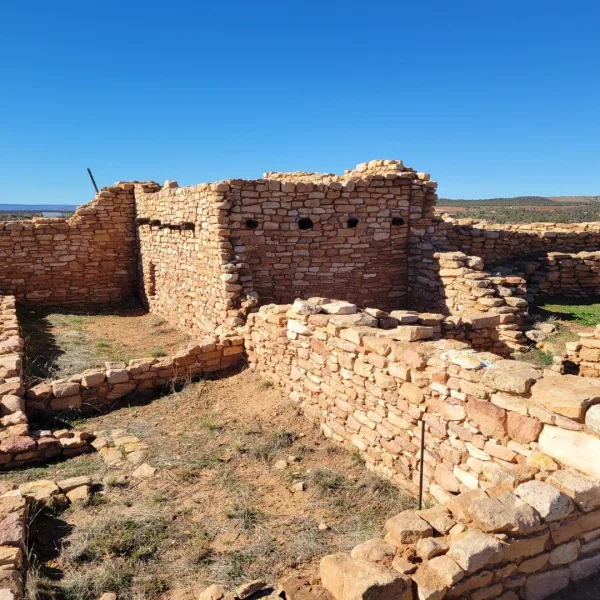
- Layers of Daily Life. The excavated rooms outside show household activity, storage patterns, and the rhythms of a small community. These clues help visitors understand how people organized space and movement.
- Ceremony and Community. The kiva remains highlight how ritual and communal gatherings were woven into daily life. The form and placement of the kiva link this site to the wider Four Corners world.
- Master Craftsmanship. The pottery gallery inside features some of the finest work from the region. Noticing paint lines, firing technique, and mineral sources reveals how skilled and interconnected these communities were.
- A Hub of Regional Exchange. Many artifacts in the museum came from distant valleys and mesas. These pieces help visitors understand how far ideas and materials traveled across the Colorado Plateau.
Key Structures of the Edge of the Cedars Ruins
- Reconstructed Kiva: A full scale ceremonial chamber built with traditional proportions, designed so visitors can climb down the ladder and experience the interior space. Interpretive notes explain how kivas functioned as settings for ceremony, teaching, and community life.
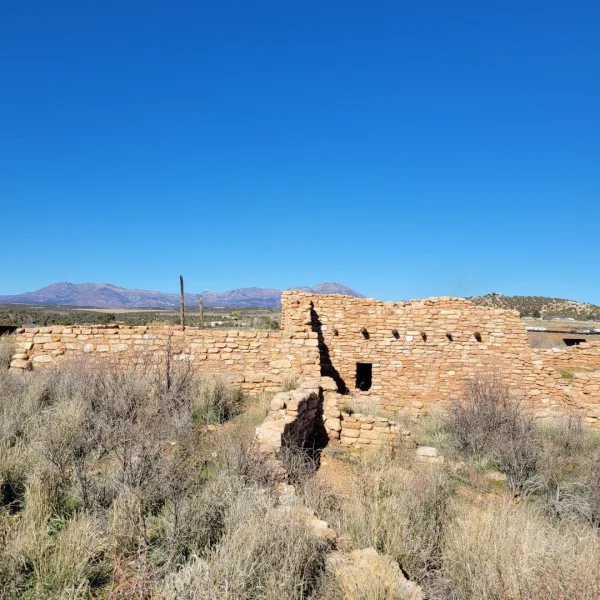
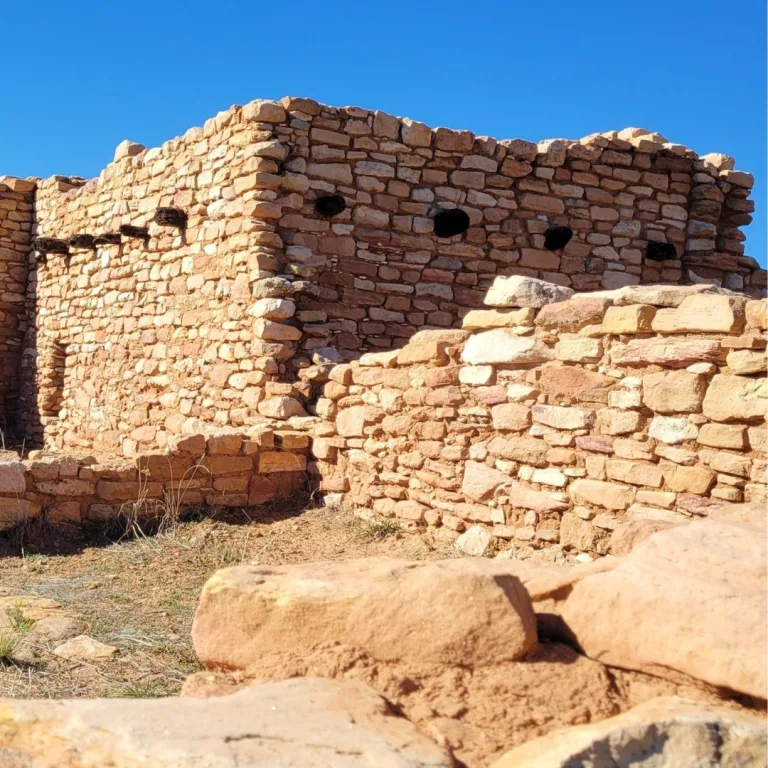
- Village Foundations: Low masonry outlines that show the footprint of rooms and shared outdoor areas from the original settlement. These foundations illustrate how families organized living, working, and gathering spaces around small communal courtyards.
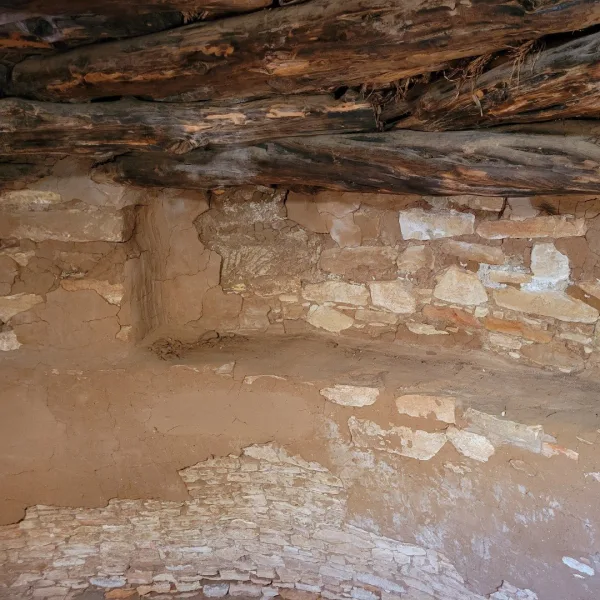
- Masonry Room Blocks: Remnants that indicate storage rooms, domestic activity areas, and multi room configurations typical of Pueblo villages. The surviving stone courses show how walls were laid out and how space was divided for daily tasks.
- Museum Galleries: Purpose built exhibition halls that display pottery, textiles, stone tools, ceremonial pieces, and regionally focused cultural information. The galleries provide context that complements the outdoor village remains.
- Conservation Lab Windows: Viewing areas where visitors may observe conservation specialists stabilizing artifacts and preparing items for storage or display. These spaces offer insight into the methods used to protect archaeological materials.
History and Legends
The landscape around Edge of the Cedars holds a long record of human presence in what is now southeastern Utah. The people who lived in this region were part of the wider Ancestral Puebloan world, a network of communities that built in stone, farmed the high desert, and developed cultural traditions that stretched across the Colorado Plateau. Many of the artifacts preserved in the museum come from the surrounding canyons and mesas. Together they trace patterns of movement, settlement, and daily activity that unfolded across many centuries.
The village beside the museum represents only a small portion of what once stood here. Its low foundations and room outlines follow layouts seen throughout the region, where households clustered around shared outdoor spaces that supported cooking, tool making, and community life. The reconstructed kiva offers a rare chance to understand how these ceremonial rooms were arranged, since many original kivas are left undisturbed out of respect for descendant communities. When excavation is necessary, the chambers are often filled in again to ensure their long term protection. The form seen here reflects a regional tradition, showing how ideas and building practices moved between settlements.
Inside the museum, the collection presents a broad view of the cultural world that shaped this region. Pottery, tools, textiles, and ceremonial items highlight the skill of local artisans and the variety of traditions they drew from. Some pieces speak to long distance exchange. The McCaw feather sash is a clear example of this, because it reflects connections between desert communities in Utah and tropical regions far to the south. Items like this demonstrate how ideas, materials, and knowledge moved through wide networks long before modern borders existed.
Experiences Around Edge of the Cedars
The ruins are only part of the story. This corner of Blanding sits on a high plateau below the Abajo Mountains, with sage, juniper, and red-rock canyon country stretching south.
At Cedar Mesa Pottery, take the self-guided workshop tour to watch Native artists paint and finish pottery using brushes, sponges, airbrushes, and etched designs.
The Dinosaur Museum shifts much farther back in time, with fossilized dinosaur skin, eggs, skeletons, life-size models, and a giant petrified tree.
Preservation efforts at Edge of the Cedars focus on both education and stewardship. Exhibits explain how archaeologists document and care for fragile objects, while the reconstructed kiva allows visitors to experience a type of space that rarely survives in complete form. Although the outdoor village is modest in size, the museum’s collection gives it context and depth. Together they offer a concentrated introduction to the history of the Four Corners region and to the enduring traditions of the Puebloan world.
How to Get There & Where to Go Next
How to Visit Edge of the Cedars
Step-by-step access to the site
- Start in Las Vegas NV take I 15 north to St. George, about 2.5 hours.
- St. George to Page AZ follow UT 9 and US 89 east, about 2.5 hours.
- Page to Blanding UT stay on US 89 then turn onto UT 95 east, about 2.5 hours.
- Enter Blanding continue on US 191 north for a few minutes.
- Turn west on 400 West the museum entrance appears on the right.
Tips: Watch for the brown highway sign marking the turn. This avoids overshooting the neighborhood approach.
Nearby Ruins You Can Visit
In the sandstone canyons of the Four Corners, these nearby ancestral sites reveal the shared traditions and regional connections of the ancient Pueblo world.

Five Kiva Pueblo – A compact alcove village centered on five ceremonial kivas in the canyonlands of the Four Corners.

Sand Canyon Trail – Cliffside pueblos and towers line a canyon route that reflects daily life in this region.

Lowry Pueblo – A compact village with a Great Kiva, showing how community and ceremony blended in Chaco’s northern sphere.


Download Quick Guide
Español
English
Traveler Tips
- Plan at least an hour to explore both the museum displays and the outdoor archaeological site.
- Bring water since the outdoor portion has limited shade.
- Take time to view conservation work through the lab windows when staff are present.
- Climb carefully into the reconstructed kiva and respect all posted guidelines.
- Photography is welcome in most areas but check signage for restrictions.
Elsewhere in the Americas…
At the same time, major societies across the ancient Americas were building capitals, ceremonial landscapes, and trade networks on a far larger scale.

In Mexico, Chichén Itzá flourished as a major Maya city where pyramids and observatories aligned with celestial cycles.

Tiwanaku shaped highland ritual life through sunken courts and carved stone monuments around Lake Titicaca.
Insider Explorer Advice
The museum is best explored at an unhurried pace since many displays include detailed notes that reward close attention. The reconstructed kiva outside adds a helpful sense of scale and complements what you see indoors.
For those interested in cultural connections, the cases that focus on regional trade are especially valuable. The feather sash and textile fragments show how far materials and ideas traveled. Paired with the small outdoor village, the museum gives a clear and concentrated introduction to the Ancestral Puebloan world.
Summary: Edge of the Cedars Museum and Site offers a rich blend of artifacts, interpretation, and hands on exploration. It gives visitors a concentrated look into the lives and traditions of the Ancestral Puebloans while remaining easy to explore in a single visit.