
Huaca Pucllana
PERU / LIMA / LIMA, WARI, YCHSMA
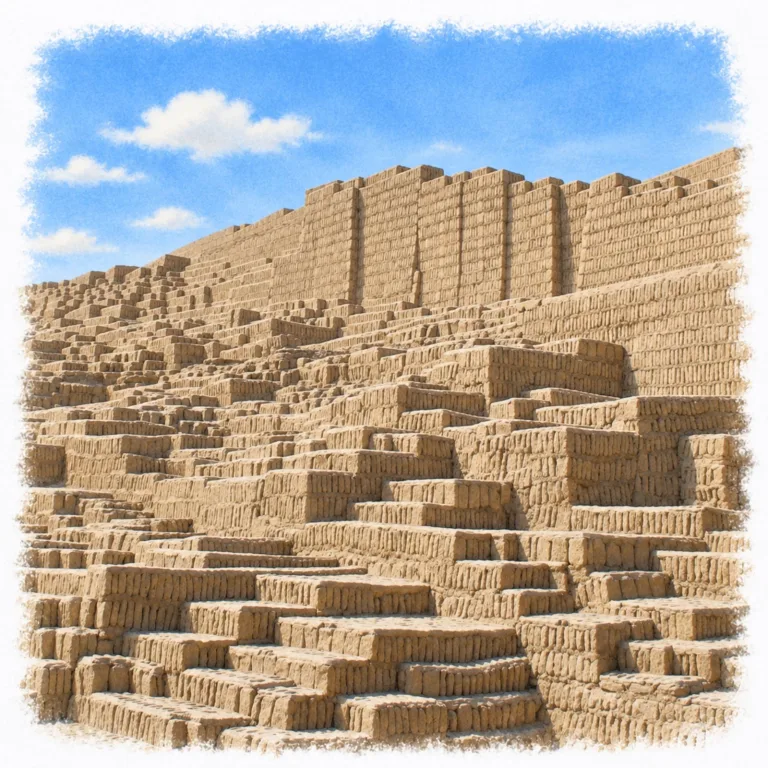
In the middle of Miraflores, Huaca Pucllana rises in stepped adobe platforms, where Lima builders shaped a ceremonial and administrative center that still interrupts the modern city with pre-Hispanic scale.
| Name | Huaca Pucllana |
| Civilization | Lima; later Wari and Ychsma reuse |
| Location | Miraflores, Lima, Peru |
| Elevation | Approx. 91 m (299 ft) |
| Years Active | c. 400–700 CE; later funerary use through c. 1450 CE |
| Primary Resources | Adobe, marine offerings, irrigated valley agriculture |
| Site Type | Ceremonial and administrative center; later burial ground |
| Key Highlights | Great Pyramid, adobitos construction, ceremonial plaza, site museum |
| INT Airport | Jorge Chávez International Airport (LIM) |
| Entry Fee | S/15 general daytime admission; S/7.50 reduced |
| Best Time to Visit | Weekdays, early morning, or select evening tours |
| Field Visit | Visited and documented by Lost Ruins of the Americas |
Unique Features of the Huaca Pucllana Archaeological Site
- Urban Huaca: A major adobe ruin preserved in the middle of Miraflores
- Adobitos: Vertically set adobe bricks built for earthquake-prone ground
- Seven Platforms: A broad stepped pyramid with unusual horizontal mass
- Wari Burials: Later tomb use added another cultural layer to the site
Location & Access
- Nearest Town: Lima, in the Miraflores district
- Directions: The site sits on Calle General Borgoño, a short taxi ride from central Miraflores and a longer but manageable approach from central Lima by metro, bus, or rideshare plus a short walk
- Official Site Authority: Museo de Sitio Pucllana
- Opening Hours: Wednesday–Monday, 9:00 AM–5:00 PM; closed Tuesdays. Night visits Wednesday–Sunday, 6:30–9:15 PM, with reservations.
- Entry Fees: Daytime S/15 general, S/7.50 reduced; nighttime S/17 general, S/8.50 reduced.
- Facilities: Site museum, guided tours, native flora and fauna area, and a separately operated restaurant.
- Accessibility: Wheelchair access is limited to the lower level; the pyramid route includes slopes and uneven surfaces.
- Pro Tip: Choose a daytime visit to access the Great Pyramid and native flora and fauna area, which are excluded from the night tour.
Highlights to Help Understand Your Visit
This site makes more sense when it is read as a layered ritual complex rather than as a single pyramid.
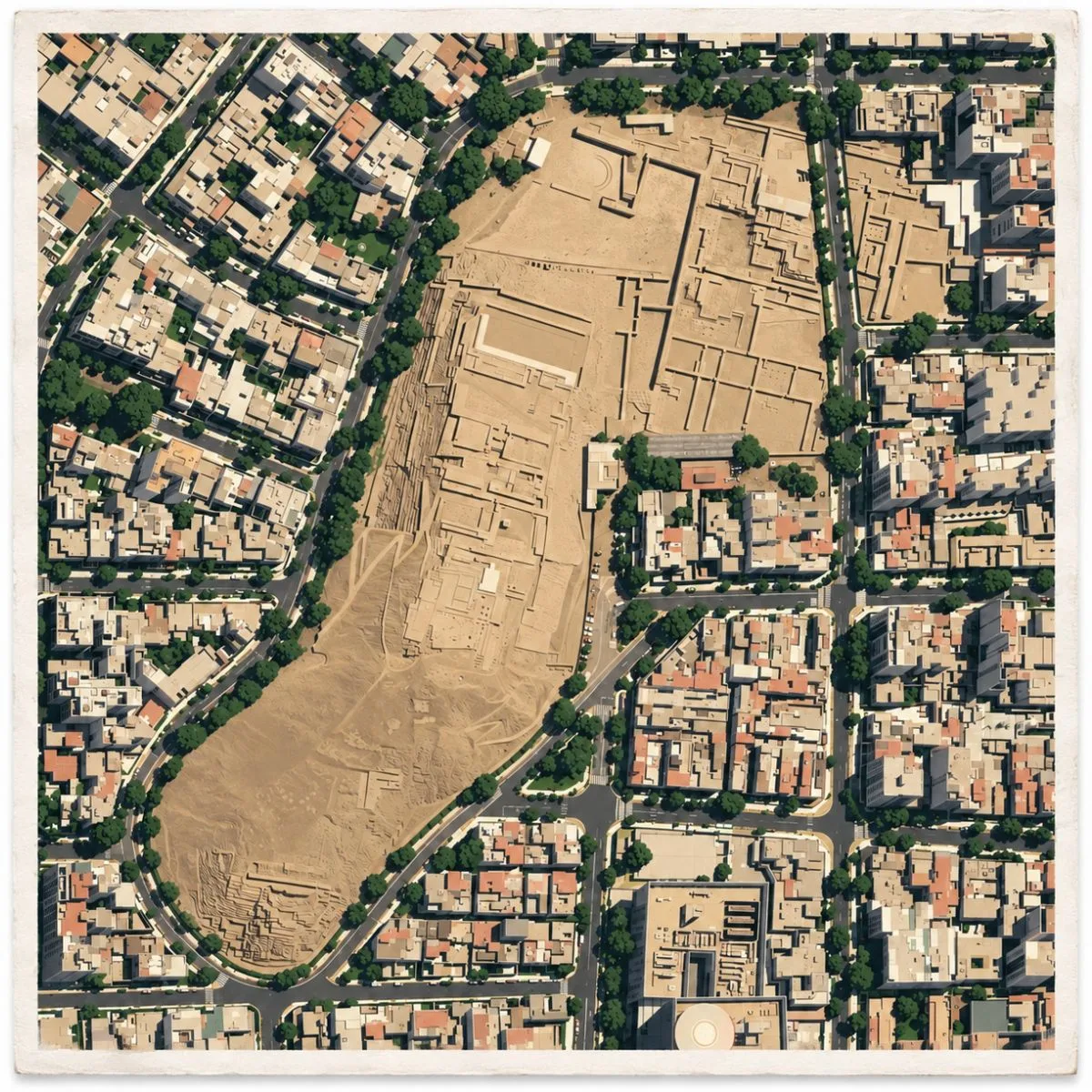
- A Huaca Inside the City: The first thing to notice is not only the monument itself, but its setting. Huaca Pucllana survives inside a dense modern district, which makes its scale easier to underestimate until the visitor stands beside it.
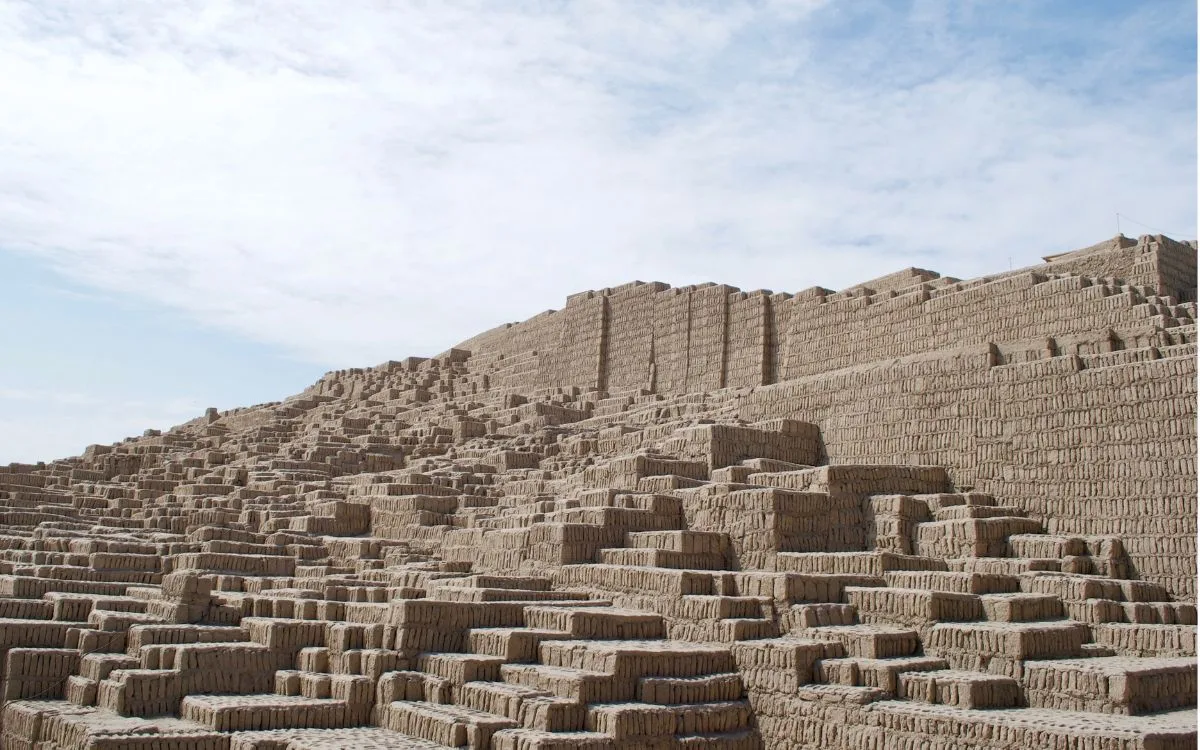
- Adobe Built for Movement: The bricks were often set upright in tight rows, a technique sometimes called adobitos. They read almost like books on a shelf, and that arrangement helped large masses of earth respond better to seismic stress.
- Ceremony and Administration Together: The complex was not only sacred space. The divided sectors suggest a place where ritual authority and practical control worked side by side.
- Marine Life Far from the Shoreline: Offerings of fish and other sea resources matter here. They reveal how coastal belief, food systems, and ceremonial exchange reached deep into the logic of the site.
- Reuse is Part of the Story: Huaca Pucllana was not frozen after the Lima culture. Wari and later Ychsma use left funerary traces that turned the monument into a place of memory as much as active ceremony.
- Height Was Authority: The stepped mass of the pyramid was a statement of control. Rising above surrounding enclosures, it organized movement, visibility, and ritual hierarchy.
Key Structures of Huaca Pucllana
- Great Pyramid: The dominant stepped adobe mass at the center of the site, built in successive platforms that made the huaca both a ceremonial focus and a visible statement of authority.
- Ceremonial Plaza: Open space beside the main pyramid where formal gatherings, ritual movement, and controlled approach to the monument likely took place.
- Dividing Wall: A major internal separation that helps explain the site’s split between more restricted ceremonial space and the sectors tied to administration and daily site management.
- Administrative Sector: A zone of smaller adobe enclosures, patios, and work areas that balanced the sacred side of the complex with organized practical activity.
- Ramps and Access Routes: Elevated approaches and controlled circulation paths that reveal how movement through the huaca was structured rather than open.
- Platformed Enclosures: Smaller built spaces around the main monument that helped define the site’s layered layout and the hierarchy of access within it.
- Offering Pits: Excavated ritual deposits containing marine materials and other offerings that connect the huaca to wider coastal belief systems.
- Burial Areas: Later funerary use, especially during the Wari period, transformed parts of the complex into a place of memory as well as ceremony.
- Excavation Zones: Exposed archaeological sections where visitors can see construction phases, fill layers, and the logic of adobe building more clearly.
- Site Museum: A small but important interpretive space that anchors the visit with ceramics, burials, and finds that explain the huaca’s long occupation and excavation history.
History and Legends
Huaca Pucllana took shape between about 400 and 700 CE in the lower Rímac Valley, centuries before modern Lima surrounded it. The Lima culture raised the ceremonial center from millions of handmade adobe bricks, building an elongated stepped pyramid above plazas, courtyards, ramps, and passageways. The surviving pyramid stretches roughly 300 meters long, 80 meters wide, and 25 meters high, rising through seven platforms. Its walls were built largely from small adobes set vertically in close rows, the distinctive construction often called the bookshelf technique. From the upper platforms, the monument dominated a landscape of irrigated fields and smaller settlements extending toward the Pacific.
Pucllana grew through repeated cycles of construction rather than from a single finished plan. Plazas and ceremonial rooms were used for a time, then deliberately closed, filled, and rebuilt at a higher level. One large plaza in the northeastern sector preserved the remains of food preparation, craft production, and feasting associated with one of these closures. Walls in earlier phases were carefully plastered and sometimes painted yellow, while new floors and walls rose above buried architecture. The result is a pyramid whose mass contains earlier versions of the ceremonial center sealed beneath later construction.
The ceremonies surrounding those changes could be elaborate. Large decorated vessels were broken, food was consumed in quantity, and marine animals held a prominent place in both meals and imagery. Sharks appear repeatedly on Lima pottery from Pucllana, and shark remains have been recovered from ritual deposits and feasting contexts. During the final major construction phase, ritual activity could also involve human sacrifice. On the Fifth Platform, archaeologists found a man and a woman placed within construction fill after older architecture had been partially dismantled. Their injuries and placement indicate that they were sacrificed as part of the rebuilding that produced one of Pucllana’s last Lima-period forms.
Around 700 CE, Pucllana ceased functioning as the Lima ceremonial center it had been for generations. Roughly a century and a half later, the Wari began using the abandoned monument for a very different purpose. They cut tombs into the upper part of the pyramid and turned it into an elite cemetery. The burials included finely made textiles and other objects associated with Wari status, placing people connected with the expanding highland power directly into a monument built by an earlier coastal society. The old Lima pyramid was no longer being enlarged, but it had become important enough for Wari elites to choose it as a place for their dead.
Pucllana continued to draw people long after the Wari cemetery fell out of use. From about 1100 to 1450 CE, Ychsma communities used the old complex for burials and as a repository for offerings, returning repeatedly to architecture that was already several centuries old. They did not rebuild the great pyramid as the Lima culture had done. Instead, they inserted their own dead and offerings into the surviving monument, adding another layer of use to a place whose original ceremonial order had disappeared. By the end of its pre-Hispanic history, Pucllana had passed from a living Lima ceremonial center to a Wari elite cemetery and finally to a Ychsma place of burial and offering, with each society finding a different reason to return to the same adobe pyramid.
Experiences Around Huaca Pucllana
The ruins are only part of the story. Miraflores spreads between Lima’s dry coastal plain and the cliffs above the Pacific.
–
At Museo Amano, explore one of Lima’s strongest collections of pre-Columbian textiles, including finely woven Chancay, Nazca, and Inca pieces.
–
Nearby Mercado Nº 1 de Surquillo is packed with tropical fruit, fresh Pacific fish, shellfish, and small counters serving ceviche and juices.
How to Get There & Where to Go Next
How to Visit Huaca Pucllana
Step-by-step access to the site
- From historic Lima: Take a taxi to Calle General Borgoño, block 8, Miraflores (30–60 minutes, depending on traffic).
- By public transport: From Jirón de la Unión station, take the Metropolitano Regular C south toward Matellini to Angamos (30–45 minutes).
- Walk from Angamos: Head west along Avenida Angamos, then turn right onto General Borgoño (15–20 minutes).
Tips: Allow time for the museum, since the finds help explain the adobe complex outside.
Nearby Ruins You Can Visit
Lima’s surviving ceremonial centers are best understood together. Huaca Pucllana fits into a wider coastal landscape of adobe platforms, burial spaces, and sacred compounds that once organized the valleys around what is now the capital.

Huallamarca – Another major huaca in modern Lima, useful for comparing burial use and adobe construction.

Pachacamac – The great pilgrimage center south of Lima, with temples, plazas, and a much larger sacred landscape.

El Paraíso: An earlier complex in the Chillón Valley that shows how deep central-coast ceremonial building traditions run.
Traveler Tips
- Go early if visiting by day, since exposed adobe and open paths heat up quickly
- Allow at least 60 to 90 minutes if the museum is included, and longer if moving slowly through the circuit
- Do not skip the museum, especially for visitors who want context for the burials and excavated finds
- Evening visits can change the feel of the site, but schedules are more limited and worth checking in advance
- Bring water, even for a relatively short visit
Elsewhere in the Americas…
While Huaca Pucllana was rising and being reused on Peru’s central coast, other parts of the Americas were also building monumental centers that tied ritual space to political control.

In central Mexico, Teotihuacan was expanding into one of the largest cities in the ancient Americas, with pyramids and processional avenues.

On Peru’s north coast, the Moche were building huacas such as Huaca de la Luna, where painted adobe monuments framed elite ritual and political authority.
Insider Explorer Advice
The streets around Huaca Pucllana give little warning of the enormous adobe pyramid among the surrounding buildings. Walking the final blocks makes that contrast especially striking. Once inside, look closely at the rows of small upright bricks and how they form the walls and platforms. From farther back, those same bricks merge into the mass of the pyramid. Give the museum time as well. The pottery and other excavated objects help connect the monumental buildings with the people who used them.
Summary: Huaca Pucllana is where Lima’s ancient adobe authority still rises intact above the modern city that grew around it.