
Teotihuacán
MEXICO / STATE OF MEXICO / UNKNOWN
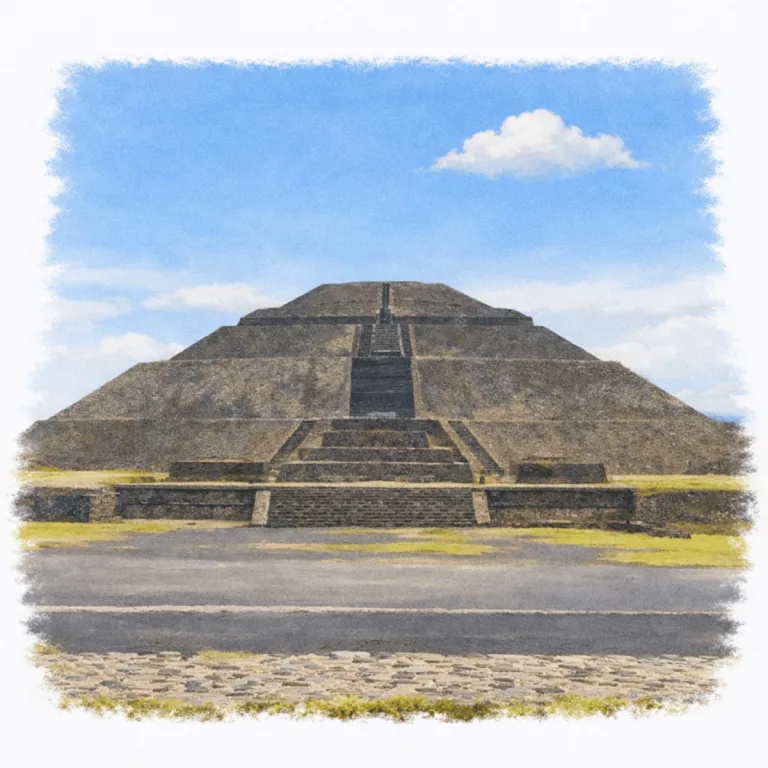
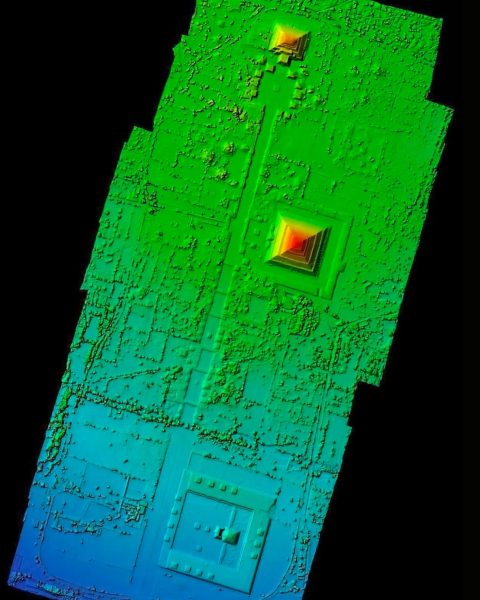
Across a vast highland basin northeast of Mexico City, Teotihuacán arranges a monumental urban grid, where the Avenue of the Dead aligns pyramids, plazas, and compounds into one of Mesoamerica’s largest planned cities.
| Name | Teotihuacán |
| Civilization | Unknown origin; later revered by the Aztecs |
| Location | San Juan Teotihuacán,State of Mexico, Mexico, Mexico |
| Elevation | 2,270 and 2,300 meters (7,450 to 7,500 feet) above sea level |
| Years Active | c. 150 BCE to 650 CE, with later pilgrimage and reuse |
| Primary Resources | Obsidian, textiles, pigments |
| Site Type | Planned metropolis and ceremonial capital |
| Key Highlights | Pyramid of the Sun, Pyramid of the Moon, Avenue of the Dead, Temple of the Feathered Serpent, murals |
| INT Airport: | Felipe Ángeles International Airport (NLU) |
| UNESCO | Pre-Hispanic City of Teotihuacan |
| Entry Fee | 105 MXN; 210 MXN for foreign visitors |
| Best Time to Visit | Weekdays at opening |
| Field Visit | Visited & photographed by Lost Ruins of the Americas |
Unique Features of the Teotihuacán Archaeological Site
- Monumental Scale: Pyramids and plazas organized along the Avenue of the Dead.
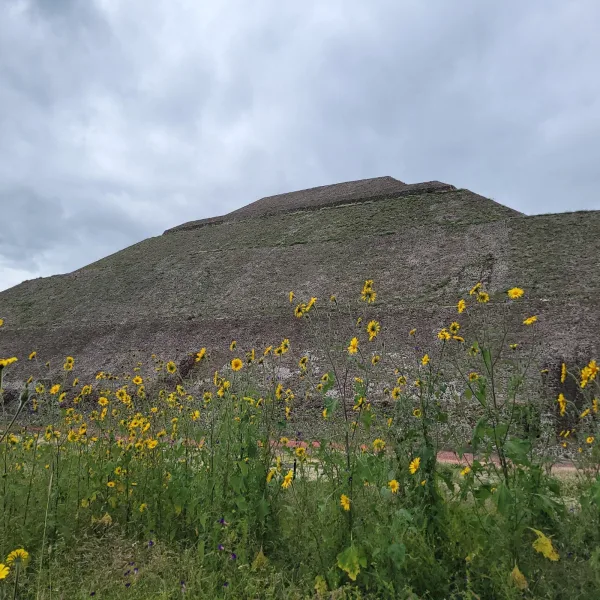
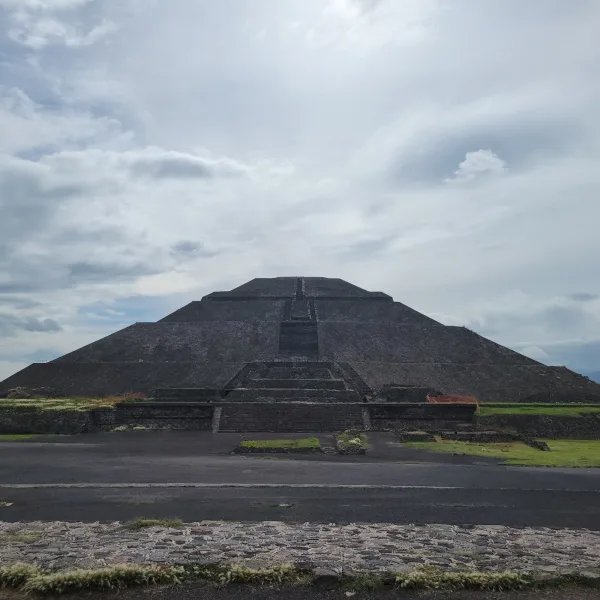
- Pyramid of the Sun: One of the largest ancient structures in Mesoamerica.
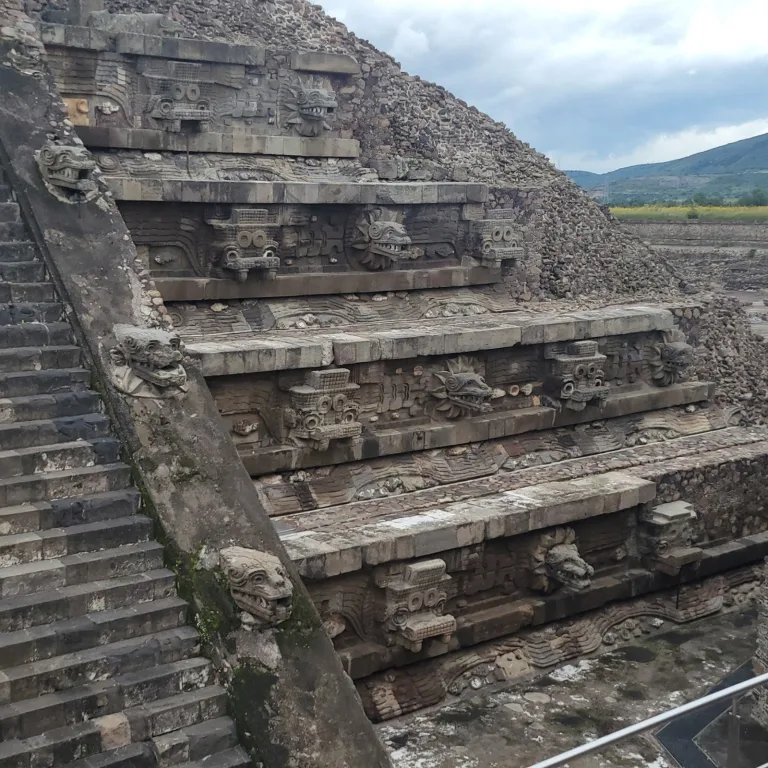
- Feathered Serpent Temple: Carved serpent heads and buried sacrificial victims mark its ceremonial power.
- Obsidian Industry: Workshops produced blades, tools, and goods traded across Mesoamerica.
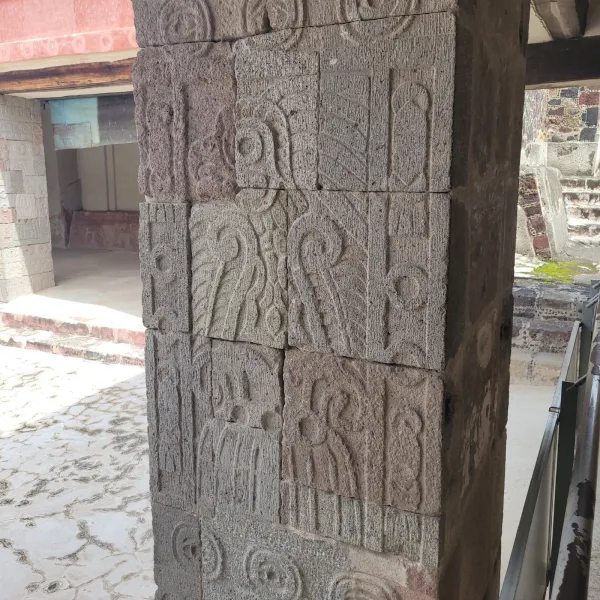
- Painted City: Murals preserved deities, animals, rituals, and elite symbolism in vivid color.
- Planned Urban Core: Residential compounds and ceremonial spaces followed a controlled city grid.
Location & Access
- Nearest Town: San Juan Teotihuacán
- Directions: From Terminal del Norte in Mexico City. Inside the station, walk left to the last row of ticket counters to find the bus to Teotihuacan. Buses run frequently and drop passengers at the main entrance.
- Official Website: INAH, Zona Arqueológica de Teotihuacán
- Opening Hours: 8:00 AM to 5:00 PM, with last access at 4:30 PM.
- Entry Fees: 105 MXN for Mexican nationals and foreign residents; 210 MXN for foreign visitors. Online tickets are available.
- Facilities: Parking, restrooms, shop, guided visits, and the Museum of Teotihuacan Culture. Museum admission is included with the archaeological-zone ticket.
- Accessibility: Partial. The site covers a broad area with long exposed walking distances, uneven surfaces, stone paths, and stairways around the monuments.
- Pro Tip: Ask about return bus times when you arrive. The pickup area is near the original drop-off spot.
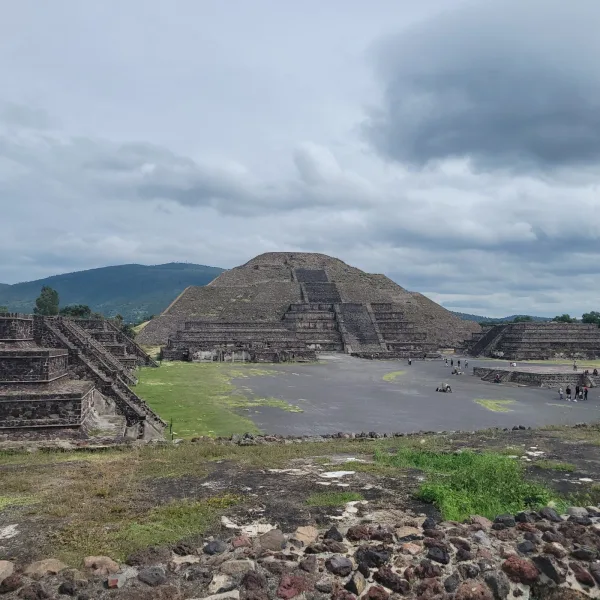
Highlights to Help Understand Your Visit
Teotihuacán isn’t just monumental. It’s intentional. These details help decode the city’s layout, power, and hidden messages as you walk the site.
- Avenue as Axis: The main road isn’t straight by accident. It aligns with astronomical events and frames the experience of power and ceremony.
- Pyramids with Purpose: The Sun and Moon pyramids weren’t isolated temples. They anchored urban zones, rituals, and movement across the city grid.
- Eyes on the Serpents: At the Temple of the Feathered Serpent, look closely. Each head isn’t just decorative; it’s symbolic of water, warfare, and sacred cycles.
- Hidden Murals: Many structures were once brightly painted. Try to imagine the plazas in full color: red gods, blue skies, green symbols of maize and life.
- Urban Silence: There’s no writing here. No glyphs like the Maya or Zapotec. Teotihuacan speaks through stone, scale, and spatial control.
Key Structures of the Teotihuacán Ruins
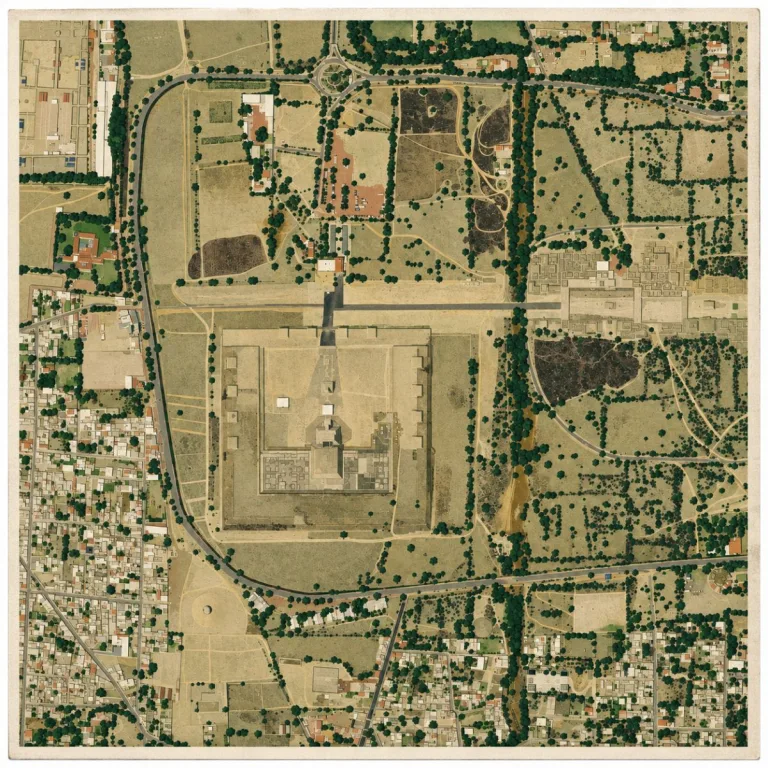
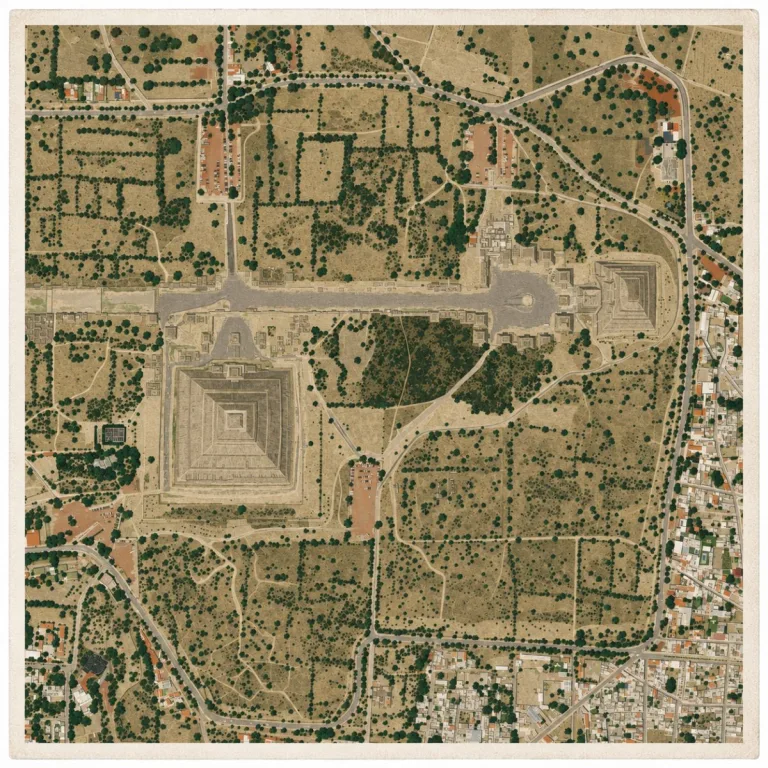
- Pyramid of the Sun: The largest structure at the site, aligned with the setting sun during the summer solstice. Served as a major ritual center and focal point for solar worship.
- Pyramid of the Moon: Located at the northern end of the Avenue of the Dead. Used for ceremonial offerings and burials, elevated to overlook the city.
- Temple of the Feathered Serpent (Quetzalcóatl): Decorated with carved serpent and marine motifs. Served as an elite ritual site and possibly linked to calendrical cycles.
- Ciudadela (Citadel): A large sunken plaza surrounding the Temple of the Feathered Serpent. Likely used for massive public gatherings or political-religious events.
- Avenue of the Dead: The main processional axis of the city, nearly 2 miles long. Once flanked by temples, marketplaces, and elite residences.
- Residential Compounds: Apartment-style dwellings that housed extended families, artisans, and merchants. Some compounds were decorated with murals and organized around internal patios.
- Palatial Complexes: Includes the following:
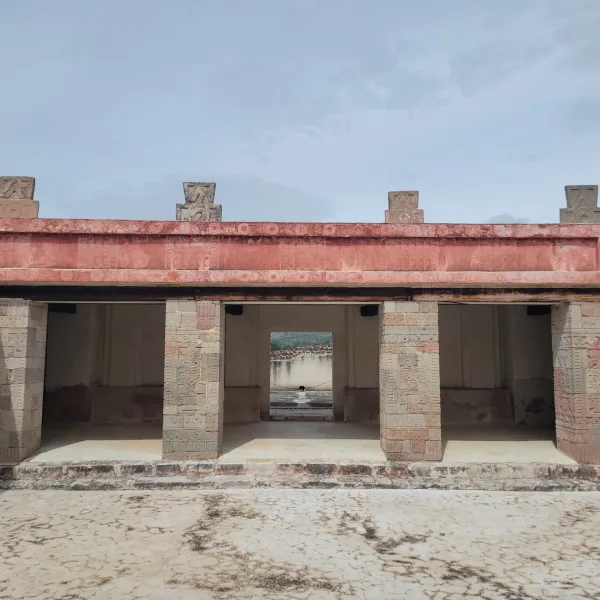
- Palace of Quetzalpapálotl: Ornate elite residence with columned halls and carved bird-butterfly motifs. Associated with religious or administrative elites.
- Tetitla Compound: Residential zone with well-preserved murals showing deities and cosmological themes.
- Temple of Agriculture: Modest ceremonial platform near the Pyramid of the Sun. Possibly used for harvest-related rituals or solar tracking.
- Obsidian Workshops: Scattered across the city. Produced blades, tools, and ritual objects from locally quarried volcanic glass.
- Drainage Systems: Subsurface channels and architectural features that managed rainwater and runoff. Part of the city’s advanced urban engineering.
History and Legends
Teotihuacán wasn’t built by the Aztecs. It was ancient even to them. By the time the Mexica rose to power, this massive city had already been abandoned for centuries. They gave it the name we use today: “Teotihuacan,” often translated as “The Place Where Gods Were Born.”
The city began around 100 BCE and rose rapidly to become one of the largest urban centers in the premodern world, with a population estimated at over 100,000 at its peak. Its carefully planned layout, including the vast Avenue of the Dead and monumental pyramids, speaks to a society of great complexity and ambition.
The Pyramid of the Sun, towering over the city’s center, remains one of the tallest man-made structures from the ancient Americas. To the north lies the smaller but still imposing Pyramid of the Moon. And at the southern end, the Temple of Quetzalcóatl, also called the Temple of the Feathered Serpent, displays rows of intricately carved serpents and marine motifs, hinting at a deep mythological system.
Yet despite all this grandeur, no one knows for sure who built Teotihuacán. Theories point to a coalition of ethnic groups, perhaps Toltec ancestors, or even displaced peoples from earlier cities like Cuicuilco. What is clear is that the city was a major center of trade, religion, and military power.
Its influence stretched deep into Mesoamerica. Teotihuacan-style architecture and ceramics have been found as far away as the Maya cities of Tikal and Copán. The presence of obsidian workshops also marks the city as a key node in pre-Columbian commerce.
Experiences Around Teotihuacán
The ruins are only part of the story. Teotihuacán rises from a broad highland basin northeast of Mexico City, surrounded by dry fields, maguey, and volcanic hills.
In San Juan Teotihuacán, stop at an obsidian workshop to see volcanic glass cut and polished, then try barbacoa, mixiotes, or pulque made from local maguey.
Nearby Acolman adds a different layer of history at the Ex Convento de San Agustín, where a carved Plateresque façade, painted cloisters, and traditional piñata workshops reflect the town’s long colonial and craft traditions.
Around 550 CE, Teotihuacán collapsed. Theories range from internal rebellion and climate stress to invasion or economic downturn. Temples were burned, elite compounds abandoned. The city was left to decay, but its myths endured. Later civilizations viewed Teotihuacan as sacred, even divine. Aztec kings made pilgrimages here, claiming a spiritual lineage with the builders of the great pyramids.
Today, Teotihuacán stands as a national treasure and a UNESCO World Heritage site. New excavations continue to uncover hidden chambers, tunnels, and frescoes, making it one of the most important archaeological zones in the Americas.
How to Get There & Where to Go Next
How to Visit Teotihuacán
– Step-by-step access to the site –
- Start from Mexico City: Take Metro Line 5 to Terminal del Norte station (~25 min).
- Buy bus ticket: Walk to the far-left counters marked “Teotihuacan” (~5 min).
- Bus ride: Direct service to the site’s main entrance (~1 hr 15 min).
- Walk-in: Entry gate is just ahead of the drop-off, no shuttle needed (~2 min walk).
Tip: Ask about return bus times when you arrive. Schedules vary, and rides can fill up near closing.
Nearby Ruins You Can Visit
Teotihuacán influenced distant cities through its architecture, obsidian trade, and mythic power. These ruins reflect its enduring reach across ancient Mesoamerica.
Teotenango – A walled city on a volcanic ridge, where Matlatzinca builders shaped terraces, plazas, and gates above the Toluca Valley floor.

Malinalco – Carved into cliffside rock, its ceremonial complex guarded the highlands with mythic precision.
Tula – Atlantean columns and militaristic art show echoes of Teotihuacan’s grandeur and later Toltec appropriation.
Traveler Tips
- What to Bring: Water, hat, sunscreen, comfortable shoes
- Best Time to Visit: Morning hours to avoid heat and crowds
- Nearby Attractions: On-site museum, Basilica of Guadalupe (in CDMX)
- Climbing Restrictions: Climbing the pyramids is now prohibited; stay on marked paths
Elsewhere in the Americas…
While Teotihuacán rose in central Mexico, the Andean world saw new ceremonial traditions and regional powers taking shape across desert coasts and highland basins:

In the Andes highlands, the Moche center of Huaca de la Luna developed ceremonial platforms and mural programs tied to ritual practice.

In the highlands of Colombia, the Muisca center of El Infiernito aligned stone columns for seasonal observation and ceremonial practice.

On Peru’s coast, the Nazca Lines expressed ritual and symbolic meaning through geoglyphs of animals, figures, and geometric forms.
Insider Explorer Advice
Although the site is massive, it’s surprisingly easy to visit from Mexico City. After taking the metro to Terminal del Norte, travelers should head to the far-left ticket booths to find the bus to Teotihuacán. It drops off near the front entrance and returns from the same spot.
Be prepared for a lot of walking. The pyramids and temples are spaced across a sprawling complex. While climbing is no longer allowed, the scale and symmetry of the site are still breathtaking from ground level. Don’t skip the Temple of Quetzalcóatl, though a longer walk from the main plaza, its artistry is stunning and often less crowded. Try to arrive early, bring water, and confirm the return bus schedule to avoid last-minute stress.
Summary: Teotihuacán is not just a ruin, it’s a city of lost gods. From soaring pyramids to buried secrets, it remains one of the most awe-inspiring sites in all of Mesoamerica.