
The Mississippian Civilization:
Builders of Mounds, Networks, and Urban Centers
Engineers of earth, masters of maize, and creators of one of North America’s most complex pre-contact societies
Across the fertile valleys of the Mississippi, a people rose who shaped earth itself into monuments. Their cities stood upon broad plazas, their temples crowned great mounds, and their rituals tied together the rhythms of maize, cosmos, and power.
Known today as the Mississippian civilization, they thrived from around 800 CE to 1600 CE, spreading across the Southeast and Midwest. They were master engineers of earth, innovators in agriculture, and builders of vast urban centers such as Cahokia.
Though their cities have quieted, their legacy endures in the sacred landscapes of North America and in the traditions of descendant communities who still honor these lands.

Civilization Snapshot
| Category | Info |
|---|---|
| Region | Southeastern and Midwestern North America |
| Timeframe | ~800 CE – 1600 CE (peaked ~1050–1350 CE) |
| Capital / Major Cities | Cahokia, Angel Mounds, Kincaid Mounds, Etowah, Wickliffe Mounds |
| Peak Population | Cahokia estimated at 15,000–20,000; regional networks served hundreds of thousands |
| Language(s) | Likely Siouan, Muskogean, and Caddoan families (not directly recorded) |
| Known For | Platform mounds, maize agriculture, Southeastern Ceremonial Complex |
| Modern Influence | Ancestor to many Southeastern tribes (e.g. Choctaw, Creek, Caddo, Natchez) |
Why Visit the Mississipian Region
The mounds are only part of the story. Across the Mississippi Valley and Southeast, river towns, hardwood forests, and broad floodplains still shape the landscape where Mississippian centers once rose.
Walk bluffs above the river, follow wetlands and forest trails, and visit places where the rhythms of water, migration, and fertile ground still define daily life. Markets, small towns, and regional foodways help show why this world grew where it did.
From southern Illinois to Alabama and the lower Mississippi, the wider region gives a fuller sense of the land that supported one of North America’s great mound-building civilizations.
The Mississippian world is where mound, river, and memory still hold the land together.
Origins in River Valleys
The Mississippians emerged from Woodland traditions around 800 CE, carrying forward older practices of mound building and ritual while transforming them into something larger in scale and symbolism. Their roots can be traced to Hopewell and Adena cultures of the Ohio Valley, whose earthworks and ceremonial centers foreshadowed the cities of the Mississippian world. What distinguished the Mississippians was the intensity of maize agriculture, which allowed populations to grow and elite classes to form around new urban landscapes.
Floodplains of the Mississippi and Ohio rivers offered fertile soils that made maize surpluses possible. These surpluses fed labor forces capable of raising platform mounds that reached extraordinary heights. Centers like Cahokia in Illinois, Angel Mounds in Indiana, and Kincaid Mounds in southern Illinois became powerful hubs, while others like Wickliffe in Kentucky and Etowah in Georgia revealed the regional reach of the Mississippian tradition. Each site balanced political authority with sacred landscape, embedding cosmology directly into the built environment.

Sacred Lineages and Social Order
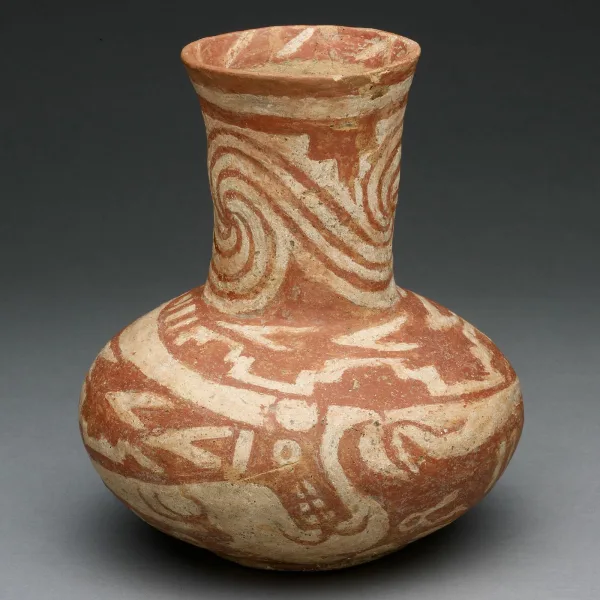
Mississippian towns revolved around plazas framed by platform mounds. At their summits stood temples, chief’s residences, or council houses, rising above the community as physical embodiments of spiritual and political order. Chiefs often claimed divine lineage, presenting themselves as mediators between the Upper, Middle, and Underworld. This three-tiered cosmos was represented through symbols of falcons, serpents, and the sacred axe, binding ritual practice to cycles of fertility, warfare, and renewal.
At Cahokia, Monks Mound dominated the horizon, its vast terraces supporting structures where leaders presided over ceremonies. Nearby stood great woodhenges, circular arrangements of posts aligned to solstices and equinoxes, marking sacred time and linking civic order to the cosmos. Burial mounds revealed layers of status and devotion, containing copper plates, shell gorgets, effigy pipes, and carefully crafted pottery. These goods reflected both the wealth of elites and the cosmological significance of the community, where ritual and governance were inseparable.
Networks of Exchange and Artistry
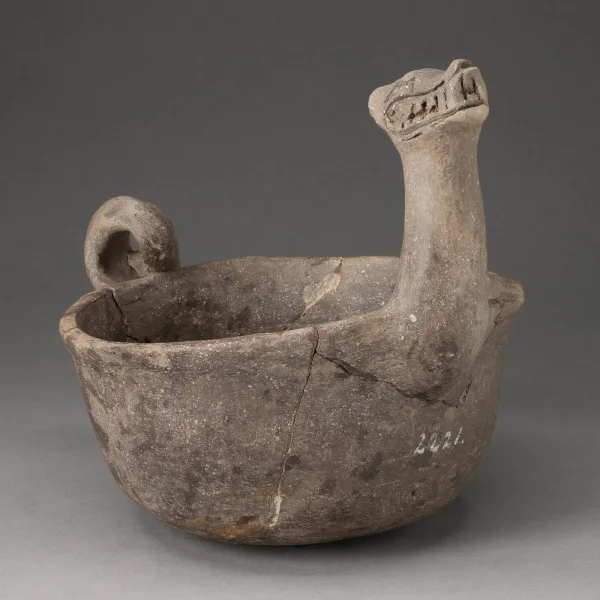
Trade linked the Mississippian world across thousands of miles. Copper from the Great Lakes, shells from the Gulf of Mexico, mica from the Appalachians, and obsidian from the Rocky Mountains all converged in their plazas. These materials were transformed into sacred objects that gave form to the Southeastern Ceremonial Complex, a shared symbolic language expressed in engraved shell, hammered copper repoussé plates, and intricately painted ceramics. Such objects were not only works of art but vehicles of power, reinforcing elite authority and spiritual worldviews.
The artistry of the Mississippians extended beyond ceremonial goods. Wattle and daub houses clustered around plazas, palisades of timber protected settlements, and artisans produced effigy pipes carved with animals and ancestors. At Spiro Mounds in Oklahoma, extraordinary caches of artifacts included textiles, wooden carvings, and engraved shell items preserved in burial chambers, offering a glimpse of the sophistication and symbolic depth of Mississippian craftsmanship. Through these creations, the Mississippians shaped both material culture and a shared spiritual imagination.
Enduring Legacy
By the 1500s many Mississippian centers had declined, their plazas and mounds weathering under shifting populations, resource pressures, and new waves of conflict. Yet the traditions of the Mississippian world did not disappear. Descendant peoples such as the Choctaw, Creek, Natchez, Chickasaw, and Caddo carried forward their languages, rituals, and social memory. Ceremonial cycles like the Creek Green Corn Ceremony, Natchez sun chief traditions, and Caddo dances recall the rhythms once celebrated on mound-top temples. Today, sites such as Cahokia, Etowah, and Spiro stand protected as cultural treasures, their mounds rising as witnesses to one of North America’s most complex civilizations. The Mississippian spirit continues in living communities and in the landscapes where earth, sky, and story still converge.

Museums that Explore the Mississippian World
Across the Mississippi Basin and Southeast United States, museums preserve the story of the Mississippian world through mound archaeology, ceremonial art, and sacred objects that reveal how these societies organized power, trade, and ritual life.
- Cahokia Mounds Interpretive Center (Illinois) – Explains the scale, planning, and ceremonial life of North America’s largest Mississippian city.
- Dickson Mounds Museum (Illinois) – Explores Native history in the Illinois River Valley, with strong context for Mississippian settlement, farming, and ceremony.
- Jones Archaeological Museum at Moundville Archaeological Park (Alabama) – Introduces one of the largest Mississippian centers in the Southeast through artifacts and site interpretation.
- Etowah Indian Mounds Museum (Georgia) – Displays artifacts from a major ceremonial center tied to elite power, carved stone, and river trade.
- Hampson Archeological Museum State Park (Arkansas) – Interprets the Nodena people through one of the strongest late Mississippian collections in the Mississippi Valley.
- Angel Mounds State Historic Site (Indiana) – Interprets one of the best-preserved Mississippian mound centers in the Ohio Valley and helps place it within the wider ceremonial world of eastern North America.
Together, these museums and collections provide a wider view of the Mississippian world. From Cahokia to Moundville, Etowah, Parkin, and Nodena, each gallery helps reveal how ceremony, trade, and political authority shaped one of the great civilizations of North America.
Mississippian Ruins You Can Visit
- Cahokia – The largest Mississippian city, with Monks Mound, woodhenges, and a sprawling layout.
- Angel Mounds – A Mississippian center of platform mounds and plazas, enclosed by a palisade along the Ohio River.
- Wickliffe Mounds – Mississippian village with platform mounds and river views.
- Dickson Mounds – A museum above Mississippian cemeteries, village remains, and the Illinois River Valley.
- Millstone Bluff – A hilltop Mississippian village in southern Illinois with petroglyphs, stone box graves, and dwelling outlines overlooking the Shawnee forest.
- Kincaid Mounds – A multi mound settlement and regional hub at the southern edge of the Mississippian world.
- Spiro Mounds – A temple site in Oklahoma with unique burial chambers and carved shell artifacts.
- Towosahgy – A fortified Mississippian center with seven mounds, a central plaza, and traces of its palisade and moat.
Explore Related Civilizations
- Ancestral Puebloan – Built cliff dwellings, kivas, and canyon settlements across the high desert Southwest.
- Woodland Cultures – Predecessors who introduced early farming, pottery, and ceremonial burial practices.