
Cholula
MEXICO / CAMPECHE / MAYA
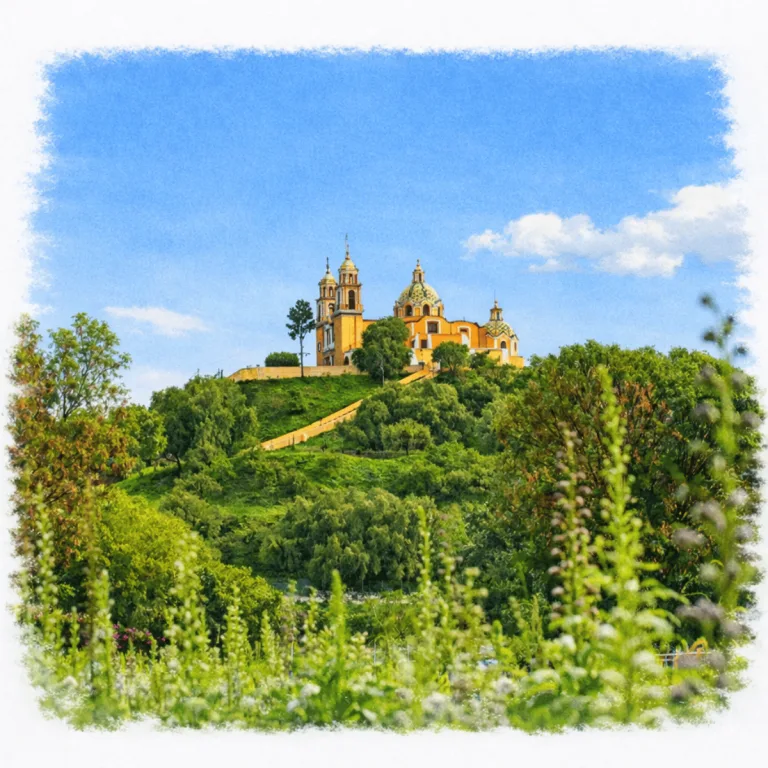
At the edge of a modern city in the Puebla Valley, Cholula rises as a massive earthen pyramid mound, where layered construction over centuries created the largest pyramid by volume in the world.
| Name | Cholula (Tlachihualtepetl) |
| Civilization | Mixtec–Toltec, later Aztec |
| Location | Puebla-Tlaxcala Valley, Puebla, Mexico |
| Elevation | 2,150 meters (7,050 feet) |
| Years Active | c. 650 BCE to 1521 CE |
| Primary Resources | Adobe, ceramics, agricultural goods, regional trade goods |
| Site Type | Ceremonial city, pilgrimage center, and trade hub |
| Key Highlights | Largest pyramid by volume, interior tunnels, murals, volcano views |
| INT Airport: | Puebla International Airport (PBC) |
| Entry Fee | 105 MXN for nationals and residents; 210 MXN for foreign visitors |
| Best Time to Visit | Clear mornings for summit volcano views |
| Field Visit | Visited & photographed by Lost Ruins of the Americas |
Unique Features of the Cholula Archaeological Site
- World’s Largest Pyramid: By volume, larger than Giza, now hidden under grass and a church.
- Interior Tunnel System: 8 km of excavated passageways through the heart of the structure
- Layered Construction: Six phases of construction from different periods
- Murals: “Mural of the Drinkers” and other preserved art in bold colors
- Volcano Viewpoint: From the summit church, see Popocatépetl and Iztaccíhuatl
Location & Access
- Nearest City: San Pedro Cholula
- Directions: From Puebla, take Recta a Cholula west until it becomes Ruta Quetzalcóatl. Turn south onto 5 de Mayo, then west onto Avenida Morelos toward the archaeological zone. Travel time is approximately 25 to 40 minutes, depending on traffic.
- Official Website: INAH Zona Arqueológica de Cholula
- Opening Hours: Wednesday to Sunday, 9:00 AM to 5:00 PM, with last access at 5:00 PM.
- Entry Fee: 105 MXN for Mexican visitors and foreign residents; 210 MXN for foreign visitors. Admission includes the site museum.
- Facilities: Site museum, restrooms, guided visits, and online ticket purchase.
- Accessibility: Moderate, steps in tunnels and steep hill climb
- Pro Tip: Arrive early on a clear day to see Popocatépetl and Iztaccíhuatl

Highlights to Help Understand Your Visit
Cholula isn’t just a pyramid. It is a layered site, with newer temples built over older ones.
These clues help decode what is visible and what is buried.
- Layers of Belief: The pyramid wasn’t torn down; it was built over again and again. Each layer speaks to a new era of ritual power.
- A Hill That Isn’t a Hill: What looks like a grassy rise is entirely man-made. Its form conceals one of the greatest feats of ancient engineering.
- Tunnels as Time Travel: Walking inside the structure isn’t just access; it’s a rare look into pre-Hispanic construction methods and spiritual chambers.
- Colonial on Sacred: The church on top isn’t coincidence; it was conquest strategy. One sacred site was claimed by crowning it with another.
- Obsidian, Not Stone: While the pyramid looks like dirt, this was a ritual city tied to obsidian flow: trade, bloodletting, and cosmology all passed through it.

Key Structures of Cholula
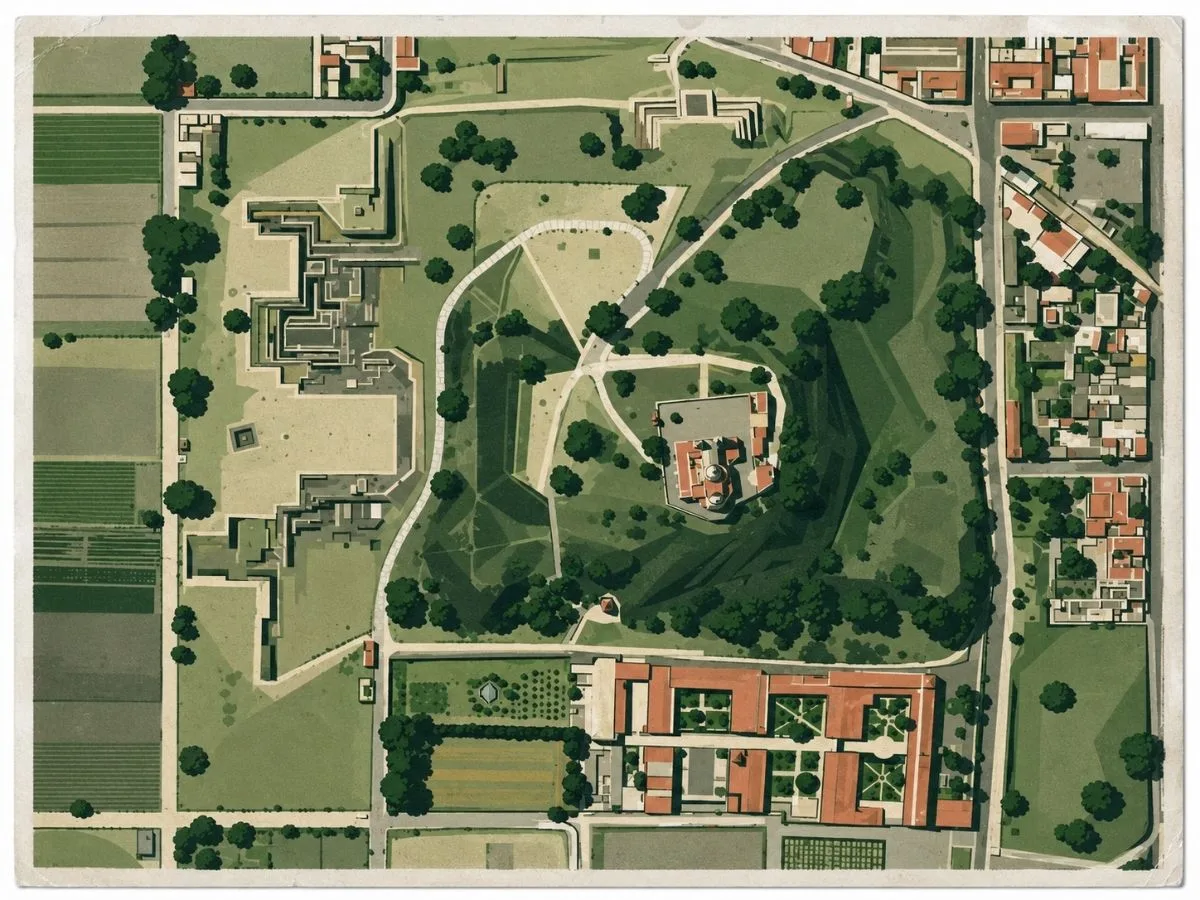
- Great Pyramid of Cholula (Tlachihualtepetl): A monumental adobe structure measuring 450 by 450 meters at its base and rising over 60 meters in height. Built in six superimposed phases, it was once brightly painted and decorated with altars and niches.
- Tunnel Network: Over 8 kilometers of tunnels excavated by archaeologists, allowing modern visitors to access internal staircases, shrines, and construction layers otherwise lost to time. A rare chance to walk through the core of a Mesoamerican pyramid.
- South Plaza: A large ceremonial plaza on the southern face of the pyramid featuring broad staircases, platform altars, and sections of original adobe façade, partially excavated and open to the public.
- Murals: Notably the “Mural of the Drinkers,” located within the older buried chambers, shows a ritual feast involving pulque. Other fragments depict cosmological symbols and ceremonial activity, revealing Cholula’s artistic and religious depth.
- Altar of the Sculpted Skulls: A carved platform discovered at the base of the pyramid bearing images of stylized skulls and other sacrificial iconography, interpreted as a link to death rituals and the underworld.
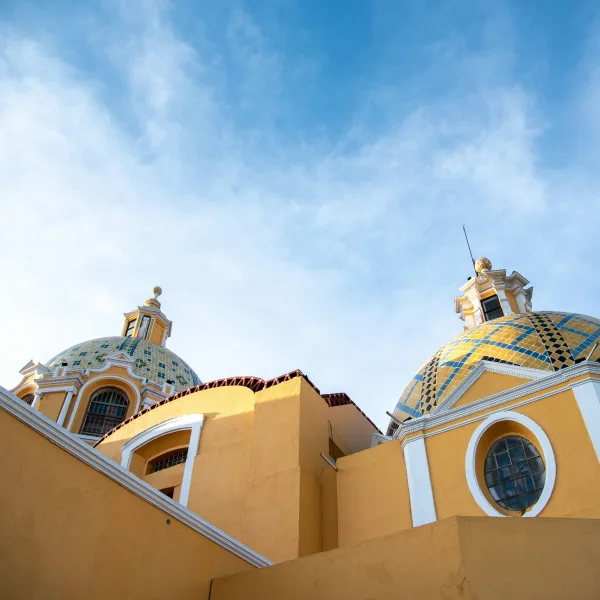
- Summit Church: Nuestra Señora de los Remedios, a 16th-century Spanish church still active today. Built directly atop the pyramid’s highest point, it symbolizes the colonial overlay of Catholicism onto pre-Hispanic sacred space.
- On-Site Museum: Though technically modern, this small but well-curated museum at the entrance displays artifacts, murals, and models of the pyramid’s layers, helping orient visitors before they explore the grounds.


History and Legends
Cholula stands not only as the largest pyramid by volume in the world, but also as one of the most layered sacred sites in the Americas, literally and symbolically. The city’s roots stretch back to at least 500 BCE, when early farming communities began constructing ceremonial platforms. Over centuries, as civilizations rose and fell across Mesoamerica, Cholula adapted, absorbed, and expanded. Each new generation of builders laid another layer atop the last, culminating in a six-phase pyramid structure built from adobe, stone, and belief.
By the height of its Classic period, Cholula was both a political power and a religious magnet, a pilgrimage site with connections across central Mexico, home to trade, priesthoods, and sacred astronomy. The pyramid, known as Tlachihualtepetl, or “man-made mountain,” was central to this spiritual landscape. Over time, it became so overgrown and weathered that later arrivals assumed it was a natural hill, unknowingly preserving what lay within.
One of Cholula’s most famous artistic treasures is the “Mural of the Drinkers,” buried deep within the pyramid’s older chambers. Painted in bold reds and ochres, it depicts a ritual gathering where elite men consume fermented beverages, likely pulque, in honor of gods and cycles of renewal. These ceremonies were not casual indulgence; they were cosmological events, reflecting the Maya and Central Mexican view of intoxication as spiritual transformation.
Experiences Around Cholula
The ruins are only part of the story. Cholula is a walkable old city of plazas, churches, markets, and streets framed by Popocatépetl on clear days.
Walk from Plaza de la Concordia through the Ex-Convento de San Gabriel and Capilla Real, then stop in Mercado Cosme del Razo for cecina, cemitas, or other Poblano antojitos.
A short drive south links Santa María Tonantzintla and San Francisco Acatepec, two of the region’s most distinctive Baroque churches. For something outdoors, Cerro Zapotecas has hiking and mountain-bike trails above the city.
After the Spanish conquest in 1519, Hernán Cortés and his Tlaxcalan allies staged a brutal massacre in Cholula, killing thousands of unarmed locals in a show of force and deterrence. It was one of the darkest moments of the conquest, and its memory still echoes through historical accounts and local retellings. In classic colonial form, the Spanish then crowned the ancient pyramid with the Church of Nuestra Señora de los Remedios, converting one sacred mount into another.
And yet, Cholula endured. Excavations in the 20th century began to peel back the layers of this massive adobe monument, revealing staircases, shrines, and murals that had survived centuries underground. Unlike many pyramid sites, here you can walk inside, literally into the memory of an ancient people. The pyramid was not torn down. It was swallowed by time, protected by earth, and now reopened to light.
For the modern visitor, Cholula’s magic lies in these contrasts: buried and towering, pre-Hispanic and colonial, exposed and still secret. It is a monument to continuity, where every step down a tunnel or up to a church is a walk across centuries.
How to Get There & Where to Go Next
How to Visit Cholula
Step-by-step access to the site
- Start in Puebla: From the city center, drive or take a colectivo — about 30 minutes.
- Take a pink colectivo: Board at Av. 4 Pte and Calle 11 Nte, marked “Cholula.”
- Drop-off: Get off near the zócalo — the pyramid base is a 5–10 minute walk.
- Tunnel entrance: Purchase tickets near the southwest base of the pyramid.
Tips: Arrive early for volcano views and to avoid lines at the tunnels, which close earlier than the surface site.
Nearby Ruins You Can Visit
These sacred centers echo Cholula’s layered past. Volcanic views, colonial overlays, and deep ceremonial continuity across time.
Cantona – A vast fortress city of stone causeways, obsidian trade, and volcanic horizons to the east.

Cacaxtla – Home to some of Mesoamerica’s most vivid murals, blending Maya influence with central Mexican political power.
Chalcatzingo – A highland site with Olmec-style carvings and ceremonial terraces tied to early valley traditions.

Download Quick Guide
Español
English


Traveler Tips
- Start with the tunnels, they close earlier than the surface site
- Climb the hill slowly, it’s steep but paved, with benches along the way
- The summit church is still in use, respect local worshippers
- Visit the adjacent museum for excellent context and AC
- Combine with a walk through town. Cholula has great food and art
Elsewhere in the Americas…
During the same centuries that Cholula flourished as a major religious center in central Mexico, other cultures across the Americas were shaping powerful regional traditions:

On Isla del Sol, the Chinkana Labyrinth served as an Inca center tied to Titicaca’s origin myths.

At Ciudad Perdida, high in Colombia’s Sierra Nevada, the Tairona built terraced ceremonial centers.

In the U.S. Southwest, Ancestral Puebloans built communities and ceremonial structures at Yucca House.
Insider Explorer Advice
Travelers seeking the local route from Puebla can take a pink colectivo marked “Cholula” from Avenida 4 Poniente and Calle 11 Norte. It stops near Cholula’s central plaza, leaving only a short walk to the Great Pyramid. Departing in the morning offers the best chance of clear views across the valley toward the volcanoes, before haze begins to soften the surrounding peaks. Approaching on foot from the plaza also allows the church-crowned pyramid to emerge gradually above Cholula’s modern streets.
Summary: Cholula is earth, fire, faith. The largest pyramid of them all, buried, blessed, and still standing.