
Huaca Arco Iris
PERU / TRUJILLO / CHIMÚ
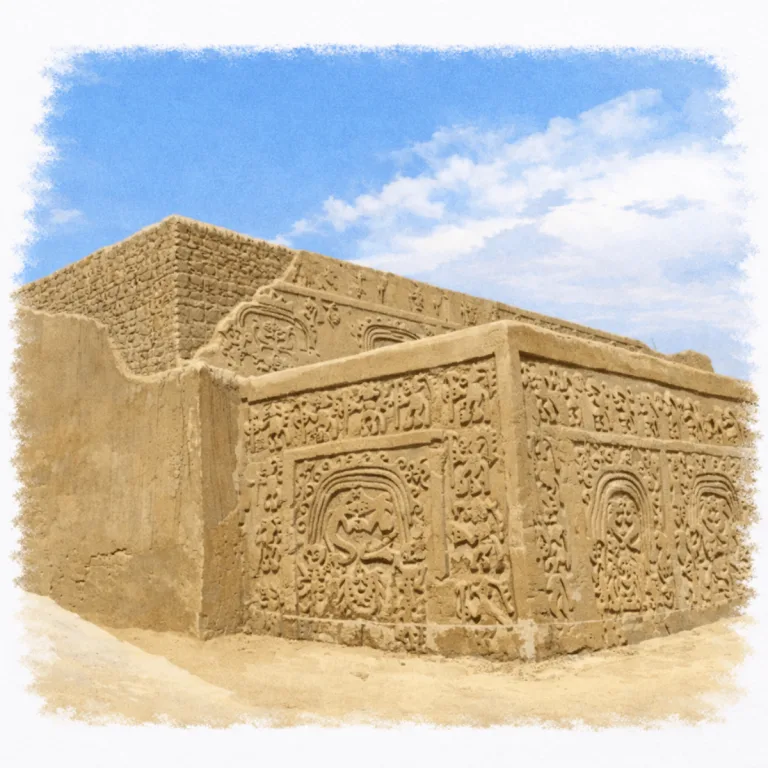
Within an arid landscape near Trujillo, Huaca Arco Iris shapes its temple façade with molded adobe patterns, where dense surface ornamentation forms one of the most detailed Chimú wall designs.
| Name | Huaca Arco Iris (El Dragón) |
| Civilization | Chimú |
| Location | La Esperanza, Trujillo, La Libertad Region, Peru |
| Years Active | c. 900 – 1470 CE |
| Primary Resources | Adobe, marine goods, irrigated crops, regional trade |
| Site Type | Ceremonial huaca in urban context |
| Key Highlights | Dragon friezes, rainbow motifs, ceremonial plaza |
| INT Airport: | Jorge Chávez International Airport (LIM), with onward flights to Trujillo (TRU) |
| Entry Fee | Chan Chan ticket, S/10 Peruvian adult, S/17 foreign adult |
| Best Time to Visit | Mid-morning or late afternoon |
| Field Visit | Visited and documented by Lost Ruins of the Americas |
Unique Features of the Huaca Arco Iris Archaeological Site
- Adobe Friezes: Iconic bas-relief dragons line the huaca walls, their stylized forms curving with ceremonial power.
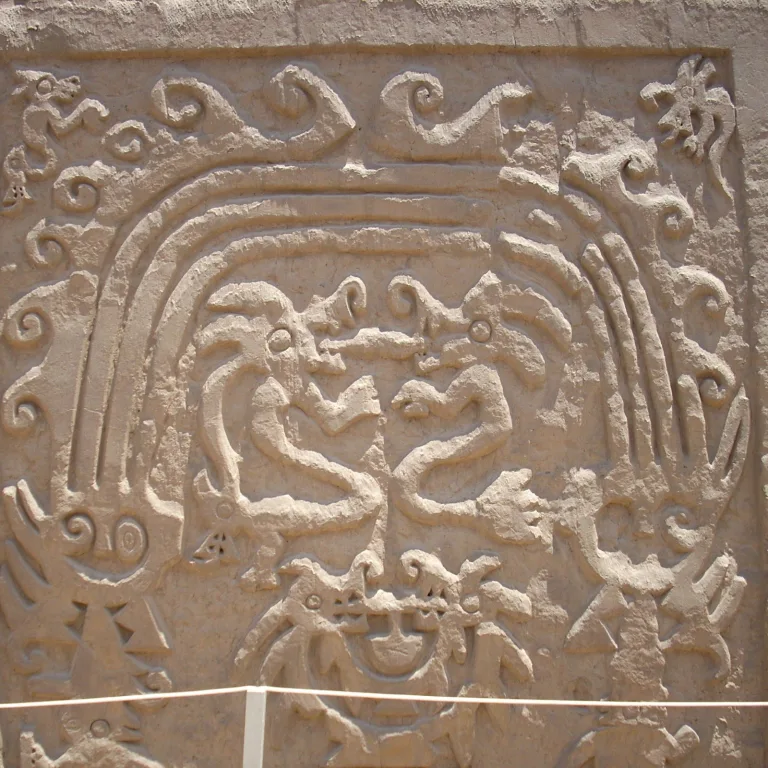
- Rainbow Iconography: TThe site’s namesake comes from vivid rainbow imagery carved into its adobe surface, a rare motif in Chimú art.
- Urban Setting: Unlike most huacas, this structure sits amid neighborhood blocks, fully integrated into Trujillo’s modern sprawl.
- Public Access: The site is visible from the street and acts as a local park space, living heritage in daily use.
Location & Access
- Nearest City: Trujillo
- Directions: Huaca Arco Iris sits between Trujillo and Huanchaco, with access from the Panamericana Norte. Ask local buses to stop at “Huaca El Dragón” and disembark by the entrance.
- Opening Hours: Daily, 9:00 AM to 4:00 PM
- Entry Fees: Entry Fee: Included in the Chan Chan archaeological complex ticket, S/10 Peruvian adult, S/17 foreign adult
- Facilities: Informal: nearby shops, local restaurants, rest stops
- Accessibility: Easy: flat terrain, visible from sidewalk
- Pro Tip: Combine with a visit to Huaca Takaynamo, just a short walk away and under active restoration
Highlights to Help You Understand Your Visit
What looks like a neighborhood relic is actually a living fragment of Chimú cosmology, built with layered meaning and purpose.
- Dragons That Guard, or Guide: The repeated dragon-like forms aren’t just decorative. They likely represent sky serpents or celestial guardians tied to Chimú ritual cosmology.
- Rainbows in the Desert: The arched reliefs on the west wall echo rainbow shapes, a rare symbol in Andean art, possibly referencing rain, fertility, or seasonal balance.
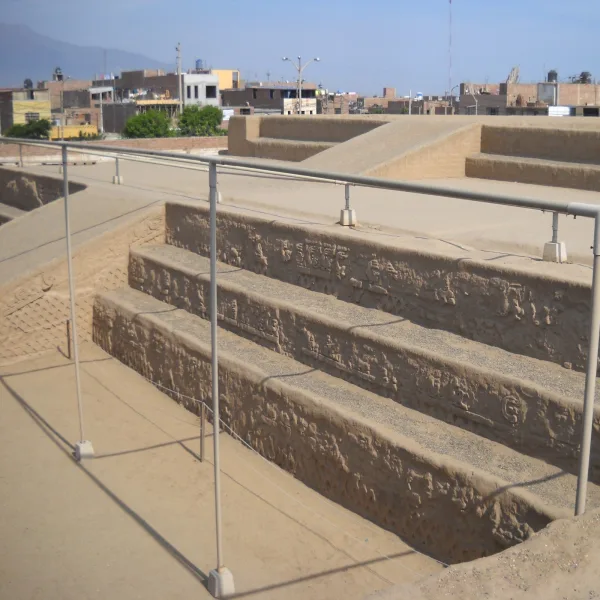
- Ritual Movement: The ramp isn’t just a staircase. Its slope suggests ceremonial procession, guiding movement in a controlled, symbolic ascent.
- Compressed Monumentality: Though compact, the huaca’s high walls and deep reliefs magnify its visual power, a temple scaled to urban space, not diminished by it.
- Urban Entanglement: The huaca’s survival inside a living neighborhood isn’t accidental. Its spiritual footprint may have protected it from total erasure.
Key Structures of Huaca Arco Iris
- Main Platform: A large, stepped adobe structure built on a north-south axis, likely used for ritual gatherings, public ceremony, and offerings. It features a central elevated area that may have served as a stage for priestly functions.
- Relief Wall: The east-facing façade contains intricate adobe friezes depicting dragon-like figures, interpreted as stylized serpents or mythic creatures tied to Chimú religious beliefs. These friezes are deeply cut and arranged in rhythmic sequences along the platform base.
- Rainbow Panel: A unique section of the western wall where arched lines, interpreted as rainbow motifs, are carved in layered symmetry. These may symbolize rain, fertility, or sky deities, and are rare within known Chimú iconography.
- Entrance Ramp: A gently sloping adobe ramp provides access to the upper levels of the platform. This ramp may have been ceremonial in function, allowing dignified ascents during rituals, and mirrors similar ramps seen in larger huacas of the region.
- Side Platforms: Smaller terraces extend from the main mound, potentially used for offerings, storage, or as transitional spaces between sacred and communal zones.
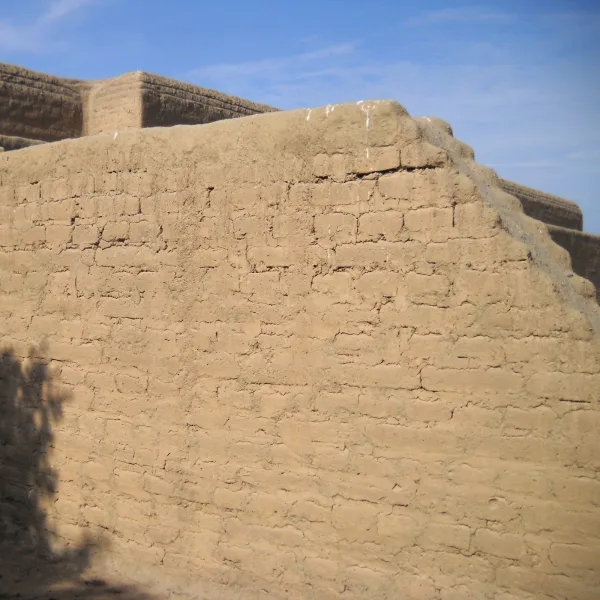
- Peripheral Walls: Low perimeter walls of adobe define the ceremonial boundary of the site. These may have functioned to separate the ritual space from the surrounding urban area and were likely added in later phases.
How to Get There & Where to Go Next
How to Visit Huaca Arco Iris
– Step-by-step access to the site –
- From Lima – Take a night bus to Trujillo (9–10 hours) or a 1-hour domestic flight.
- Arrival in Trujillo – From the bus terminal or airport, take a taxi to Avenida Mansiche (15–20 minutes).
- Local access – Ask for a stop at “Huaca El Dragón” or walk a few minutes from the main road.
Tips: The site is open-air and freely accessible; visit in the morning or late afternoon to avoid strong sun.
Nearby Ruins You Can Visit
These neighboring Chimú and Moche sites offer layered ceremonial histories, each adding a piece to the puzzle of Trujillo’s pre-Columbian sacred landscape.

Chan Chan – Vast adobe palaces and friezes reveal the seat of Chimú imperial power, just beyond the huaca’s shadow.

Huaca del Sol – A massive adobe mound still cloaked in mystery, visible but closed. The lost twin to Huaca de la Luna.

Huaca de la Luna – Painted gods, sacrifice altars, and a mountain backdrop define the Moche’s earlier ceremonial epicenter.
History and Legends
Huaca Arco Iris, also called El Dragón, is a Chimú-era ceremonial structure located in the coastal city of Trujillo, Peru. Built between 900 and 1470 CE, it reflects the height of Chimú architectural expression before the region fell under Inca control. The structure consists of a stepped adobe platform decorated with friezes depicting stylized dragons and rainbow arcs, rendered in deep relief across the façade.
The Chimú civilization, centered in nearby Chan Chan, constructed huacas not only as ritual platforms but also as cosmological stages, physical links between earth and sky. In this context, the rainbow and dragon motifs of Huaca Arco Iris are especially striking. While the exact meaning of the symbols is debated, scholars suggest they represent celestial forces, fertility, or weather patterns crucial to the Chimú’s coastal desert environment.
Archaeological findings indicate that the site was likely used for ceremonial gatherings and offerings. Its relatively small scale, compared to other Chimú temples, suggests it served a localized community within the broader network of coastal settlements. The presence of sloped ramps and relief iconography links it architecturally to larger sites within the Chimú sphere.
Experiences Around Huaca Arco Iris
The ruins are only part of the story. Trujillo spreads across a dry coastal plain where irrigated valleys cut through the desert.
At the Museo del Juguete, see everything from a 2,300-year-old Virú whistle and Chancay dolls to tin soldiers, trains, and European toys collected by artist Gerardo Chávez.
Nearby Iglesia y Monasterio El Carmen holds around 150 colonial paintings, including works from the Quito school, alongside carved altarpieces and religious art from the 17th and 18th centuries.
After the Inca conquest of the Chimú in the late 15th century, many huacas were repurposed or left dormant. Huaca Arco Iris remained largely intact, preserved in part by its absorption into the urban grid of Trujillo. In the modern era, it functions as both archaeological site and neighborhood landmark, a huaca not hidden away, but visible amid traffic and daily life.
Traveler Tips
- Site is open-air and unfenced. Best visited during daylight hours.
- Bring water and sun protection; there’s little shade near the huaca.
- Local tiendas and small restaurants are within walking distance.
- Limited formal signage on site. Consider reading up beforehand.
Elsewhere in the Americas…
While the Chimú civilization shaped the northern coast of Peru, other cultures across the Americas were reaching architectural and political heights of their own:


In the central United States, early Mississippian culture was emerging, with sites like Angel Mounds taking shape.

In central Mexico, the Aztec (Mexica) built Tenochtitlán, creating a powerful empire of tribute and monumental temples.
Insider Explorer Advice
Though no specific oral legends are currently attached to El Dragón, its iconography invites interpretation. Some local educators have revived the narrative potential of the dragons as guardians or sky-serpents, echoing broader Andean traditions where hybrid creatures bridge natural realms. Today, its quiet prominence speaks to a continuity of place: past power etched into the adobe, still visible on a city corner.
Summary: Huaca Arco Iris is a rare intersection, a Chimú ceremonial platform standing plainly within a modern city block, its friezes still whispering stories in adobe relief.