
Huari
PURU / AYACUCHO / WARI
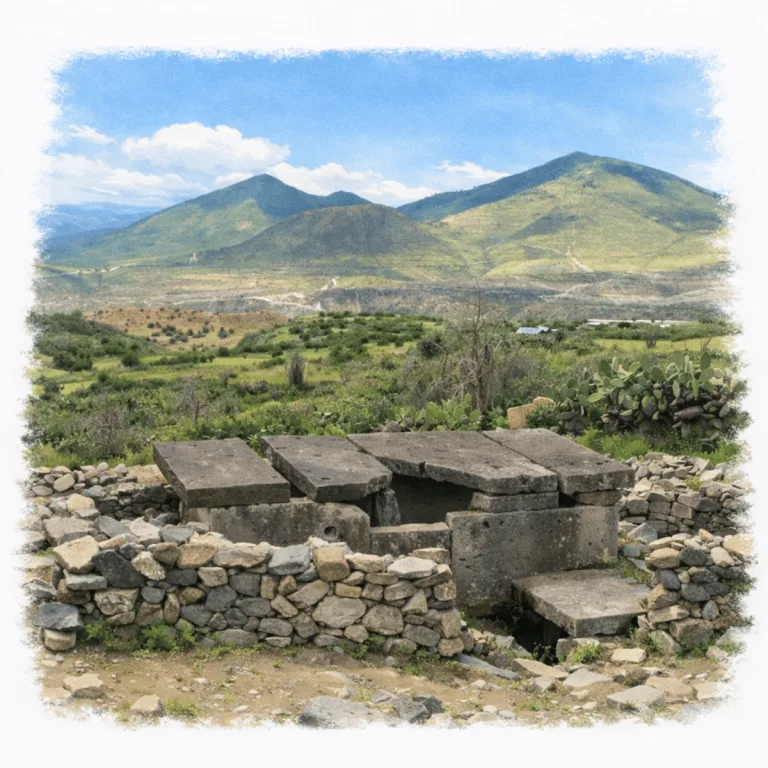
Once the capital of a highland empire, Huari sprawls beneath the sun, with stone foundations, scattered pottery, and the quiet echoes of Wari rule.
| Name | Huari (Wari) |
| Civilization | Wari |
| Location | Pacaycasa and Quinua Districts, Huamanga Province, Ayacucho, Peru |
| Elevation | 2,800 m (9,200 ft) above sea level |
| Years Active | c. 600 – 1000 CE |
| Primary Resources | Stone masonry, polychrome ceramics, textiles |
| Site Type | Imperial capital and ceremonial center |
| Key Highlights | Subterranean chambers, elite tombs, ceramic scatter |
| INT Airport | Coronel FAP Alfredo Mendívil Duarte International Airport (AYP), Ayacucho |
| Entry Fee | S/6 general admission |
| Best Time to Visit | Dry season (May–September), mid-morning |
| Field Visit | Visited & photographed by Lost Ruins of the Americas |
Unique Features of the Huari Ruins Archaeological Site
- Original Ground Context: Pottery and architecture remain where they fell – not moved, reconstructed, or isolated from the terrain.
- Surface-Level Cultural Material: Ceramics and lithics appear across walking areas, not isolated to exhibit zones.
- Non-linear Site Form: The ruins do not follow a centralized axis or ceremonial spine – structures are dispersed, with no visible focal point.
- Burial Architecture Integration: Tomb galleries and ceremonial enclosures are embedded into the terrain, not raised above it.
- Pre-Inca Imperial Layout: The grid-based organization, though partially buried, represents an early state model distinct from later Inca forms.
Location & Access
- Nearest Town: Pacaycasa; Ayacucho is the main visitor base.
- Directions: From Ayacucho, follow the Ayacucho-Quinua road northeast for approximately 22 kilometers. The entrance is beside the highway at kilometer 23. Allow about 30 to 35 minutes by car. Public minibuses traveling toward Quinua also stop near the site.
- Opening Hours: Tuesday to Sunday, 9:00 AM to 5:00 PM. Closed Mondays.
- Official Website: Ministry of Culture, Museo de Sitio Wari
- Entry Fees: S/6 general; S/3 higher-education students; S/1 minors. Includes Museum Admission.
- Facilities: Site museum, restrooms, parking, ticket office, pedestrian paths, Spanish-language guides, and craft sales.
- Accessibility: Limited. The main entrance has stairs, and parts of the outdoor circuit cross uneven surfaces. Reserved parking and staff assistance are available.
- Pro Tip: Final combis back to Ayacucho may leave before 5:00 PM, confirm return options early

Highlights to Help You Understand Your Visit
Huari doesn’t impress with towering temples, it speaks through walls, layout, and what’s left underfoot. These are the clues that unlock the site.
- Empire by Design: The thick walls and right-angle passages weren’t defensive, they were administrative. Movement was controlled. Access was earned.
- No Grand Plaza: There’s no ceremonial center here. Power was dispersed, compartmentalized, a network, not a throne room.
- Temples You Might Miss: D-shaped structures once held sacred meaning, but don’t expect height or decoration. Wari ritual space was enclosed, not elevated.
- Tombs Underfoot: The dead weren’t cast out, they were kept close. You’re walking over elite burials that once held wrapped ancestors and offerings.
- Shards of Identity: Broken Wari pottery is everywhere. These weren’t just dishes, they were political, artistic, and sacred. Geometric patterns, stylized faces, and bold colors once traveled the empire. Now they crunch underfoot.
Key Structures of the Huari Ruins
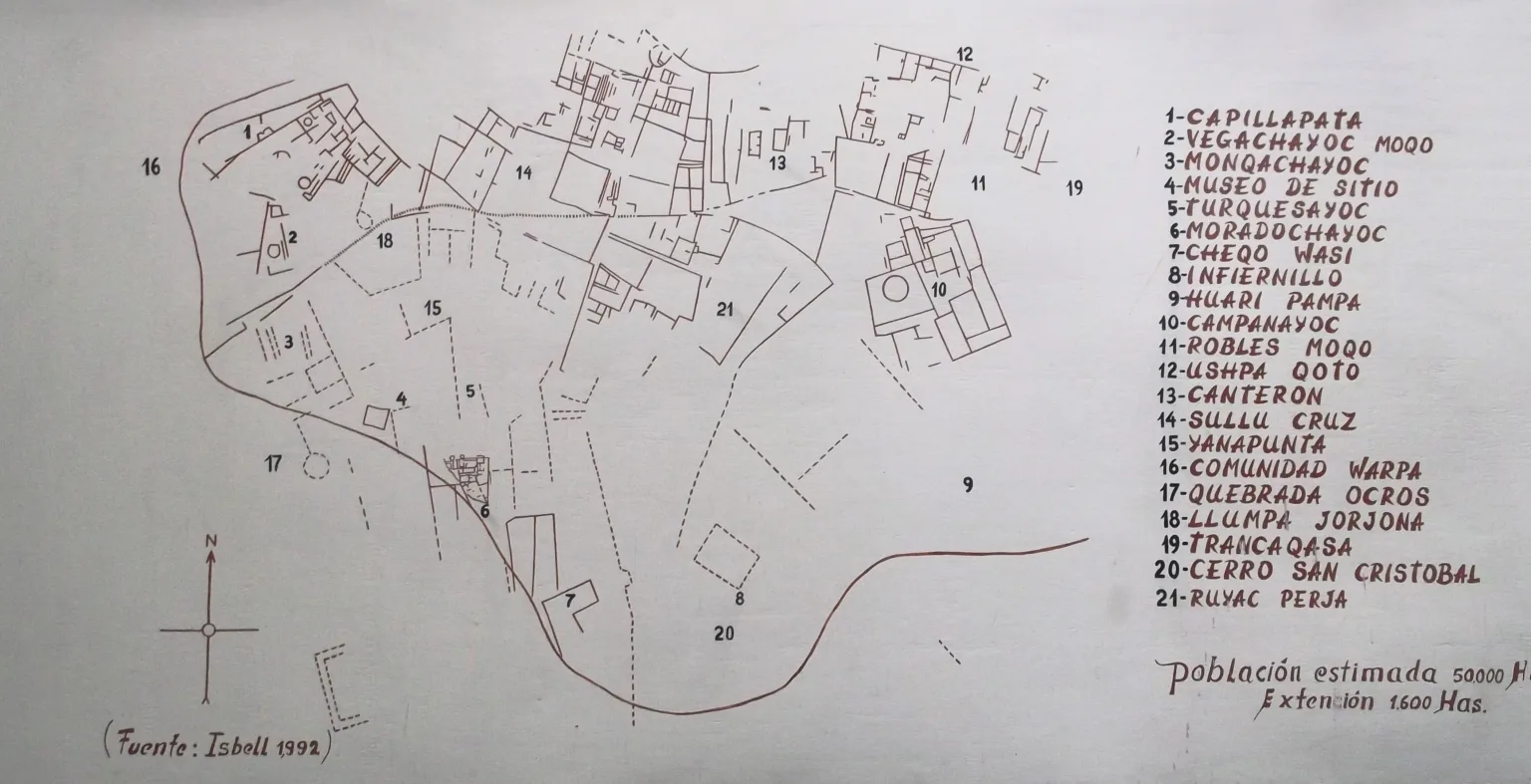
- Vegachayoc Moqo: A major ceremonial sector organized around D-shaped ritual architecture, raised platforms, and enclosed courts, revealing how sacred space was separated within Huari’s densely planned urban core.
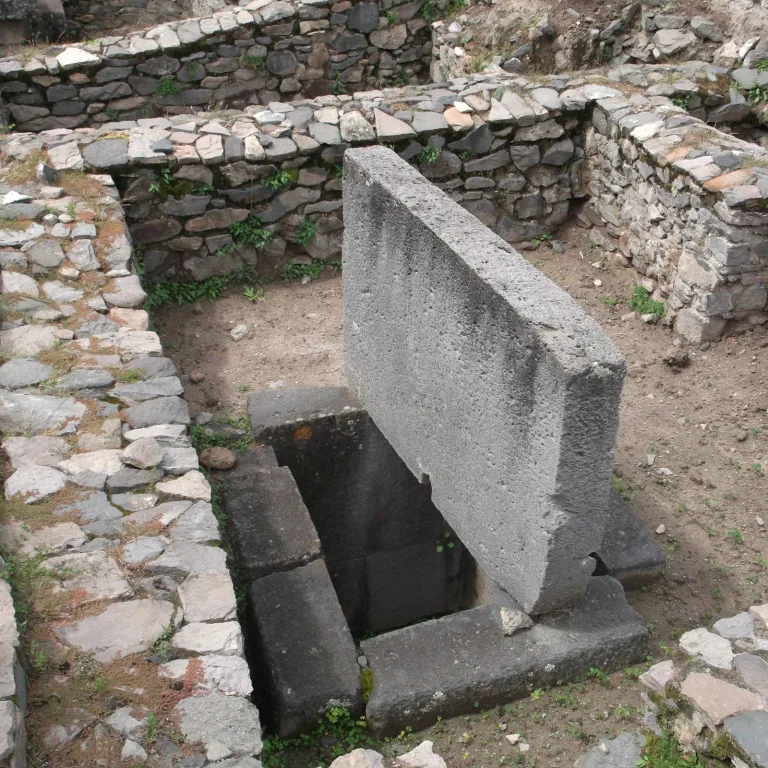
- Monqachayoc: A monumental funerary complex of sunken courts, subterranean galleries, stone-lined chambers, and deeply buried mausoleums, showing how elite burial was controlled through depth, enclosure, and restricted access.
- Cheqo Wasi: A mortuary sector of finely built rectangular chambers and massive slab-covered burial boxes, preserving some of Huari’s clearest evidence for high-status funerary architecture and specialized stone construction.
- Moradochayoc: A large enclosed compound containing courts, rectangular rooms, and temple remains, showing how ceremonial buildings were embedded within Huari’s broader pattern of walled and compartmentalized urban space.
- Capillapata: A system of massive double walls and enclosed compounds, defining controlled sectors while directing movement through one of Huari’s most imposing surviving examples of urban boundary architecture.
- Turquesayoc: A specialized workshop district marked by turquoise beads, carved fragments, and production debris, preserving evidence of the skilled craft labor that supported Huari’s ceremonial and elite economy.
- Ushpa Qoto: A complex of buildings beside a plaza, with parallel walls, semicircular structures, and subterranean rooms, preserving an unusually varied arrangement within Huari’s heavily enclosed urban landscape.
- Robles Moqo: An artifact-rich sector where ceramic fragments and stone tools helped define the Robles Moqo pottery style, linking the capital’s excavated remains to a wider Wari artistic tradition..
History and Legends
Huari, also spelled Wari, grew from a landscape that was already occupied before the Wari state emerged. Huarpa communities lived across the Ayacucho region, and beneath later construction at Moraduchayoq archaeologists found an earlier sunken square court whose exact date remains uncertain. Around the end of the seventh century, the scale of settlement changed dramatically. People concentrated around Huari as new compounds, ceremonial buildings, streets, and enclosed spaces spread across the high ground north of modern Ayacucho. Huari was becoming the capital of an expanding Wari state, eventually developing into an urban center that covered several square kilometers.
Walking through the ruins today, the city can feel fragmented because so much survives as long walls and isolated compounds, but those walls once organized a dense urban landscape. Stone foundations supported tall masonry walls finished with mud plaster, and some important buildings appear to have been painted in red and white. Courtyards and plazas opened inside large enclosed compounds, while narrow passages controlled movement between them. Among the most distinctive buildings were D-shaped ceremonial structures, a form that later appeared at Wari centers far beyond Ayacucho. Huari was being built not just as a place to live, but as a city where political authority, ritual, craft production, and elite residence were concentrated behind monumental walls.
Some of the most elaborate construction went underground. At Monqachayuq, builders created subterranean galleries, a sunken court, and a deeply buried mausoleum reached through carefully constructed stone architecture. The principal mausoleum lay about eight meters below the surface, with finely made chambers arranged around a central space. The tombs had been disturbed before modern excavation, so the identities of the people buried there are unknown, but the labor invested in them points to individuals of exceptional status. Huari’s rulers and elites were not only building a capital above ground. They were also creating monumental places for death, ancestry, and ceremony beneath it.
Experiences Around Huari
The ruins are only part of the story. Cactus-covered hills and cultivated valleys shape this dry stretch of the Ayacucho highlands.
In nearby Quinua, step into a pottery workshop to see the town’s distinctive hand-shaped ceramics, often topped with small churches, animals, and figures.
Back in Ayacucho, visit the Casa Museo Joaquín López Antay to see the work and legacy of the master who transformed the traditional retablo into one of Peru’s best-known forms of popular art.
From Huari, Wari influence spread far beyond the Ayacucho Valley. By the eighth century, Wari-style architecture, ceramics, textiles, and religious imagery were appearing across much of the central Andes. Large provincial centers such as Pikillacta near Cusco and Viracochapampa in northern Peru show how far this new political system could reach. Control was not identical everywhere, and some regions were tied to Huari more closely than others, but the scale was unprecedented in much of the Andes. Roads, administrative compounds, and shared architectural forms linked distant places to a political center at Huari centuries before the rise of the Inca Empire.
Huari’s power faded gradually rather than ending in a single catastrophe. Radiocarbon evidence shows that the capital remained active into the eleventh century, even as the wider Wari political system weakened and eventually broke apart. Communities continued living in the Ayacucho region after the capital lost its former role. By the time the Spanish chronicler Pedro Cieza de León passed through in the sixteenth century, the great city was already ancient ruins, which he recorded under the name Viñaque. Later excavation revealed just how large and complex that ruined landscape had once been, from ceremonial buildings and painted walls to underground tombs and immense residential compounds, confirming Huari as the center of one of the most powerful pre-Inca states in the Andes.
How to Get There & Where to Go Next
How to Visit Huari
Step-by-step access to the site
- Start in Lima – Fly to Ayacucho (1 hr) or take an overnight bus (8–10 hrs).
- Arrive in Ayacucho – Transfer to city center or market terminal (15–20 min).
- Travel to Huari – Take a combi or taxi to the ruins (~30–40 min).
- Enter the site – Pay small entry fee at booth and follow marked trail (5 min).
- Walk to main ruins – Uphill paths lead to tombs and chambers (10–15 min).
Tips : The road is unpaved but passable in dry season. Bring sun protection and plenty of water. There are no vendors inside.
Nearby Ruins You Can Visit
From Huari’s highland core, you can follow the trail of Wari influence across rugged terrain, to later ceremonial centers, mountain citadels, and echoes of collapsed power.

Machu Picchu – A royal Inca sanctuary built with the same elite masonry and cosmological precision.

Tarmatambo – A lesser-known site perched above Tarma, showing layered construction from Wari to Inca eras.
Antaymarca – Isolated ridge-top ruins with Wari-style enclosures and burial chambers, still hidden from most tourist maps.


Traveler Tips
- Bring plenty of water – the site has limited shade and no vendors inside.
- Wear good shoes – terrain is uneven and paths can be dusty after noon.
- Check return transport times – final combis often leave before posted closing hours.
- Allow time for the on-site museum – it helps decode what you’re seeing in the field.
- Pottery is everywhere – observe, don’t disturb.
Elsewhere in the Americas…
As Huari reshaped the central Andes, other societies across the Americas were also organizing power through ceremonial centers, controlled landscapes, and long-distance exchange.
On the southern Andean plateau, Tiwanaku expanded around monumental courts, temples, and raised fields, extending religious and political influence across the Lake Titicaca basin.

In the Mississippi Valley, Cahokia began forming its vast mound-and-plaza landscape, establishing the urban pattern that would later define the largest Indigenous city north of Mexico.
In central Mexico, Xochicalco concentrated trade, ritual, and defense within a fortified hilltop city, where terraces, plazas, and carved monuments expressed regional authority.
Insider Explorer Advice
The combi from Ayacucho takes about 30 minutes, a tight ride, full of locals with the beautifully patterned awayos they use to carry everything from children to firewood. It’s the easiest way up, but return trips can be sparse. Don’t count on anything after 4:30 PM. Inside the site, there are no gates or guides. Just dust paths, thick slabs, and pottery shards scattered everywhere, more than most ruins, littering the ground like quiet ruins of their own. You’ll pass sealed chambers, collapsed walls, and traces of polychrome ceramics in every direction. Most of Huari is still buried. What’s left above ground feels unguarded and immense, a city in pause, waiting to be read. Walk slowly and circle wide, the best clues are off the main path.
Summary: Huari is history without fences, sprawling, silent, and waiting beneath the soil. You don’t just visit. You find