
Viracochapampa
PERU / LA LIBERTAD / WARI
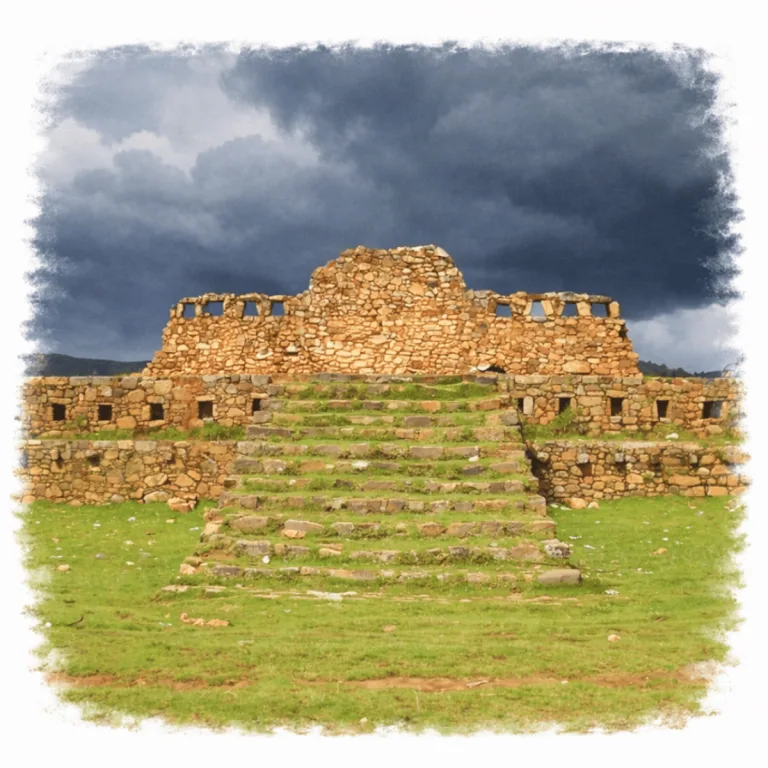
On a broad highland plain outside Huamachuco, Viracochapampa spreads a planned Wari administrative compound, where long rectilinear enclosures project imperial order into Peru’s northern highlands.
| Name | Viracochapampa |
| Civilization | Wari |
| Location | La Libertad, Peru |
| Elevation | 3,070 m (10,072 ft) above sea level |
| Years Active | c. 700–1000 CE |
| Primary Resources | Stone, raised terraces, Andean grasses |
| Site Type | Administrative center |
| Key Highlights | Orthogonal layout, restored entry walls, |
| Entry Fee | Free |
| Best Time to Visit | Late afternoon |
| Field Visit | Visited & photographed by Lost Ruins of the Americas |
Unique Features of the Viracochapampa Archaeological Site
- Modular Wari layout: Rectangular compounds and walls placed with consistent geometry
- Integrated modern use: The site doubles as a local park and social space
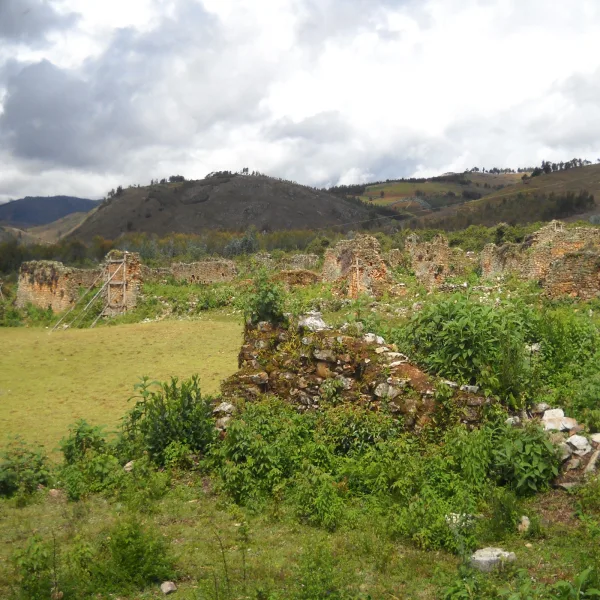
- Visible stratification: Some areas are restored while others remain collapsed or braced
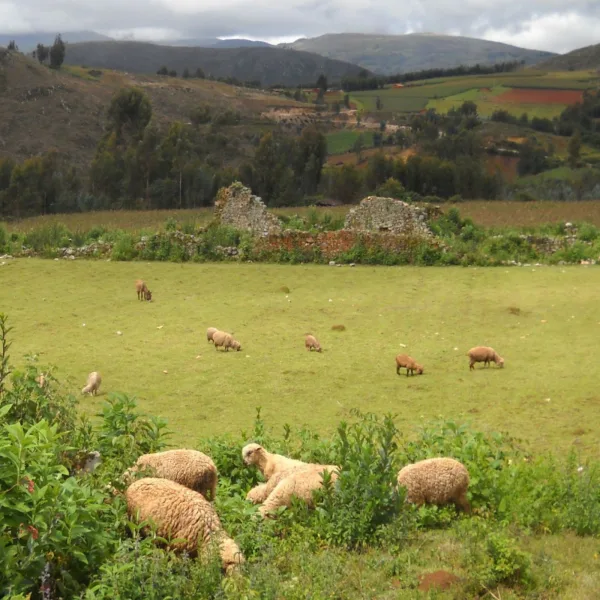
- Mountain horizon lines: The site has views of the highland terrain in nearly all directions
Location & Access
- Nearest Town: Huamachuco
- Directions: Hire a mototaxi from the Huamachuco town center. Travel time is about 15 minutes. Drivers can be asked to return later for pickup.
- Opening Hours: Daylight hours only
- Entry Fees: None
- Facilities: None available on-site
- Accessibility: Mostly flat terrain with open pathways
- Pro Tip: Bring water and sun protection. Be aware, the weather can change quickly in the high Andes.
Key Structures of Viracochapampa
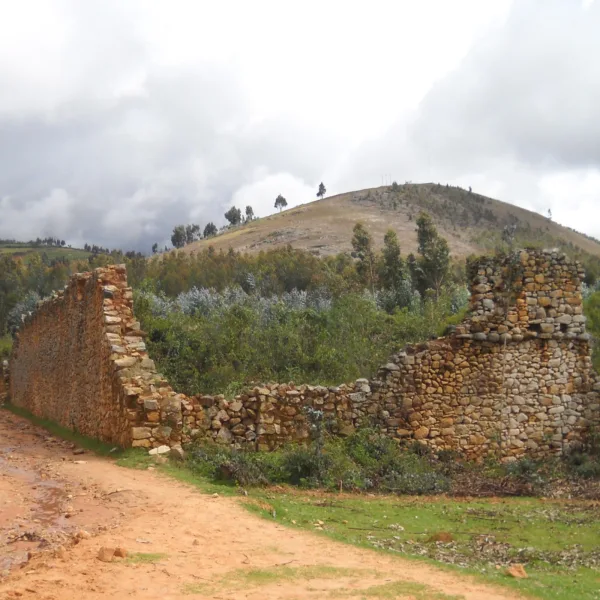
- Enclosing Wall with Central Avenue: A substantial double-walled enclosure surrounds the site, cut by a broad central avenue that served as the principal axis of movement and entry.
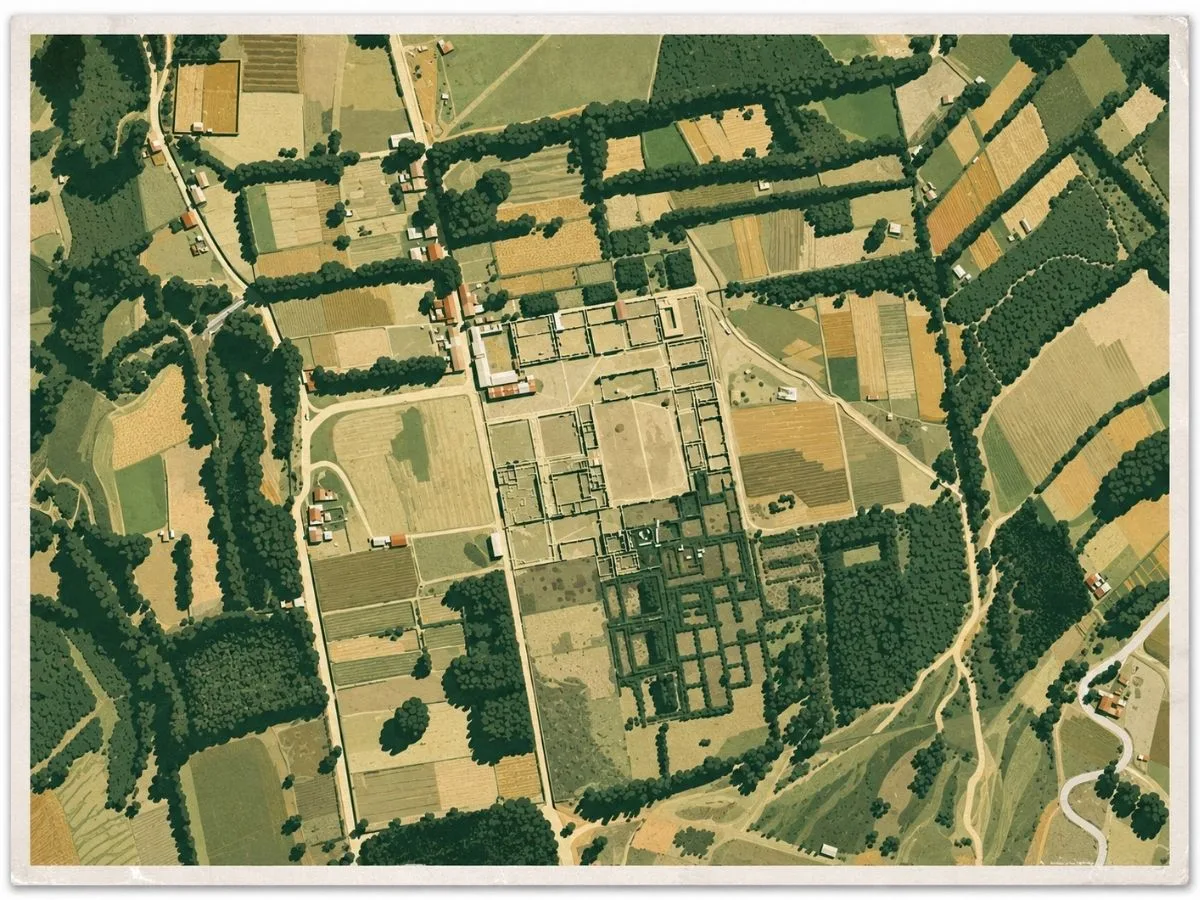
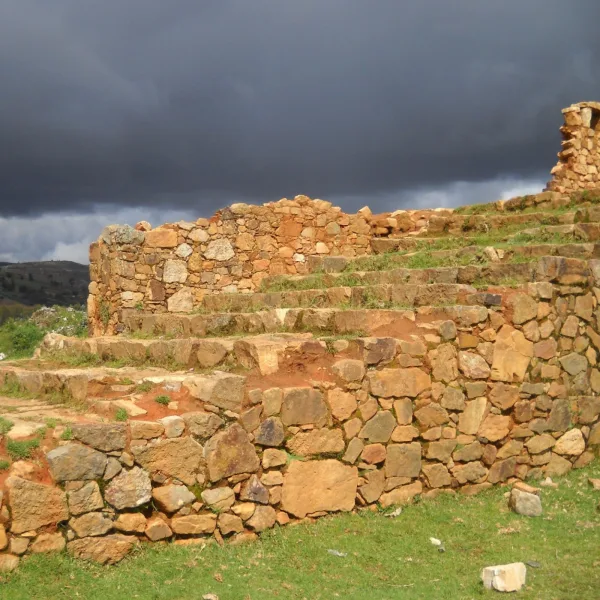
- Rectangular Stone Compounds: Eight large rectangular building groups, built with dressed stone and red mortar, form the administrative heart of the city. Each compound is organized around an open courtyard.
- Niched Halls: Galleries with rounded corners and niches are a hallmark of Wari provincial centers. At Viracochapampa, these spaces likely served ceremonial or administrative functions.
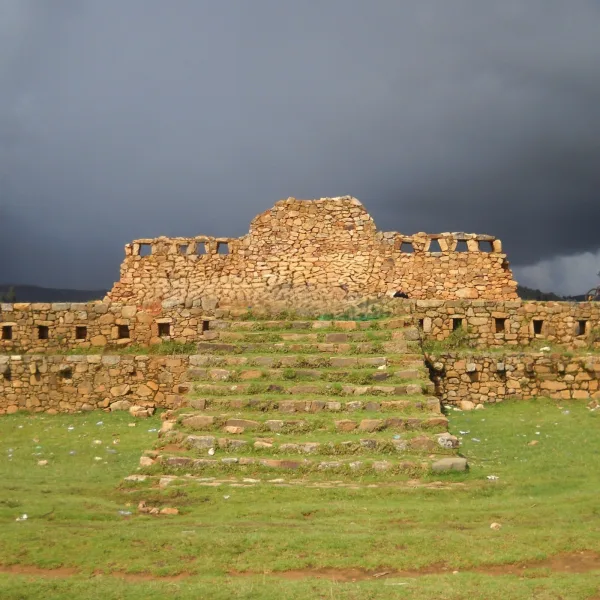
- Main Entry Complex: The most stabilized and restored portion of the ruins, where walls still define the original plan and show how visitors were funneled into the compounds.
- Courtyards and Open Plazas: Large open spaces framed by walls reflect the Wari emphasis on order and symmetry, likely used for gatherings, processions, or official functions.
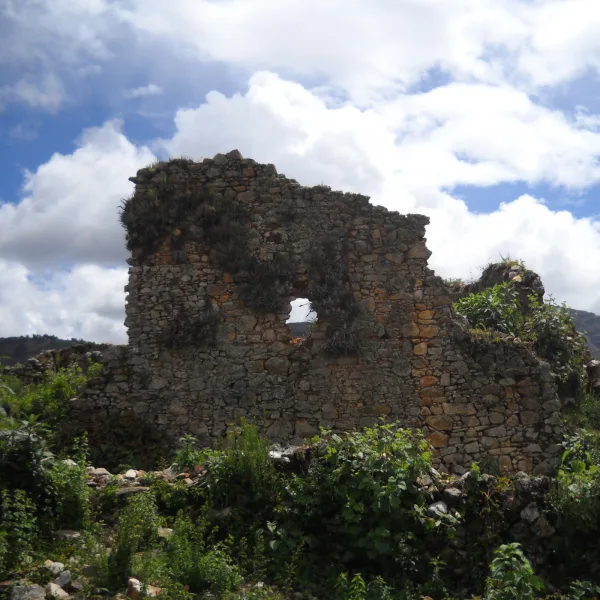
- Collapsed and Stabilized Zones: Several sectors remain partially buried or collapsed, with conservation efforts reinforcing exposed walls to preserve the site’s layered history.
History and Legends
Viracochapampa was established around 700 CE as one of the northern administrative centers of the Wari state during the Middle Horizon. Located just outside Huamachuco in Peru’s La Libertad region, the site reflects Wari efforts to extend their influence deep into the northern highlands. Its position on a broad plain provided access to fertile fields, pastureland, and trade routes that connected the central Andes with Cajamarca to the north and coastal valleys to the west.
The city was not built gradually but planned from the outset. Large rectangular compounds, stone walls, and axial corridors were laid out in a deliberate grid, consistent with Wari ideals of order and authority. These compounds likely housed administrators, storage facilities, and ritual spaces rather than dense residential neighborhoods. The emphasis on corridors and symmetry conveyed control and coordination rather than monumentality. For archaeologists, this planning marks Viracochapampa as a textbook example of Wari urban design adapted to a frontier zone.
Its role was both practical and symbolic. As an outpost, Viracochapampa helped consolidate Wari power in a region with long-standing cultural traditions of its own. The presence of standardized architecture reinforced the reach of the state, while its location near Huamachuco ensured access to agricultural production and highland trade. Though lacking the towering platforms of coastal centers, its layout demonstrates the Wari ability to impose a recognizable pattern of governance across diverse landscapes.
Experiences Around Viracochapampa
The ruins are only part of the story. High Andean grassland and cultivated slopes spread across the plateau above Huamachuco.
–
If your visit falls on Sunday, Huamachuco’s weekly market brings vendors from surrounding communities into town with produce, livestock, clothing, and cooked food.
–
Farther west, Pimentel and Puerto Eten add seafood, beach walks, fishing-town atmosphere, and Pacific sunsets. Together, they make Batán Grande part of a broader northern Peru experience.
By the end of the first millennium, the wider Wari state began to weaken. Environmental stress, internal conflict, and the limits of imperial control contributed to its decline. Viracochapampa, like other regional centers, was gradually abandoned. The site shows no evidence of catastrophic destruction but rather a slow fading of its administrative purpose.
Legends tied to Viracochapampa are scarce, but its very name carries meaning. “Viracocha” refers to the Andean creator deity known across multiple cultures, while “pampa” means plain. The name suggests that the site may have retained spiritual associations long after its political role ended. The ruins remained visible in the landscape, a reminder of earlier power and sacred order.
Modern archaeological study has confirmed its Wari origins and highlighted its significance as the most important Wari center in northern Peru. Conservation efforts in recent decades have stabilized collapsing walls and reinforced exposed compounds, making the geometry of the city easier to appreciate. Visitors today can walk through defined corridors and enclosures that reveal the precision of Wari planning while still experiencing the quiet highland atmosphere that has always surrounded the site.
How to Get There & Where to Go Next
How to Visit Viracochapampa
– Step-by-step access to the site –
- Lima to Trujillo: 1-hour flight or 9-hour bus north along the coast.
- Trujillo to Huamachuco: 6-hour bus or shared van into the highlands.
- Huamachuco to Site: 15-minute mototaxi from Plaza de Armas to the Entrance.
Tips: Visit early in the day for clear skies. Mototaxi drivers in town know the site well. Just ask for Viracochapampa.
Nearby Ruins You Can Visit
The highlands of northern Peru are layered with stone-built power centers. These sites each reflect different timelines and cultures, but all speak to regional ambition and sacred design.

Cerro Miraflores – A nearby hilltop ruin above Huamachuco with stone platforms and scenic overlooks.

Marcahuamachuco – Monumental walls and funerary towers crown a mountaintop once called the “Machu Picchu of the North.

Huaca de la Luna – A Moche ceremonial pyramid layered with murals, warrior cult imagery, and generations of painted sacrifice platforms.
Traveler Tips
- Bring water and light snacks, as there are no vendors on-site.
- Wear sturdy shoes; the ground is uneven in places and pathways cross grassy areas.
- Facilities are limited, check in Huamachuco before heading out.
- The site is now supervised, so follow marked paths and respect restricted areas.
- Afternoon light gives the best definition to the stone compounds for photography.
Elsewhere in the Americas…
While Batán Grande was thriving under Sicán rule, other civilizations in the Americas were reshaping their centers of power.



In North America, the Ancestral Puebloans built masonry villages and ceremonial spaces at Mesa Verde.
Insider Explorer Advice
When traveling to Huamachuco for Marcahuamachuco, many visitors are also directed to Viracochapampa and Cerro Miraflores by the staff at the excellent museum just off the town square. A short mototaxi ride leads to a site that has seen steady improvements, with stabilized walls and marked paths that make its Wari geometry clearer than before. The setting is calm and open, offering a slower-paced experience that contrasts with the immensity of Marcahuamachuco while standing strong on its own as a highland Wari center.
Summary: Viracochapampa has grown into a more defined and preserved Wari site, rewarding visitors with clarity of design and a peaceful highland atmosphere.