
Tiwanaku
BOLIVIA / LA PAZ / TIWANAKU
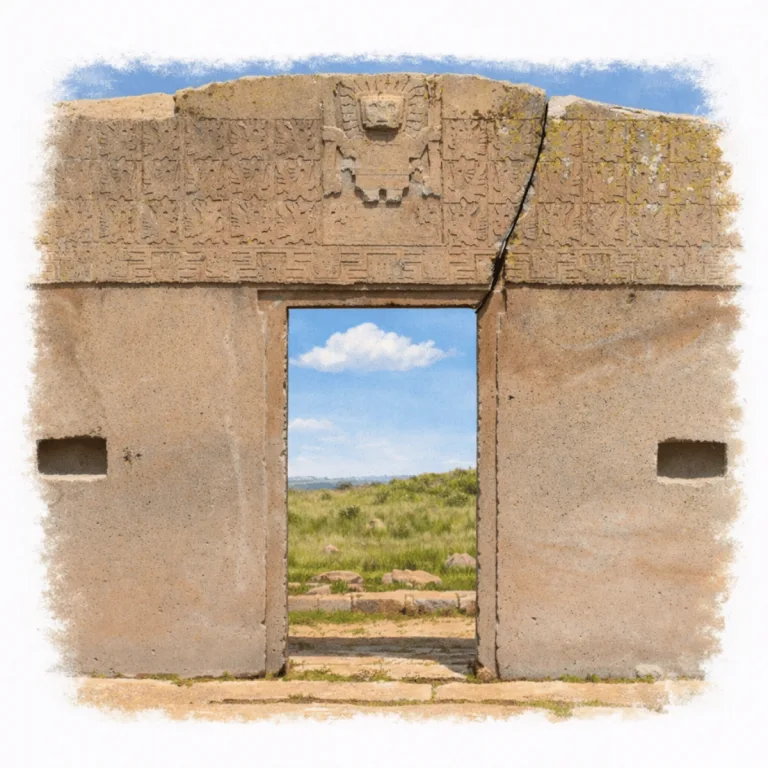
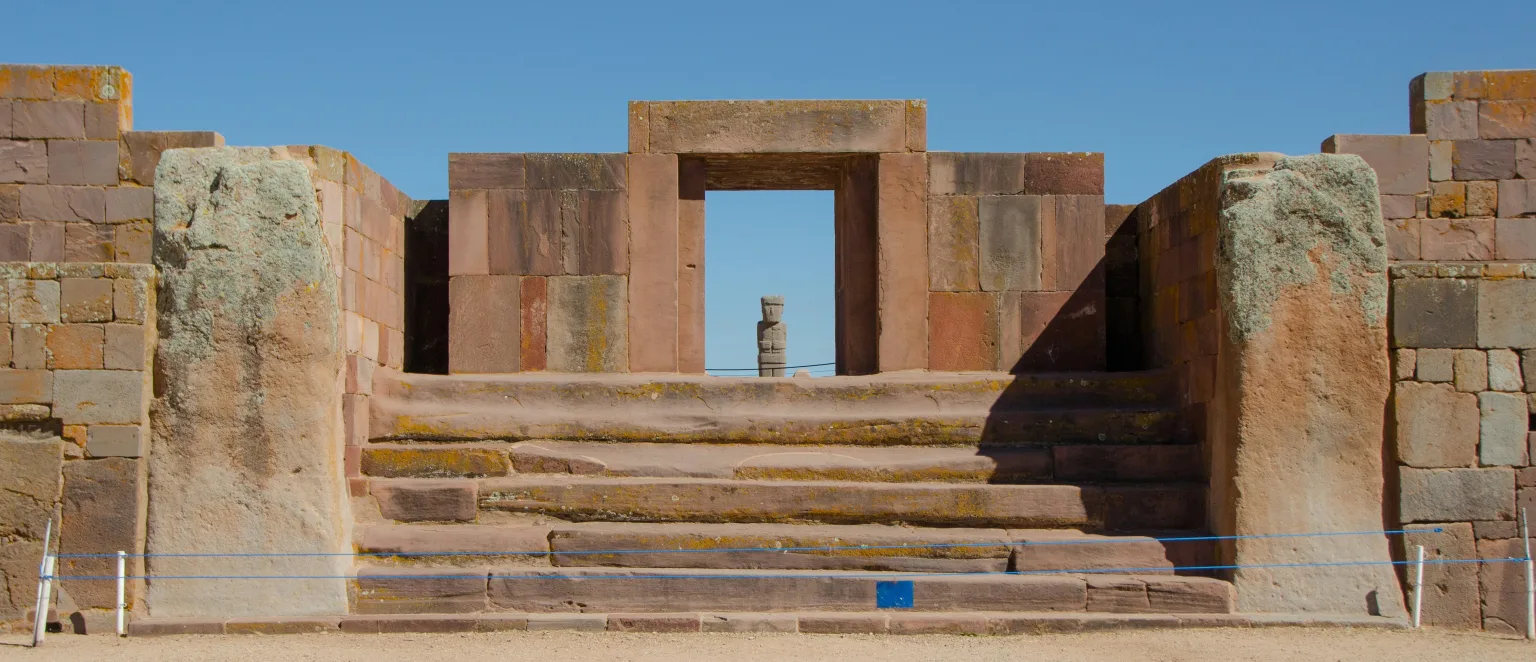
On the high plain near Lake Titicaca, Tiwanaku rises in cut stone around Kalasasaya, where the Gateway of the Sun fixes the ceremonial core in a single carved portal.
| Name | Tiwanaku |
| Civilization | Tiwanaku |
| Location | Altiplano, near Lake Titicaca, Bolivia |
| Altitude: | 3,850 meters (12,600 feet) |
| Years Active | c. 500 to 1000 CE |
| Primary Resources | Andesite, sandstone, camelid wool, maize |
| Site Type | Ceremonial and urban center |
| Key Highlights | Gate of the Sun, Kalasasaya, Akapana Pyramid, monoliths |
| UNESCO | World Heritage Site (2000) |
| Entry Fee | 10 Bs – (100 Bs Foreigners) |
| Best Time to Visit | Dry season, May to October |
Unique Features of the Tiwanaku Archaeological Site
- Monumental Stonework: Precisely cut and fitted stone blocks still give the ceremonial core its weight and presence.
- Gate of the Sun: A single carved monument that has become the site’s most famous and unforgettable image.
- Monoliths: Standing carved figures add a human presence to a site otherwise defined by architecture and open space.
- Lost Adobe City: Much of ancient Tiwanaku was built in adobe, leaving the surviving stone core to carry the site’s power today.
Location & Access
- Nearest City: La Paz, Bolivia
- Directions: Public minibuses depart from the Cementerio General area in La Paz and travel across the altiplano directly to Tiwanaku. The site is located within the modern town and is easily reached on foot.
- CIAAAT: Tiwanaku
- Opening Hours: Typically open daily, hours vary slightly by season.
- Entry Fees: 10 Bs – (100 Bs Foreigners)
- Facilities: Museum, ticket office, restrooms, small shops in town.
- Accessibility: Flat terrain with short walking distances across the main ceremonial area.
- Pro Tip: Visit the museum before exploring the ruins. It provides important context for the stonework and artifacts found across the site.
Highlights to Help You Understand Your Visit
Tiwanaku makes more sense when seen as a ceremonial stone core rising out of a vanished adobe city.
- A Site of Platforms and Courts: Tiwanaku is easier to understand when attention stays on terraces, enclosures, and sunken spaces rather than on single stones alone.
- Movement Was Carefully Shaped: The site was not meant to reveal itself all at once. Entrances, walls, and open areas guided how people approached its most important spaces.
- Height Changes Carry Meaning: Raised platforms and lowered courts create a rhythm of ascent, descent, and pause that helps explain the site’s formal character.
- The Open Space Is Part of the Experience: Tiwanaku does not crowd visitors with dense ruins. Its broad layout gives the monuments room to feel deliberate and commanding.
- Look for Order Before Detail: The larger pattern matters first. Once the arrangement of courts, platforms, and sightlines becomes clear, the carved features make more sense.
- The Ceremonial Core Still Leads the Visit: Even with much of the old city gone, the surviving center still directs attention toward ritual, authority, and controlled display.
Key Structures of Tiwanaku
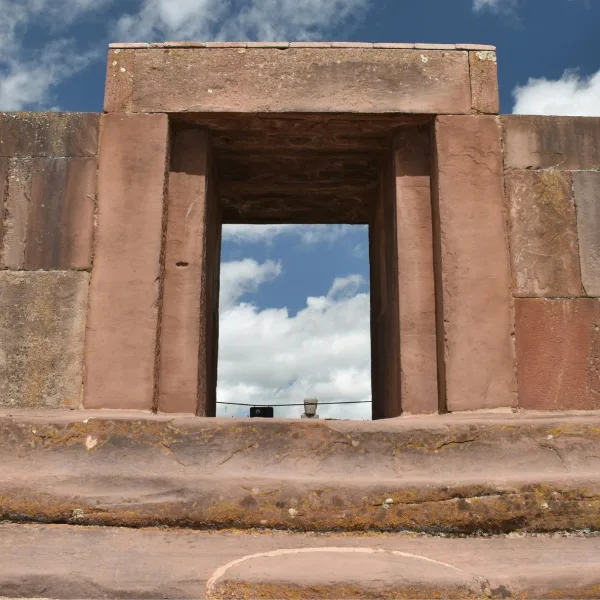
- Gate of the Sun: Tiwanaku’s most famous monument, this carved stone gateway is known for its central deity figure and the symbolic imagery cut across its upper face. It is smaller than some visitors expect, but in person it carries much of the site’s force.
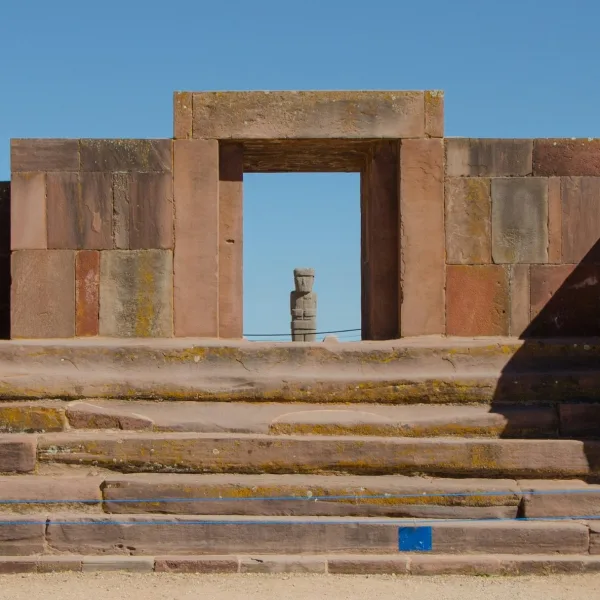
- Ponce Monolith: A tall carved monolith associated with the Kalasasaya complex, notable for its formal stance and dense symbolic detail. It adds a strong human presence to a site often remembered first for stone platforms and gateways.
- Kalasasaya: A large ceremonial platform and enclosure marked by standing stone pillars and strong alignment. Its scale and elevated position help show how Tiwanaku shaped some of its most formal public space.
- Akapana Pyramid: A massive stepped platform that once stood at the center of the ceremonial core. Though heavily ruined today, its size still makes clear how important height, terraces, and staged ascent were here.
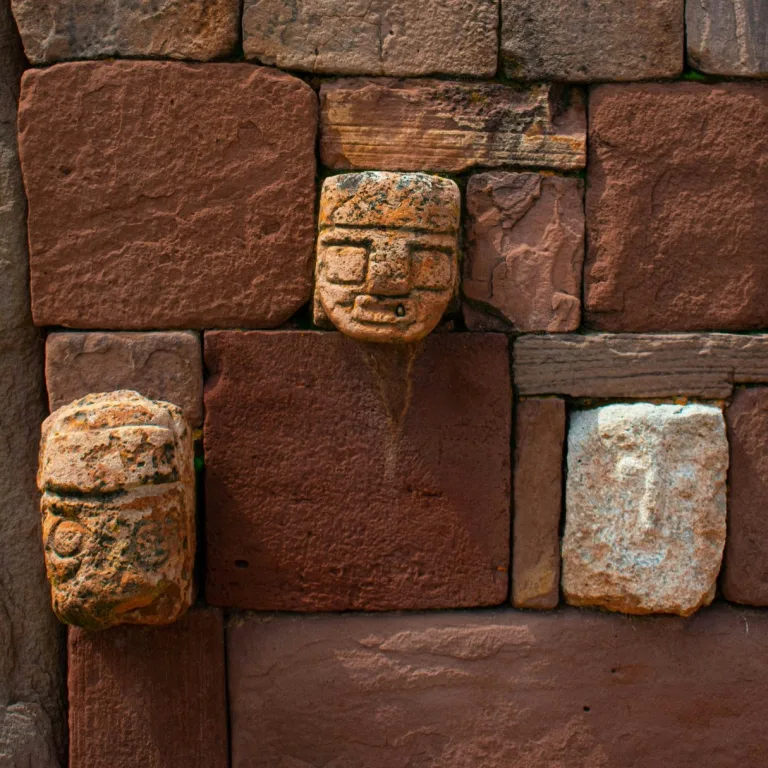
- Semi Subterranean Temple: A sunken rectangular court lined with carved stone heads set into the walls. It creates one of the site’s sharpest changes in feeling, dropping visitors into an enclosed stone space below the level of the surrounding monuments.
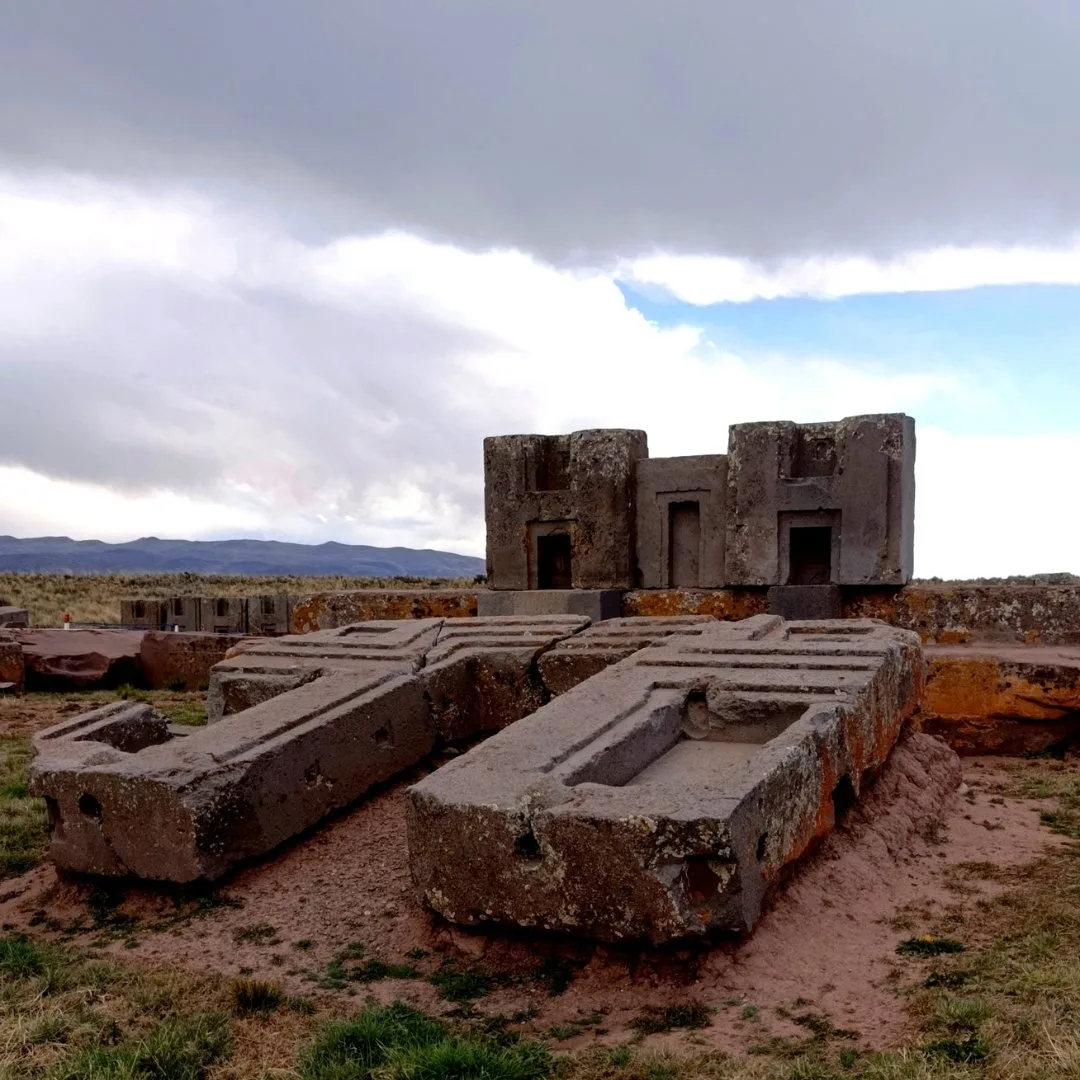
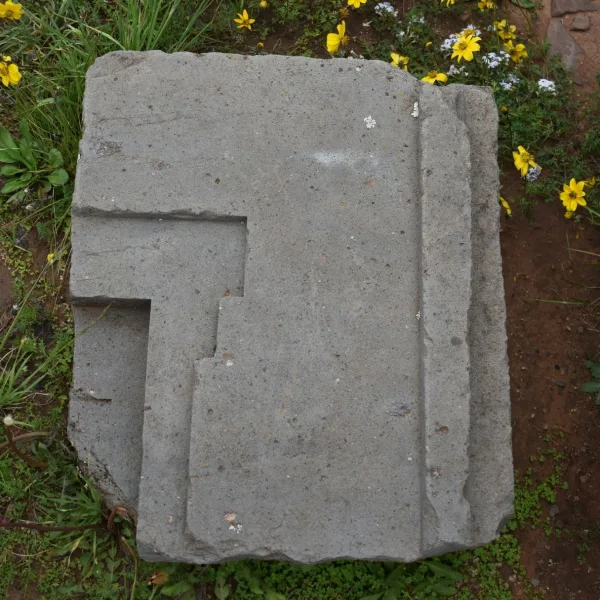
- Pumapunku: A monumental stone complex famous for its sharply cut blocks, fitted joints, and technical precision. Even in collapse, it remains one of the clearest examples of Tiwanaku’s stoneworking skill.
- Putuni: A palace-like compound often linked to elite or ceremonial use. Its enclosed form adds another layer to the site, showing that Tiwanaku was built from more than broad platforms and open courts alone.
- Kheri Kala: A smaller mound and platform complex near the ceremonial center that helps reveal the broader layout of the site. It points to a larger urban setting beyond the most famous monuments.
- Kantatallita: A lesser-known stone complex with dressed slabs and worked fragments. It helps show that high-level stoneworking extended across the ceremonial core, not just to its best-known monuments.
- Bennett Monolith: One of Tiwanaku’s most important sculpted stone figures, carved with ritual imagery and linked to the ceremonial precinct. It shows how monumental sculpture stood alongside architecture as part of the site’s sacred program.
- El Fraile Monolith: Another major standing stone figure, carved with ritual elements and long tied to Tiwanaku’s ceremonial world. Its presence helps round out the sculptural side of the site’s sacred core.


History and Legends
Tiwanaku emerged on the Bolivian altiplano near Lake Titicaca and grew into one of the earliest powerful civilizations in the Andes. Beginning as a small settlement, it developed into a ceremonial and urban center between roughly 500 and 1000 CE. At its height, Tiwanaku influenced large portions of the southern Andes through trade, religion, and shared cultural practices. It did not rise in isolation. During the same broader era, the Wari were building another major highland power farther northwest in present-day Peru, showing that more than one influential Andean tradition was taking shape at once. Unlike later empires, Tiwanaku’s power appears to have spread through networks of influence rather than direct military control.
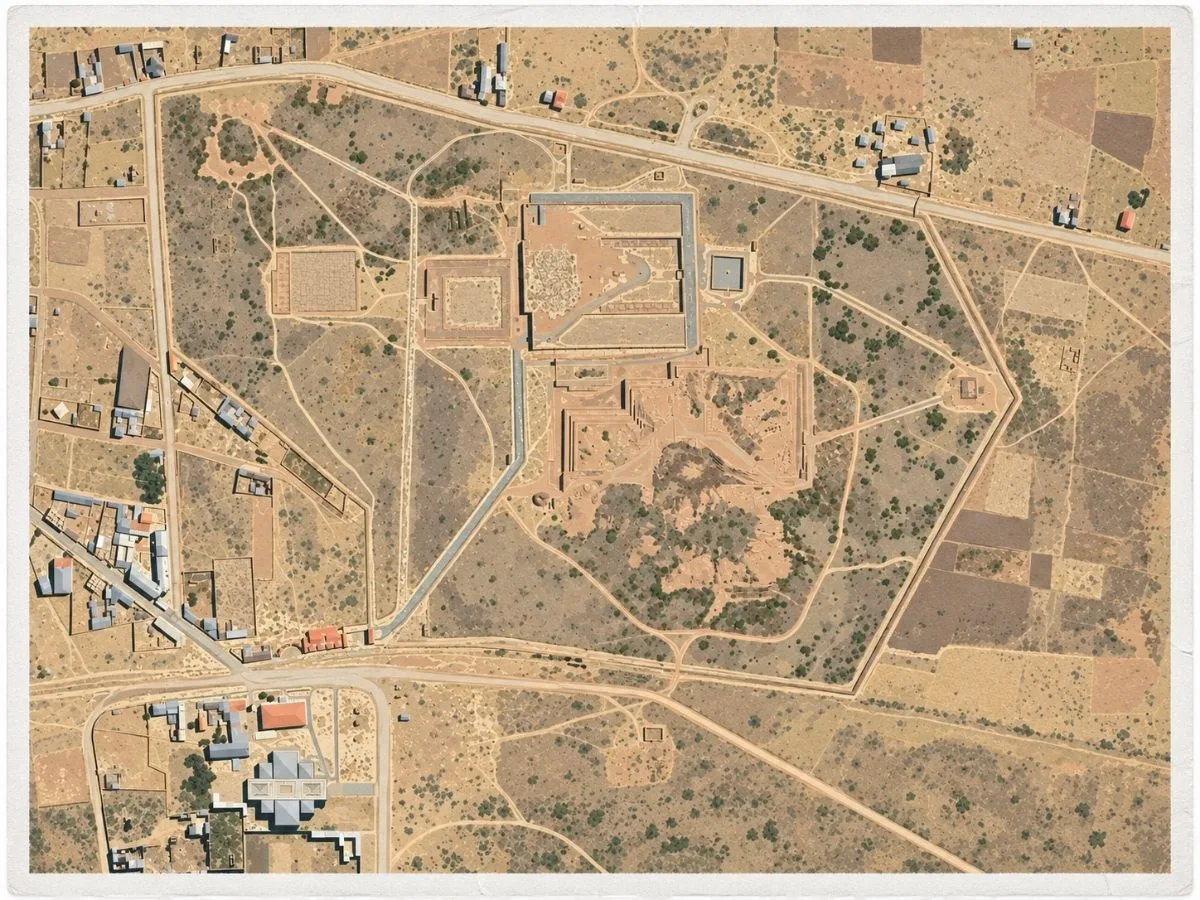
The city itself was much larger than what is visible today. While the ceremonial core is built in stone and still stands, much of Tiwanaku was constructed from adobe, which has since eroded or lies buried beneath the modern town. What remains are the monumental structures that once anchored the city’s ritual life. Platforms, sunken courts, and precisely carved blocks define the landscape, giving a sense of order and permanence even as much of the original urban fabric has disappeared.
Central to Tiwanaku’s identity is its stonework. Massive andesite and sandstone blocks were quarried, transported, and shaped with a level of precision that continues to draw attention. The Gate of the Sun stands as one of the most recognized elements of the site. Carved from a single block, it features a central figure surrounded by symbolic imagery often associated with time, cycles, and celestial observation. The exact meaning remains debated, but the consistency of its design suggests a shared system of belief tied to seasonal change and cosmic order.
Who were the Tiwanaku?
The Tiwanaku were an ancient highland people who lived on the altiplano near Lake Titicaca in present day Bolivia. Rising to prominence between about 500 and 1000 CE, they built a culture centered on ceremony, formal public space, and finely worked stone. They are best known for carved monoliths, sunken courts, raised platforms, and symbolic imagery linked to sacred time and seasonal cycles. Life in their world was shaped by the harsh highland environment, the ritual importance of the landscape, and a capital that served as both a political and ceremonial center.
The layout of Tiwanaku reflects a strong connection to the surrounding landscape. Structures are oriented in relation to the sun and horizon, and the site’s position on the altiplano links it to wider networks around Lake Titicaca. In Andean traditions, mountains, water, and the earth itself are active forces. The placement of ceremonial spaces at Tiwanaku suggests that the builders were working within this framework, shaping the city as both a physical and symbolic center.
Local traditions often connect Tiwanaku to stories of origin and creation. Some accounts treat it as a place tied to beginnings, emergence, and sacred power. These ideas fit within broader Andean traditions, where certain landscapes and built spaces carried deep spiritual meaning. At Tiwanaku, the gateways, courts, and formal stone settings still give that older sense of ritual importance real weight.
Experiences Around Tiwanaku
The ruins are only part of the story. Windy fields and grazing land stretch across the Altiplano toward Lake Titicaca.
If your visit falls on Sunday, browse Tiwanaku’s q’atu around Plaza 14 de Septiembre, where rural producers sell potatoes, grains, clothing, and household goods.
Nearby Guaqui adds the lakeshore, with old locomotives and railway buildings from the route that once connected La Paz with steamships crossing Lake Titicaca.
By around 1000 CE, Tiwanaku’s influence declined, and the site was gradually abandoned. The reasons are still discussed, with possible factors including environmental change, shifting trade networks, or internal social dynamics. Over time, the adobe city faded, leaving the stone core exposed. Later cultures and modern settlements grew around the ruins, but the central monuments remained as markers of a once powerful ceremonial center.
Today, Tiwanaku continues to hold cultural importance for Indigenous communities in the region. Ceremonies are still held at the site, especially during the Andean New Year, linking present day traditions with the deep past. Visitors walking through the ruins encounter not only the remains of an ancient city, but a landscape where stone, sky, and belief remain closely connected.
How to Get There & Where to Go Next
How to Visit Tiwanaku
– Step-by-step access to the site –
- Start in La Paz Catch a public minibus in the Cementerio General area for Tiwanaku (about 90 minutes).
- Arrive in Tiwanaku town Most visitors get dropped in or near the modern town beside the archaeological zone.
- Walk to the site From town, it is an easy walk to the main ruins and museum area.
- Stay overnight if needed Tiwanaku works well as a small-town base if you want more time at the site.
Tip: Go early for stronger light and fewer people, and bring cash, sun protection, and water for the exposed high-altitude setting.
Nearby Ruins You Can Visit
Tiwanaku’s stonework, sacred planning, and highland setting connect it to other Andean sites where architecture carried ritual meaning far beyond the walls themselves.

Machu Picchu – Precise stonework and mountain setting make the landscape itself feel like part of the monument.

Chincana Labyrinth – A maze of stone on Isla del Sol, tied to pilgrimage, myth, and the sacred world of Lake Titicaca.

Nasca Lines – Vast geoglyphs spread across the desert, turning the open landscape itself into a place of meaning and design.
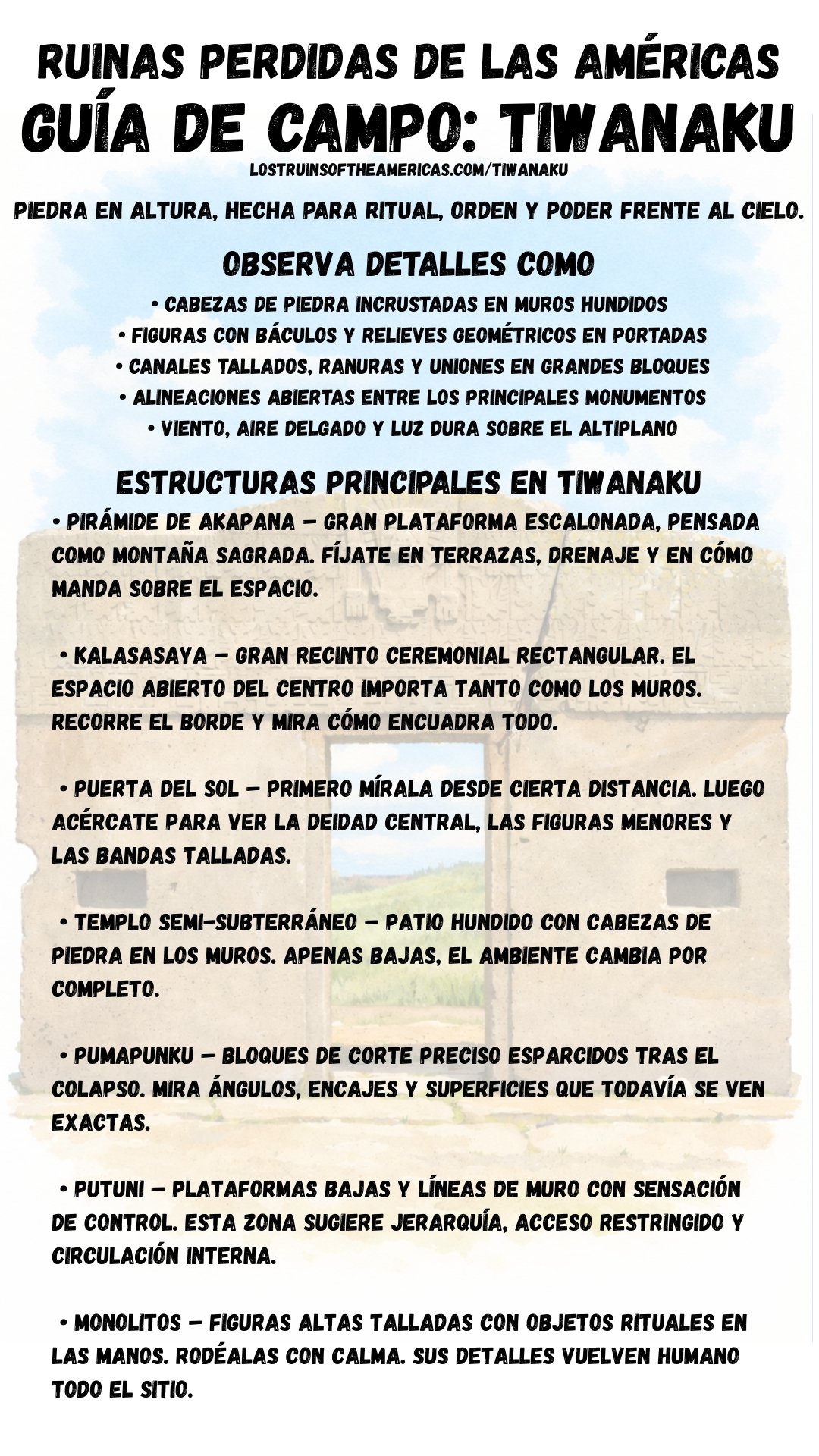
Download Field Guide
Español
English


Traveler Tips
- Visit the museum first to understand the significance of the stone carvings and monoliths.
- Bring sun protection; the altiplano has intense sunlight and little shade.
- Allow at least half a day to explore both the site and museum.
- Dress for changing weather conditions at high altitude.
Elsewhere in the Americas…
As Tiwanaku flourished on the high plains near Lake Titicaca, other cultures across the Americas were also shaping ceremonial landscapes and regional traditions of power:

In central Mexico, Teotihuacan organized urban life through grand avenues, pyramids, and planned compounds.

In Oaxaca, the Zapotec city of Monte Albán was a political center with plazas, tombs, and carved stone monuments.
Insider Explorer Advice
From La Paz, minibuses leave from the Cementerio General area and make the trip across the altiplano to Tiwanaku. Staying in the modern town places you directly on top of much of the ancient city, with the main archaeological zone within walking distance. The museum is worth visiting before the ruins, as it helps connect the carved stones and monoliths to the broader ceremonial world. The Sun Gate stands out as a defining moment, a single carved stone that feels central to the entire site. Much of the original adobe city is gone, but the remaining stonework carries the presence of what once stood there.
Summary: Tiwanaku is a high altitude ceremonial center where monumental stonework and buried cities reveal one of the Andes’ earliest and most influential cultures.