
Monte Albán
MEXICO / OAXACA / ZAPOTEC–MIXTEC
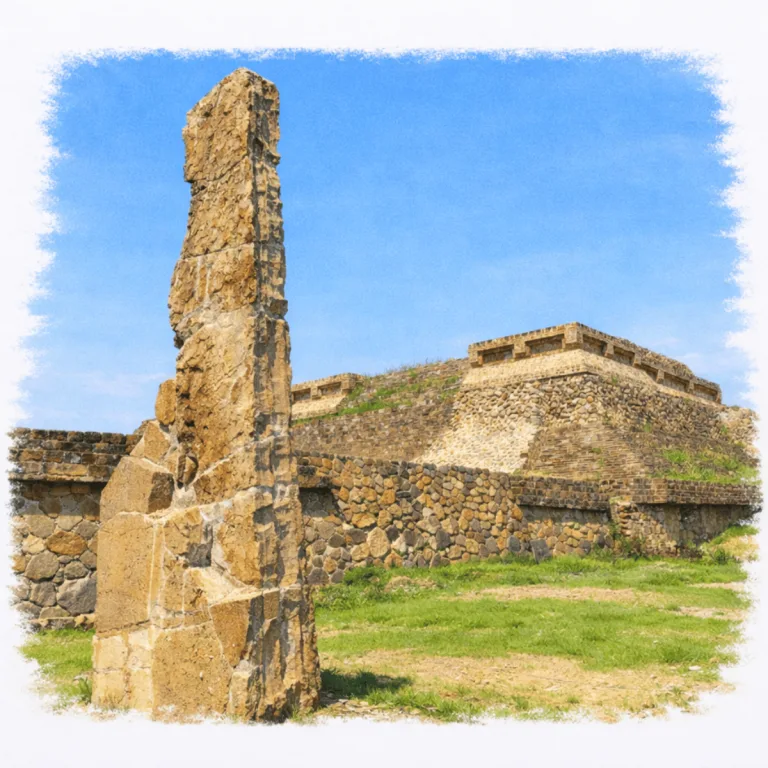
Atop a flattened mountain summit above the Oaxaca Valley, Monte Albán levels a vast hilltop to form a monumental plaza, where carved terraces and platforms reshape the ridge into a planned Zapotec capital.
| Name | Monte Albán |
| Civilization | Zapotec (later Mixtec reuse) |
| Location | Oaxaca, Oaxaca, Mexico |
| Elevation | 1,940 meters (6,400 feet) above sea level. |
| Years Active | c. 500 BCE – 800 AD (Zapotec); Mixtec reuse afterward |
| Primary Resources | Stone, maize, beans, squash, ceramics |
| Site Type | Urban and ceremonial mountaintop capital |
| Key Highlights | Main Plaza, Los Danzantes, Building J, Ballcourt |
| UNESCO | Archaeological Site of Monte Albán |
| Entry Fee | ~$105 MXN / ($210 MXN Foreigners) |
| Best Time to Visit | Weekday mornings |
| Field Visit | Visited & photographed by Lost Ruins of the Americas |
Unique Features of the Monte Albán Archaeological Site
- Architectural Highlights: Main plaza, pyramids, observatories, ballcourts
- Notable Artifacts: Danzantes carvings, Tomb 7 goldwork, Zapotec glyphs
- Natural Surroundings: 360° views of the Oaxaca Valley
- Comparative Notes: One of the oldest and largest highland city-states in Mesoamerica
Location & Access
- Nearest Town: Oaxaca City
- Directions: From Oaxaca de Juárez, take the road toward San Pedro Ixtlahuaca, then follow the signs onto Camino Dr. Ignacio Bernal, which climbs directly to the entrance.
Shuttles leave hourly from a few blocks southwest of Mercado Benito Juárez. Return service every half hour from the site parking lot. - Official Website: INAH Zona Arqueológica de Monte Albán.
- Opening Hours: 8:00 AM – 5:00 PM
- Entry Fees: 105 MXN for Mexican nationals and foreign residents; 210 MXN for foreign visitors. Online ticket purchase is available.
- Facilities: Site museum, restrooms, parking, restaurant, shop, medical assistance, and accessibility services. The museum is included with admission and closes at 4:30 PM.
- Accessibility: Partial. INAH lists accessibility services, but the monumental core includes uneven stone surfaces, slopes, exposed plazas, and stairways.
- Pro Tip: Go early for cooler temperatures and fewer crowds

Highlights to Help Understand Your Visit
Monte Albán wasn’t just a city. It was a message carved into stone. Here’s how to read what you’re walking through:
- A City Above All: The entire mountaintop was leveled, not for defense, but for visibility and power. The Zapotecs wanted to be seen.
- Ritual in Every Step: The plaza is more than open space. It’s a stage. Pyramids, platforms, and temples direct attention and movement like choreography.
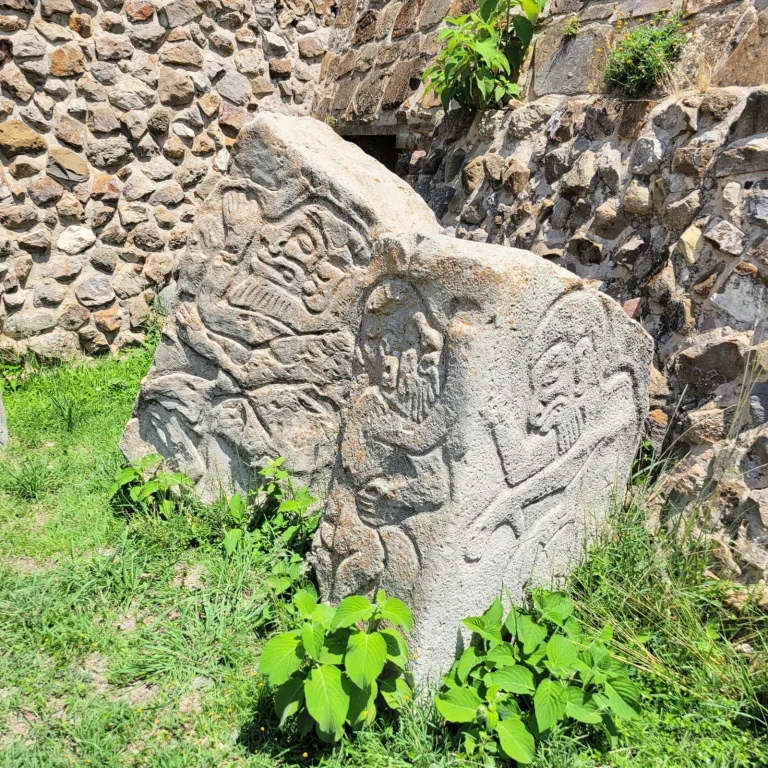
- Signs of Submission: The Danzantes reliefs aren’t dancers. They’re captives. Their placement near the entrance sends a message of control and conquest.
- Layers of Belief: Many structures were rebuilt over centuries. Each phase added symbolic meaning. What you see is a palimpsest of ritual, rule, and renewal.
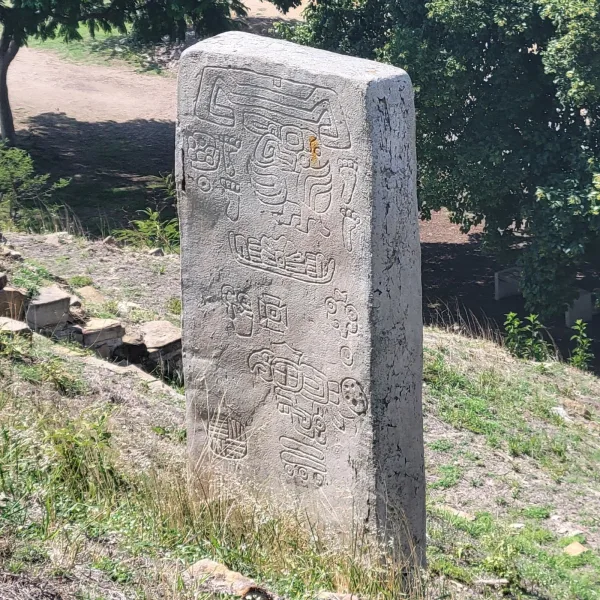
- Written in Stone: Look for glyphs carved into stairs and walls, some of the earliest writing in Mesoamerica, documenting power through architecture.
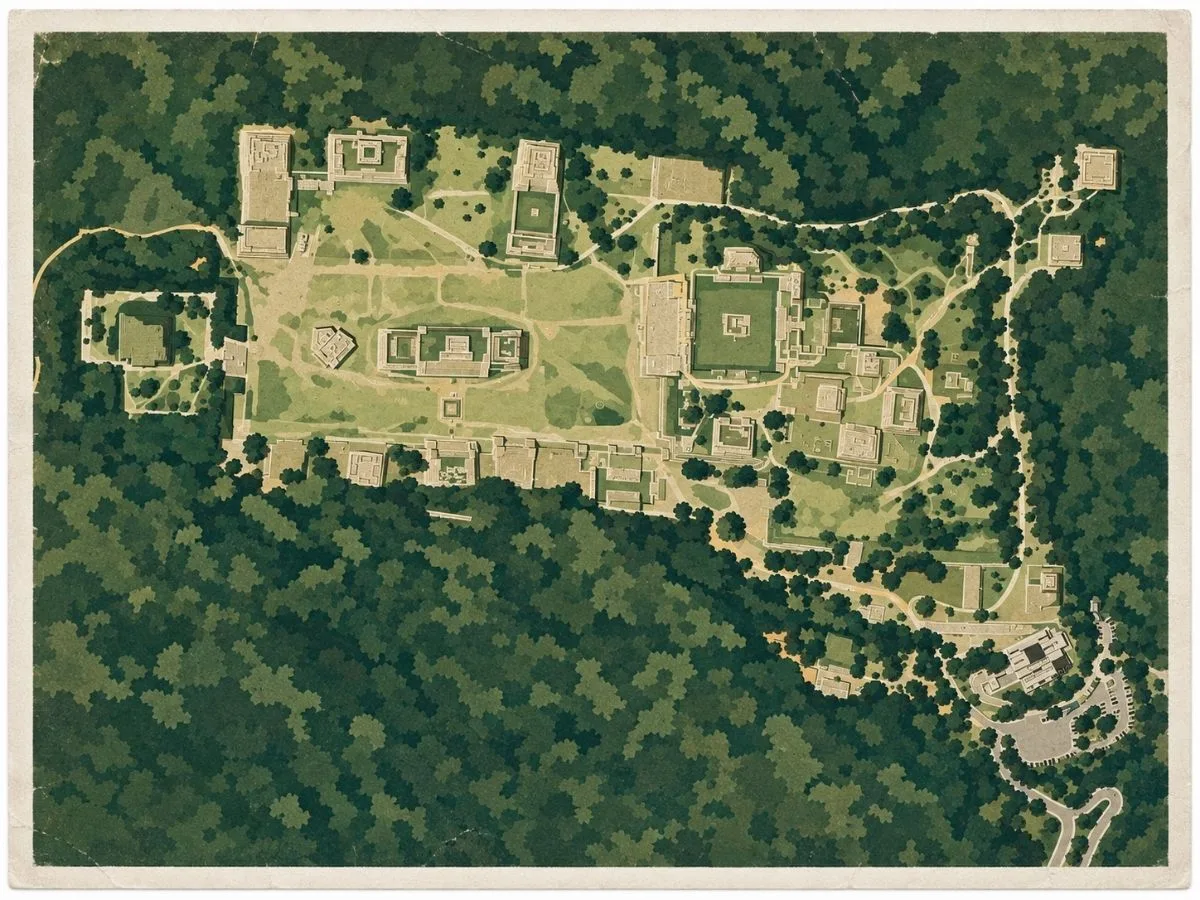
Key Structures of the Monte Albán Ruins
- Great Plaza: The broad ceremonial core of Monte Albán, artificially leveled on the mountaintop and framed by platforms, temples, tombs, and civic architecture.
- North Platform: A massive elevated complex anchoring the northern end of the plaza, with terraces, stairways, patios, and ceremonial buildings.
- South Platform: The high southern counterpart to the North Platform, reached by a broad stairway and used to close the main ceremonial axis.
- Building J: An angled, arrowhead-shaped structure set apart from the plaza grid, commonly linked to astronomical observation and carved political records.
- Los Danzantes Gallery: Carved stone slabs showing contorted human figures, now commonly interpreted as captives, defeated enemies, or political monuments rather than dancers.
- Ball Court: A sunken I-shaped court near the plaza edge, used for the Mesoamerican ballgame and its ceremonial and political meanings.
- System IV: A temple, patio, and altar complex along the plaza, helping define the ceremonial architecture around the main civic space.
- System M: A temple-patio-temple complex on the southwest side of the plaza, closely associated with the Danzantes Building and paired in form with System IV.
- Building P: A plaza structure with an internal vertical shaft, often discussed in relation to solar zenith observation and ritual architecture.
- Tomb 104: An elite painted tomb with mural decoration, offering a rare view into Zapotec funerary art and high-status burial practice.
- Tomb 105: A decorated burial chamber with mural remains, tied to Monte Albán’s long tradition of elite tomb construction beneath and around major buildings.
- Site Museum: The interpretive collection at the entrance, housing carved monuments, ceramics, and artifacts that connect the visible ruins to Zapotec history.

History and Legends
Monte Albán shaped the highlands of Oaxaca for over a thousand years. From its mountaintop perch, it watched empires rise and fall, its plazas echoing with the footsteps of priests, rulers, astronomers, and warriors. Founded by the Zapotecs around 500 BCE, the city began as a bold act of engineering. Rather than settle in the valley, they leveled the ridge of a mountain. The result was a sacred platform in the sky.
By 200 BCE, Monte Albán had grown into a capital of regional power. Tens of thousands lived around its ceremonial core. Its temples, tombs, and observatories aligned with solstices and mountain peaks. One of its oldest features, the Danzantes, depicts nude and twisted figures carved into stone. Once thought to be dancers, they are now seen as captives or sacrificial victims. These carvings mark an early chapter in Monte Albán’s role as both a spiritual and military center.
The Zapotecs developed one of the earliest writing systems in Mesoamerica. Glyphs on stelae and building walls recorded conquests, rulers, and calendar events. Monte Albán’s influence spread across Oaxaca, inspiring smaller cities and ceremonial centers throughout the region.
After 750 AD, the city began to decline. The reasons remain debated, but Monte Albán was never truly abandoned. Centuries later, the Mixtecs arrived. They did not erase the past. They honored it. Tomb 7, discovered in 1932, held over 500 artifacts, including gold jewelry, obsidian mirrors, and turquoise mosaics. Although the tomb was reused by the Mixtecs, the offerings preserved a shared legacy of reverence and ritual.
Experiences Around Monte Albán
Dry hills rise above the broad Oaxaca Valley, where cultivated fields and agave spread toward the surrounding mountains.
In Oaxaca City, visit the Museo de Arte Prehispánico de México Rufino Tamayo, where more than a thousand objects trace artistic traditions across Mesoamerica through ceramics, sculpture, and carved stone.
Then head to Mercado 20 de Noviembre’s Pasillo de Humo, choose tasajo, cecina, or chorizo, and have it grilled with onions, chiles, and handmade tortillas.
Monte Albán remained a place of power into the colonial era. Spanish chroniclers noted its presence, though few disturbed it. Today, it endures as a ceremonial landscape carved in stone. Its design still speaks, its tombs still hold offerings, and its mountain setting still commands the valley below. Monte Albán was not just built. It was believed into being.
How to Get There & Where to Go Next
How to Visit Monte Albán
Step-by-step access to the site
- Start in Oaxaca City: 10 min walk to shuttle area near Mercado Benito Juárez
- Board shuttle van: Departs hourly, ~25 min ride uphill
- Arrive at site: Shuttle drops at main entrance near ticket booth
- Return trip: Vans leave hourly from parking area
Tip: Visit before 9:30 AM for soft light, cool weather, and fewer crowds.
Nearby Ruins You Can Visit
These ruins share the same Oaxaca Valley as Monte Alban. Each one reflecting the rise and fall of Zapotec power, sacred geography, and later Mixtec influence.





Traveler Tips
- What to Bring: Sun protection, water, walking shoes
- Best Time to Visit: Early mornings for best light and fewer visitors
- Nearby Attractions: Rufino Tamayo Prehispanic Art Museum, Mercado Benito Juárez
- Safety Notes: The site is vast and exposed, pace yourself and stay hydrated
Elsewhere in the Americas…
While Monte Albán rose over the Oaxaca Valley, cultures across the Americas were building sacred landscapes and expanding their influence across the mountains and coast:

In Colombia, the Muisca site of El Infiernito featured aligned stone columns used for solar observation and ceremonial practice.


In the central U.S., the Mississippian center of Cahokia built massive earthen mounds and ceremonial plazas tied to regional authority.
Insider Explorer Advice
Reaching Monte Albán is straightforward. Affordable shuttles depart regularly from a few blocks southwest of Mercado Benito Juárez and deliver visitors directly to the site entrance. Arriving early ensures a spot and a quieter experience. Once inside, travelers often spend several hours exploring the main plaza and surrounding pyramids. For a deeper understanding of the region’s artistic traditions, a visit to the Museo de Arte Prehispánico de México Rufino Tamayo in Oaxaca City is highly recommended. The museum’s curated timeline of artifacts, arranged by civilization, offers context and insight not available on-site, especially the evolution of stylistic motifs over time. Pairing both experiences provides a richer perspective on ancient Zapotec and Mixtec culture.
Summary: Monte Albán is a mountaintop masterpiece of Zapotec ingenuity and Mixtec reverence, one of Mexico’s most unforgettable ancient cities.