
Yagul
MEXICO / OAXACA / ZAPOTEC
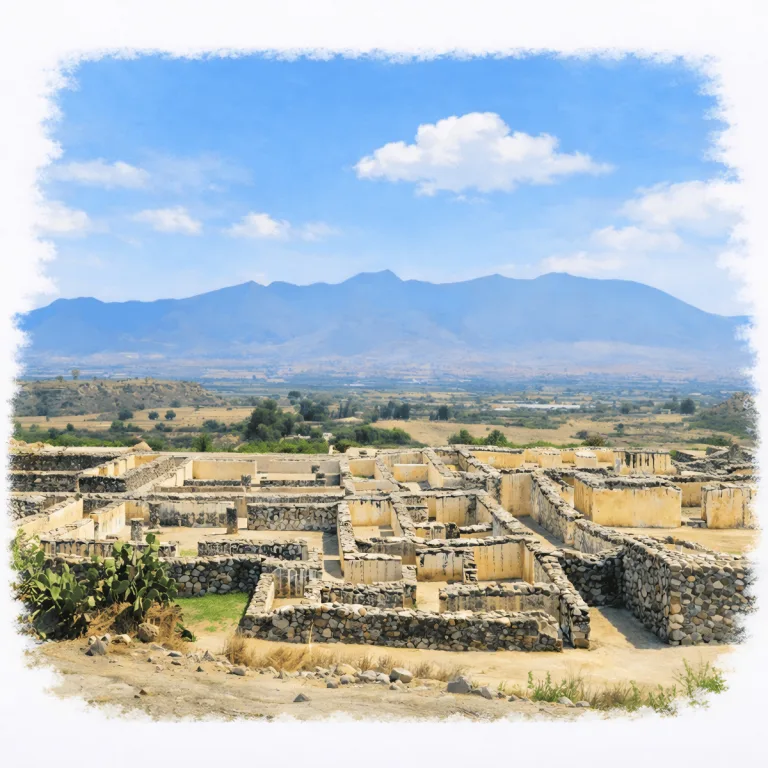
Below the fortified mesa above the Tlacolula Valley, Yagul places the largest ballcourt in the Valley of Oaxaca at the center of its settlement, where the court’s scale dominates the open space beneath the hilltop fortress.
| Name | Yagul |
| Civilization | Zapotec |
| Location | Tlacolula de Matamoros, Oaxaca, Mexico |
| Elevation | 1,600–1,800 m (5,300 to 6,000 feet) above sea level |
| Years Active | c. 500–1521 AD |
| Elevation: | 1,693 meters (5,554 feet) |
| Primary Resources | Maize, obsidian, salt |
| Site Type | Hilltop fortress and ceremonial center |
| Key Highlights | Palace of the Six Patios, ballcourt, tombs |
| UNESCO | Caves of Yagul and Mitla |
| Airport: | Oaxaca International Airport (OAX) |
| Entry Fee | 105 MXN; 210 MXN for foreign visitors. |
| Best Time to Visit | Weekday mornings |
| Field Visit | Visited & photographed by Lost Ruins of the Americas |
Unique Features of the Yagul Archaeological Site
- Architectural Highlights: Palace of the Six Patios, acropolis courts, fortress walls, and the valley’s largest ballcourt
- Ceremonial Layout: Patios, platforms, and open courts arranged across a compact hilltop plan
- Defensive Position: Fortified ridgeline setting with broad views over the Tlacolula Valley
- Residential Core: Elite room groups and courtyards that remain easy to read on foot
- Natural Surroundings: Cliffside views across the valley and surrounding Oaxaca highlands
Location & Access
- Nearest Town: Tlacolula de Matamoros, Oaxaca.
- Directions: From Oaxaca City, follow Federal Highway 190 toward Mitla. Pass Tlacolula and turn at kilometer 36.3, then continue about 1.4 kilometers to the entrance.
- Official Website: INAH Zona Arqueológica de Yagul.
- Opening Hours: Monday through Sunday, 8:00 AM to 5:00 PM. Last entry is at 4:00 PM.
- Entry Fees: 105 MXN for Mexican citizens and foreign residents; 210 MXN for foreign visitors. Sundays are free for Mexican citizens.
- Facilities: Parking and restrooms. Food, smoking, and pets are not permitted inside.
- Accessibility: Moderate to difficult, with uneven stone, stepped terraces, and a steep climb to La Fortaleza.
- Pro Tip: Bring all supplies with you, there’s no shade, and it gets hot quickly
Highlights to Help Understand Your Visit
Yagul isn’t just a ruin to walk through. It’s a place to observe how power, ritual, and everyday life were physically shaped by stone. These clues will help frame your experience:
- A Maze of Authority: The Palace of the Six Patios is more than housing. It’s a labyrinth of control. Watch how visibility and access are restricted by walls and passageways.
- Burials Hidden in Plain Sight: Tombs are scattered around the site, often beneath platforms or beside patios. Their placement reveals how the living coexisted with ancestors.
- Views as Power: The fortress overlooks trade routes and the valley below. Its position wasn’t just for defense. It symbolized oversight and dominance.
- Unfinished or Erased: Some structures look worn or partial. These may be unfinished, looted, or ritually decommissioned, part of Yagul’s shifting history.
- No Single Center: Unlike larger Zapotec cities, Yagul feels decentralized. Authority may have been spread across family compounds or ritual zones.
Key Structures of the Yagul Ruins
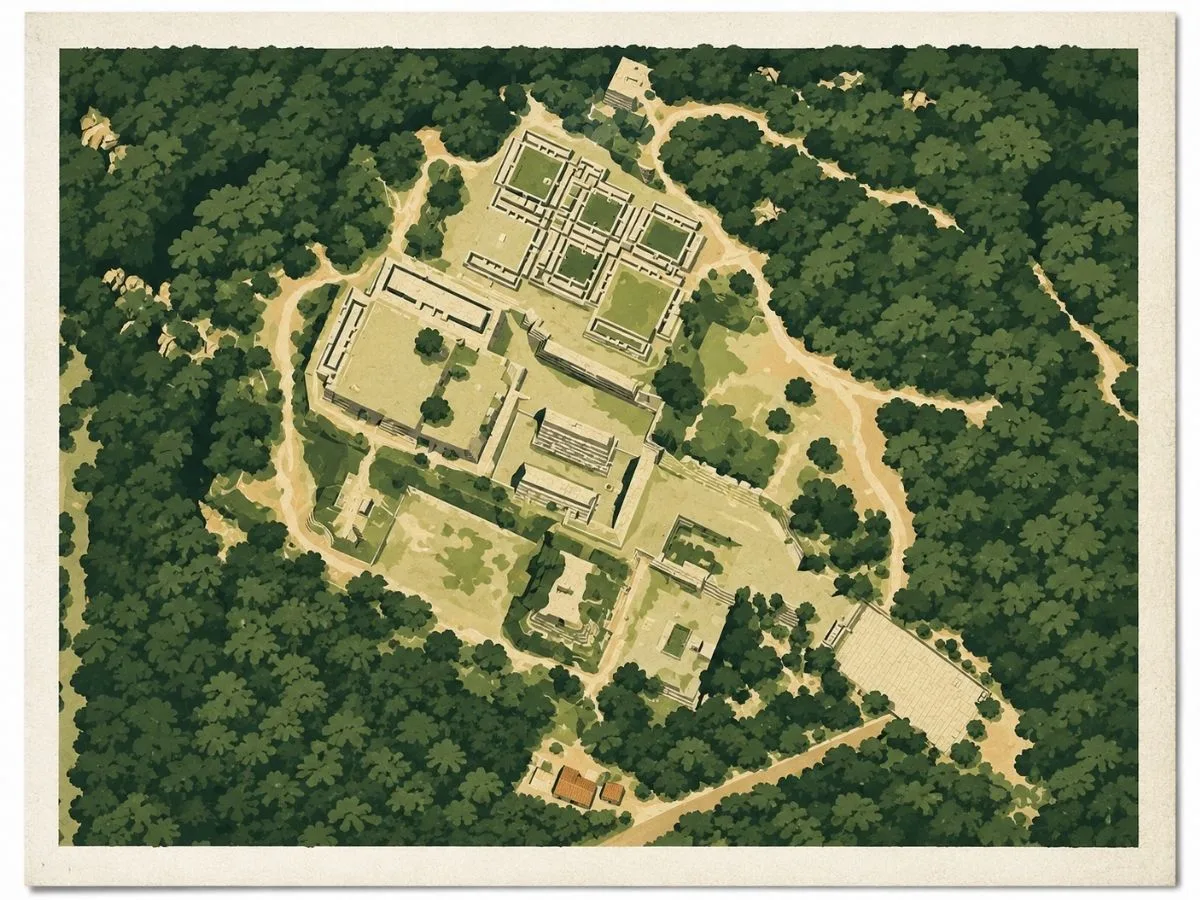
- Palace of the Six Patios: A maze-like elite complex built around six interconnected courtyards, with rooms, corridors, and tomb entrances that suggest both residential and administrative use. It is one of the clearest expressions of status and spatial control at Yagul.
- Ballcourt: A monumental court aligned east to west and considered the largest in the Valley of Oaxaca. More than an athletic space, it formed part of the ceremonial and political life of the city.
- Fortress Area: A defensive complex set high above the ceremonial center, protected by both natural cliffs and constructed walls. Its lookout points command broad views of the Tlacolula Valley and make clear that defense mattered here.
- Burial Chambers: Stone tombs built beneath patios, buildings, and other key spaces across the site. These chambers reflect the importance of ancestry, status, and funerary tradition in Zapotec urban life.
- Council Chamber: A long administrative room south of the palace complex, likely used for formal gatherings or governance. Its scale and placement suggest a civic role rather than a domestic one.
- Decorated Street: A narrow passage flanked by stone mosaic work, linking major structures within the ceremonial center. It shows that movement through Yagul was designed, controlled, and visually emphasized.
- Temple-Patio Complexes: Open ceremonial spaces organized around patios, altars, and raised platforms. These formed the ritual core of the site and anchored public life below the fortress.
History and Legends
Yagul developed above the Tlacolula Valley in a landscape with a much deeper human history. Nearby caves and rock shelters preserve evidence of hunting, gathering, early cultivation, and the long transition toward settled farming, but the city visible on the hill belongs to a much later period. After Monte Albán declined around the ninth century, political power in Oaxaca became more dispersed, and Yagul grew into one of the important Zapotec centers of the valley. Houses, ceremonial spaces, tombs, and defensive works spread across terraces cut into the slopes and natural shelves of the hill.
One of the earliest major monuments still visible is the large I-shaped ball court, built roughly between 500 and 900. Its construction predates much of Yagul’s later palace architecture, showing that the hill was already an important ceremonial place before the city reached its Postclassic height. The court was tied to rites involving warfare, sacrifice, and renewal, and its position near the center of the settlement kept those public ceremonies close to the spaces where political life later became concentrated.
By the Late Postclassic period, Yagul’s rulers were living inside the Palace of the Six Patios, a tightly organized complex built between about 1200 and the Spanish conquest. Its courtyards served different purposes, from public affairs to more private activities associated with the ruling household. Tomb entrances opened directly from the patios, bringing ancestors into the same architectural world as the living. Elsewhere on the hill, the Triple Tomb joined three burial chambers into a single funerary complex, another sign that elite families were investing heavily in burial and ancestry as part of political life.
Above the palaces and courts, the rocky summit known as La Fortaleza formed the strongest natural position on the hill. Its cliffs and height made it a useful refuge and defensive point during periods of conflict, with wide views across the Tlacolula Valley below. That defensive setting helps explain Yagul’s character in the centuries after Monte Albán. Power was no longer centered in one dominant regional capital. It was divided among competing Zapotec centers, including Mitla and Zaachila, and at Yagul the palace compounds, tombs, ball court, walls, and fortified summit all belonged to that more fragmented political landscape.
Yagul remained occupied into the final centuries before Spanish rule. Its later Zapotec history survives most clearly in the close relationship between residence, ancestry, ceremony, and defense, all packed into the same hillside settlement. Modern excavation beginning in the 1950s exposed much of the palace and funerary architecture visible today, but the basic story is still readable in the ground itself. Yagul was a city built for a world of local rulers, ancestral tombs, public ritual, and guarded high ground, shaped by the political changes that followed Monte Albán’s decline.
Experiences Around Yagul
The ruins are only part of the story. Dry foothills and cultivated fields spread across the Tlacolula Valley, framed by the mountains east of Oaxaca.
If your visit falls on Sunday, the Tlacolula market is the place for barbacoa, tlayudas, pan de cazuela, mezcal, and stalls piled with produce and household goods from surrounding villages.
A short detour to Teotitlán del Valle leads into family weaving workshops, where wool rugs are woven on pedal looms and dyed with cochineal, indigo, and local plants.
How to Get There & Where to Go Next
How to Visit Yagul
– Step-by-step access to the site –
- Start in Oaxaca City: Walk to the colectivo stop near the ADO station (10 mins)
- Take colectivo toward Mitla: Ride lasts about 1 hour
- Drop at Yagul entrance: Ask driver to let you off at the highway access point
- Walk uphill to site: Paved road climb takes around 25 minutes
- Return trip: Wait roadside or catch another colectivo back to Oaxaca
Tip: Arrive early and bring water. The site is exposed and has no vendors or shade.
Nearby Ruins You Can Visit
Yagul shared its valley with other Zapotec stronghold. Each one marking a different chapter in the region’s shifting power and ceremonial traditions.


Monte Albán – Ancient Zapotec capital perched above Oaxaca. Once the center of valley life and power.

Zaachila – A later Zapotec stronghold with rich tombs and overlapping Mixtec influence.
Traveler Tips
- What to Bring: Water, sunscreen, hat, walking shoes
- Best Time to Visit: Early morning for cooler weather and quiet atmosphere
- Nearby Attractions: Mitla ruins, Tlacolula Sunday market, rock shelters
- Safety Notes: Remote feel; bring supplies and expect limited shade
Elsewhere in the Americas…
As Yagul shaped the Zapotec world, South American cultures were building their own legacies of power, burial, and sacred design:

On Isla del Sol, the Chinkana Labyrinth served as an Inca pilgrimage center linked to Titicaca’s origin myths.


In the central USA, the Mississippian center of Kincaid Mounds developed platform mounds and ceremonial spaces.
Insider Explorer Advice
Travelers can catch a colectivo from Oaxaca City to Mitla (departing near the ADO station) and ask to be dropped at the Yagul highway entrance. From there, it’s a steady 25-minute uphill walk to the site. Bring plenty of water and a sun hat. The ruin is often quiet, allowing visitors to explore the Palace of the Six Patios in solitude. On-site caretakers are usually happy to point out the tombs and ballcourt, adding valuable context. The fortress climb rewards with sweeping valley vistas, so plan to linger at the lookout points. For a full day of exploration, pair Yagul with nearby Mitla or the bustling Tlacolula Sunday market.
Summary: Yagul may not be grand, but it’s unforgettable. A quiet Zapotec site rich in ruins, wind, and ancient stone paths that still lead somewhere.