The Zapotec Civilization:
Lords of the Cloud People
Ancient architects of Oaxaca’s mountaintop cities and sacred timekeeping traditions
When we think of ancient civilizations in the Americas, the Maya and Inca often take center stage. But long before either of those empires rose to power, the Zapotec civilization was shaping the highlands of southern Mexico. They were building mountaintop cities, developing one of the oldest writing systems in the Americas, and envisioning the world as a sacred, living landscape.
They were the Zapotecs, self-described as Be’ena’a, or “The People.” Others would come to call them the Cloud People, for they lived among the mist-covered ridges of Oaxaca, where time was tracked in cycles and ancestors watched from underground.
Their civilization lasted for more than a thousand years. It continues, in many ways, to this day.
Civilization Snapshot
| Region | Valley of Oaxaca, southern Mexico |
| Timeframe | ~500 BCE – 1500s CE (peaked 300–700 CE) |
| Capital / Major Cities | Monte Albán, Mitla, Yagul, San José Mogote, Lambityeco, Zaachila |
| Peak Population | Estimated 500,000+ across city-states (~600 CE) |
| Language(s) | Zapotec (multiple distinct but related dialects still spoken today) |
| Known For | Early writing, mountaintop cities, sacred geometry, calendar system |
| Cultural Relatives | Mixtec, Olmec, Teotihuacan, Maya |
| UNESCO Sites | Monte Albán, Prehistoric Caves of Yagul and Mitla |
Why Visit the Zapotec Region
The ruins are only part of the story. The Mixtec world stretches across rugged mountains, fertile valleys, painted codices, sacred tombs, and living Indigenous communities in Oaxaca, Puebla, and Guerrero.
Follow the history of powerful kingdoms like Tilantongo and Tututepec, explore museums that preserve Mixtec goldwork and manuscripts, and visit sites where ancient rulers used art, marriage alliances, and warfare to shape one of Mesoamerica’s most complex political landscapes.
Oaxaca City anchors many journeys into this history, with museums, markets, festivals, and nearby archaeological sites that reveal how Mixtec and Zapotec worlds often overlapped.
The Mixtec region is where painted history, mountain kingdoms, and living tradition still share the same horizon.

Before the Zapotecs: The Ancient Foundations of Oaxaca
The story of the Zapotecs doesn’t begin with temples or tombs. It begins with maize, obsidian, and fire pits in open-air villages. The valleys of Oaxaca have been continuously inhabited for at least 10,000 years, and by the early Formative Period (1500–500 BCE), they had become a cradle of innovation.
Communities like San José Mogote, in the Etla Valley, represent a bridge between early village life and the more complex Zapotec culture that followed. Here, archaeologists have found:
- Public buildings with ritual hearths and altars
- Defensive walls, suggesting regional conflict or status competition
- Some of Mesoamerica’s earliest carved glyphs, possibly names of rulers or sacred dates
- Evidence of elite burials and differentiated social classes
These early villages show a clear trajectory toward urbanism and religious centralization. San José Mogote, in particular, seems to have served as a kind of “protocapital,” laying the ideological and political groundwork for what would become Monte Albán.
The Rise of the Zapotec Civilization
By 500 BCE, the peoples of the Oaxaca Valley had begun to coalesce into something new. A centralized culture emerged that combined ritual authority, agricultural control, and organized urban life. The Zapotec civilization arose from this process, uniting the three main arms of the valley (Etla, Tlacolula, and Zimatlán) under shared religious and political ideals.
These communities saw time, space, and power as sacred continuums. Rulers were not merely administrators; they were intermediaries between worlds. Temples were oriented toward celestial events, and hilltops became symbols of divine order. From this worldview came the first great Zapotec city, Monte Albán, designed as both a political center and a cosmic map of the heavens and earth
- Unified Valley Society: Distinct villages began aligning politically and ritually, ending centuries of local rivalry.
- Structured Religion: Priests and rulers shared power through sacred kinship, encoded in early glyphs and ritual calendars.
- Urban Vision: Planned plazas, terraces, and tombs reflected both human order and divine geometry.
From these foundations, the Zapotecs established one of Mesoamerica’s earliest state-level societies. This civilization would thrive for nearly two millennia, leaving behind cities in the clouds, tombs of gold and jade, and a calendar that measured eternity itself.

Monte Albán: Mountain Capital of the Sky
Monte Albán wasn’t just a city. It was a statement. Founded around 500 BCE, the builders of this ceremonial center chose a mountaintop ridge and physically leveled it to create a massive central plaza. This act alone was monumental, not just architecturally but symbolically. They reshaped the land itself to align with cosmic order.

At its height (300–700 CE), Monte Albán housed an estimated 25,000–35,000 people. The city featured:
- A vast central plaza over 300 meters long
- Temples aligned to solstice and equinox points
- Ballcourts, where ritual games may have reenacted cosmic dramas
- Tombs carved directly into the rock, filled with offerings of jade, gold, and carved bone
- Dozens of stelae, including the famous Danzantes, which depict twisted human figures, likely captured enemies, sacrificed leaders, or mythic beings
Monte Albán wasn’t just the seat of Zapotec power. It was the ceremonial heart of southern Mesoamerica for centuries. Its influence reached down into the Pacific coast, across the Isthmus of Tehuantepec, and up into highland Chiapas.
Learn more about Monte Albán and how to visit with the Monte Albán Ruins Guide
Even as other civilizations rose and fell, Monte Albán remained a touchstone of ritual and cosmic authority. In time, Zapotec leadership and sacred tradition shifted to new centers, including Yagul, a fortified hilltop city, and Zaachila, the final Zapotec capital known for its royal tombs and Mixtec influences. These sites carried the legacy of Monte Albán forward, reflecting a civilization that adapted without surrendering its spiritual foundations.
Writing Before the Maya?
Among the most remarkable Zapotec innovations was their writing system. Inscriptions on stelae and monuments, some as early as 500 BCE, show a combination of pictographic and phonetic glyphs. These inscriptions are among the earliest true writing systems in the Americas.
- Calendar dates
- Names of places and rulers
- Events such as battles or dedications
- Possibly religious texts, although no codices survive
The Zapotec script predates, or at least parallels, the earliest Maya writing and may have influenced later systems such as Mixtec codices. While not fully deciphered, its presence across Zapotec monuments shows a society that was literate, hierarchical, and deeply engaged with time, memory, and political identity.
Writing wasn’t ornamental. It was sacred technology, used to anchor legitimacy, encode prophecy, and narrate cosmic order.

Society of Divine Lineage
Zapotec society was organized into city-states, each led by a ruler who combined political authority with spiritual power. These rulers often traced their ancestry back to gods or sacred ancestors, legitimizing their control not through military conquest alone but through divine inheritance.

The elite lived in compounds near ceremonial plazas, surrounded by richly decorated walls and elevated walkways. They were buried in tombs beneath their homes or temples, a symbolic merging of life and death, surface and underworld.
The broader population included:
- Farmers who worked terraced hillsides and valley fields
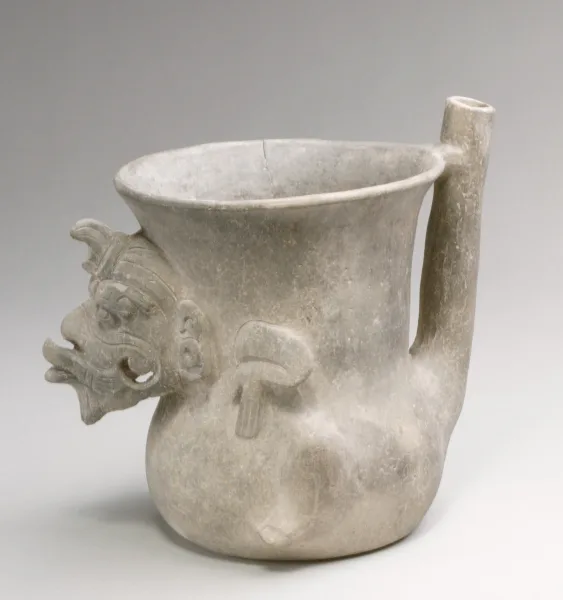
- Artisans who specialized in pottery, textiles, jewelry, and incense burners
- Priests and diviners who read the stars, interpreted omens, and conducted rituals
- Military elites and war captains who led raids or defended territory
Power in Zapotec cities was not centralized in a single emperor. It was distributed, negotiated, and expressed through ritual performance, lineage alliances, and sacred geography.
Beliefs, Cosmology, and Sacred Geography
The Zapotec cosmos was understood as a layered universe linking gods, humans, and ancestors through sacred space. Each level held meaning and movement, forming a complete world of balance and transformation.
The three realms included:
- An upper world of gods, stars, and celestial cycles, where deities controlled rain, sun, and time
- A middle world, the human realm of earth, agriculture, and political life, where rituals sustained cosmic order
- An underworld, both shadowy and sacred, home to ancestors and chthonic deities who guarded fertility and rebirth
Caves, mountains, and springs were portals between these realms. Temples were often built above or beside these natural features to mark points of connection. A cave might serve as an entrance to the underworld, while a mountaintop shrine offered direct access to the divine. Through this geography, the Zapotec world was seen not as separate layers, but as a single living landscape bound by spirit and stone.

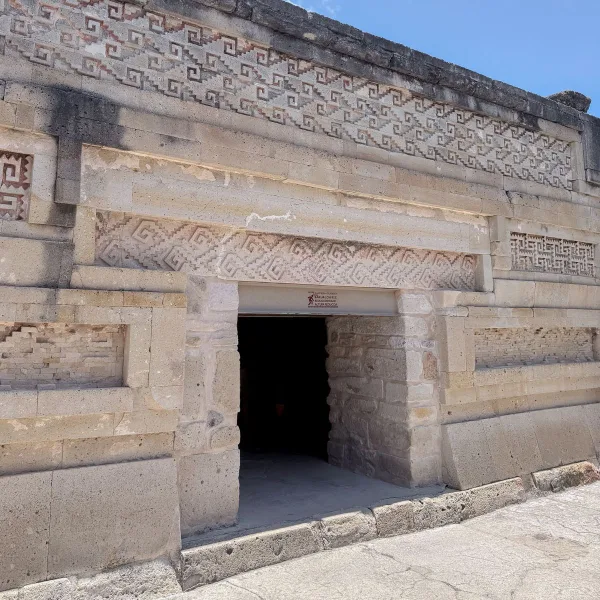
Mitla, one of the most sacred sites in the Zapotec world, embodies the civilization’s view of life, death, and cosmic order.:
- Subterranean tombs that mirror the architecture of the underworld
- Intricate stone mosaics thought to reflect patterns of life, death, and divine motion
- A legacy that endured after the Zapotec decline, when the site was adopted and revered by the Mixtecs
The Zapotec calendar, like the Maya’s, was a dual system:
- A 260-day ritual calendar used for divination, prophecy, and sacred ceremonies
- A 365-day solar year that guided agriculture and public festivals
These interlocking rhythms shaped every important decision, from planting crops to scheduling wars and royal inaugurations. Priests and diviners trained for years to read their meanings, turning the measurement of time into a sacred science that bound humanity to the gods.
Learn more about Mitla and how to visit with the Mitla Ruins Guide

Trade Routes & Economic Power
The Zapotecs were deeply connected to the economic lifelines of Mesoamerica. Their central position in southern Mexico allowed them to move goods efficiently between the highlands and the coast, the Gulf and the Pacific.
They controlled key chokepoints:
- The Tehuantepec Isthmus, the narrowest land route between the oceans
- Mountain passes through the Sierra Madre
- Valley corridors leading toward Chiapas and central Mexico
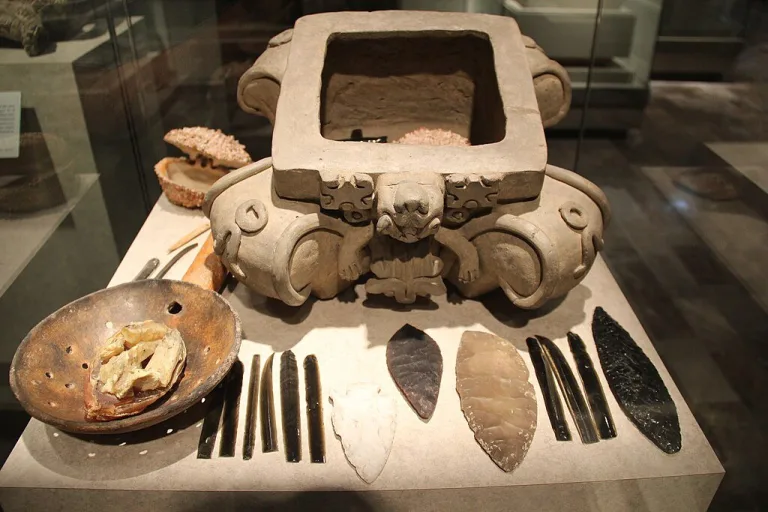
Trade goods included obsidian, Spondylus shells, cacao, cotton textiles, salt, feathers, turquoise, and ceremonial incense. Trade wasn’t just about goods. It was about symbolic capital. Exotic materials reinforced elite identity, while sacred substances like copal or jade played key roles in rituals. Long-distance trade also brought in ideas, art styles, and deities, contributing to the hybrid culture seen in many Zapotec tombs and artifacts.
Interaction with Other Civilizations
The Zapotec world did not rise in isolation. They developed through contact, exchange, and shared belief systems that shaped the course of Mesoamerican history. Over the centuries, Zapotec traders, artists, and rulers connected with neighboring powers, adopting ideas while spreading their own.
- Olmecs: passed on sacred kingship, jaguar imagery, and the ritual ballgame, shaping royal identity and public ceremony in Oaxaca
- Teotihuacan: diplomatic ties; evidence of a Zapotec barrio may have existed in the city, pointing to resident artisans, merchants, and ritual specialists
- Maya: shared calendrical systems and sacred architecture, including temple alignments to solstice and equinox events
- Mixtecs: cultural heirs and later political rivals, especially in Mitla, where tomb art and mosaic façades reworked Zapotec forms
Through exchange, alliance, and migration, ideas moved in both directions. These relationships refined Zapotec religion, art, and urban planning, extending Oaxacan influence across Mesoamerica.
Why the Zapotec Story Still Matters
The Zapotec people remain one of the most culturally vibrant Indigenous groups in the Americas. Over 400,000 speakers continue to preserve their language, weaving traditions, oral histories, and systems of self-governance. In towns like Teotitlán del Valle, ancient cosmology is still woven into wool rugs, while Zapotec women lead in commerce and politics across the Isthmus of Tehuantepec.
Although Monte Albán was among the first large-scale archaeological excavations in Mesoamerica, early efforts ignored Indigenous voices. Today, Zapotec scholars and communities are reclaiming their past, demanding the repatriation of sacred artifacts, shaping how their history is interpreted, and reaffirming sites like Mitla as living heritage.
The Zapotecs never ruled an empire or conquered half a continent, but they endured. For more than two thousand years, they mapped time, built cities in the clouds, and carved their beliefs into stone and earth. Their legacy lives not just in ruins or museums, but in the language, artistry, and spirit of their descendants.
The Zapotec story is not a relic of the past, but a living thread of continuity, resilience, and Indigenous knowledge. To walk Monte Albán or hear Zapotec spoken in a market is to hear history whisper: “We were never gone.”
Museums That Bring the Zapotecs History to Life
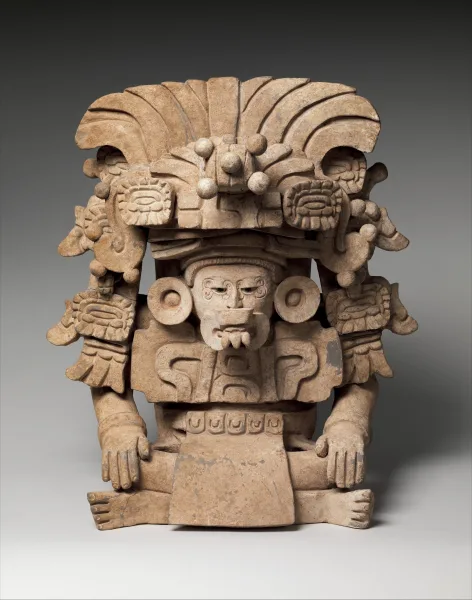
Across Oaxaca and southern Mexico, museums preserve the legacy of the Zapotec civilization through carved stone, goldwork, pottery, and sacred design. Visiting these collections reveals how Zapotec ideas of balance, ancestry, and the divine still shape Oaxacan culture today.
- Museo de las Culturas de Oaxaca (Santo Domingo, Oaxaca City) – Located in a former Dominican monastery overlooking the city, this museum holds treasures from Monte Albán, including the gold, jade, and turquoise offerings from Tomb 7.
- Museo Rufino Tamayo (Oaxaca City) – Features a curated collection of pre-Columbian art from across Mesoamerica, emphasizing Zapotec and Mixtec sculpture, urns, and ceremonial objects.
- Museo de Sitio Monte Albán (Oaxaca Valley) – On-site museum at Monte Albán displaying carved stelae, ceramics, and architectural models that explain the city’s role as a cosmic center.
- Museo Nacional de Antropología (Mexico City) – Mexico’s flagship museum, housing key Zapotec artifacts from Monte Albán, Mitla, and other Oaxacan sites. Its Oaxaca hall features funerary urns, carved stelae, and goldwork that show the artistic range of Zapotec civilization.
- Museo Comunitario de Santa Ana del Valle (Tlacolula Valley) – A community-run museum preserving local Zapotec heritage, with textiles, ceramics, and ritual items that connect traditional weaving towns to their ancient ancestors.
Together, these museums connect the mountaintop ruins with the living culture of Oaxaca. Each offers a window into how Zapotec artistry, belief, and identity continue to inspire the region today.