
Calakmul
MEXICO / CAMPECHE / MAYA
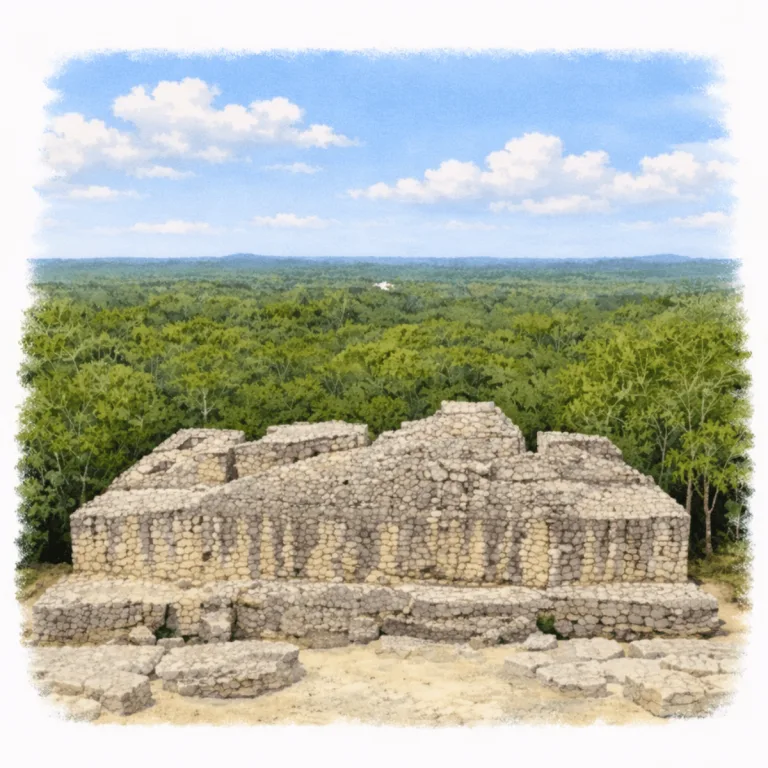
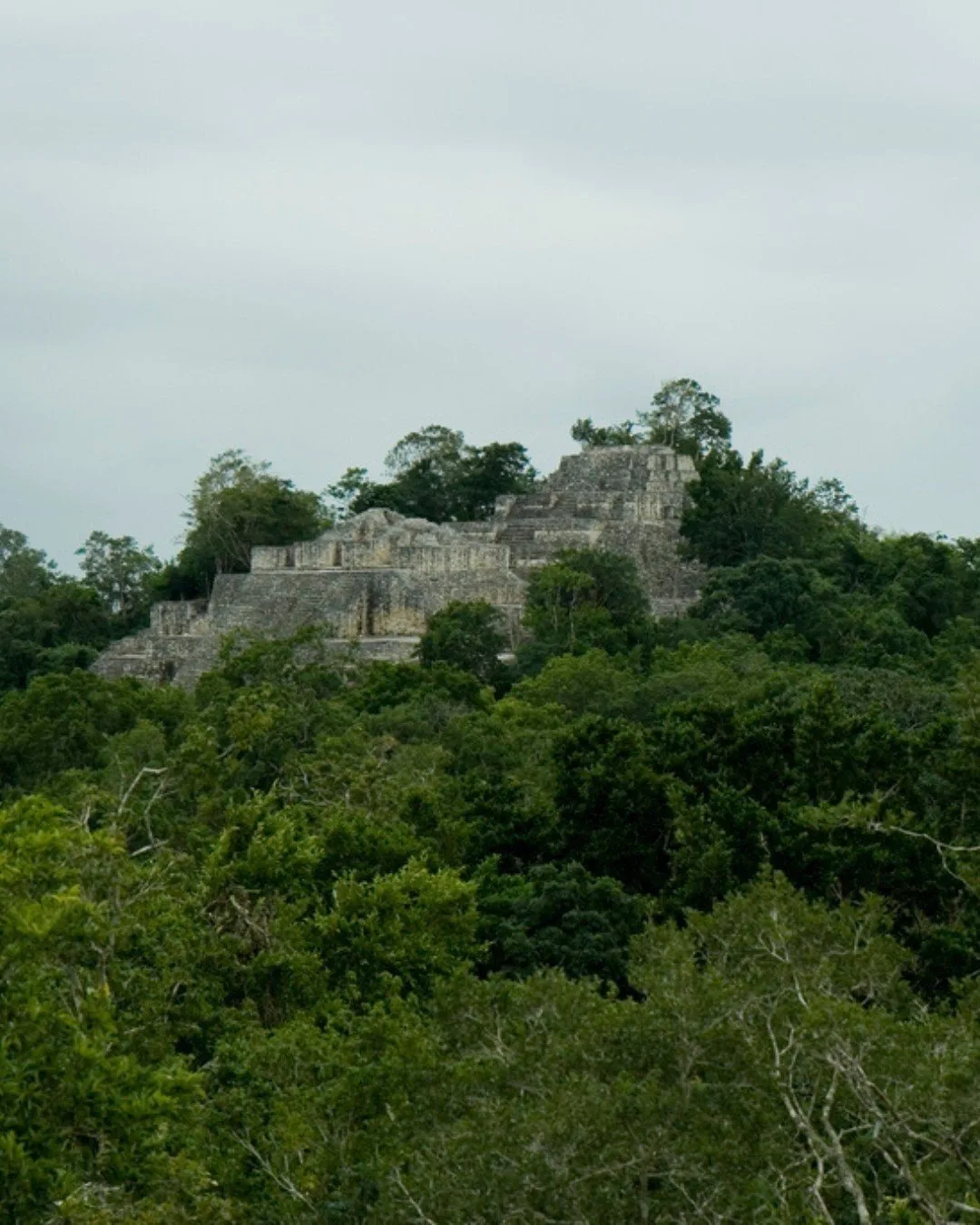
Deep within the Petén rainforest, Calakmul rises through dense canopy with towering temple-pyramids, where one of the largest Maya cities commanded a vast political network across the central lowlands.
| Name | Calakmul |
| Civilization | Maya |
| Location | Calakmul Biosphere Reserve, Campeche, Mexico |
| Elevation | 173 to 237 m (567 to 777 ft) above sea level |
| Years Active | c. 900 BCE–1000 CE; peak c. 250 BCE–700 CE |
| Primary Resources | Maize, forest products, jade, trade networks |
| Site Type | Dynastic capital and major urban center |
| Key Highlights | Structure II, Kaan dynasty, 120 stelae, rainforest setting |
| INT Airport | Chetumal International Airport (CTM) |
| UNESCO | Protected Tropical Forests of Calakmul |
| Entry Fee | 105 MXN for Mexican visitors and residents; 210 MXN for foreign visitors, plus a 215 MXN reserve fee |
| Best Time to Visit | Morning, dry season (Nov–April) |
| Field Visit | Visited and documented by Lost Ruins of the Americas |
Unique Features of the Calakmul Archaeological Site
- Architectural Highlights: Temple II, Temple I, dozens of plazas and staircases
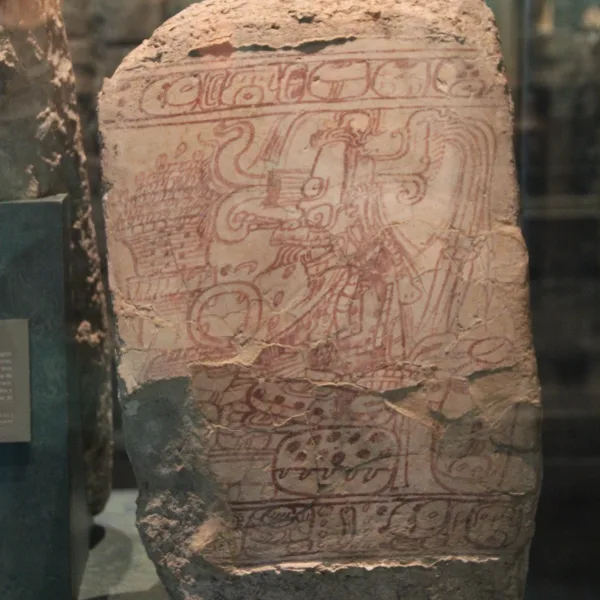
- Notable Artifacts: Glyph-carved stelae, royal inscriptions, Snake Kingdom symbols
- Natural Surroundings: Dense jungle, biosphere reserve, tropical wildlife
- Comparative Notes: Wild, remote, far less trafficked than Tikal or Palenque
Location & Access
- Nearest Town: Conhuás; Xpujil is the nearest practical base for lodging and transport.
- Directions: From Xpujil, take Highway 186 west and turn south at Conhuas. A narrow jungle road leads 60 km into the reserve. Allow 1.5–2 hours for this leg.
- Official Website: INAH Zona Arqueológica de Calakmul.
- Opening Hours: Archaeological zone daily from 8:00 AM to 5:00 PM, with last entry at 4:00 PM. Reserve access operates from 6:00 AM to 3:00 PM.
- Entry Fees: 105 MXN for Mexican visitors and residents; 210 MXN for foreign visitors, plus the 215 MXN protected-area fee. Additional community charges may apply.
- Facilities: Small visitor center, parking, basic restrooms
- Accessibility: Moderate to difficult, with long forest paths, uneven limestone surfaces, and steep stairways on the principal structures.
- Pro Tip: Treat the reserve’s 3:00 PM closing time as the true access cutoff. The final 60-kilometer forest road begins beyond the gate and cannot be rushed.
Highlights to Help Understand Your Visit
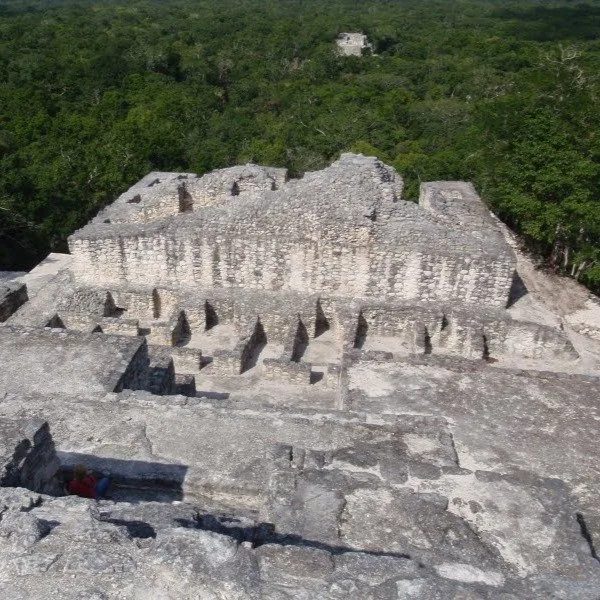
Calakmul isn’t just vast, it’s layered, political, and deeply tied to the jungle that hides it. These clues help reveal what kind of city it really was.
- Rulers on High: The tallest structures weren’t just temples. They elevated kings above their subjects and the forest itself.
- The City is Spread Thin: Calakmul lacks a central plaza like Tikal. Power here was diffuse, embedded in clusters of elite compounds and ceremonial zones.
- Snake Emblems and Stelae: Dozens of carved stelae declare Calakmul’s dominance, their placement and inscriptions tell a story of conquest and propaganda.
- Hidden in the Canopy: The jungle here is not a barrier, it was always part of the city. Shade, resources, and defense all came from the trees.
- Water is Power: Look for the aguadas, man-made water reservoirs carved into the land. In a dry season, these were survival, control, and wealth.
- Causeways that Lead Out: Sacbeob connect Calakmul to faraway cities like El Mirador. These roads carried ideas, alliances, and troops, not just trade.
Key Structures of the Calakmul Ruins
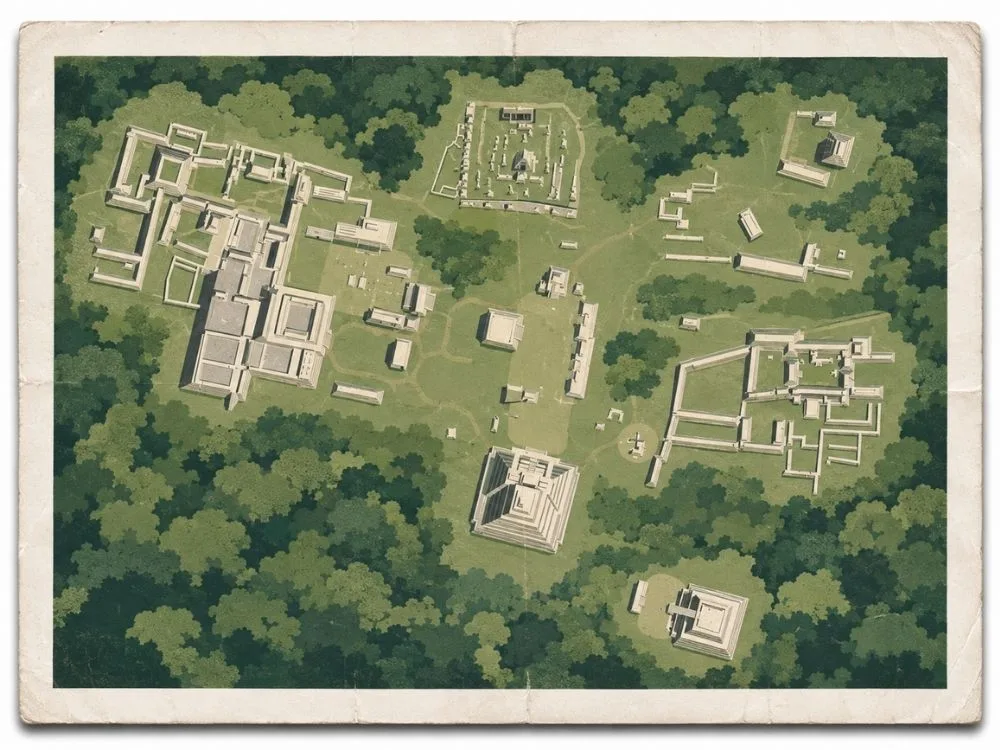
- Great Central Plaza: Six major buildings frame Calakmul’s ceremonial axis, where monumental pyramids, temples, and carved stelae define the city’s central core.
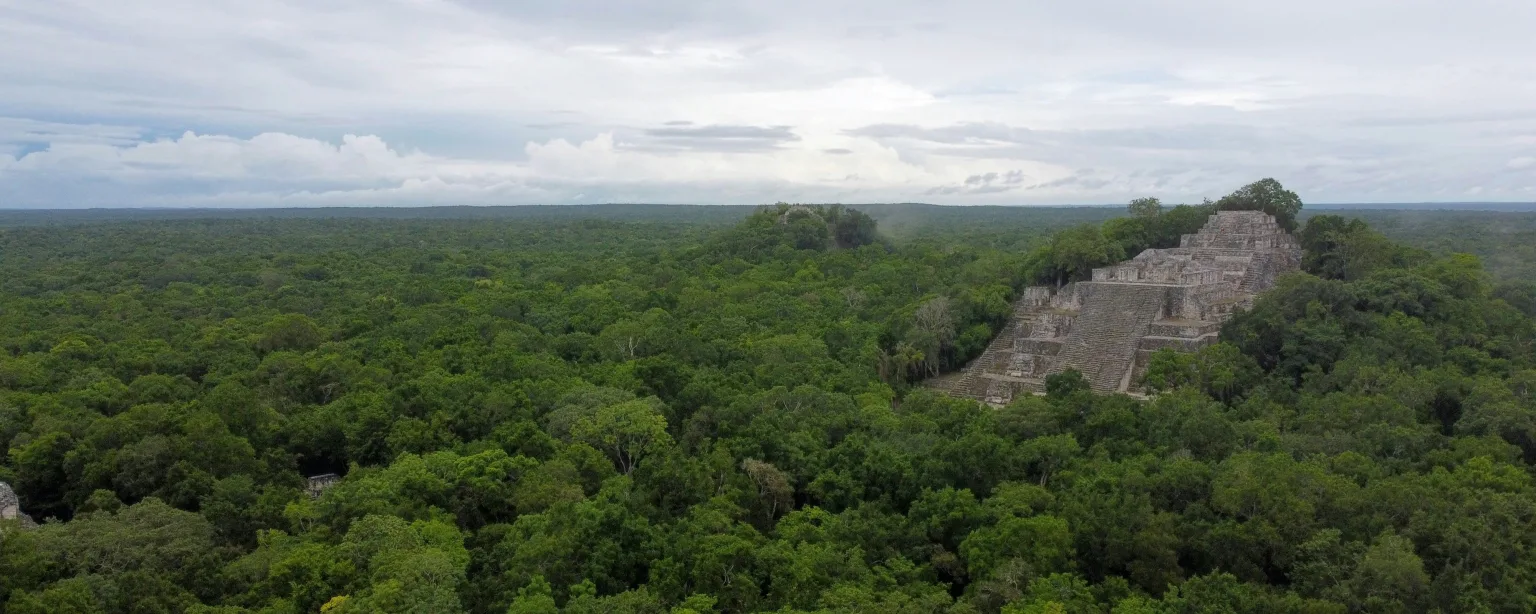
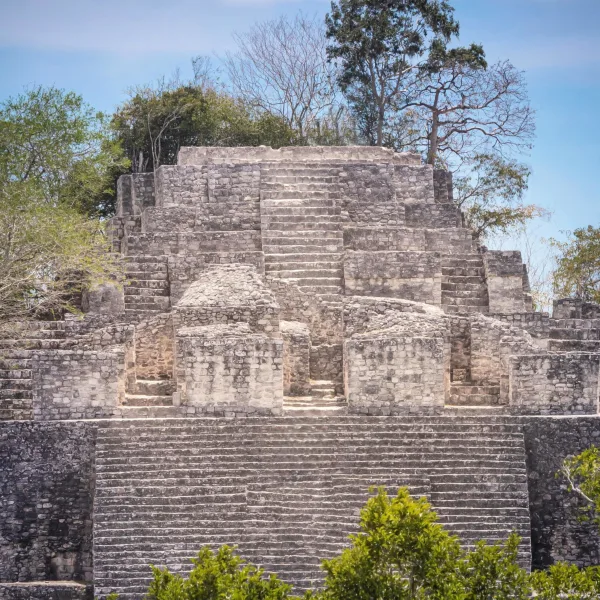
- Structure II: The largest monument at Calakmul anchors the southern side of the plaza. Repeated construction phases enlarged its stepped mass, added summit buildings, and covered earlier façades decorated with monumental stucco masks.
- Structure I: Calakmul’s second-largest pyramid rises southeast of Structure II. Its orientation and unobstructed view toward the western horizon have led archaeologists to associate it with solar ritual.
- Structure VII: This south-facing temple pyramid closes the northern end of the plaza opposite Structure II. Summit rooms, a roof comb, stelae, and a richly furnished burial mark its long ceremonial importance.
- Structures IV and VI: These buildings form an early E-Group complex across the plaza. Structure VI provided the western observation point, while the temples of Structure IV marked changing sunrise positions through the year.
- Structure V and its Stelae: A low public building stands within the central plaza, ringed by ten stelae erected across several periods. Their placement brought royal images and historical records directly into public ceremonial space.
- Great Acropolis: Walled courts, palaces, temples, and elite residences form one of Calakmul’s most densely built precincts. Public, private, and restricted spaces reveal how government, ceremony, and privileged domestic life overlapped.
- Structure XI Ballcourt: Built within the Great Acropolis during the Late Classic, the court reused stone from an earlier building and incorporated part of the ritually broken Stela 66.
- Chiik Nahb Acropolis: A buried radial substructure preserves rare murals of richly dressed people handling, serving, and consuming food and drink. The scenes offer an unusual view of social life beyond royal ceremony.
- Stelae of Calakmul: About 120 carved monuments stand across the city’s plazas and architectural groups. Though many are heavily weathered, their inscriptions preserve rulers, dynastic events, and the political history of the Kaan kingdom.
History and Legends
Calakmul rose within the interior forests of the southern Maya lowlands, where limited surface water made urban life dependent on careful control of the landscape. Ancient inscriptions called the city Uxte’tuun, meaning “Three Stones,” a name that may have evoked the primordial hearth at the center of Maya creation. Calakmul developed into a major settlement during the Middle Preclassic and remained active for more than fourteen centuries.
The city was already ancient before the Kaan dynasty made it the center of the Snake kingdom. Temples, plazas, reservoirs, and residential groups had expanded through the Preclassic and Early Classic periods, establishing Calakmul as one of the largest cities in the region. Current epigraphic research places the earlier Kaan royal seat at Dzibanché and suggests that the dynasty shifted, divided, or reestablished itself at Calakmul during the seventh century.
Calakmul reached its greatest political strength under Yuknoom Ch’een II, who ruled from 636 to 686 CE. During his long reign, the royal court expanded and the city became the center of a network held together through warfare, marriage, trade, alliance, and the installation of friendly rulers. Calakmul’s influence reached across much of the southern lowlands, connecting distant courts without turning them into a single unified empire.
Experiences Around Calakmul
The ruins are only part of the story. Calakmul sits inside a vast tropical forest of ceiba and ramón trees, where toucans and monkeys make the surrounding reserve part of the experience.
The Calakmul Biosphere Reserve adds birding and wildlife watching along jungle roads and trails. Near Highway 186, Cueva de los Murciélagos brings huge columns of bats overhead at dusk.
The village of 20 de Noviembre adds woodworking, embroidery, melipona honey, and a glimpse of the region’s living Maya communities.
The rivalry with Tikal unfolded across generations. The Kaan dynasty defeated Tikal in 562, before its court was fully established at Calakmul, and Yuknoom Ch’een II checked the same rival again in 657. The balance shifted in 695, when Tikal defeated Calakmul’s ruler Yuknoom Yich’aak K’ahk’. That loss weakened the political network surrounding the Snake kings, but it did not bring the city to an immediate end.
Calakmul continued to raise monuments as its regional influence narrowed. Royal authority became more local, construction slowed, and population declined through the ninth century. The latest surviving date recorded on a stela is 909 CE, marking the final known statement from a city whose political reach had once extended far beyond its forested core.
No single legend survives to explain Calakmul, but ritual memory did not disappear when the city was abandoned. Ceramic evidence suggests that people continued to visit parts of the abandoned city into the Postclassic period and possibly the early colonial era. Cyrus Lundell brought Calakmul into modern archaeological record in 1931, yet its history has remained difficult to recover. Rain and humidity erased much of the writing from its limestone stelae, forcing the story of the Snake kings to be reconstructed from scattered inscriptions across the wider Maya world.
How to Get There & Where to Go Next
How to Visit Calakmul
Step-by-step access to the site
- Take Tren Maya from Cancún to Conhuas (Calakmul stop) – approx. 5 hr 15 min.
- Find taxi in Conhuas to biosphere checkpoint – approx. 45 min.
- Continue by taxi to Calakmul ruins – approx. 1 hr.
Tips: Taxis in Conhuas may be limited – confirm in advance. No services at the ruins. Bring water, snacks, and cash..
Nearby Ruins You Can Visit
These Maya sites were rivals, allies, or echoes of Calakmul’s power. From remote jungle capitals to ceremonial crossroads in the shifting politics of the Classic era.

Caracol – A powerful Maya capital allied with Calakmul, where the massive Caana palace complex rises above the forests of western Belize.

Balamkú – Known for its rare stucco frieze with preserved paint and powerful royal imagery.

Xpuhil – Known for its rare three-tower temple and compact Rio Bec layout that highlights stylized upper tiers and decorative facades.
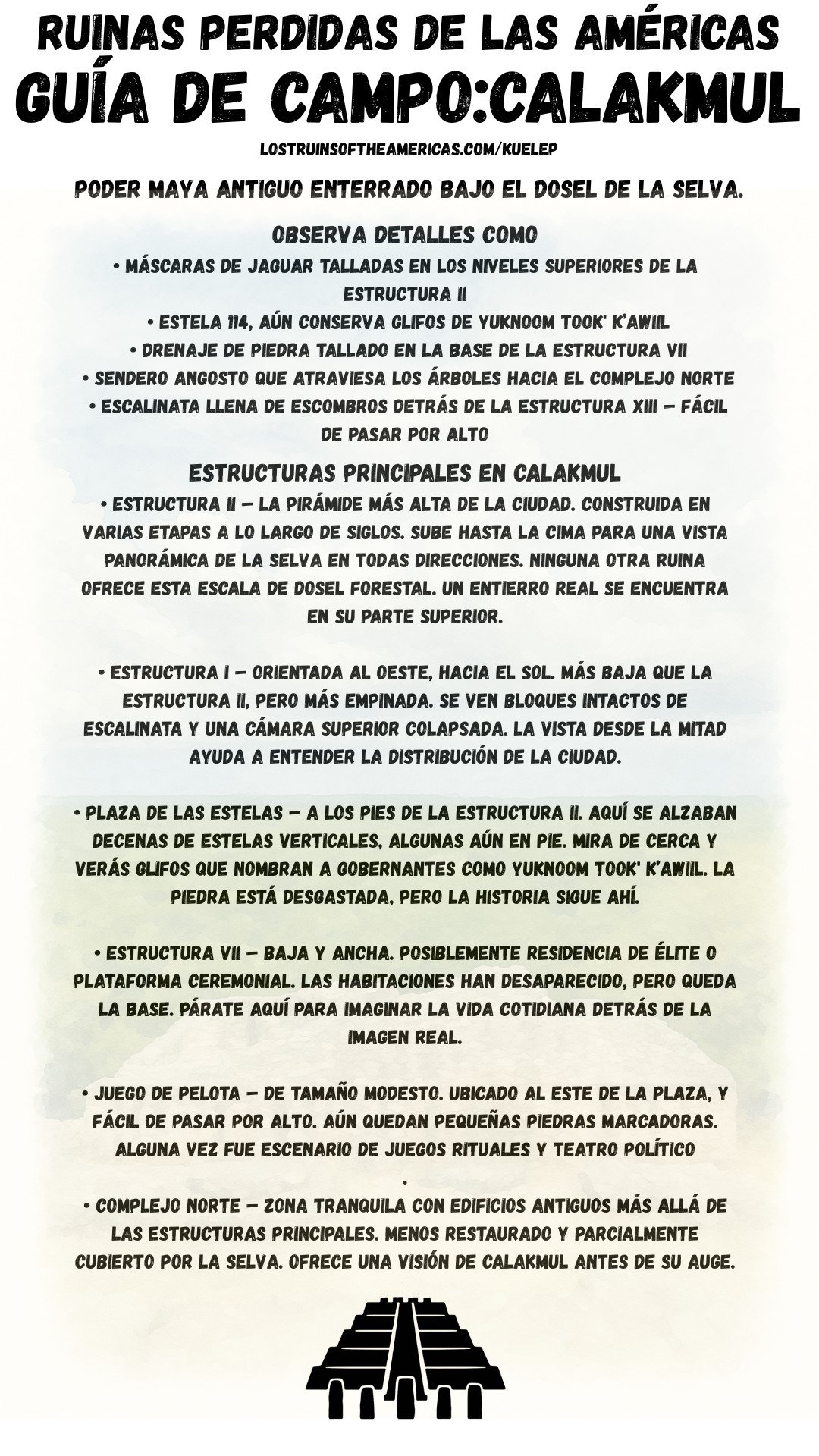
Download Field Guide
Español
English
Traveler Tips
- Allow at least three hours for the principal plazas and acropolises, with additional time for the site museum.
- Visit the museum before entering the ruins. Replicas of the Chiik Nahb murals and Structure II frieze make the protected originals easier to understand.
- Bring water and wear long sleeves, mosquito-resistant clothing, and shoes with non-slip soles. The reserve remains hot and humid even beneath the forest canopy.
- Bring binoculars and move quietly along the forest paths. Monkeys, tropical birds, and other wildlife often appear.
Elsewhere in the Americas…
While Calakmul rose as a major Maya superpower, other parts of South America saw the emergence of sophisticated cities, other cultures across the Americas were shaping regional power and identity:

Sechín and coastal northern Peru sites continued as a ceremonial centers tied to ancestor veneration and deeply rooted ritual traditions.

San Agustín in Colombia reached its final phase of sculptural activity, with tomb guardians and enigmatic statues still added to sacred sites.

In the U.S. Southwest, Ancestral Puebloans built ceremonial structures and kivas at Chimney Rock, aligned to lunar cycles.
Insider Explorer Advice
Stay overnight in Xpujil and head out before sunrise. The jungle road is long but peaceful, and arriving early gives you the chance to explore in cooler temperatures with minimal crowds. The sound of howler monkeys echoing through the canopy is unforgettable. Temple II is a steep but climbable pyramid that gives you a view few ruins can match, an unbroken sea of green to every horizon.
Summary: This is not a tourist stop, Calakmul is real adventure. Bring everything you need, and expect the unexpected.