
San Agustín
COLOMBIA / HUILA / SAN AGUSTÍN
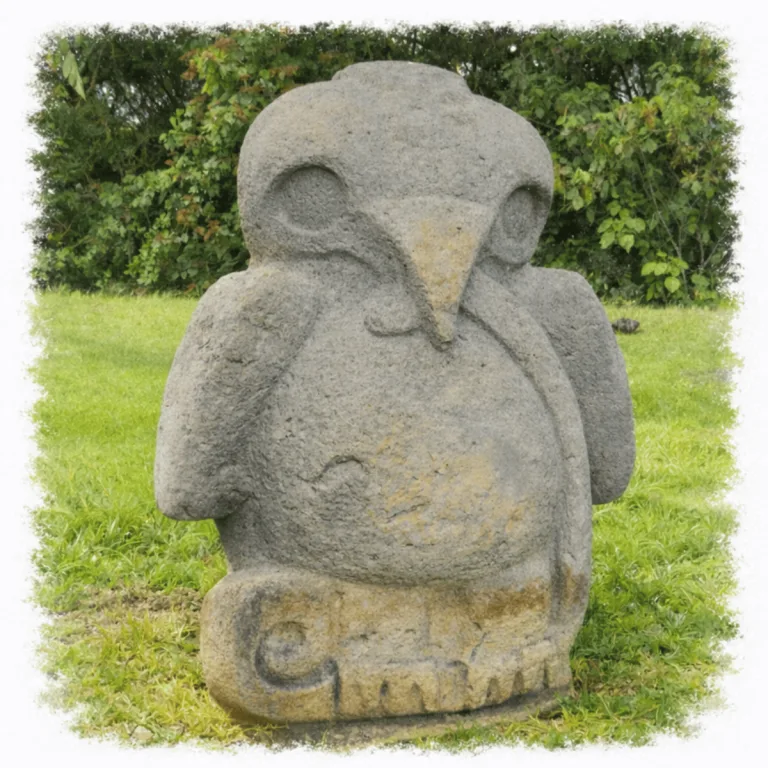
Across rolling hills in southern Colombia, San Agustín fills its landscape with carved stone statues, where human and animal figures stand as one of the largest concentrations of megalithic sculpture in the Americas.
| Name | San Agustín |
| Civilization | San Agustín Culture |
| Location | Huila Department, Colombia |
| Elevation | 1,800 meters (5,900 feet) above sea level |
| Years Active | c. 1000 BCE – 900 CE |
| Primary Resources | Volcanic stone, gold, river access |
| Site Type | Ceremonial necropolis and sculpture field |
| Key Highlights | Monolithic statues, burial mounds, Fuente de Lavapatas, forest trail circuit |
| UNESCO | San Agustín Archaeological Park |
| Entry Fee | 35,000 COP (~$9 USD) |
| Best Time to Visit | Morning or late afternoon, dry season (Dec–Mar) |
| Field Visit | Visited & photographed by Lost Ruins of the Americas |
Unique Features of the San Agustín Archaeological Site
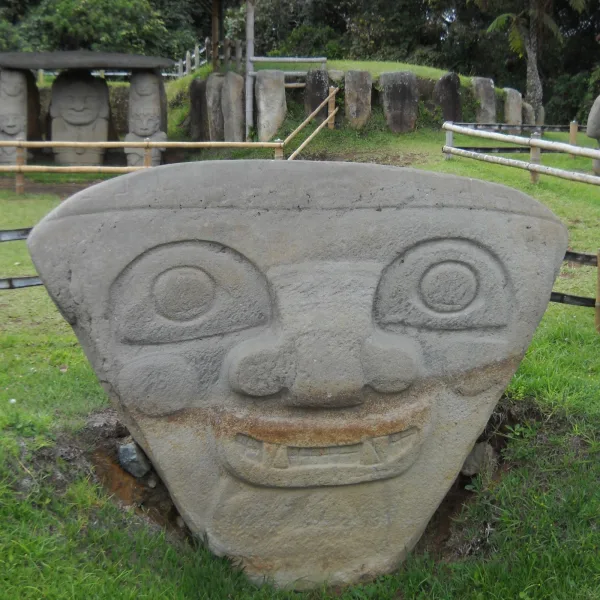
- Expressive Stone Figures: Monumental statues carved from volcanic rock, ranging from fierce to playful in style and mood.
- Underground Tombs: Many sculptures guard shaft tombs or burial chambers below mounds, highlighting funerary function.
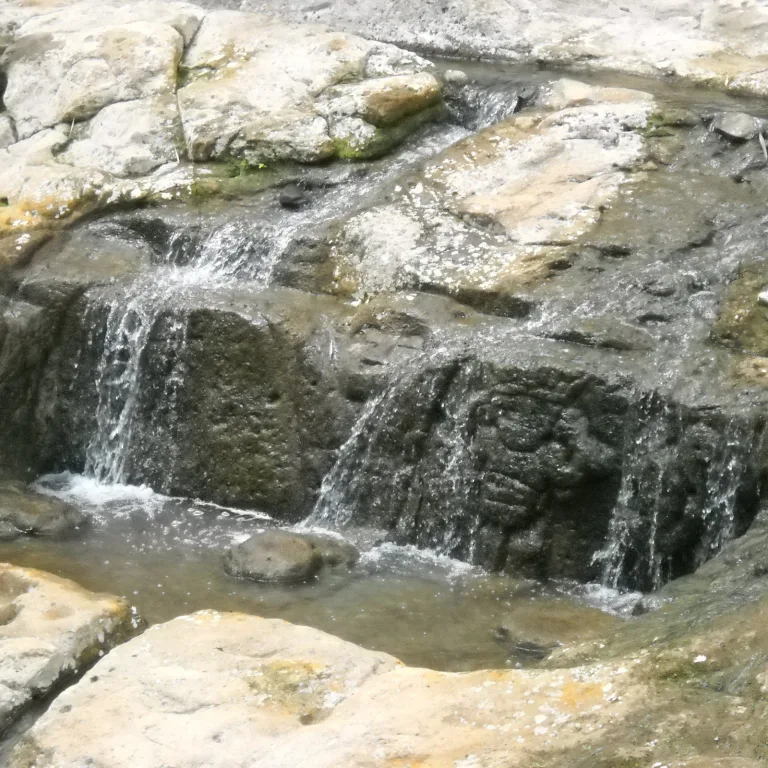
- Fuente de Lavapatas: Sacred waterwork carved directly into bedrock. Includes channels, pools, and symbolic motifs.
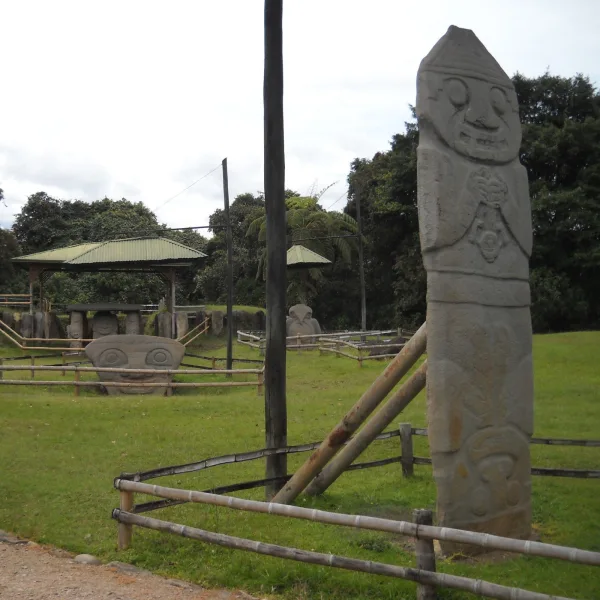
- Site Spread: Statues are dispersed across wide terrain, encouraging exploration rather than centralized viewing.
- Unclear Iconography: Many figures include animals, dual faces, or supernatural elements. Interpretations vary widely.
Location & Access
- Nearest Town: San Agustín, Huila
- Directions: From town center, the main archaeological park is a 30 to 40 minute walk or short taxi ride. The route is clearly marked and mostly paved.)
- Opening Hours: 8:00 AM – 4:00 PM daily
- Entry Fees: 35,000 COP (~$9 USD)
- Facilities: Visitor center, restrooms, museum, café
- Accessibility: Moderate. Trails are uneven in places but well-maintained
- Pro Tip: Stay up the hill for cooler air and walk down to the park in the early morning
Highlights to Help Understand Your Visit
San Agustín is not a ruin in the traditional sense. It is a ceremonial landscape filled with symbols and sculpture, spread out across fields, trails, and forest. These highlights will help you approach it with the right lens.
- Statues as Guardians: Many of the stone figures were placed at tomb entrances or mound edges. Their positioning was intentional, guiding the dead and watching the living.
- Burial First, Sculpture Second: The layout often began with a tomb, then the statue was added. In San Agustín, the dead shaped the architecture.
- No Single Center: The park is a collection of sculptural zones, not a central temple. Each group has its own energy and purpose. Let the terrain lead.
- Faces Tell Stories: The figures vary in size and mood. Some are fierce, others serene or even playful. These shifts reflect different roles — guardian, ancestor, spirit.
- Water as Ritual Path: The Fuente de Lavapatas isn’t just carved stone. It channels living water, blending natural flow with spiritual meaning.
Key Structures of San Agustín
- Mesita A: One of the central mounds, featuring several statues around a tomb entrance. Includes guardian figures and seated forms.
- Mesita B: Smaller grouping of sculptures with stylistic variation and ritual positioning. Connected to surrounding burial features.
- Fuente de Lavapatas: A shallow riverbed engraved with ritual channels and human-animal carvings, thought to represent ceremonial cleansing.
- El Bosque: Cluster of statues within a wooded zone, some partially hidden in vegetation. Shows natural integration of art and terrain.
- Alto de Lavapatas: Elevated viewpoint with large figures and panoramic visibility. May have served as ceremonial or directional marker.
- Statue Field Trails: Network of paths that lead through open-air groupings of sculptures. Designed for wandering and gradual discovery.

History and Legends
San Agustín is the most important archaeological site of Colombia’s southern Andes, and the heart of the culture that bears its name. Occupied as early as 1000 BCE and active well into the first millennium CE, the site is best known for its carved stone statues, over 500 of them, which form one of the largest collections of pre-Columbian sculpture in the Americas. The people of San Agustín left no writing, but their art speaks through form, gesture, and expression.
The site functioned as both cemetery and ceremonial landscape. Large stone figures were positioned over tombs, at trail intersections, and around platforms, often in pairs or facing each other. These sculptures include human forms, animals, mythic hybrids, and composite beings. Many are depicted with elaborate headdresses or fanged mouths, suggesting roles as guardians or intermediaries.
The Fuente de Lavapatas is among the most enigmatic features. Carved into a natural streambed, it includes channels, faces, pools, and zoomorphic designs. Its exact function is unknown, but scholars believe it was used in initiation or cleansing rituals. The use of living water suggests a cosmology rooted in natural flow and transformation.
Experiences Around San Agustín
The ruins are only part of the story. Green hills, coffee fields, and deep river valleys spread across the upper Magdalena in the Colombian Massif.
–
At the Estrecho del Magdalena, walk down to where Colombia’s largest river squeezes between rock walls only a few meters apart.
–
In the hills around San Agustín, visit a coffee farm to see how locally grown beans are picked, dried, roasted, and prepared in one of Huila’s major coffee-growing landscapes.
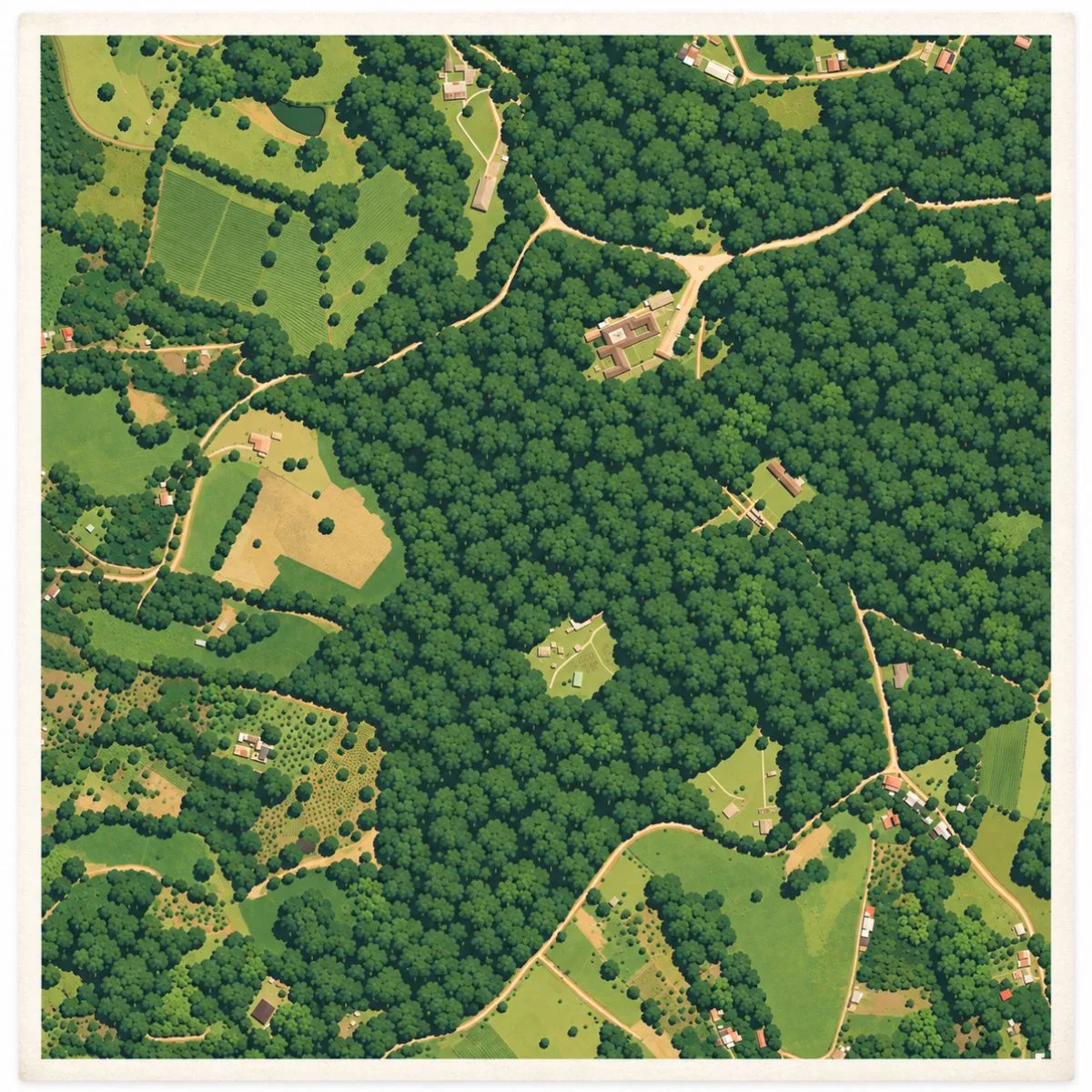
Despite its scale, San Agustín is not an urban ruin. It was never a dense city. Instead, it was a ceremonial region, spread across ridges and valleys, with sculpture fields that blend into the forest. The layout encourages wandering. Most visitors will never see all the figures in one trip, which may be intentional. The site resists completion. It reveals itself in pieces.
How to Get There & Where to Go Next
How to Visit San Agustín
– Step-by-step access to the site –
- Bogotá to Neiva – Bus or flight, 6 to 10 hours.
- Neiva to Pitalito – Bus south via Huila valley, 5 hours.
- Pitalito to San Agustín – Shared taxi or colectivo, 45 minutes.
- Town to Ruins – Walk or mototaxi to park entrance, 10 to 40 minutes.
Tips: The road from Neiva to San Agustín is long but scenic. Start early to avoid walking back uphill in the heat.
Nearby Ruins You Can Visit
San Agustín’s sculpted stone guardians stand alone in style, but these distant sites share its sacred focus, funerary depth, and connection to early power.

El Infiernito – Muisca stone pillars aligned to the sun, used for ritual and calendar tracking near Villa de Leyva.

Ciudad Perdida – Stone terraces, jungle paths, and highland sanctuaries hidden in Colombia’s Sierra Nevada.

Ingapirca – An Inca-Cañari site in the Ecuadorian Andes, known for its solar temple, elevated setting, and layered ceremonial history.

Download Quick Guide
Español
English

Traveler Tips
- Wear shoes with grip. Trails may be damp or uneven, especially near the Fuente de Lavapatas streambed.
- Bring a hat or umbrella for shade. Some areas are exposed, especially on the approach trail.
- The site is walkable from town, but the final entrance is downhill. Plan for a return uphill or use a taxi.
- The museum is small but worth visiting before you enter. It gives context to the layout and timeline.
- Afternoons tend to be warmer and busier. Mornings offer more solitude and better light for photos.
Elsewhere in the Americas…
While San Agustín’s sculptors shaped sacred stone guardians in the Colombian highlands, other civilizations across the Americas were reaching new architectural and political heights:

Teotihuacan was at its peak in central Mexico, with its grid-planned city and pyramids influencing trade and ceremonial life far beyond the valley.


Angel Mounds – A Mississippian town with earthen platform mounds, a central plaza, and traces of a palisade beside the Ohio River.
Insider Explorer Advice
Staying up on the hill above town makes the morning walk to the ruins feel like a slow reveal. The path curves past fields and trees, and you arrive with the sun. The site is easy to explore on your own. Carvings appear one at a time, each with its own face, its own weight. Some feel protective, others strange or even joyful. They are not anonymous. You can feel the sculptor behind them. Allow time for that. This is not a place to rush through.
Summary: San Agustín is not built to impress at a glance. It’s a long conversation in stone, one face at a time.