El Cuajilote
MEXICO / VERACRUZ / TOTONAC
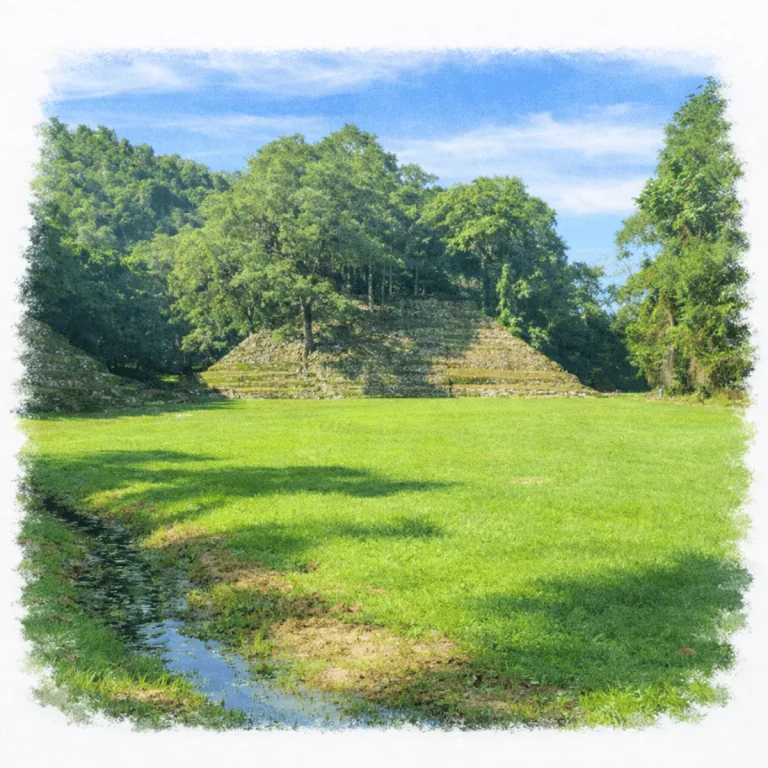
In Veracruz, El Cuajilote channels a natural spring through a temple platform into the central plaza, where flowing water is built directly into the site’s ceremonial design.
| Name | El Cuajilote |
| Civilization | Totonac |
| Location | Near Tlapacoyan, Veracruz, Mexico |
| Elevation | 1,495 meters (4,910 feet) |
| Years Active | c. 600–1200 AD |
| Primary Resources | River access, agriculture, carved stone |
| Site Type | Ceremonial and residential center in tropical foothills |
| Key Highlights | Plaza with stream, carved stairways, pyramids |
| Entry Fee | 85 pesos for Mexican visitors; 155 pesos for foreign visitors. |
| Best Time to Visit | Morning hours, dry season |
| Field Visit | Visited & photographed by Lost Ruins of the Americas |
Unique Features of the El Cuajilote Archaeological Site
- Notable Artifacts: Water channels, ceremonial plaza, stream-fed shrine
- Architectural Highlights: Stone pyramids, altar platforms, stepped access trails
- Natural Surroundings: Dragonflies, butterflies, and birds along the stream corridor
- Comparative Notes: Less monumental than El Tajín but more immersive and atmospheric
Location & Access
- Nearest Town: Tlapacoyan, Veracruz.
- Directions: From Tlapacoyan, follow the road toward Plan de Arroyos to Santiago. From Santiago, the final approach continues on foot across a hill toward the Bobos River. Local buses serve Santiago, but a taxi can simplify the rural connection.
- INAH: Cuajilote Archaeological Zone.
- Opening Hours: Tuesday to Saturday, 10:00 AM to 3:30 PM.
- Entry Fees: 85 pesos for Mexican visitors; 155 pesos for foreign visitors.
- Facilities: Small entrance office with staff on duty. A tienda near the road junction is the last reliable place for drinks and basic supplies.
- Accessibility: Moderate. The approach requires a rural walk over uneven ground and may become muddy during the rainy season.
- Pro Tip: Carry water and supplies from Tlapacoyan or stop at the tienda before beginning the final walk. Confirm transportation back to town before setting out.
Highlights to Help Understand Your Visit
El Cuajilote isn’t grand. It’s intimate. To understand it, you have to tune in to how water, stone, and ceremony intertwine across a quiet jungle landscape.
- A Sacred Stream as Centerpiece: The site was built around a spring. This isn’t background; it’s the heart of the place, and possibly the reason it was chosen at all.
- Platform, Not Pyramid: The main mound isn’t sky-reaching. It’s wide and flat, meant for gathering, ritual, and presence, not spectacle.
- Hidden Geometry: The stairways, terraces, and plaza shape a quiet cosmogram. The symmetry is subtle, but intentional; it echoes Totonac worldview.
- Stillness as Atmosphere: You’ll hear birds, not crowds. That silence is part of the experience. The site speaks in absence, not display.
- Ritual Without Monumentality: No carved stelae, no massive temples. Cuajilote teaches that sacred space doesn’t need scale to matter.
- Stone carvings with phallic symbolism line parts of the site, pointing to fertility rites and the sacred role of water in Totonac ritual life.
Key Structures of the El Cuajilote Ruins
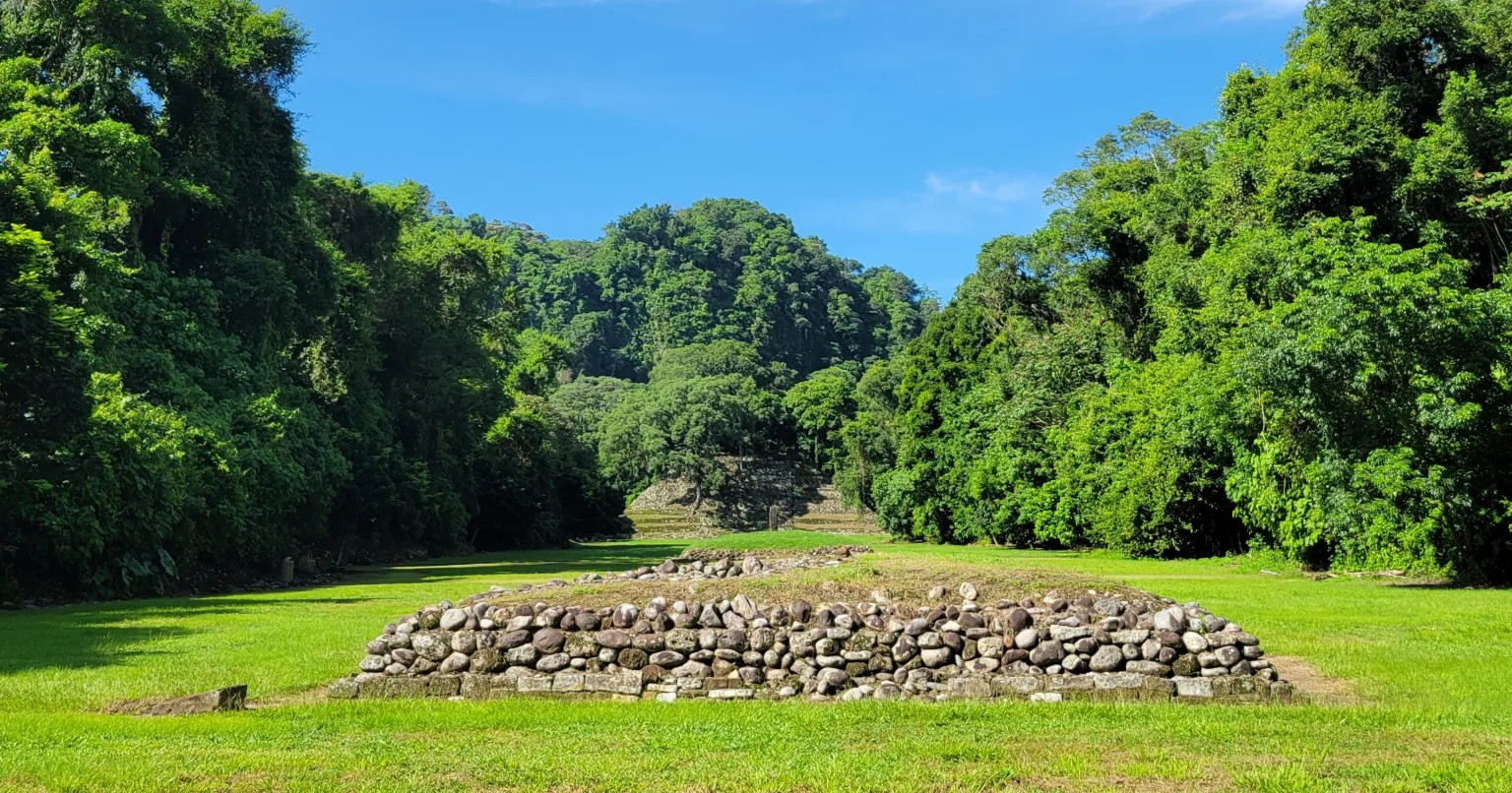
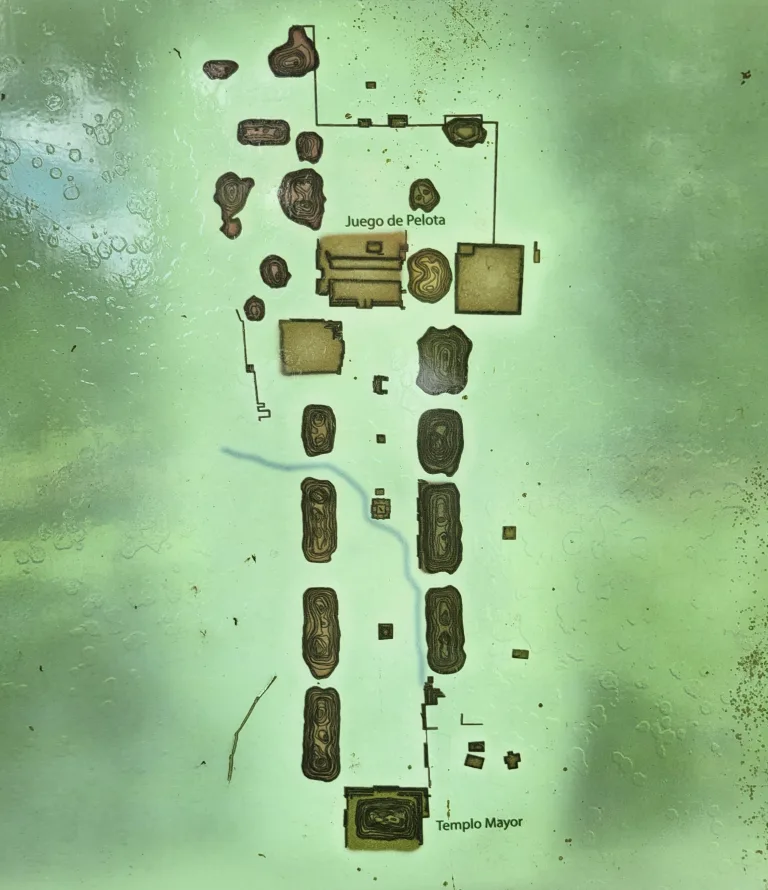
- Gran Plaza: The ceremonial core extends roughly 400 meters between the Templo Mayor and the northern ballcourt. Twelve major buildings and four central adoratorios frame the open space, while a spring-fed stream crosses the plaza before leaving between the western platforms.
- Templo Mayor (Structure 1): The principal pyramid anchors one end of the Gran Plaza with two stairways divided by three broad alfardas. Its stepped walls once carried blue-painted stucco, and excavation revealed an earlier talud-tablero structure beneath the visible construction.
- Temple of the Springs (Structure 14): Rising about 15 meters and stretching nearly 80 meters along the plaza, this is El Cuajilote’s defining water-linked monument. Remains of a two-room building survive above the stepped base, while a natural spring emerges beside the structure and sends water directly across the ceremonial center.
- Phallic Monument at Adoratorio A2: A plain upright stone occupies the center of one of the Gran Plaza’s four principal shrines. Its form has been interpreted as phallic, although archaeologists have also considered a possible role as a marker for seasonal solar events.
- Adoratorio A4: An early circular platform lies beneath the altar’s later rectangular phases. More than 1,500 male San José Acateno figurines with pronounced phallic attributes were recovered from its fills and floors, giving the structure a strong documented connection to fertility ritual.
- Toad Sculpture and Adoratorio A14: A large monolithic amphibian rests beside this shrine in Plaza Oeste. A possible divine-flower motif appears along its side, while the damaged face and earthbound form have led to interpretations involving water, the underworld, or the earth deity Tlaltecuhtli.
- Circular Temazcal: This sunken steam bath measures nearly nine meters across and contains a perimeter bench built above ten interconnected ducts. One channel supplied air and distributed vapor through the others, revealing unusually careful engineering beneath the bathing chamber.
- Building 12: A twelve-tiered ceremonial platform rises beside the Gran Plaza, reached by two stairways bordered with narrow alfardas. Archaeological records indicate that two separate temple buildings once stood at the summit.
- Ballcourt (Structures 7 and 8): A semisunken court with a double-T plan closes the northern side of the Gran Plaza. Measuring approximately 60 by 12 meters, it was rebuilt through at least three phases and retains traces of the stucco that once finished its stone walls.
- Secondary Plazas and Boundary Walls: Seven additional plazas extend beyond the principal ceremonial space, each enclosed by its own platforms, shrines, and watercourses. Low masonry barriers separated activity zones, connected the site’s natural terraces, and helped contain seasonal flooding from the Río Bobos.
History and Legends
El Cuajilote is one of the most atmospheric and under-visited Totonac ruins in Veracruz. Nestled among rolling lowland hills near Tlapacoyan, it served as a regional ceremonial center from around 600 to 1200 AD. Though overshadowed by its more famous neighbor El Tajín, Cuajilote offers its own quiet kind of power. It blends sacred architecture with the living landscape around it.
The site was likely a smaller, independent Totonac settlement that gradually developed ceremonial functions, evidenced by the presence of several pyramidal mounds, stepped platforms, and a large central plaza. It is believed to have functioned as a local hub for ritual gatherings, agricultural coordination, and possibly even regional diplomacy during the Epiclassic and Postclassic periods.
What makes El Cuajilote especially unique is its incorporation of a natural water feature directly into its ceremonial layout. A clear stream emerges from beneath one of the temple platforms and flows through the heart of the plaza. In Mesoamerican cosmology, water was deeply symbolic, tied to fertility, underworld deities, and the sustenance of life. That this stream was not merely left alone but integrated into the structure suggests Cuajilote’s builders saw it as sacred, or perhaps as a portal between earthly and spiritual realms.
Excavations at the site have been limited, but several staircases, retaining walls, and platform bases remain clearly visible. Carved stone blocks and the arrangement of structures point to Totonac building traditions, including the use of wide, flat steps and upright corner stones. Though the temples here never reached the grandeur of El Tajín’s pyramids, the ceremonial design still reflects high social organization and cosmological planning.
Recent preservation efforts have helped maintain the site, which remains relatively clean and intact. The surrounding pastureland, often dotted with grazing cattle, only adds to the surreal charm of the walk-in experience. No official museum exists, but a small on-site office monitors the ruins and collects the modest entry fee.
Though no single legend defines El Cuajilote, its very existence tells a larger story. It speaks of regional identity, sacred geography, and quiet endurance. It’s not a ruin that demands attention. It invites stillness, reflection, and imagination.
Experiences Around El Cuajilote
The ruins are only part of the story. The site is inside the Río Filobobos protected landscape, where tropical forest, steep ravines, and fast-moving rivers define this part of Veracruz.
A rafting trip on the Río Filobobos runs through jungle, rapids, and narrow river canyons, making it one of the strongest experiences to pair with the site.
For a slower day, hike to Cascada de Tomata or Cascada del Encanto near Tlapacoyan, where trails lead through dense vegetation to waterfalls and natural pools.
How to Get There & Where to Go Next
How to Visit El Cuajilote
Step-by-step access to the site
- From Tlapacoyan: Local buses to Santiago or Paso Real leave from Zaragoza street (5–10 min).
- From Santiago stop: Walk or taxi 30 minutes along a rural road toward the tienda junction.
- Final approach: Turn left at the tienda and walk 20 minutes on a trail through pasture and trees.
- Entry point: Small staffed booth at site entrance, near stream.
Tips: Bring water and sun protection. The trail can get muddy in rainy season. Site is quiet, with no vendors or amenities inside.
Nearby Ruins You Can Visit
From sacred springs to mountain fortresses, these nearby ruins offer distinct windows into ancient Veracruz and Puebla ceremonial traditions.


Yohualichan – A post-Tajín ceremonial site where Totonac traditions endured through mountain mist and sacred waterworks.
Cantona – A sprawling highland city of obsidian trade and ritual plazas, built with volcanic stone and unmatched urban planning.

Download Quick Guide
Español
English

Traveler Tips
- Visit during the dry season, when rural access roads and site paths are easier to manage.
- Wear shoes with grip, since ground surfaces can be uneven near vegetation and low stonework.
- Bring water and insect protection. Facilities are limited, and the riverine setting holds humidity.
- Expect a quiet, lightly restored site rather than a heavily reconstructed archaeological park.
- Allow extra time if visiting Vega de la Peña, which sits close enough to pair with El Cuajilote.
- Start early from Tlapacoyan if using local transport, since rural timing is easier before late afternoon.
Elsewhere in the Americas…
As El Cuajilote took shape in Veracruz, other cultures across the Americas were shaping regional power and ceremonial traditions:



In the U.S. Southwest, Ancestral Puebloans built early communities and ceremonial spaces at Escalante Pueblo.
Insider Explorer Advice
For travelers willing to go a little out of the way, El Cuajilote offers a rare reward. The journey from Tlapacoyan is straightforward but requires patience: a local bus to the Santiago turnoff, a rural road walk past a small tienda, and a final stretch through pastureland. The payoff is worth it. The site is quiet, verdant, and beautifully preserved. The stream running through the plaza brings it all to life, with dragonflies and butterflies floating through shafts of morning light. Visitors should bring everything they need, but know that the small office at the entrance is staffed, and the path, while wild, is walkable. It’s not just a ruin. It’s a place that breathes.
Summary: El Cuajilote is a hidden Totonac site tucked into the green folds of Veracruz, alive with spring water, wildlife, and a deep sense of forgotten ritual. It is not large or crowded, but it’s unforgettable.