
The Totonac Civilization:
People of Vanilla and Sacred Wind
Keepers of El Tajín, the voladores, and the roots of vanilla
In the steamy lowlands and lush hills of eastern Mexico, just inland from the Gulf Coast, rose a culture of extraordinary beauty, sacred movement, and architectural precision. They built stone cities with pyramid steps that echoed thunder, watched the skies from observatories carved in relief, and cultivated the first known vanilla orchards in the Americas.
They were the Totonac. Master artisans, ceremonialists, and farmers of the cloud-swept lands of Veracruz.
Though often overshadowed by the Maya and Aztecs in modern imagination, the Totonacs left behind one of the most unique and enduring sacred cities in Mesoamerica: El Tajín, with its Pyramid of the Niches, thundering ballcourts, and carved cosmic dances.

Civilization Snapshot
| Category | Info |
|---|---|
| Region | Eastern Mexico — primarily modern-day Veracruz |
| Timeframe | ~600 CE – 1500s CE (peaked ~800–1200 CE) |
| Capital / Major Cities | El Tajín, Papantla, Zempoala |
| Peak Population | Est. 250,000–500,000 across the region (~1000 CE) |
| Language(s) | Totonac (still spoken in modern dialects) |
| Known For | El Tajín’s Pyramid of the Niches, the Danza de los Voladores, early vanilla cultivation |
| Cultural Relatives | Olmec (ancestral region), Huastec, Aztec (later conquerors) |
| UNESCO Sites | El Tajín, Ritual ceremony of the Voladores |
Why Visit the Totonac Region
The ruins are only part of the story.
Northern Veracruz is a landscape of forested hills, fertile lowlands, and coastal towns where Totonac culture still shapes daily life.
Travelers can explore Papantla, where the Voladores soar above the plaza, then visit the nearby Parque Takilhsukut for the Cumbre Tajín Festival, a celebration of Totonac art, dance, and ritual knowledge.
Farther south, beaches and small fishing towns such as Nautla and Poza Rica offer local cuisine and quiet coastal views, while inland roads pass through vanilla orchards and villages that still speak Totonaco.
The Totonac region is where living tradition meets the rhythm of the Gulf, a place of fragrance, movement, and memory.
Before the Totonacs: Foundations of the Gulf Lowlands
The Gulf Coast wasn’t empty when the Totonacs emerged. For thousands of years before their rise, the region was home to small farming villages that cultivated maize, squash, beans, and chili peppers in the warm, humid lowlands. Archaeological traces suggest that by 2000 BCE, these early cultures were already building ceremonial mounds and participating in regional trade.
During the Formative and Classic periods, the Gulf region saw heavy influence from major civilizations to the south and west, especially the Olmecs, whose colossal heads and ritual centers left a lasting mark on the cultural DNA of eastern Mesoamerica. Later, the architectural innovations of Teotihuacan and the ritual iconography of the Maya also rippled through the region.
By the time El Tajín began to rise around 600–800 CE, the Totonac heartland had already absorbed centuries of ceremonial, agricultural, and artistic tradition. They then transformed into something entirely their own.
Who Were the Totonacs?
The Totonacs called their homeland Totonacapan, the “place of the three hearts,” for the three great cities that anchored their world: El Tajín, Cempoala, and Papantla. These were not just centers of power. They were sacred landscapes, where temples, ballcourts, and plazas moved in rhythm with the cycles of maize, rain, and cosmic breath.
They spoke Totonac languages still alive in parts of Veracruz and Puebla today. Their civilization flourished between 600 and 1200 CE, reaching its height at El Tajín, one of Mesoamerica’s great ceremonial centers.
They were skilled farmers and traders who cultivated maize, cacao, cotton, and vanilla in the fertile lowlands. River and coastal routes carried their goods to distant markets, connecting them with the highlands of central Mexico.
Totonac cities reflected a balance between ritual and daily life. Temples and palaces hosted offerings and festivals. Nearby villages wove textiles, carved tools, and tended the fields. Deities of wind, rain, and fertility shaped the structure of both time and space.


Beliefs, Deities, and the Sacred Wind
The Totonac worldview revolved around natural forces, fertility, and the rhythm of the cosmos. Wind, rain, maize, and fire were not just elements. They were living powers that shaped the land and demanded reverence. The divine was not distant. It moved through storms, took root in the soil, and echoed in the flight of birds.
Though much of Totonac mythology was lost after the conquest, some threads remain:
- Deity of Wind: Possibly linked to Quetzalcoatl, sacred wind was a creative force that carried breath, spirit, and voice across the world
- Fertility goddesses: Earth mothers and maize spirits stood at the heart of ritual cycles, guiding planting, birth, and renewal
- The Sacred Tree: The cosmos was imagined as a vertical axis with layered realms, joined by a tree that connected the earth to the spirit world
- Voladores Ritual: The “Dance of the Flyers” began as a rain-invoking ceremony. Dancers descended from a high pole in slow spirals, honoring the elements and calling balance back to the land
Unlike some neighboring cultures, the Totonacs appear to have emphasized continuity over conquest. Time was cyclical, not linear. Renewal came through offering, balance, and return. The goal was not domination but harmony with the forces that sustained life.

The Sacred Ballgame: Rituals of Power and Renewal
The ballgame was one of the deepest expressions of Totonac belief. It was not played for sport alone but as a sacred act of creation, sacrifice, and renewal. On the courts of El Tajín, players moved between the realms of gods and men, their movements echoing the cycles of rain, wind, and maize.
Each game carried a ritual purpose. The heavy rubber ball symbolized the sun and the struggle to keep it in motion mirrored the eternal balance between life and death. The rhythm of the match became a form of prayer, a ceremony to sustain the breath of the world.
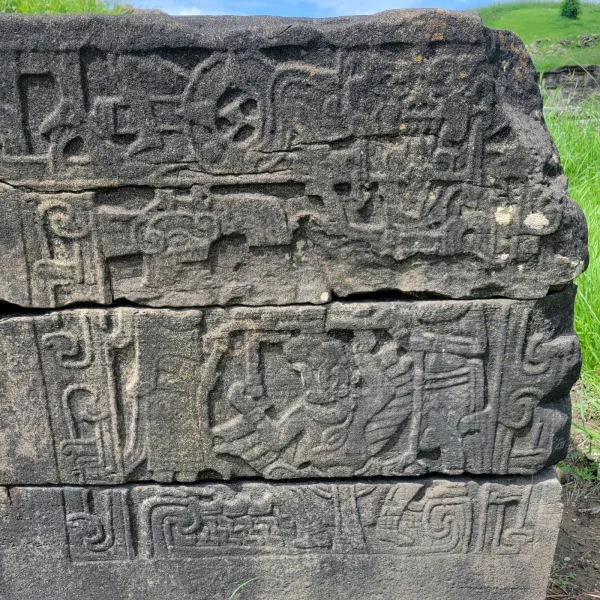
Carved panels on El Tajín’s South Ballcourt record these ceremonies in stone. Priests, musicians, and players appear in scenes of offering, sacrifice, and renewal, reminding onlookers that fertility and cosmic order depended on balance between worlds.
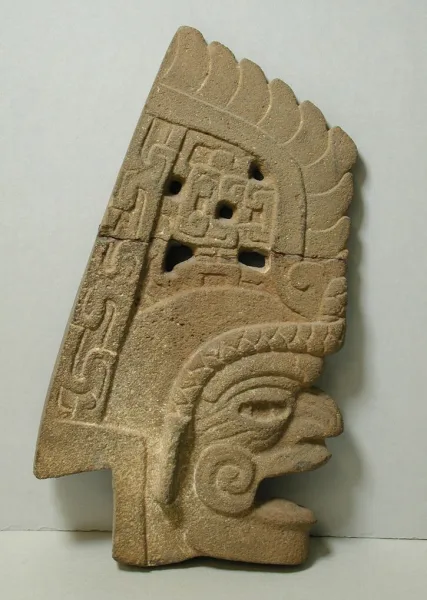
Stone yokes, palmas, and hachas found throughout Veracruz reflect the ritual power of the game. Many depict serpents, bound captives, and jaguar warriors, symbols of transformation and divine strength. These were ceremonial objects, part of a cycle of victory, death, and rebirth that echoed through Totonac life.
In Totonac culture, the ballgame was both myth and mirror. It united earth and sky, effort and offering, teaching that every harvest, every season, and every struggle was part of the same sacred rhythm.


El Tajín: City of Niches and Storms
The most iconic Totonac city is El Tajín, a UNESCO World Heritage Site and ceremonial capital that flourished between 800 and 1200 CE. Rising in the forested hills of Veracruz, it was built in stone and shadow, becoming one of the most distinctive urban centers in ancient Mesoamerica.
At its core stands the Pyramid of the Niches, a seven-tiered temple carved with 365 stone recesses, each one marking a day of the solar calendar. Nearby, more than 15 ballcourts suggest that ritual sport was central to civic and religious life.
El Tajín was a city of alignment and symbolism:
- Calendrical design that linked architecture to time and ritual
- Storm and rain ceremonies, possibly linked to the god Huracán
- Reliefs and murals that depict sacrifice, myth, and divine power
The city emerged in the centuries after the fall of Teotihuacan, filling a cultural void with a new expression of regional strength. El Tajín was not just powerful. It was visionary.
Other Totonac cities, including Yohualichan in the Sierra Norte of Puebla, carried El Tajín’s architectural traditions into new highland environments, showing how Totonac culture adapted and endured across the region.
Learn more about the history and how to visit with the El Tajín Ruins Guide.

Totonac Trade Networks and Market Life
The Totonacs lived in city-states ruled by nobles and priestly lineages. Power centered on a high priest-king or council of lords, who guided ritual life, diplomacy, and the agricultural calendar. Though never unified under a single empire, Totonac cities shared a common worldview expressed through ceremony, architecture, and seasonal rhythm.
Within their society
- Rulers and priests managed sacred time, conducted offerings, and maintained alliances with neighboring cities
- Artisans shaped a rich material culture, producing incised red pottery, spindle whorls, musical instruments, and carved stone panels
- Farmers cultivated maize, beans, squash, chile, cotton, and the vanilla orchid, which was native to the region and highly prized
- Women served as weavers, midwives, cooks, and spiritual caretakers whose labor and knowledge held homes and ceremonies together

These roles came together in the marketplaces and plazas that sustained Totonac life. Cities were not only political and ceremonial centers but also hubs of exchange, where goods, stories, and rituals moved through a network that reached far beyond the Gulf Coast. Trade bound the region together, linking farmers and artisans with coastal merchants and highland caravans.
Totonac exports included
- Vanilla pods, cultivated in the humid lowlands and valued for ritual offerings, perfume, and flavoring
- Salt and dried fish, carried from coastal settlements to inland markets
- Cotton cloth, woven in fine patterns and used for tribute, ceremony, and trade
- Incense resins such as copal, burned in temples and homes alike
- Shell jewelry and feathered regalia, exchanged for luxury items and ritual display
- Paint pigments and dyes, made from minerals and plants, prized by artisans and scribes

Trade networks linked the Totonac homeland with major cultures across Mesoamerica. They exchanged goods and ritual knowledge with the Maya to the east and the Mixtecs to the south. They shared coastal markets and sacred traditions with Classic Veracruz cultures and maintained contact with Toltec and Zapotec communities through inland trade routes.
Settlements such as El Cuajilote, along the Cazones River valley, connected inland farmers and artisans to Gulf Coast markets, reinforcing the Totonacs’ role as intermediaries between highland and coastal worlds.
In return, caravans and canoe fleets brought obsidian, jade, turquoise, cacao, and fine ceramics from highland regions. These goods moved along rivers, mountain passes, and coastal paths that tied lowland markets to the interior world.
Trade was more than the movement of goods. It carried beliefs, symbols, and artistic styles that connected distant peoples. Market days were also feast days, where exchange became ceremony.
Their position along the rivers and the Gulf Coast made the Totonacs natural intermediaries between inland and maritime worlds. This geography created a living bridge between mountains, markets, and the sea, making Totonacapan a vital connector of people, belief, and art.


Cultural Networks and Shared Influence
The Totonacs maintained strong ties with neighboring cultures, shaping and exchanging ceremonial forms, symbols, and materials across eastern and central Mesoamerica.
- Maya – Shared calendrical knowledge, ceremonial imagery, and ritual timing, especially visible at El Tajín
- Toltecs – Contact brought new religious motifs and visual styles during the Postclassic period
- Classic Veracruz cultures – Maintained deep regional connections through architecture, ballgame tradition, and sacred iconography
- Gulf Coast lowland societies – Engaged in sustained exchange of ritual goods, artistic forms, and plant knowledge
- Highland traders and artisans – Brought obsidian, jade, pigments, and ceramics into Totonac markets
These were not imperial relationships. They were built on exchange, movement, and shared cycles of time and ceremony. The Totonacs were not on the edge of Mesoamerican life. They were part of its sacred and artistic core.
Aztec Domination and the Spanish Alliance
By the late fifteenth century, Totonac cities such as Cempoala and Papantla had fallen under Aztec control. The empire of Tenochtitlan demanded tribute in cacao, cotton, salt, and laborers, placing a heavy burden on the Gulf Coast. Aztec officials stationed in the region collected goods and enforced tribute schedules, while local leaders balanced loyalty with quiet resistance.
When Hernán Cortés landed on the Gulf Coast in 1519, the Totonacs saw a chance to break free. Leaders of Cempoala welcomed the Spaniards and formed an alliance that changed the course of Mesoamerican history. The Totonacs provided warriors, guides, translators, and supplies, becoming the first Indigenous nation to join forces with the Europeans against the Aztec Empire.
This alliance gave Cortés the local knowledge and manpower he needed to advance inland toward Tlaxcala and eventually Tenochtitlan. Without Totonac support, the campaign would likely have failed.
In the short term, the alliance brought relief from tribute and Aztec dominance. But the cost was immense. Temples were destroyed, rituals suppressed, and Catholicism imposed as the colonial order took hold. Yet traces of Totonac belief and identity endured in their language, rituals, and art, carried quietly through the centuries by the descendants who still live across Veracruz and Puebla today.
The Totonac People Today
The Totonac story did not end with conquest or conversion. It continues in the towns and highlands of Veracruz, Puebla, and Hidalgo, where families still speak Totonaco, plant vanilla vines, and perform ceremonies that trace their lineage back more than a thousand years. In these communities, the past is not distant memory but living knowledge passed through language, art, and ritual.
Even the words we use today carry echoes of Totonac speech. Everyday foods such as tomato, chili, and vanilla trace their names to the languages of the Gulf Coast, where the Totonacs first cultivated and named them. Through language as much as through ritual, their influence spread far beyond their homeland.
- Papantla remains a cultural heart, home of the Voladores, whose ceremonial flight, Ritual ceremony of the Voladores, is recognized by UNESCO as Intangible Cultural Heritage
- Vanilla cooperatives continue the ancient cultivation of the orchid once grown for offerings and ritual use
- Weaving, medicine, and midwifery schools preserve ancestral knowledge through community teaching
- The Centro de las Artes Indígenas stands as a living center of Totonac identity, where youth learn art, language, and ceremony from their elders
The Totonacs are remembered for their alliance with the Spanish, yet their legacy reaches far beyond that moment. They were builders of beauty, keepers of rhythm, and masters of the rain. They shaped cities that moved with the wind and gave the world the gift of vanilla.
Their story endures through ceremony and craft. Despite centuries of change, the Totonac people remain a living thread in the fabric of Mesoamerica. Each time the Voladores rise and spin above the trees, they renew that ancient promise, a prayer of balance between earth and sky.

Museums that Explore the Totonac
Across Veracruz and Puebla, museums and cultural centers preserve the legacy of the Totonac people through their art, ritual, and daily life. Visiting these spaces offers a deeper understanding of the world that created El Tajín, Cempoala, and Papantla, and how Totonac traditions continue to thrive today.
- Museo de Sitio El Tajín (Papantla, Veracruz) – Located beside the archaeological zone, this on-site museum displays carved reliefs, ceramics, incense burners, and artifacts uncovered at El Tajín. Exhibits explain the city’s sacred architecture, ballgame traditions, and role in regional trade.
- Museo Teodoro Cano (Papantla, Veracruz) – Dedicated to the celebrated Totonac artist Teodoro Cano, this museum showcases murals, sculptures, and ethnographic displays that highlight Totonac identity, language, and the modern practice of the Voladores ritual.
- Centro de las Artes Indígenas (Papantla, Veracruz) – A living cultural institution within the Parque Takilhsukut, where Totonac masters teach traditional arts, music, medicine, and dance. The center is part of the UNESCO-recognized Intangible Cultural Heritage program.
- Museo de Cempoala (Cempoala, Veracruz) – Adjacent to the Cempoala ruins, this small site museum presents pottery, obsidian tools, and ritual objects that illustrate Totonac life before and during Aztec domination.
- Museo de Antropología de Xalapa MAX (Xalapa, Veracruz) – One of Mexico’s premier regional museums, with exceptional examples of Classic Veracruz and Totonac sculpture, including ballgame reliefs and ceramic figures from El Tajín.
Together, these museums reveal how Totonac art, faith, and agriculture continue to shape the identity of Veracruz. Each visit connects the visitor not only to an ancient civilization but to a living culture that still speaks, creates, and celebrates in the language of the wind.
Totonac Ruins You Can Visit
- El Tajín — A monumental urban center known for its stepped pyramids, ballcourts, and carved reliefs.
- Yohualichan — A hilltop site with Totonac architecture and talud-tablero elements, often linked with El Tajín’s cultural sphere.
- El Cuajilote — A riverside ceremonial site featuring carved altars and connections to Totonac religious practice.
Explore Related Civilizations
- Olmecs — The earlier Gulf Coast culture whose influence laid a foundation in this region.
- Huastecs — Northeastern neighbors with shared coastal trade and cultural overlap.
- Maya — Interaction through trade and shared ceremonial forms, especially in the Postclassic.
- Aztecs — Conquered the Totonac region before the Spanish arrived; later rebelled with Spanish alliance.