
Escalante Pueblo
USA / COLORADO / ANCESTRAL PUEBLOAN
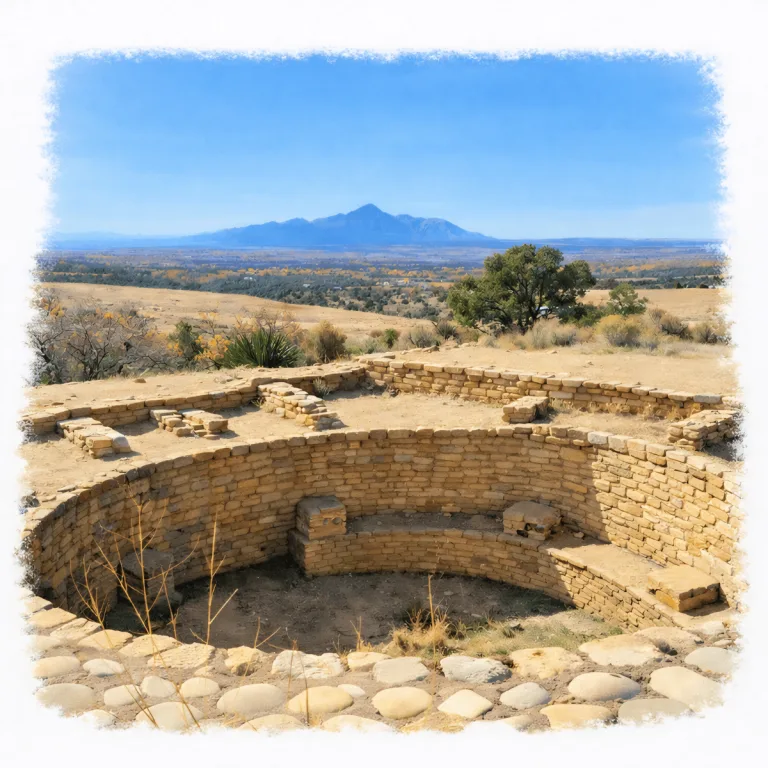
On a sandstone rise above the Escalante River, Escalante Pueblo clusters masonry rooms around a central kiva, where a compact village layout reflects Ancestral Puebloan community design.
| Name | Escalante Pueblo |
| Civilization | Ancestral Puebloans |
| Location | Canyons of the Ancients Visitor Center, near Dolores, Colorado |
| Elevation | 7,086 to 7,214 ft (2,160 to 2,199 m) above sea level |
| Years Active | c. 900 to 1200 CE |
| Primary Resources | Sandstone masonry, agriculture, canyon resources |
| Site Type | Hilltop village with ceremonial features |
| Key Highlights | Kiva, stone walls, canyon views, interpretive trail, museum access |
| Entry Fee | No fee for site access |
| Best Time to Visit | Spring and fall |
| Field Visit | Visited & photographed by Lost Ruins of the Americas |
Unique Features of the Escalante Pueblo Archaeological Site
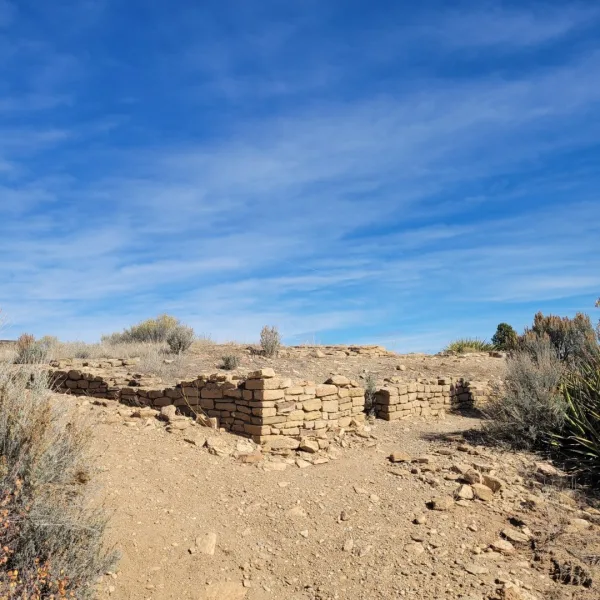
- Stabilized Masonry Footprint: The site is preserved at low height, but the room blocks and boundaries still read clearly.
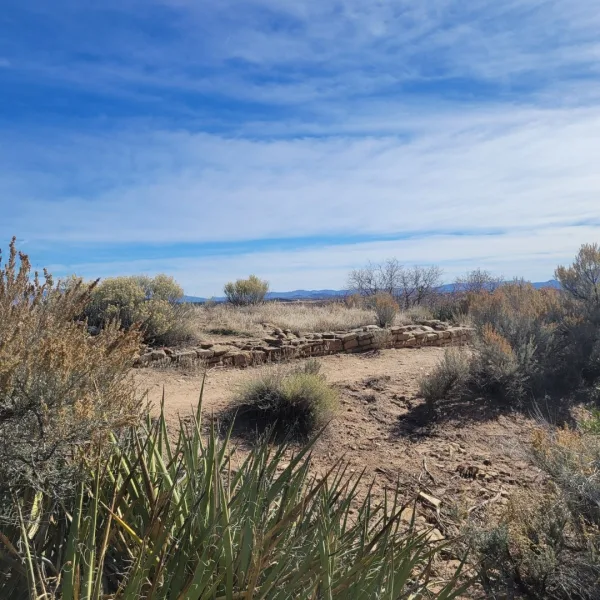
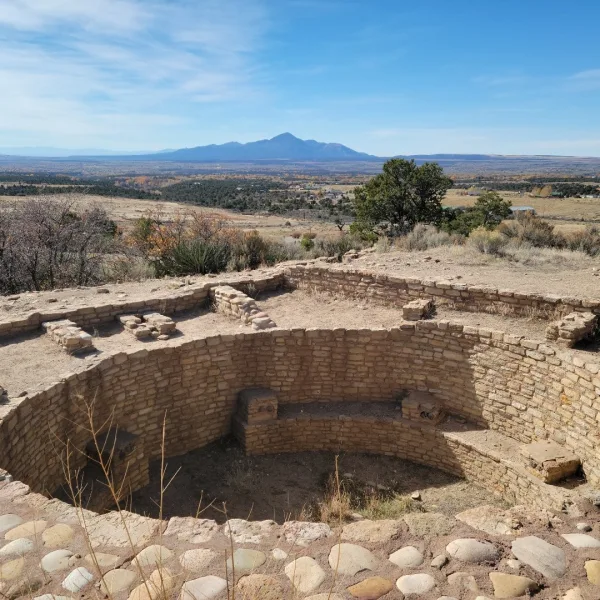
- Hilltop Village Setting: The settlement sits on a rise above the valley floor, giving wide sightlines across the Dolores landscape.
- Interpretive Walk: A short maintained trail with signage helps visitors understand what they are seeing without a guide.
- Museum Context On-Site: The adjacent visitor center and museum adds maps, exhibits, and regional context to the visit.
- Clear, Compact Plan: The layout is easy to follow compared with many low-relief Puebloan sites nearby.
Location & Access
- Nearest Town: Dolores, Colorado
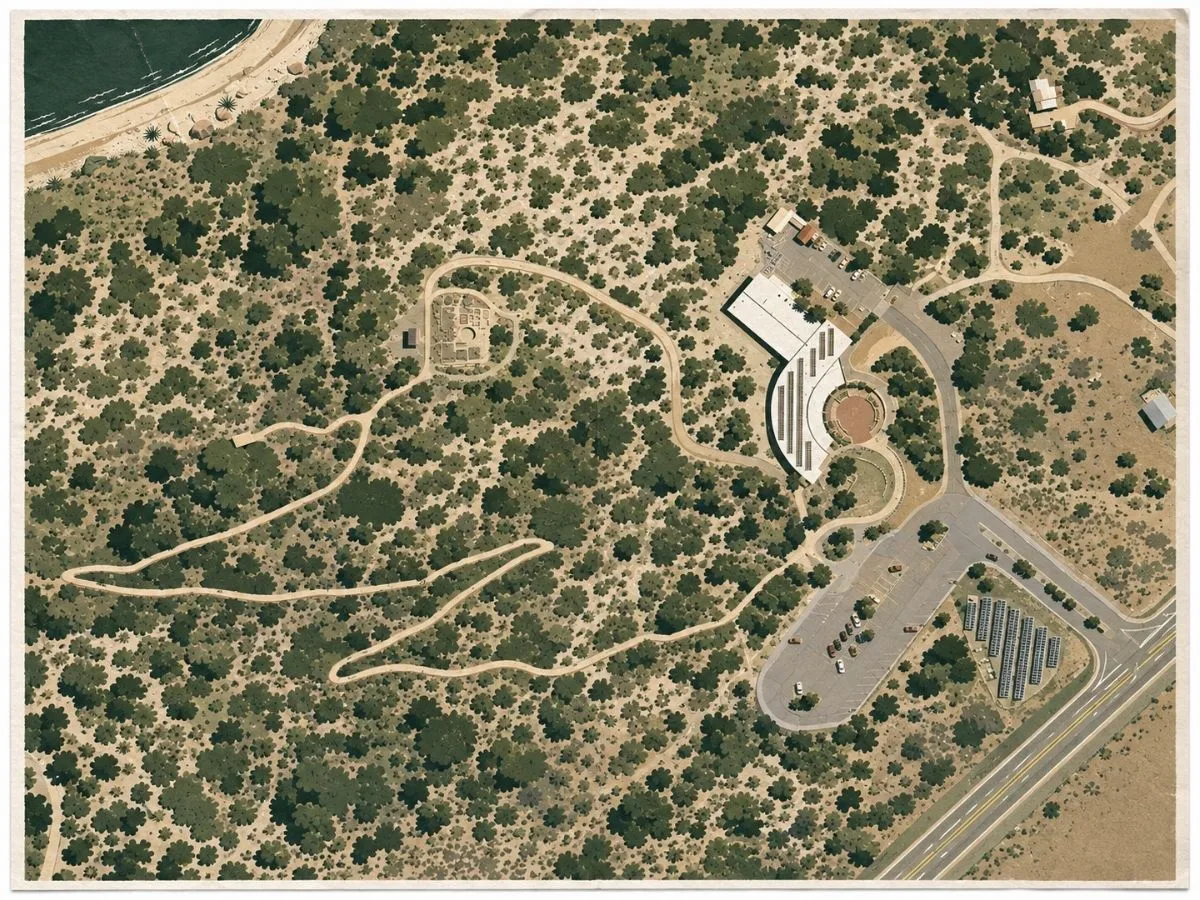
- Site Location: Hilltop directly behind the Canyons of the Ancients Visitor Center and Museum
- Official BLM Page: Canyons of the Ancients Visitor Center and Museum
- Trailhead: Starts at the visitor center and is clearly marked
- Hike Length: About 0.5 miles one way
- Visitor Center Hours: March to October, 9:00 AM to 5:00 PM. November to February, 10:00 AM to 4:00 PM
- Site Access: Paved trail to the pueblo, open during daylight hours
- Entry Fees: No fee to access the trail or the pueblo
- Facilities: Restrooms, exhibits, maps, and staff assistance at the visitor center
- Accessibility: Wheelchair accessible
Highlights to Help Understand Your Visit
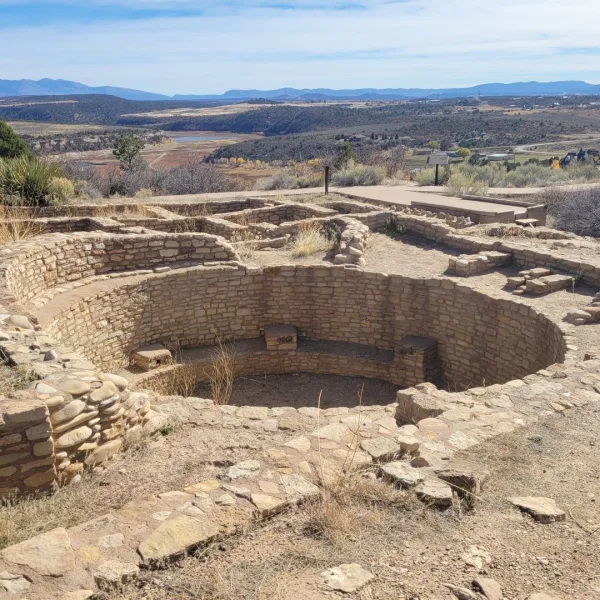
On a hill above the valley floor, Escalante Pueblo preserves a simple plan and a wide field of view.
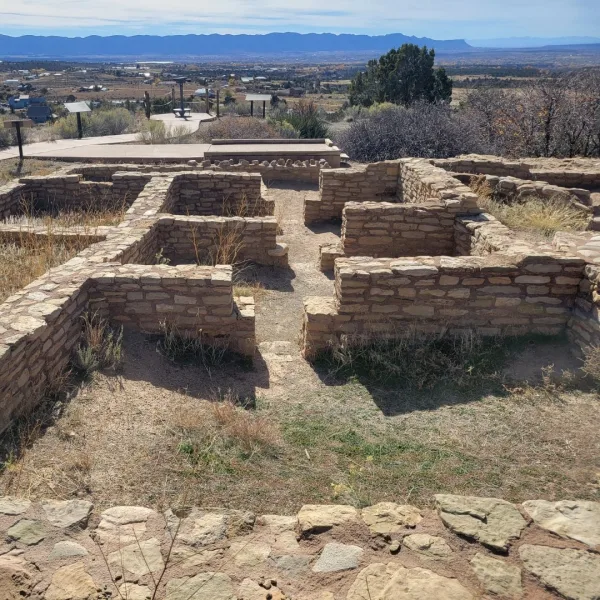
- Read the Walls Like a Map: Even when masonry is low, wall lines still preserve room sizes, doorways, and circulation. The village plan becomes the main artifact.
- Think in Everyday Sequences: Picture the basic rhythm, storage, cooking, work space, and shared indoor areas. The site makes more sense when visitors imagine movement between tasks instead of hunting for a single “main building.”
- Ceremony Was Built Into the Neighborhood: The ceremonial space matters because it sits within a lived-in cluster. It signals that ritual life was not separate from daily life, it was embedded in it.
- Location Was Part of the Design: The setting is a clue. A village placed for visibility and access makes the surrounding valley and distant landmarks part of how people oriented themselves.
- Notice What Was Stabilized: Where stone looks cleaner or more continuous, it often reflects careful stabilization rather than untouched collapse. That contrast helps visitors separate original alignment from later preservation work.
Key Structures of the Escalante Pueblo Ruins
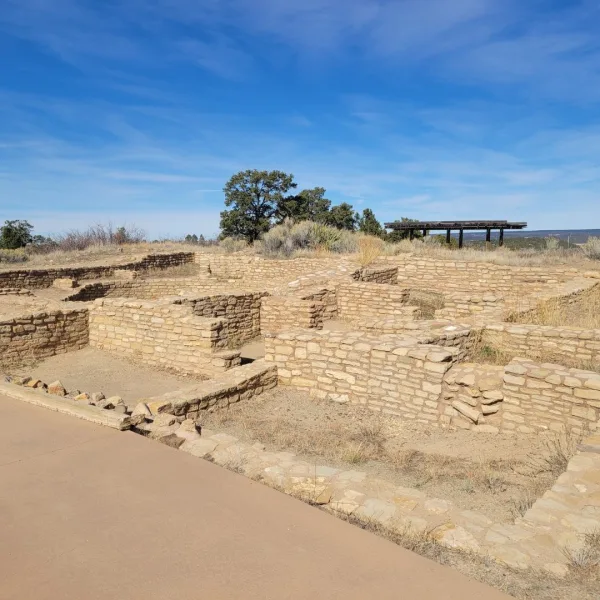
- Rectangular Roomblock: The pueblo follows a planned rectangular layout built around its ceremonial spaces. Rooms used for living and storage were gathered within one compact masonry complex.
- Excavated Kiva: One of the pueblo’s two kivas has been excavated. It contains a bench, eight roof-support pilasters, a fire pit, a subfloor ventilator, and an oblong chamber set into the floor.
- Second Kiva: A second kiva formed part of the pueblo but remains less clearly understood. Its presence shows that ceremonial space occupied a larger role within the village than the visible excavated chamber alone suggests.
- Large Pueblo Rooms: Escalante’s rooms are generally larger than those found in nearby Northern San Juan settlements. Their scale helps distinguish the pueblo from the smaller household sites surrounding the hill.
- Double-Faced Masonry Walls: Thick walls were built with finished stone faces enclosing cores of sandstone rubble. This stronger construction allowed portions of the pueblo to support a second level.
- Chaco-Style Stonework: Some wall faces alternate rows of block-shaped stones with bands of smaller spalls. The surviving pattern preserves one of Escalante’s clearest architectural connections to Chaco Canyon.
- T-Shaped Doorways: Several openings follow the distinctive T-shaped form seen in Chacoan architecture. Even in the low surviving walls, these doorways remain an important clue to the pueblo’s original design.
History and Legends
In the early 1100s, Ancestral Pueblo families were farming the country above the Dolores River. Small household pueblos stood across the hill, each connected to nearby fields, neighboring families, and the river below. Escalante Pueblo was built among them in 1129 CE, but it was larger and more formally planned than the homes surrounding it. Its position and scale marked it as a place intended to serve the wider community.
The builders brought architectural ideas from Chaco Canyon into the Dolores region. Thick stone walls, large rooms, T-shaped doorways, and a kiva enclosed within a planned roomblock gave Escalante a form rarely seen among the smaller local settlements. Chaco itself was already declining, but the ideas associated with it were still moving across the Pueblo world and being reshaped far beyond the canyon.
Escalante was not simply a distant Chacoan colony. Most of the pottery used within the pueblo followed local traditions, pointing to people already rooted in the Dolores country. They adopted a wider architectural language without leaving their regional identity behind. The result was a local Pueblo center built with knowledge gathered from across a much broader cultural landscape.
The pueblo likely served as a meeting place for families living across the surrounding farms. Some people may have lived inside its rooms, while others gathered there for trade, seasonal ceremonies, and news from neighboring communities. The objects used at Escalante were no richer than those found in nearby family homes, offering little evidence that the building belonged to a wealthy household or ruling group. Its importance appears to have come from shared use rather than private power.
Experiences Around Escalante Pueblo
The ruins are only part of the story. Escalante Pueblo overlooks McPhee Reservoir outside Dolores, where open mesa country meets the wooded foothills of southwest Colorado.
Walk the half-mile Can Do Trail at McPhee Recreation Complex for broad views across the reservoir toward the mesas around Mesa Verde.
In Dolores, visit the Galloping Goose Railroad Museum to see Galloping Goose No. 5 and the replica depot recalling the town’s narrow-gauge railroad years.
That first occupation lasted only about nine years. Escalante then stood empty until people returned around 1150 CE. A third and final occupation followed around 1200, when only a few rooms were brought back into use. The reasons for these departures and returns remain unknown. What survives is the pattern itself, a prominent community building repeatedly reclaimed as Pueblo families shifted through the Dolores landscape.
Centuries later, the abandoned pueblo entered written history through the Domínguez-Escalante expedition of 1776. While traveling through the Dolores Valley, Fray Silvestre Vélez de Escalante recorded the remains of a village overlooking the river and compared it to the living Pueblo towns of New Mexico. His account became the earliest known written description of an archaeological site in present-day Colorado, and the ruin later received his name. The name records the expedition that described the site, not the Ancestral Pueblo people who built it.
How to Get There & Where to Go Next
How to Visit Escalante Pueblo
– Step-by-step access to the site –
- From Las Vegas Drive to Dolores, Colorado via I-15 and US-191 (about 8 to 9 hours).
- Dolores Go to the Canyons of the Ancients Visitor Center and Museum (about 5 minutes from town).
- Trailhead Start at the visitor center trail for Escalante Pueblo (about 0.5 miles round trip).
- On Site Plan about 30 to 45 minutes to walk the loop and read the signs.
Tips: Pair the walk with the museum exhibits for context before heading out.
Nearby Ruins You Can Visit
Escalante Pueblo is a compact village site. These other sites help place it within the broader Ancestral Puebloan world of this corner of Colorado.

Yucca House – A largely unexcavated village where the footprint stays subtle, a contrast to Escalante’s stabilized plan.

Mesa Verde – Towering cliff dwellings and painted kivas that illustrate the architectural evolution and enduring spirituality of Ancestral Puebloan life.

Sand Canyon Pueblo – Low walls, kiva depressions, and a surrounding wall still trace this mesa-edge community above the canyon.
Traveler Tips
- Begin your visit at the museum to gain context before walking to the site.
- Wear comfortable shoes for the uphill trail.
- Allow time to read plant and wildlife signage along the path.
- Bring water, especially during warmer months.
- Stay on the marked trail to protect the site.
Elsewhere in the Americas…
While Ancestral Puebloan communities were building compact stone villages across the Four Corners, other regions were developing their own centers of power and tradition:


The Chachapoya built stone settlements in Peru’s cloud forests, with fortress-like sites such as Kuélap.

Insider Explorer Advice
Escalante Pueblo works best as a combined museum and site visit. Spend time with the exhibits and talk with staff, then walk the trail with that context in mind. As you reach the hilltop, the wide view of the canyon makes the placement of the settlement immediately clear. Move slowly through the ruins and let the setting explain why this spot mattered.
Summary: Escalante Pueblo pairs a modest hilltop ruin with a strong interpretive museum, offering one of the clearest introductions to the people and landscapes of Canyons of the Ancients.