
Copán
HONDURAS / COPÁN / MAYA
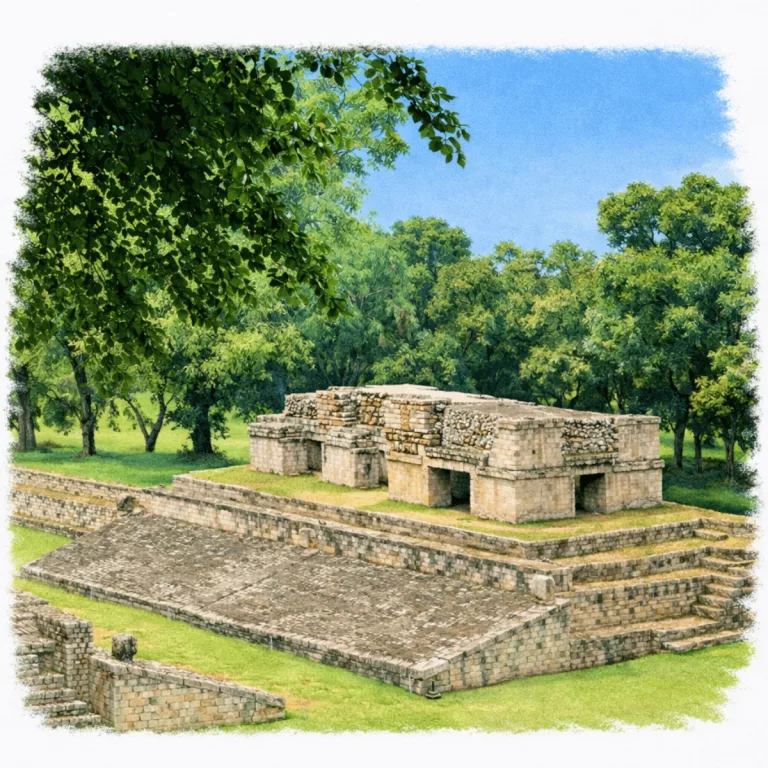
In a fertile river valley in western Honduras, Copán concentrates carved stone stelae around its ceremonial core, where detailed portraits and glyphs record one of the most refined sculptural traditions in the Maya world.
| Name | Copán |
| Civilization | Maya |
| Location | Copán Department, Honduras |
| Elevation | 600 meters (1,970 feet) |
| Years Active | c. 200 – 900 CE |
| Primary Resources | Limestone, jade, obsidian |
| Site Type | Dynastic capital and religious center |
| Key Highlights | Hieroglyphic Stairway, Temple 16, Stelae Plaza |
| UNESCO | Copán Ruins Archaeological Site |
| Entry Fee | 330 HNL (~$13 USD) |
| Best Time to Visit | Morning or late afternoon |
| Field Visit | Visited and documented by Lost Ruins of the Americas |
Unique Features of the Copán Archaeological Site
- Hieroglyphic Stairway: The longest known Maya inscription, carved into a 63-step stairway.
- Temple 16 Interior Tunnel: A rare temple within a temple, access to past phases like traveling back in time.
- Stelae Plaza: Dozens of intricately carved stelae honoring rulers and recording cosmic events.
- Jungle Ambience: The natural setting hasn’t changed much. Birds, insects, and rustling leaves would have accompanied rituals here. Don’t tune them out.
- Residential Acropolis: Network of elite homes, temples, and ceremonial spaces with multilevel terraces.
Location & Access
- Nearest Town: Copán Ruinas, Honduras. The archaeological park is about 1 kilometer east of town.
- Directions: The entrance is about a 15-minute walk or a short tuk-tuk ride from central Copán Ruinas.
- Official Site: IHAH Parque Arqueológico Copán.
- Opening Hours: Daily, 8:00 AM to 4:00 PM.
- Entry Fees: 500 HNL for foreign visitors; additional tickets are required for the Sculpture Museum and tunnels.
- Facilities: Parking, restrooms, café, visitor services, local guides, and the Copán Sculpture Museum.
- Accessibility: Moderate. Some main areas are relatively level, but grass, uneven stone, and stairways limit access through parts of the site.
- Pro Tip: Arrive when the park opens for cooler temperatures, fewer visitors, and active scarlet macaws near the entrance.
Highlights to Help Understand Your Visit
Copán rewards close attention. Its carvings, architecture, and site layout all reflect layered messages about power, time, and legacy. These clues will help frame what you’re seeing.
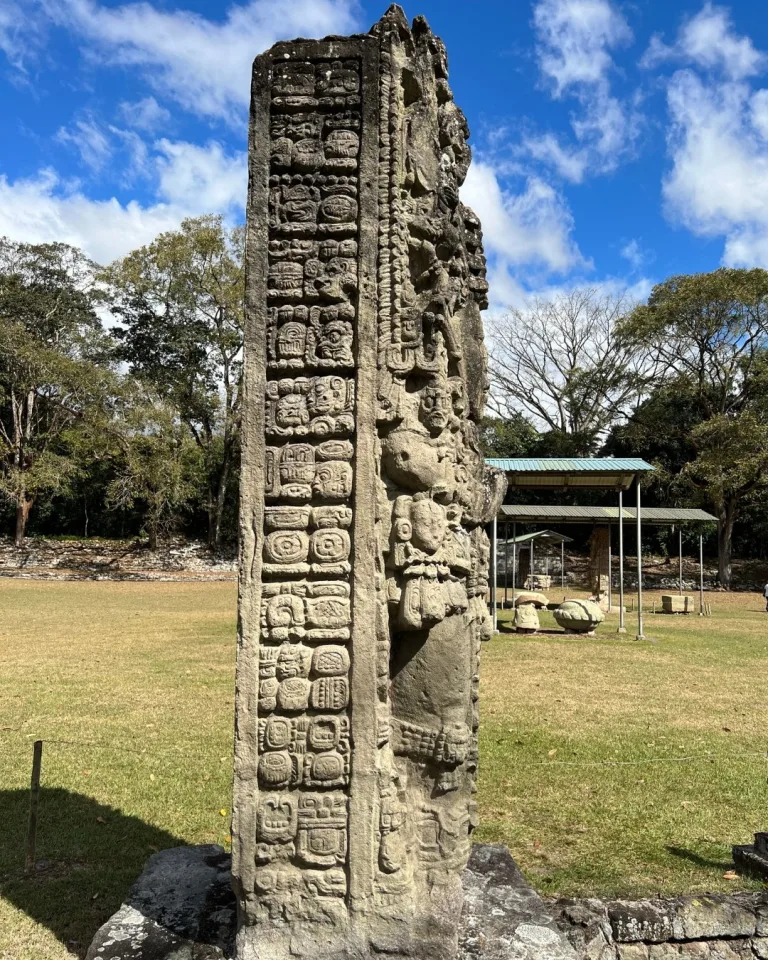
- Stelae Are Not Just Art: These upright sculptures are dynastic broadcasts. Every posture, glyph, and costume tells a story about kingship, time cycles, and sacred authority.
- Everything Leads to Temple 16: The city’s axis funnels attention to this temple, whose layered construction hides earlier shrines. Its tunnel isn’t just archaeology. It’s theology in architecture.
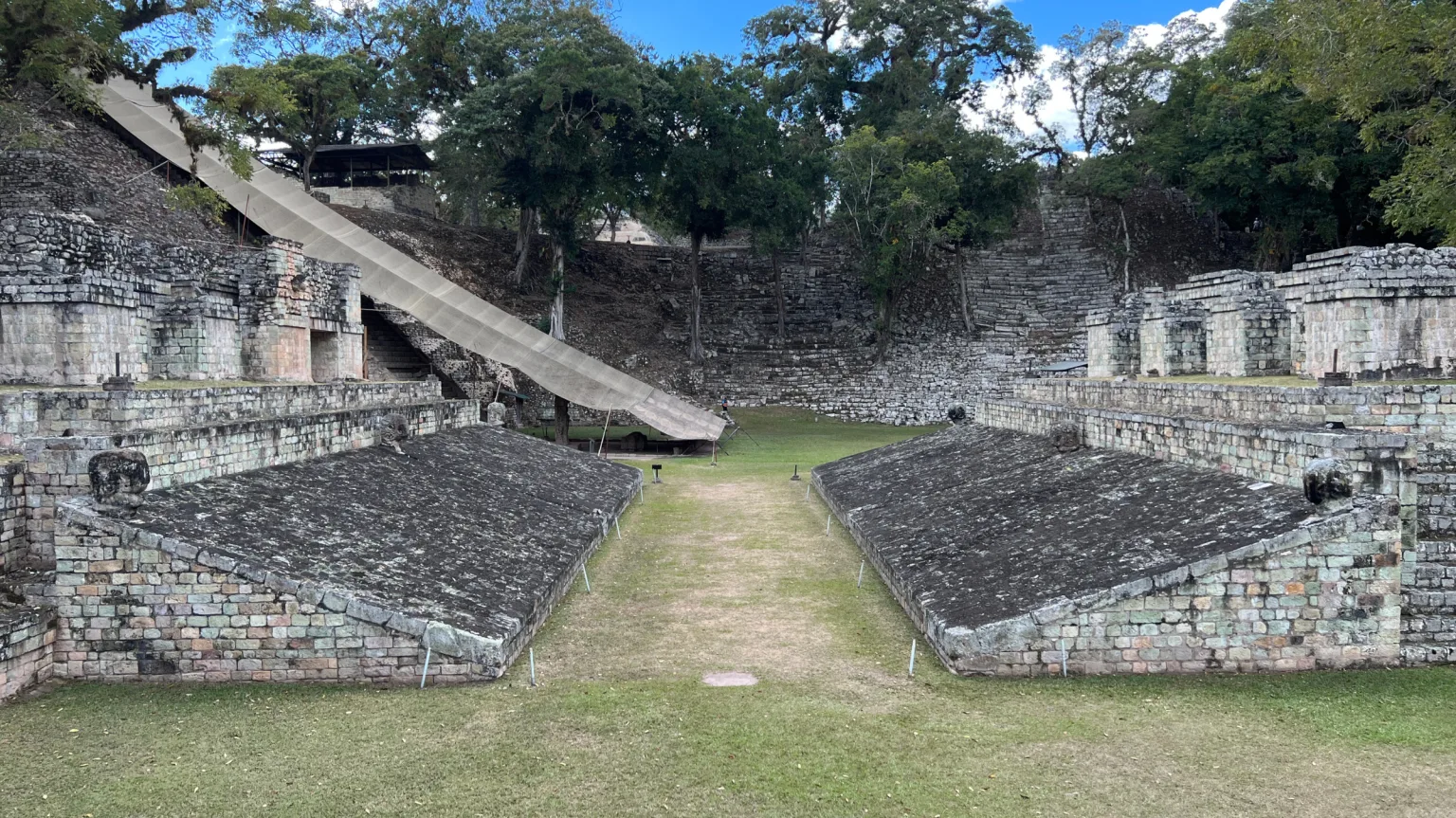
- The Ballcourt Isn’t for Sport: Its scale and iconography suggest ceremony, not gameplay. The macaw heads may link to Copán’s patron symbols and sky-related deities.
- The Stairway Reads Like a Scroll: The Hieroglyphic Stairway is a public document in stone, meant to be seen, remembered, and ritually climbed. Even broken, its message remains.
- Jungle Sound Is Part of the Experience: The natural setting hasn’t changed much. Birds, insects, and rustling leaves would have accompanied rituals here, don’t tune them out.
Key Structures of Copán
- Temple 16: The central axis of Copán’s sacred core, built atop earlier versions including the fully preserved Rosalila Temple. Tunnels allow visitors to experience its multi-phase evolution.
- Hieroglyphic Stairway: A 63-step text carved in stone, containing over 2,200 glyphs recounting the royal lineage. Both a dynastic monument and a ritual path to the heavens.
- Ballcourt: One of the finest in the Maya world, featuring macaw-head markers. Its design emphasizes ceremony over sport, reflecting Copán’s cosmological and political symbolism.
- Stelae A, B, C, D: Portrait stelae of King 18-Rabbit (Waxaklajuun Ub’aah K’awiil), placed in cosmic alignment throughout the plaza. These served as public declarations of divine authority.
- Structure 10L-11: A royal court and ritual platform, possibly used for dynastic meetings or elite gatherings. Noted for its sculpted façades and central location.
- Temple 22: A symbolically charged building with a monster-mouth portal and celestial iconography. Interpreted as a ritual gateway between the earthly realm and the divine.
- Temple 11: Constructed late in Copán’s history, this platform may represent dynastic closure or afterlife transition themes. Aligned with funerary and ancestral motifs.
- Residential Courtyards: Elite domestic spaces arranged in terraces, complete with water channels and shrines. These zones reveal how Copán’s rulers lived alongside the sacred core.
- Copán Sculpture Museum: A must-see extension of the site, housing original artifacts and a life-size reconstruction of the Rosalila Temple in its full painted glory.
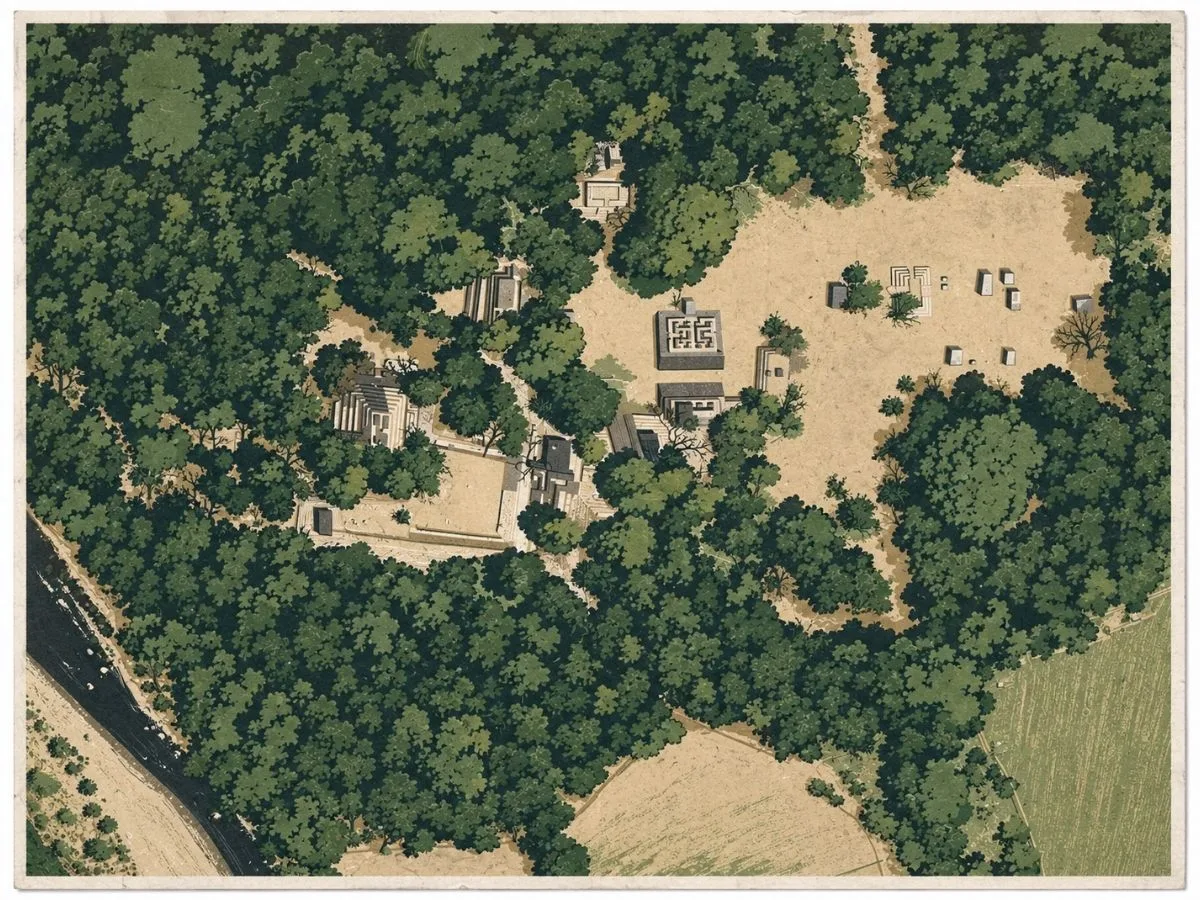
History and Legends
The ruins of Copán mark the heart of one of the most refined and artistic Maya kingdoms. Situated in the far southeastern edge of the Maya world, Copán flourished for nearly 400 years as a powerful regional capital, blending cosmopolitan influence with local innovation. Its dynastic foundation is traced to 426 CE, when K’inich Yax K’uk’ Mo’ arrived, possibly from the Tikal region, and established a royal line that would endure for over 16 rulers. Early stelae and iconography show strong ties to Teotihuacan, with imagery and rituals reflecting broader Mesoamerican trends in warfare and kingship.
Copán’s golden age unfolded between the 6th and 8th centuries, with successive rulers investing heavily in monumental art, glyphic texts, and ceremonial architecture. The city’s strategic location along southern trade routes made it a nexus between the highland and lowland Maya worlds, as well as a cultural corridor toward Honduras and El Salvador. Elaborate ballcourts, temples, and plazas showcased both local craftsmanship and a deep engagement with pan-Maya ideology.
The 13th ruler, 18 Rabbit (Uaxaclajuun Ub’aah K’awiil), ushered in Copán’s artistic zenith. He commissioned some of the most intricate stelae in the Maya world, including towering monuments that combined glyphic narrative with expressive portraiture. But in 738 CE, he was dramatically captured and executed by the ruler of Quiriguá, a much smaller vassal city that unexpectedly turned against its overlord. This event marked a profound shift in regional power, cutting off Copán’s access to key river trade routes and beginning a period of decline.
Despite this setback, later rulers continued building projects and ritual events to legitimize their rule. The final known king, Yax Pasaj Chan Yopaat, constructed major temples and commemorative structures, including Temple 11, which was designed as a cosmic portal between mythic origins and dynastic continuity. At the foot of the Acropolis, the massive Hieroglyphic Stairway, with over 2,000 glyphs, recorded centuries of Copán’s royal history. The site’s deep legacy was not just political but cosmological, embedding the city within sacred narratives of time, space, and divine ancestry.
Legends also lie buried beneath the surface. Within the Acropolis, archaeologists discovered earlier temples entombed intact within newer layers, most famously the Rosalila Temple, a vivid, stuccoed sanctuary sealed with extraordinary care. Unlike most Maya temples, which were ritually demolished, Rosalila was preserved whole, a symbolic relic of the sacred past. Today, visitors can view a full-scale replica in the museum and explore limited-access tunnels showing how Copán’s sacred core was built layer upon layer, each ruler constructing atop the last like offerings to time itself.
The city was ultimately abandoned in the 9th century CE during the broader Maya collapse, but its jungle-shrouded ruins endured. Rediscovered in the 16th century and excavated more thoroughly in the 19th, Copán continues to captivate with its depth of detail and layered constructions, a city of faces and phases.
Experiences Around Copán
The ruins are only part of the story. Around Copán, forested hills, coffee farms, and warm river valleys give western Honduras plenty to explore beyond the archaeological park.
At Macaw Mountain, walk shaded trails among rescued scarlet macaws, toucans, and parrots while learning about the conservation work that has returned macaws to the Copán Valley.
Ride horseback through Finca El Cisne while learning how coffee, cacao, and cardamom are grown, or spend an afternoon soaking in the hot and cold spring pools at Luna Jaguar.

How to Get There & Where to Go Next
How to Visit Copán
Step-by-step access to the site
- Start in Guatemala City – Fly into La Aurora International Airport (GUA).
- Shuttle to Antigua – 1.5 hrs by van or private taxi.
- Take shared shuttle to Copán Ruinas – 6–7 hrs via the El Florido border, dropped off in the village center.
- Walk to the ruins – 15 min on foot from Copán Ruinas along a marked path.
Tip: No guide or tour is required. These shuttles are public-facing transport used by independent travelers.
Nearby Ruins You Can Visit
These Maya cities share Copán’s dynastic ambition, sacred architecture, and obsession with legacy. Each carved their own path through time.

Tikal – Towering pyramids and jungle causeways reflect a massive city once locked in power games with its neighbors.
Palenque – Royal tombs and poetic inscriptions reveal the ritual depth of a rival Maya center.

Yaxchilán – River-bound and remote, this city’s stelae and lintels showcase elite portraiture and cosmic warfare.

Download Field Guide
Español
English
Traveler Tips
- Arrive right when the site opens for best light and quiet surroundings.
- Visit the onsite museum to view reconstructed Rosalila Temple and carved replicas.
- Bring bug spray, the surrounding jungle is alive with life, especially in wet season.
- Wear good shoes, trails include uneven stones and grassy sections.
- Don’t rush, the stelae deserve time for close viewing and admiration.
Elsewhere in the Americas…
While Copán flourished in the Classic Maya world, other major centers across the Americas were building their own systems of power, ceremony, and urban identity.

Across the northern Andes, Wari planners laid out Viracochapampa with rigid compounds, long corridors, and plazas.

In Peru’s northern highlands, Marcahuamachuco rose with massive stone galleries, hilltop walls, and enclosed plazas.

In southeastern Utah, early Puebloan settlement at Edge of the Cedars grew around pithouses, storage rooms, and ceremonial space.
Insider Explorer Advice
Copán Ruinas may be busier than decades past, but it remains delightfully walkable and intimate. Staying in the village means you can simply walk to the ruins, with no need for taxis or tours. Early morning is alive with jungle sounds and birdsong. One of Copán’s most magical features is Temple 16’s tunnel, where you literally step inside history. Each layer reveals a previous version of the temple, like peeling back time itself. It’s an unforgettable, time-machine-like moment that sets Copán apart from every other Maya site.
Summary: Copán is a sacred Maya archive carved in limestone, best explored on foot and with unhurried curiosity. Its tunnels, stelae, and stories make time tangible.