
Ollantaytambo
PERU / CUSCO / INCA
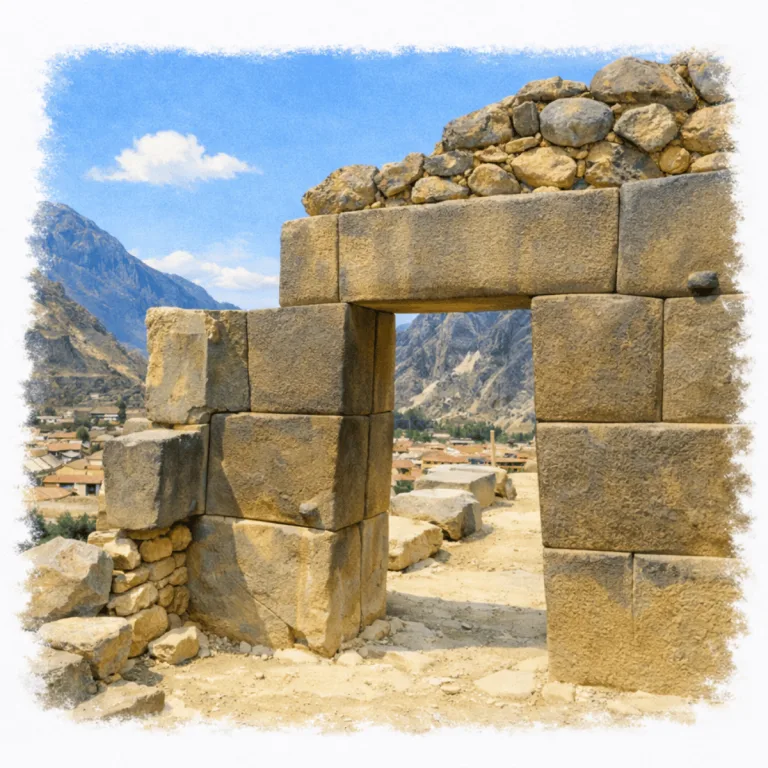
Rising in steep tiers above the valley floor, Ollantaytambo centers on monumental temple construction, where finely cut stone terraces and unfinished blocks mark one of the largest building efforts of the Inca world.
| Name | Ollantaytambo |
| Civilization | Inca |
| Location | Sacred Valley of Peru, Urubamba Province, Cusco Region, Peru |
| Elevation | 2,860 m (9,383 ft |
| Years Active | c. 1400 – 1537 CE |
| Primary Resources | Pink rhyolite, fieldstone, water, maize, agricultural goods |
| Site Type | Royal estate, ceremonial center, and fortified administrative complex |
| Key Highlights | Temple of the Sun, Agricultural Terraces, Princess Baths, Old Town Grid |
| INT Airport | Alejandro Velasco Astete International Airport (CUZ), Cusco |
| Entry Fee | S/70 Boleto Turístico Parcial III; S/130 Boleto Turístico Integral |
| Best Time to Visit | Early morning or late afternoon |
| Field Visit | Visited & photographed by Lost Ruins of the Americas |
Unique Features of the Ollantaytambo Archaeological Site
- Imperial Construction Interrupted: The massive unfinished stones reveal a rare moment in Inca history. Few sites so clearly display the sudden halt of monumental ambition at the time of invasion.
- Sacred and Strategic: Ollantaytambo uniquely served as both royal estate and military fortress. Its design balances spiritual symbolism with tactical precision.
- Living Hydraulics: Water still flows through the site’s original canals and town grid, demonstrating the durability of Inca engineering.
- Pinkuyluna in Dialogue: The facing hill contains granaries and lookout posts aligned with the main site, forming a cross-valley system that blends infrastructure with landscape.
- Gateway to the Empire: This was a key junction on the road to Machu Picchu and the Amazon. Its walls and terraces controlled the flow of goods, people, and power.
Location & Access
- Nearest City: Cusco
- Directions: Combis from Cusco depart frequently from Calle Pavitos and reach Ollantaytambo in approximately 2 hours. You can also take a stop in Urubamba and explore en route.
- Opening Hours: 7:00 AM – 6:00 PM
- Entry Fees: The Boleto Turístico Parcial III costs S/70, remains valid for two days, and includes Ollantaytambo, Pisac, Chinchero, and Moray. The ten-day Boleto Turístico Integral costs S/130 and covers all 16 included attractions.
- Facilities: On-site bathrooms, interpretive signage, ticket office, restaurants and lodging in town
- Accessibility: Steep stone terraces and uneven stairs; moderate to strenuous physical access
- Nearby Sites: Pisac, Moray, Chinchero, Machu Picchu, Tipón
- Pro Tip: Stay overnight in town to explore both the ruins and the remarkably preserved Inca street grid,
Highlights to Help You Understand Your Visit
This isn’t just a ruin. It is a command, a memory, and a map. These clues help you read what still echoes in the stone.
- Dual Purpose Terracing: These aren’t just for crops. The steep design created both agricultural output and visual intimidation from below.
- Monoliths in Motion: Look for the unfinished stones mid-route. They tell the story of interrupted ambition when the empire’s plans were halted by war.
- Living Urbanism: The town below the ruins still follows the Inca grid, with functioning canals and homes built around carved doorways. The layout is the legacy.
- Granaries in the Sky: The qollqas on Pinkuylluna Hill aren’t ruins. They’re part of the system. Their placement reveals how the Inca thought about airflow, control, and surveillance.
- Cosmic Staircase: The climb upward mirrors spiritual ascent. Each platform draws the visitor closer to the Temple of the Sun and the Inca worldview of tiers.
Key Structures of the Ollantaytambo Ruins
- Temple of the Sun: Six massive rose-colored granite monoliths aligned on a high terrace. This is one of the most impressive Inca constructions, left unfinished by the Spanish invasion.
- Princess Baths: Finely carved ceremonial fountains and channels, likely used for elite ritual purification tied to solar and water worship.
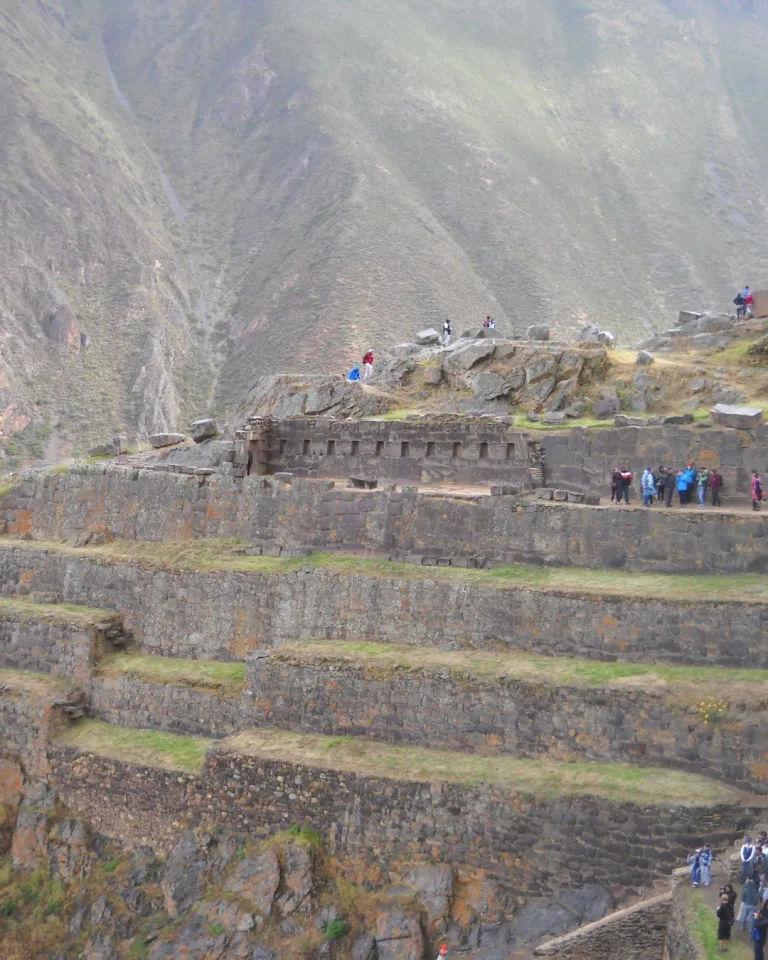
- Temple Hill Terraces: Monumental agricultural and defensive terraces climbing the main slope. These were both functional and symbolic of imperial control.
- Qollqas (Granaries): Storage buildings perched high across the valley on Pinkuylluna Hill. They were elevated to maximize airflow and food preservation.
- Wall of the Ten Niches: A ceremonial wall lined with trapezoidal niches. These were possibly used to hold sacred objects or mummified ancestors.
- Pinkuylluna Hill Complex: Granaries, lookout posts, and trails that offer panoramic views and insights into the site’s storage and defense planning.
- Old Town Street Grid: The living Inca town with original stone canals, alleys, and trapezoidal doors. It is still inhabited today.
- Inca Bridge Sector: Original stonework and river crossing points that once connected Ollantaytambo to the greater imperial road system.
- Rock Quarry Trail: A visible path leading toward the source of the massive Sun Temple stones. It reveals Inca transport engineering.
- Chullpas and Rock Shrines: Isolated towers and carved altars in surrounding hills. These are reminders of older ceremonial uses predating Inca control.
History and Legends
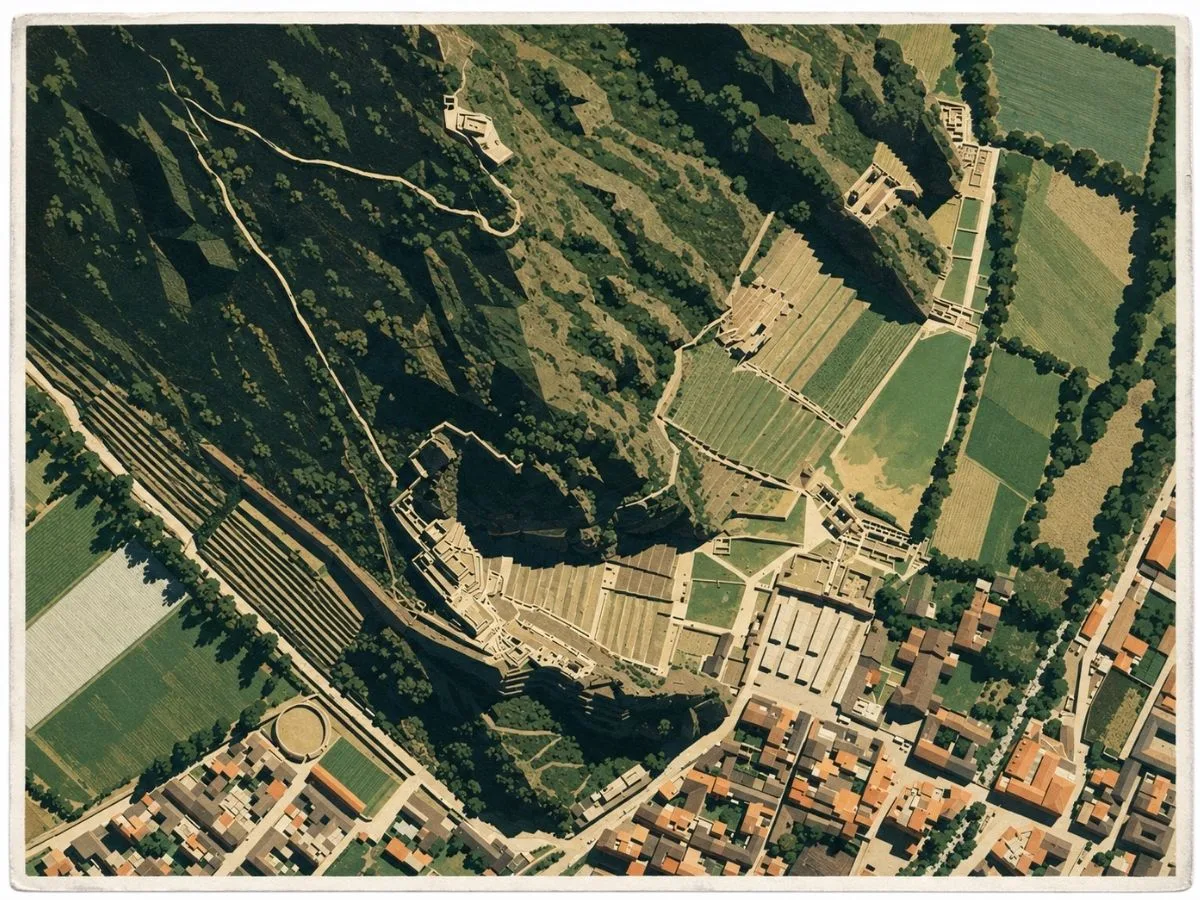
Ollantaytambo was transformed during the great Inca expansion of the fifteenth century. Colonial chroniclers disagreed over exactly which ruler began the work, but Pedro Sarmiento de Gamboa attributed the estate to Pachacuti, and the monumental rebuilding of the valley is usually associated with his reign. The setting explains much of its importance. The town sits where the Patakancha Valley meets the Urubamba, controlling fertile land and routes that continued toward the eastern forests. Instead of building only a palace or fortress, the Incas reorganized the surrounding landscape with terraces, storehouses, roads, water channels, elite residences, and ceremonial architecture. Much of that plan is still visible because the modern town continues to occupy the Inca street grid below the mountains.
The most ambitious construction rose above the settlement on what is now called Temple Hill. Broad terraces climb toward a ceremonial precinct where Inca masons worked with enormous blocks of rose-colored stone. The best-known surviving section, the Wall of the Six Monoliths, consists of six massive upright slabs fitted closely together with narrow stone inserts between them. These stones came from the Kachiqhata quarries across the Urubamba River. Workers cut and shaped blocks on the opposite mountainside, dragged them along prepared quarry roads, brought them down toward the river, and hauled them up the steep approach to the temple area. Abandoned blocks still mark parts of that route. On Temple Hill, unfinished walls and stones left in different stages of preparation preserve something unusual: not just the finished work of Inca builders, but evidence of how they were still constructing the complex when major work ceased.
Less than a century after Pachacuti’s reign, Ollantaytambo became a battlefield. In 1536, Manco Inca turned the site into a base for resistance against Spanish rule after breaking with the conquistadors in Cusco. When Hernando Pizarro attacked in early 1537, Inca forces defended the approaches to the settlement and used the terrain against Spanish cavalry. Contemporary accounts describe water being released across low ground in front of the attackers, making the field difficult for horses while defenders fought from protected positions. The Spanish force was driven back. The Battle of Ollantaytambo became one of the clearest Inca victories of the early conquest, although Manco did not remain there permanently. As Spanish pressure increased around Cusco, he eventually withdrew farther into the mountains, and resistance continued from Vilcabamba.
Ollantaytambo did not become an empty ruin after the conquest. Houses were altered, colonial buildings appeared, and new generations continued using streets and water channels laid out under Inca rule. That continuity is one of the site’s most unusual features. Narrow lanes still run between large Inca foundation walls, and water still flows beside occupied houses through stone channels built into the old plan. The ceremonial terraces above the town may belong to an imperial estate that lost its original political role, but the settlement below remained part of a living Andean community.
The town also became attached to one of the best-known stories in Quechua literature. In the drama Ollantay, a warrior of that name falls in love with Cusi Coyllur, the daughter of Pachacuti. When the ruler refuses their marriage, Ollantay rebels and establishes himself at Ollantaytambo before the story eventually ends in reconciliation under Tupac Yupanqui. The surviving written versions are colonial, and scholars continue to debate how much older oral tradition lies behind them, so the drama cannot be treated as a factual account of Pachacuti’s court. Its association with Ollantaytambo is nevertheless deeply rooted in later Andean tradition. Here that story sits beside a history already dramatic enough on its own: royal construction, stones hauled across a valley, an unfinished temple, an Inca victory over Spanish forces, and a town that continued living inside its ancient plan.
Experiences Around Ollantaytambo
The ruins are only part of the story. Terraced mountains rise sharply above the Urubamba River, with cultivated valleys climbing toward high Quechua communities.
Walk the old streets of Qosqo Ayllu, Ollantaytambo’s old town, following stone-lined water channels that still run beside narrow lanes and past Inca-era houses.
Travel up the Patacancha Valley to learn spinning, natural dyeing, and backstrap weaving directly from local women artisans.
How to Get There & Where to Go Next
How to Visit Ollantaytambo
Step-by-step access to the site
- Start in Cusco: go to Calle Pavitos for shared combis (5–10 min walk from center)
- Combi to Ollantaytambo: direct ride through the Sacred Valley (2 hrs)
- Arrive at town plaza : final drop-off point in Ollantaytambo center
- Walk to ruins: 5–10 minute uphill walk from plaza to site entrance
Tip: Combis leave as they fill. Go early for best light and fewer crowds.
Nearby Ruins You Can Visit
Inca roads and royal estates once connected the Sacred Valley. These sites echo Ollantaytambo’s blend of imperial power, ceremonial function, and stone-carved precision.

Moray – This mysterious site features concentric circular terraces believed to be an Inca agricultural laboratory for testing microclimates.

Machu Picchu – A royal Inca sanctuary built with the same elite masonry and cosmological precision.

Pisac – Sweeping terraces and mountaintop tombs mirror Ollantaytambo’s sacred landscape planning.
Download Field Guide
Español
English
Traveler Tips
- Wear hiking shoes. The site has many steep terraces and steps.
- Buy the Boleto Turístico in advance if visiting multiple Sacred Valley sites.
- Sun protection is essential, little shade at the top of the ruins.
- Explore the town in the evening, many ruins have dramatic lighting and fewer crowds after 4 PM.
- Local markets near the entrance offer food and artisanal crafts.
Elsewhere in the Americas…
While Ollantaytambo was active, civilizations across Mexico were building their own centers of power, artistry, and defense:

In the central USA, Mississippian cultures built major centers like Cahokia, shaping trade and ceremonial networks.


Insider Explorer Advice
Even though it is part of the Sacred Valley, Ollantaytambo is often treated as a stopover on the way to Machu Picchu, but it’s a destination in its own right. The town still follows the Inca grid, with running aqueducts and carved doorways embedded in modern homes. You can reach it directly from Cusco via colectivo, or break the journey in Urubamba for a layered Sacred Valley route. Stay overnight to experience the site in the early morning or late afternoon light, when the terraces cast long shadows and the crowds thin out. The view across the valley from the Temple Hill is unforgettable. It is a place where time feels suspended.
Summary: Ollantaytambo is where the living Inca world meets the stone memory of empire. It is a perfect pause in the Sacred Valley’s timeless rhythm.