
Holly Group
USA / UTAH / ANCESTRAL PUEBLOAN
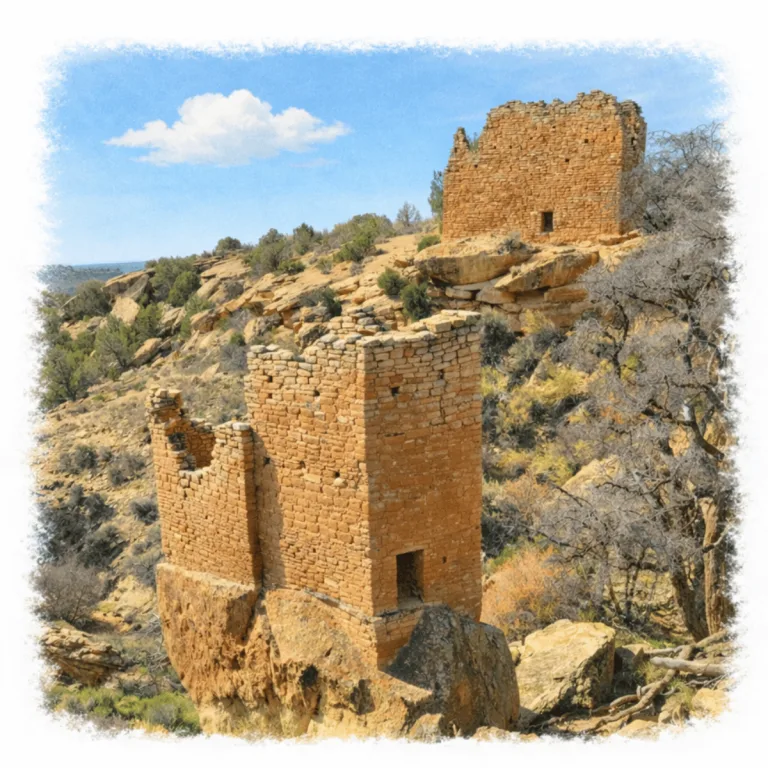
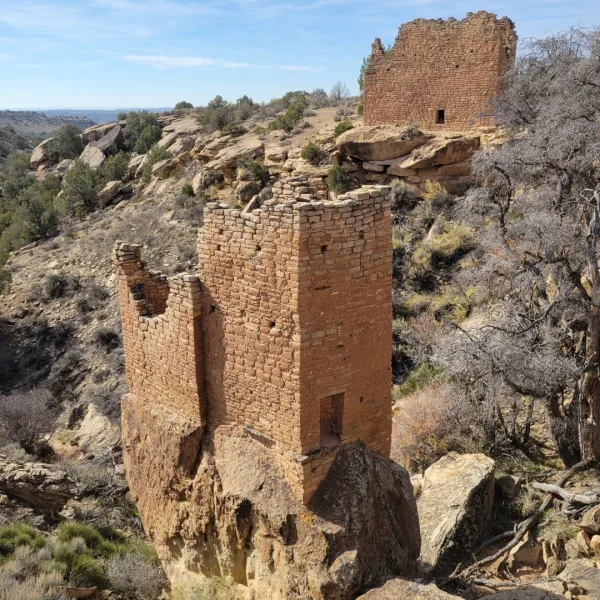
At the head of Keeley Canyon, Holly Group centers on Holly Tower rising from a sandstone boulder, where pecked handholds below the doorway mark the climb into the tower.
| Name | Holly Group |
| Civilization | Ancestral Puebloans |
| Location | Hovenweep National Monument, Utah |
| Elevation: | 5,354 feet (1,632 m) |
| Years Active | c. 1200 to 1300 CE |
| Primary Resources | Maize, beans, squash, canyon water sources |
| Site Type | Tower cluster and small village |
| Key Highlights | Boulder top tower, compact layout, remote access, canyon views |
| Entry Fee | Included with Hovenweep access |
| Best Time to Visit | Spring and fall |
| Field Visit | Visited & photographed by Lost Ruins of the Americas |
Unique Features of the Holly Group
Archaeological Site
- Holly Tower on a Boulder: A tower built directly on top of a massive sandstone boulder below the canyon rim.
- Solstice-Linked Rock Art: A nearby petroglyph panel is associated with a summer solstice light effect.
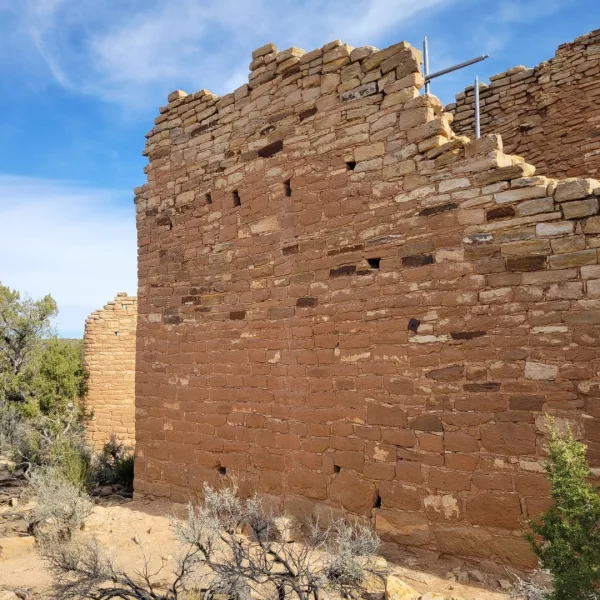
- Holly House: A larger masonry structure that shows the site was more than a single tower.
- Keeley Canyon Setting: Structures clustered around the canyon head in a compact rim-side layout.
- Part of a Wider Network: Closely tied to nearby outlying groups such as Horseshoe and Hackberry.
Location & Access
- Nearest Town: Blanding, Utah
- Trailhead: Access road turnout or Hovenweep trail connection
- Directions: Reach via rough access road requiring high clearance or hike in from Hovenweep
- Hike Length: About thirty minutes from parking or longer from Hovenweep
- Opening Hours: Day use only
- Entry Fees: Included with Hovenweep National Monument access
- Facilities: No services at the site
- Accessibility: Not wheelchair accessible
Highlights to Help Understand Your Visit
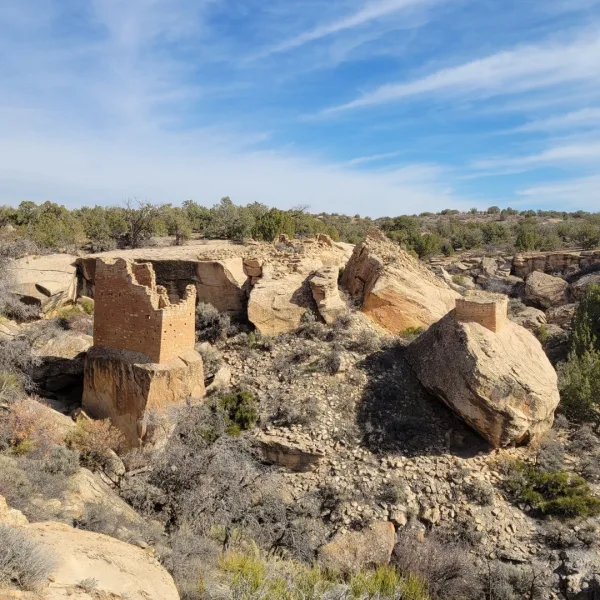
Holly Group is small, but it makes more sense when read as a carefully placed canyon settlement rather than a single tower on the edge.
- Read the Rim: The ruins follow the shape of the canyon edge, boulders, and broken ground, showing how closely the site was fitted to the land.
- The Tower Is Only the Start: Holly Tower draws the eye first, but the surrounding walls and buildings show that this was a small community, not a single isolated structure.
- The Boulder Was Chosen: Holly Tower matters partly because of where it stands. The massive rock beneath it gives the structure much of its force.
- Look Across the Canyon: Several buildings sit where they could command broad views, suggesting that placement and visibility mattered here.
- A Settlement With Meaning: The nearby solstice-linked petroglyph panel suggests that Holly was shaped by more than practical concerns alone.
Key Structures of the Holly Group Ruins
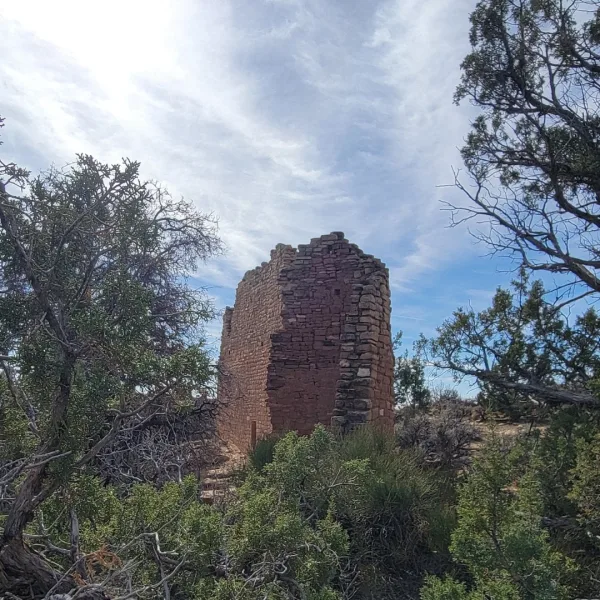
- Holly Tower: The most striking structure in the group, this tower rises from a massive boulder just below the canyon rim. Its dramatic placement and surviving stonework make it the visual center of Holly Group.
- Holly House: This larger masonry building helps show that the site was more than a single tower on the edge. Its surviving walls point to a small but organized settlement around the canyon head.
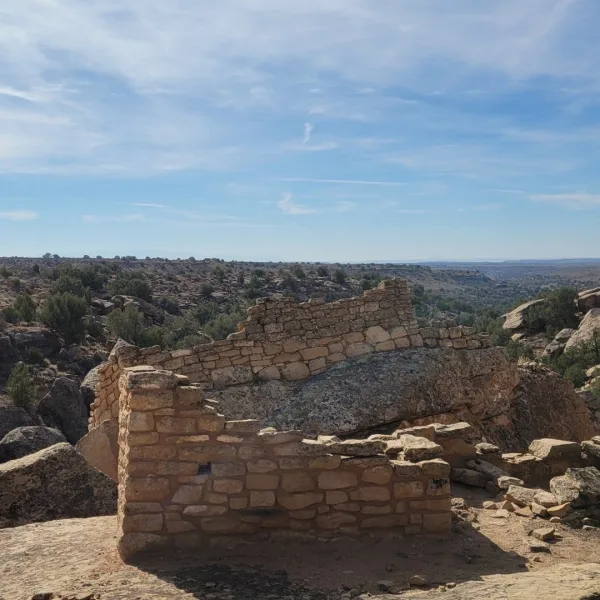
- Room Blocks: Low wall lines and foundation traces mark the remains of smaller rooms spread across the site. These spaces help reveal how daily life unfolded beside the more prominent structures.
- Wall Alignments: Surviving stone alignments show how the buildings were fitted to uneven ground, boulders, and the canyon rim. Even in fragmentary form, they help give the site its original shape back.
- Canyon Edge Structures: Several structures were built close to the rim, where they take advantage of elevation and broad views across Keeley Canyon. Their placement still gives the site much of its character.
- Petroglyph Area: Holly Group is also known for nearby rock art associated with seasonal light. This feature adds another dimension to a site already shaped by careful placement in the landscape.
History and Legends
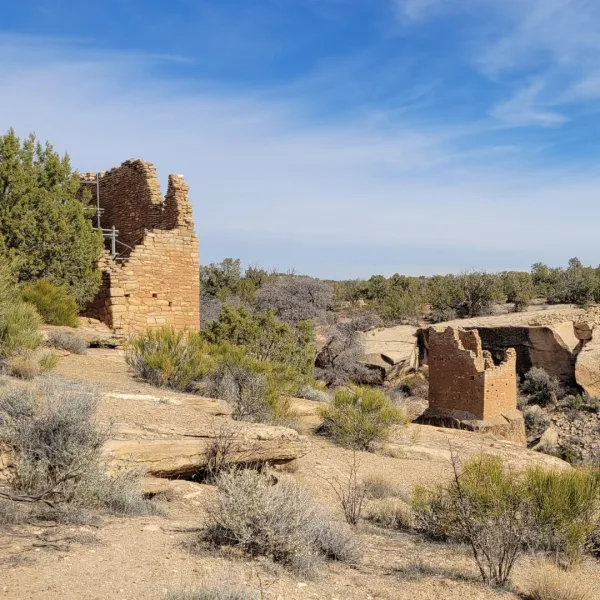
Holly Group is one of the smaller outlying communities at Hovenweep, built by Ancestral Puebloans near the head of Keeley Canyon during the late thirteenth century. Though compact, the site preserves one of the most memorable architectural settings in the monument, with masonry structures fitted closely to the canyon rim, natural boulders, and uneven ground. Like other Hovenweep settlements, it was part of a wider network of small communities that depended on farming, local water sources, and careful use of the canyon landscape.
The site is best known for Holly Tower, a small tower built on top of a massive sandstone boulder just below the rim. Its placement gives the group its defining image and shows how builders used the natural rock itself as part of the design. Nearby, Holly House and other room blocks make it clear that this was not just a single dramatic structure, but a small settlement with multiple buildings arranged around the canyon head. Low walls and surviving alignments still suggest how the community was fitted into tight, irregular space along the edge.
Holly shares this canyon-focused pattern with nearby groups such as Horseshoe and Hackberry, where towers and room blocks were also built into elevated positions above the wash. At Holly, that placement likely served practical needs such as visibility and protection, but it also gave the site a strong presence in the landscape. Even now, the architecture feels tied to the shape of the canyon rather than imposed on it.
Experiences Around Holly Group
Sagebrush and juniper spread across the high desert, with Sleeping Ute Mountain rising beyond the canyon country.
Catch a summer Native American dance performance at the Cortez Cultural Center, where dancers from across the Four Corners perform in the outdoor plaza.
The Dinosaur Museum in Blanding shifts much farther back in time, with fossilized skin, eggs, footprints, skeletons, and life-size dinosaur models.
The group is also associated with a nearby petroglyph panel linked to the summer solstice, adding a ceremonial dimension to the site. This detail helps place Holly within the broader Hovenweep world, where architecture, stone, and seasonal observation could all shape the meaning of a place.
Like other Hovenweep communities, Holly Group was abandoned toward the end of the thirteenth century as people left the region. What remains today is quiet and fragmentary, but the tower on its boulder, the low masonry walls, and the canyon-edge setting still preserve the character of a small settlement built with precision and close attention to the land.
How to Get There & Where to Go Next
How to Visit Holly Group
– Step-by-step access to the site –
- • From Las Vegas Drive to Cortez, Colorado via I-15 and US-160 (about 7.5 to 8 hours).
• Toward Hovenweep From Cortez, follow US-491 north, then County Road CC to County Road 10 / Hovenweep Road toward the monument area.
• Access Road Holly Group is reached by an unimproved BLM road off County Road 10 / Hovenweep Road, about 4 miles north of the visitor center and campground.
• On Site From the dirt parking area, the walk to the ruins is short, about 0.44 mile roundtrip.
Tips: Stop at the visitor center first for current road conditions. High-clearance vehicles are strongly recommended for the Holly access road.
Nearby Ruins You Can Visit
Escalante Pueblo is a compact village site. These other sites help place it within the broader Ancestral Puebloan world of this corner of Colorado.

Hovenweep – Towering sandstone structures perched on canyon rims reveal the same precision and planning seen at Chimney Rock.

Mesa Verde – Towering cliff dwellings and painted kivas that illustrate the architectural evolution and enduring spirituality of Ancestral Puebloan life.

Lowry Pueblo – A compact village with a Great Kiva, showing how community and ceremony blended in Chaco’s northern sphere.
Traveler Tips
- Use a high clearance vehicle for the access road or plan to hike in.
- Bring water and sun protection.
- Combine with nearby sites along the same route.
- Watch footing along the canyon edge.
- Respect the remote nature of the site.
Elsewhere in the Americas…
As the Holly Unit flourished at Hovenweep, major sites in Mexico and South America also marked powerful centers of ritual, prestige, and political control:


In northern Peru, Chachapoya power rose at Kuélap in stone walls, circular buildings, and commanding mountain views.

Insider Explorer Advice
The Holly Group is best approached as part of a broader exploration of the surrounding sites. Seeing the tower from across the canyon before descending helps set your orientation and builds anticipation for the approach. The short hike brings you into a compact space where the tower and walls feel close and immediate. Move slowly, take in the quiet, and leave nothing but footprints in this secluded corner of the monument.
Summary: The Holly Group offers a compact and remote tower site where a single boulder top structure anchors a quiet and powerful canyon landscape.