
Rockwell Mound
USA / ILLINOIS / HOPEWELL
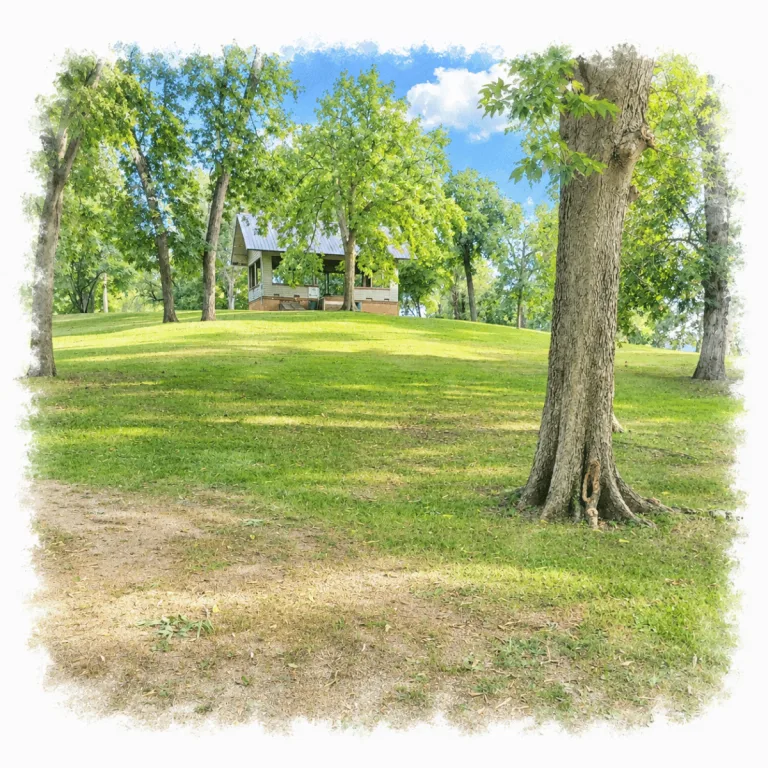
Near the meeting of the Illinois and Spoon rivers, Rockwell Mound spreads across nearly two acres, preserving the largest known Havana Hopewell earthwork in the Illinois River Valley.
| Name | Rockwell Mound |
| Civilization | Havana Hopewell tradition, Middle Woodland |
| Location | Havana, Mason County, Illinois, United States |
| Elevation | Approximately 470 to 484 feet (143 to 148 meters) |
| Years Active | Middle Woodland period, around 150 CE |
| Primary Resources | Fish, deer, waterfowl, wild plants, and cultivated native crops |
| Site Type | Monumental burial mound and ceremonial center |
| Key Highlights | Two-acre mound, summit bandstand, Lincoln and Douglas speech site |
| INT Airport | General Wayne A. Downing Peoria International Airport (PIA) |
| Entry Fee | Free |
| Best Time to Visit | Spring through fall during daylight hours |
| Field Visit | Visited & photographed by Lost Ruins of the Americas |
Unique Features of Rockwell Mound Archaeological Site
- Two-Acre Footprint: Nearly two acres wide but only about 14 feet high.
- Largest Havana Hopewell Mound: The largest known mound of the Western Hopewell tradition.
- Basket-Load Construction: An estimated 1.76 million soil loads formed the earthwork.
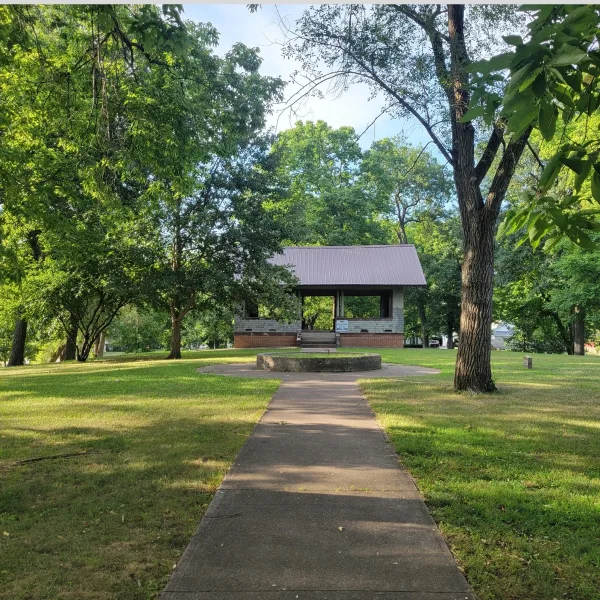
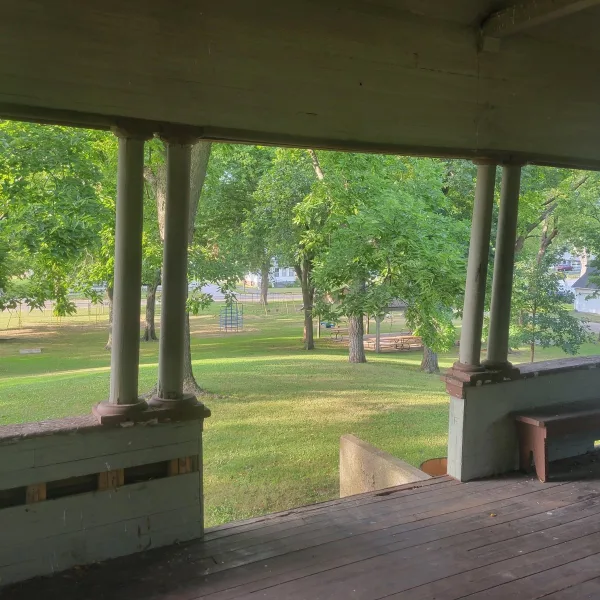
- Summit Bandstand: A large civic structure now crowns the ancient mound.
- Lincoln-Douglas Campaign Site: Douglas spoke here in 1858, followed by Lincoln the next day.
Location & Access
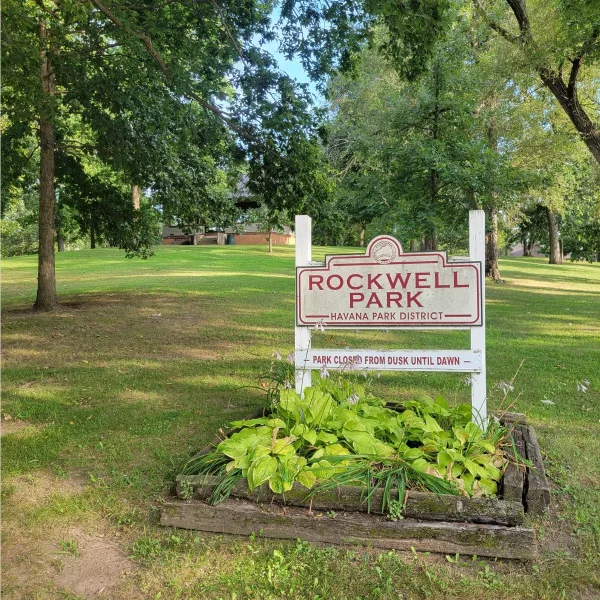
- Nearest Town: Havana, Illinois. The mound stands inside Rockwell Park near the northern edge of downtown.
- Directions: From Main Street, follow North Orange Street to its intersection with West Franklin Street.
- Official Site Authority: Havana Park District.
- Opening Hours: Open-air city park best visited during daylight hours.
- Entry Fees: Free admission.
- Facilities: Street parking, interpretive markers, summit bandstand, picnic areas, playground, seasonal pool nearby, and a riverfront campground across the street.
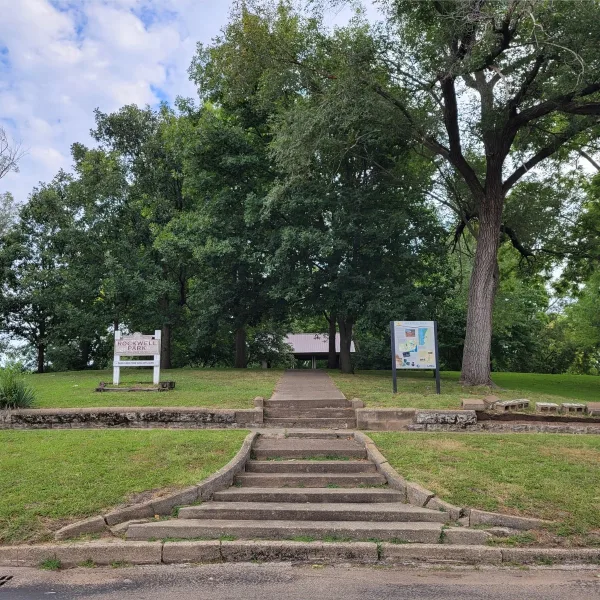
- Accessibility: The mound and markers can be viewed from street level, but reaching the summit requires climbing steps.
- Pro Tip: Walk around the mound before climbing. Its broad two-acre footprint is clearer from ground level than from the summit.
Highlights to Help Understand Your Visit
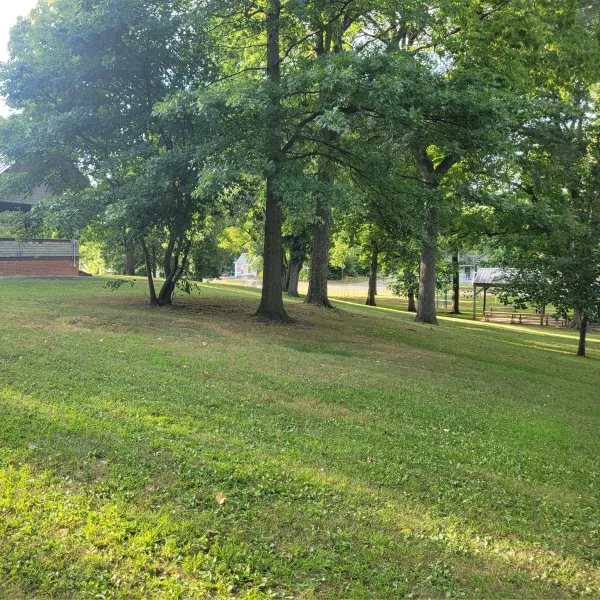
Rockwell appears at first to be a city park hill, but its low height conceals the scale and labor of a monumental earthwork.
- Read the Footprint First: Walk the base to see how a rise of only 14 feet spreads across nearly two acres.
- Separate Mound from Park: The trees, steps, and bandstand are later additions resting upon the ancient earthwork.
- Picture Repeated Construction: Distinct basket loads exposed during archaeological testing reveal how carried soil accumulated through deliberate stages.
- Place It in the River Landscape: Rockwell stands opposite the Spoon River mouth within a corridor of mounds and habitation areas along the Illinois River.
- Recognize What Has Been Lost: Most neighboring mounds were destroyed, buried, or heavily altered, leaving Rockwell as the clearest surviving monument of the wider complex.
Key Structures of Rockwell Mound
- Rockwell Mound: A nearly two-acre earthwork rising about 14 feet, recognized as the largest known Hopewell mound in the Illinois River Valley.
- Basket-Loaded Fill: A 1986 test trench exposed separate deposits of carried soil, preserving direct evidence of the mound’s labor-intensive construction.
- Buried Ground Surface: Ground-penetrating radar identified the original land surface beneath the mound and a possible internal construction stage.
History and Legends
Around CE 150, Middle Woodland communities raised Rockwell Mound on the sandy terrace above the Illinois River, close to the mouth of the Spoon River. The position joined two waterways that carried people through the center of the Illinois Valley and linked the Havana area with routes stretching across the midcontinent. Rockwell belonged to a much larger ceremonial landscape. Mounds once stood north and south of the present city, while nearby habitation areas occupied ground where river foods, forests, and transportation routes could all be reached easily. Archaeologists use the name Havana Hopewell for the interconnected communities that built these earthworks.
The mound’s scale sets it apart from the surrounding groups. Its base covers nearly two acres, and the earthwork rises about fourteen feet above the park. It is the largest known mound in the Illinois River Valley and one of the largest Hopewell mounds in the eastern United States. Construction required people to carry an immense quantity of soil to the site, probably in baskets, then spread and compact each load by hand. Havana Hopewell mounds were commonly raised above prepared burial places, sometimes including log-covered tombs, although Rockwell has never been opened enough to reveal its complete internal arrangement.
The communities gathered here were connected through the wider Hopewell exchange network. Copper from the upper Great Lakes, marine shell from the Gulf Coast, western obsidian, lead, and other valued materials moved between settlements and ceremonial centers along the continent’s river systems. Rockwell’s position near the Illinois and Spoon rivers placed it directly within those movements. The mound was not an isolated monument but part of a landscape where people lived, exchanged materials, prepared burials, and returned to places associated with their dead.
Experiences Around Rockwell Mound
The ruins are only part of the story. The Illinois River bends past Havana through broad floodplains, backwater lakes, and bottomland forest.
–
Scan the wetlands at Chautauqua National Wildlife Refuge for migrating ducks, shorebirds, pelicans, and bald eagles.
–
Walk Havana’s brick-lined downtown and riverfront past public murals, Lincoln-era markers, and the town’s distinctive 1889 lighthouse-shaped water tower.
Its unusual size later concealed what it was. Because the mound stood in a field of natural sand ridges and dunes, residents long treated the broad rise as part of the local terrain. Rockwell Park was established around it in 1849, and the ancient earthwork became a gathering place without its origin being understood. Stephen A. Douglas spoke there on August 13, 1858, during the Illinois campaign for the United States Senate. Abraham Lincoln, who had arrived in Havana by steamboat, addressed a crowd in the same park the following day. Nearly seventeen centuries after the mound was built, its summit and slopes were still serving as a public meeting ground.
The mound’s human construction was finally confirmed in 1986, when a small test trench exposed pottery fragments, cultural material, and separate loads of earth within the fill. Ground-penetrating radar used in 1990 detected the older ground surface beneath the mound and what may be an internal construction stage, allowing archaeologists to examine its structure without cutting deeply into it. Rockwell Mound entered the National Register of Historic Places in 1987. Its incorporation into a city park spared it from the plowing and development that destroyed many nearby earthworks, leaving most of this enormous Havana Hopewell monument intact in the center of modern Havana.
How to Get There & Where to Go Next
How to Visit Rockwell Mound
Step-by-step access to the site
- Arrival Airport: Fly into General Wayne A. Downing Peoria International Airport.
- Rent a Car: Direct public transportation to Havana and Rockwell Park is limited.
- Drive to Havana: Travel approximately 45 miles southwest, allowing about 50 to 65 minutes.
- Enter Downtown: Continue toward Havana’s Main Street and historic central district.
- Final Approach: Follow North Orange Street to West Franklin Street and park beside Rockwell Park.
Tip: Combine the visit with Dickson Mounds, located approximately six miles north of Havana.
Nearby Ruins You Can Visit
These sites extend the story of mound construction and Indigenous settlement across the Illinois and Mississippi river valleys.

Ogden-Fettie Mounds: A nearby Hopewell complex where the Great Ogden Mound rises above the remains of an extensive cemetery and village

Toolesboro Mounds: Seven protected Hopewell burial mounds and a community museum preserve another southeastern Iowa ceremonial landscape.

Dickson Mounds: A regional archaeological museum interprets burial grounds, village remains, and 12,000 years of Illinois River Valley history.
Traveler Tips
- Allow 20 to 30 Minutes: The mound, interpretive panels, and summit can be covered in a short visit.
- Walk the Base First: The broad two-acre footprint is easier to understand from ground level.
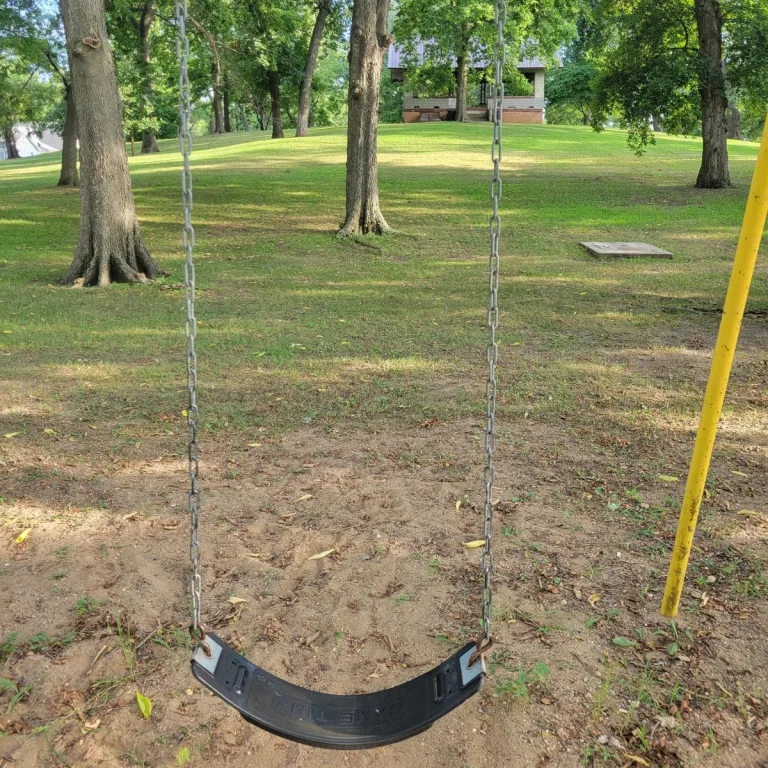
- Expect a Public Park: Rockwell remains an active neighborhood gathering place, not a fenced archaeological preserve.
- Check for Events: Community programs at the summit bandstand may affect access or atmosphere.
- Pair the Visit: Havana’s riverfront and downtown lie close enough to combine with the mound
Elsewhere in the Americas…
While Rockwell Mound was being built, major ceremonial centers were developing across Mexico and South America.

Near Lake Titicaca, Tiwanaku developed around sunken courts, stone platforms, and an increasingly organized ceremonial core.

In central Mexico, Teotihuacan expanded around monumental pyramids, broad avenues, and dense residential compounds.

In southern Colombia, San Agustín communities built burial mounds, stone tombs, and monumental carved guardians.
Insider Explorer Advice
Rockwell is a place where the modern town and ancient landscape sit almost on top of one another. Havana’s restored downtown, with its brick streets and carefully renewed storefronts, lies only a few blocks from the mound. The bandstand on the summit can make the earthwork read at first as a civic hill, so begin at the base, where its broad footprint and gradual rise become easier to see.
Across the street, the city campground extends the visit in a way few archaeological sites allow. A night beside the Illinois River, near the mouth of the Spoon River, places the traveler within the same corridor that sustained and connected the Hopewell community. The campground is modern, but the setting is not incidental. Water, floodplain, travel, and settlement remain close enough to understand after the park has emptied.
Summary: Rockwell Mound preserves a monumental Havana Hopewell earthwork where river ceremony, civic gathering, and the history of modern Havana occupy the same ground.