
Bonampak
MEXICO / CHIAPAS / MAYA
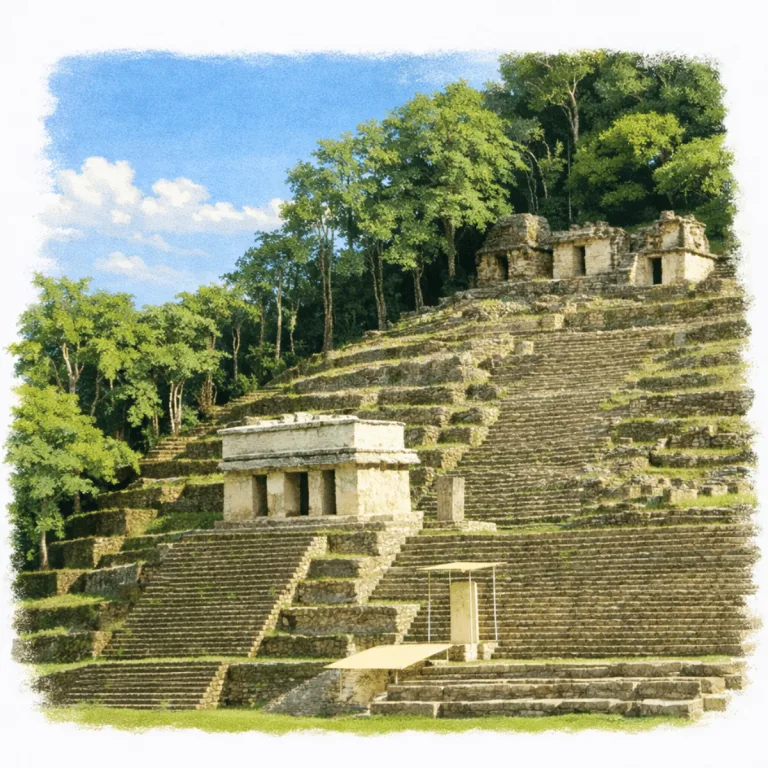
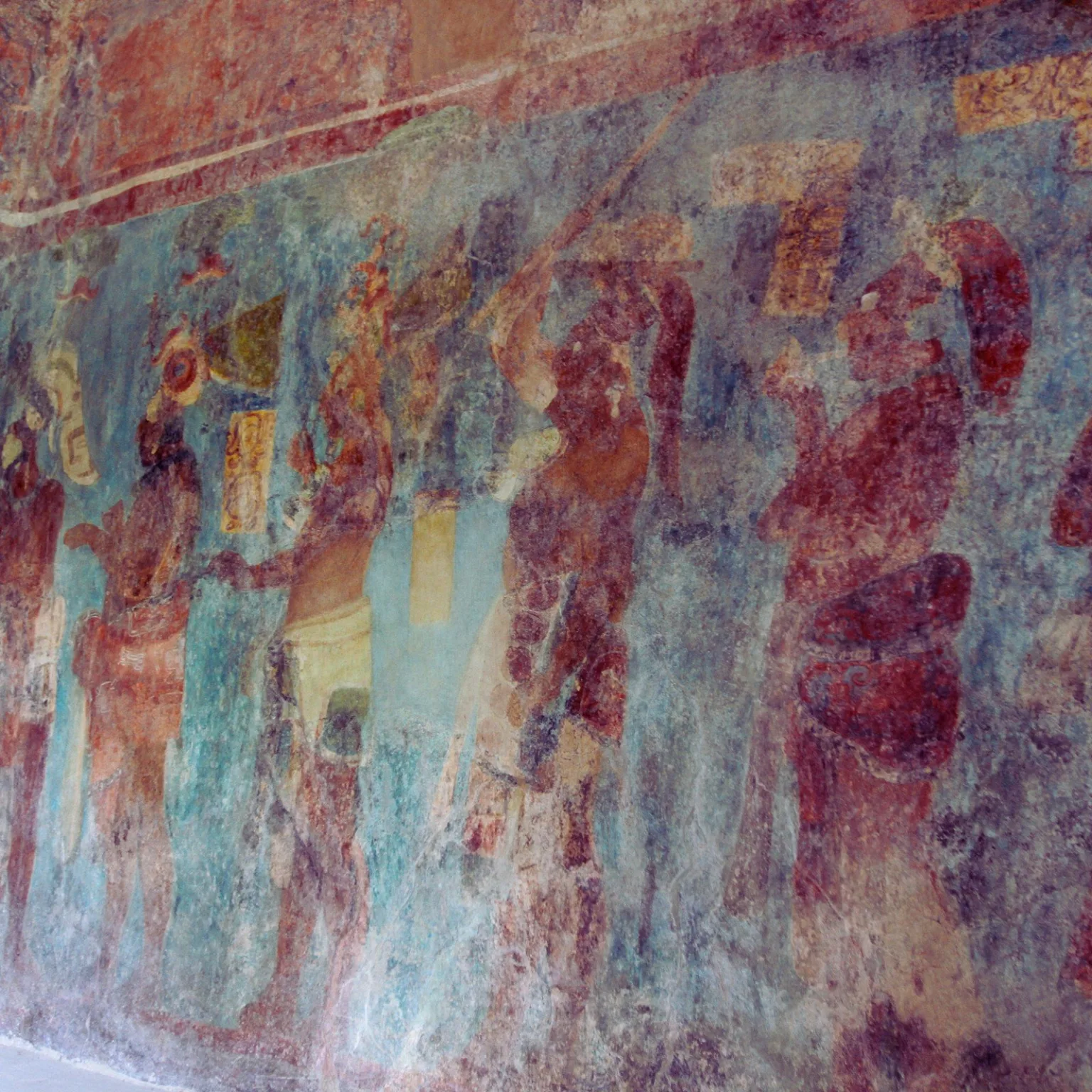
Deep within the Lacandon jungle, Bonampak preserves vividly painted interior walls, where Structure 1 records court rituals, warfare, and ceremony in some of the most detailed murals of the ancient Americas.
| Name | Bonampak |
| Civilization | Maya |
| Location | Chiapas, Mexico |
| Elevation | 2,221 feet (677 meters) |
| Years Active | c. 580 – 800 CE |
| Primary Resources | Limestone, stucco, mineral pigments, maize agriculture. |
| Site Type | Elite ceremonial site with residential and mural chambers |
| Key Highlights | Temple of the Murals, jungle setting, vivid frescoes |
| INT Airport: | Palenque International Airport (PQM) |
| Entry Fee | 105 MXN, 210 MXN for foreign visitors. Plus a 40 MXN community fee and 250 MXN local transport charge. |
| Best Time to Visit | Early morning, ideally as part of a Yaxchilán tour |
| Field Visit | Visited and documented by Lost Ruins of the Americas |
Unique Features of the Bonampak Archaeological Site
- Painted Murals: Exceptionally well-preserved wall paintings covering three temple chambers, depicting court life, warfare, and rituals.
- Jungle Location: Situated deep within the Lacandon rainforest, the site’s remote setting has helped preserve its delicate art.
- Community Stewardship: Managed in partnership with the Lacanjá-Chansayab Lacandon community, ensuring local cultural involvement.
Location & Access
- Nearest Town: Palenque
- Directions: Most easily reached on a guided day tour from Palenque. Independent travel is possible, but requires several transfers and Lacandon community transport for the final approach.
- Official Website: INAH Zona Arqueológica de Bonampak.
- Opening Hours: Monday through Sunday, 8:00 AM to 4:30 PM. Last entry is at 4:00 PM.
- Entry Fees: 105 MXN for Mexican visitors and 210 MXN for foreign visitors, plus a 40 MXN community fee and 250 MXN local transport charge.
- Facilities: Restrooms and guided tours. Food, smoking, and pets are not permitted inside.
- Accessibility: Moderate, with uneven jungle paths and steep stairs across the Acropolis.
- Pro Tip: Confirm that a Palenque tour includes the Lacandon community entrance and final shuttle into Bonampak, since both are charged separately from the archaeological-zone ticket.
Highlights to Help Understand Your Visit
Bonampak reveals Classic Maya power and ritual. Where art and architecture stage elite performance and political drama.
- Chambered Storytelling: The murals narrate a vivid sequence of court life, battle, and ritual, almost like walking through a painted play.
- Art as Authority: Color and imagery here reinforced the rulers’ divine right and social order, a visual language of power.
- Jungle Sanctuary: Isolation preserved both the murals and the experience of entering a hidden world, still felt today.
- Interwoven Histories: Bonampak’s ties to Yaxchilán and Lacandon communities show layers of political and cultural connection beyond the stones.
- Time Frozen in Color: Despite centuries, pigment brilliance remains, a testament to ancient preservation techniques and sacred care.
Key Structures of the Bonampak Ruins
- Temple of the Murals (Edificio de las Pinturas): The tri-roomed structure containing Bonampak’s celebrated murals. Each chamber tells part of a sequence, from courtly pageantry, to battle, to ritual bloodletting. Making it one of the most vivid narrative monuments in Maya art.
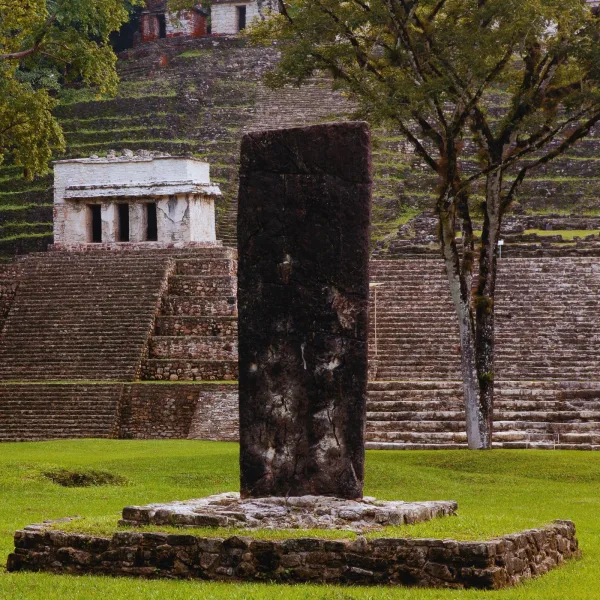
- Stela 1: A central carved monument in the Gran Plaza, showing a ruler with bound captives. It reinforces the political messages depicted inside the Temple of the Murals.
- Structures 2 and 3: Flanking the stairways of the Acropolis, these smaller temples and platforms frame access to the main plaza. They likely supported elite residences and ritual spaces.
- Stelae 2 and 3: Positioned along the Acropolis stairway, these monuments echo themes of rulership and divine sanction, greeting visitors ascending toward the murals.
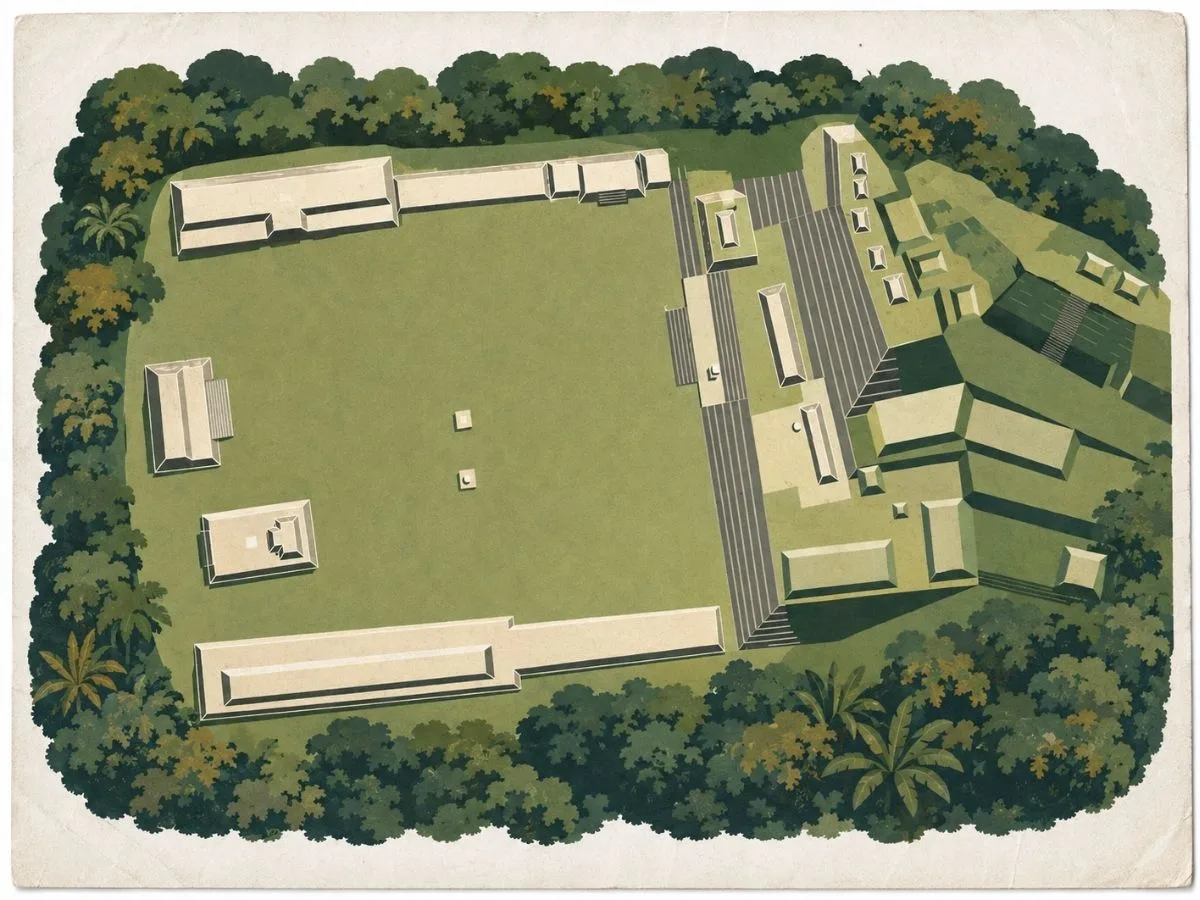
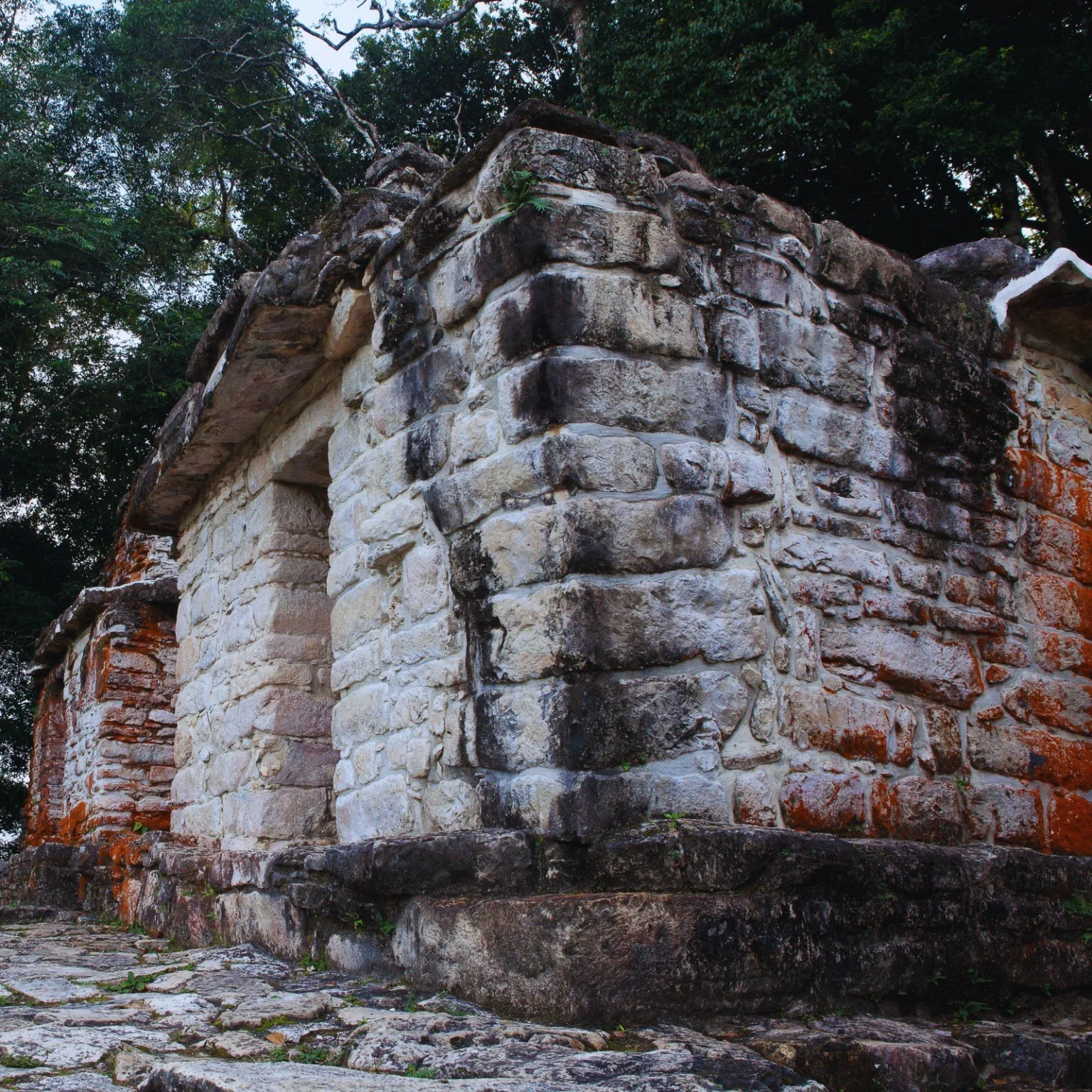
- Acropolis Complex: A broad elevated platform anchoring the eastern side of the site. It contains the Temple of the Murals, multiple secondary temples (Structures 4–10), and overlooks the Gran Plaza.
- Main Plaza: A wide open ceremonial ground, encircled by platforms and monuments. It served as the civic and ritual heart of Bonampak, where processions and gatherings unfolded.
- Structures 12–13: Large rectangular platforms on the southern edge of the plaza, defining the site’s boundary and creating symmetry with the Acropolis.
- Structures 15–17: Additional temples and platforms along the western side, including monumental stairways and niches where stelae once stood.
- Stela 5 and Structure 18: Northern plaza markers that help frame the ceremonial boundary of Bonampak’s core.
- Peripheral Structures: Outlying temples (Structures 20–21) extend beyond the Acropolis, showing that Bonampak contained both central elite monuments and secondary residential or ritual zones.
History and Legends
Bonampak, meaning “Painted Walls” in Yucatec Maya, flourished during the Late Classic period of Maya civilization, roughly between 580 and 800 CE. It functioned as a satellite center under the sway of the more powerful city of Yaxchilán. Epigraphic records indicate its rulers aligned themselves politically and ritually with Yaxchilán’s elite, including shared ceremonies and iconography.
The site’s most celebrated feature, the Temple of the Murals, provides an unparalleled glimpse into elite Maya life. Its three rooms contain floor-to-ceiling frescoes painted in intense mineral colors. Unlike most Maya sites where time has eroded pigment from walls, Bonampak’s sealed chambers preserved a visual narrative across generations. Room 1 depicts the presentation of a young heir to the court and lavish musical performances. Room 2 is a battle scene, warriors in jaguar pelts, bloodied captives, and lords orchestrating the spectacle. Room 3 reveals a post-conflict ritual, including elite bloodletting and ceremonial dance.
These murals have shifted scholarly understanding of the Maya. Once thought to be peaceful astronomer-priests, the martial and ritualistic content of Bonampak’s paintings emphasized the political and performative nature of Classic-period rulership. Hieroglyphic captions identify individuals and dates, linking events to the larger power dynamics of the Usumacinta basin.
Experiences Around Bonampak
Bonampak sits deep in the Selva Lacandona, where dense rainforest, rivers, tropical birds, and howler monkeys shape the trip.
Lacanjá Chansayab adds locally run cabins, simple meals, crafts, and guided jungle walks with Lacandon Maya families. It is the most natural nearby base for spending more time in the forest.
Jungle trails, waterfalls, swimming pools, and river trips extend the visit beyond the murals, making Bonampak part of a much wider Lacandon Jungle experience.
Archaeological surveys suggest Bonampak’s strategic location allowed for ceremonial oversight of regional traffic. But its fame today rests almost entirely on the murals, first brought to international attention in 1946 by Giles Healy, accompanied by Lacandon guides. Modern preservation efforts now protect the interior from flash photography and human breath, ensuring that the murals retain their startling vibrancy.
Though the site itself is compact, it offers a distilled encounter with Classic Maya elite life, political spectacle, ritual drama, and artistic mastery all encoded in line and color. Bonampak remains a singular destination: a chambered archive of vision, power, and painted memory.
How to Get There & Where to Go Next
How to Visit Bonampak
Step-by-step access to the site
- From Palenque: Take a guided tour or local transport (approx. 2 hours).
- Road Conditions: Mostly paved, but last stretch can be rough and bumpy.
- Walk-In: Short 10-minute walk through forested paths from parking area.
- Guided Access: Recommended for cultural insight and navigating community fees.
Tips: Flights are faster but buses can save money and run overnight. Bring water and snacks — the site is broad and has minimal facilities inside.
Nearby Ruins You Can Visit
These Maya sites echo Bonampak’s blend of political ritual, remote setting, and artistic power, windows into a region where performance and rulership were one.

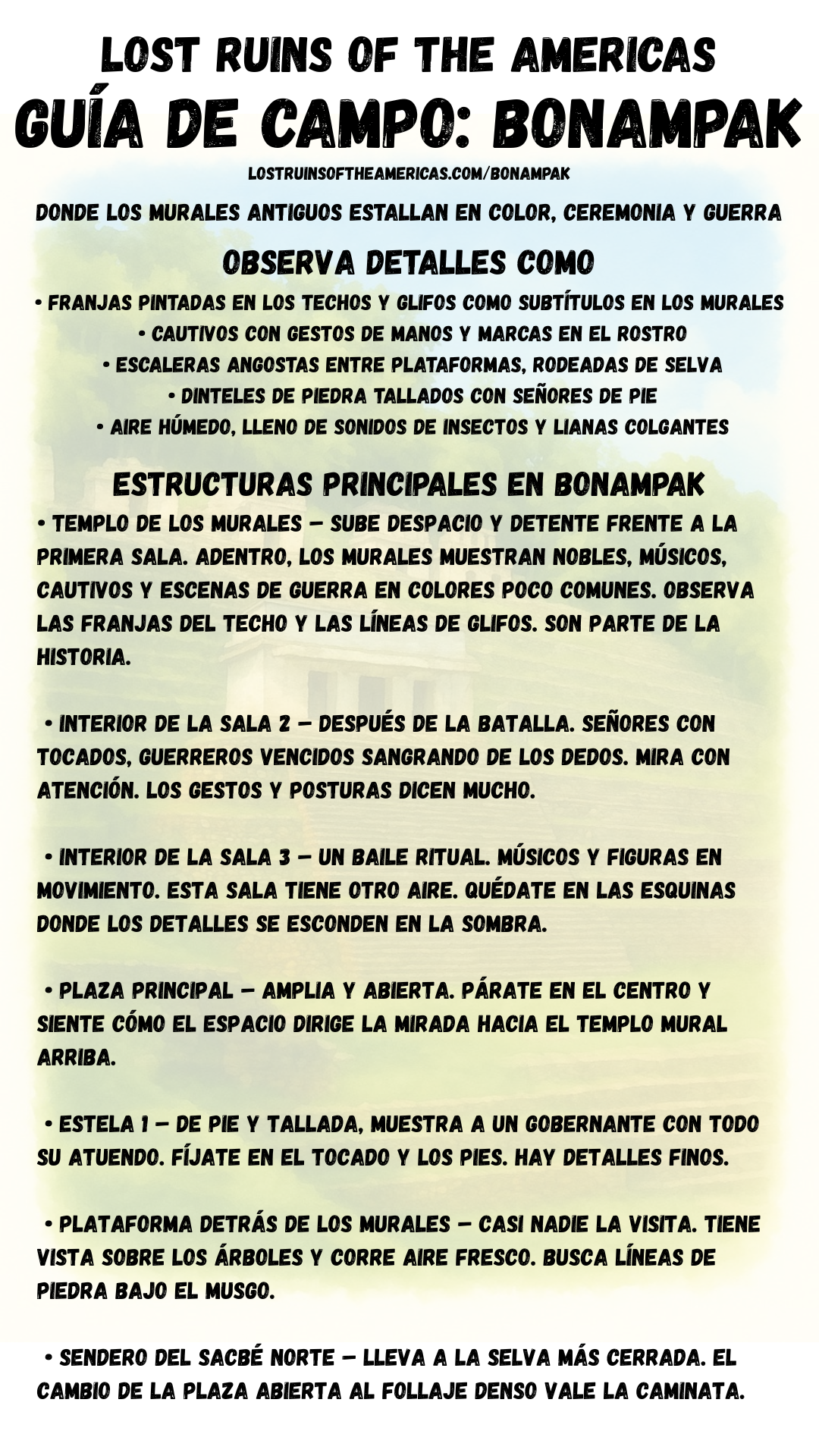
Download Field Guide
Español
English
Traveler Tips
- Combine Bonampak with a trip to Yaxchilán for a full-day immersion into Maya frontier civilization.
- Tours from Palenque are the most reliable way to reach the site. They handle road access, community fees, and scheduling.
- Bring insect repellent, water, and snacks, amenities are minimal once inside the Lacandon jungle.
- Flash photography is not allowed in the mural rooms, prepare to adjust your camera settings accordingly.
- Prepare for high humidity and potential muddy trails, wear sturdy shoes and pack dry bags if visiting during rainy season.
Elsewhere in the Americas…
During the same centuries that Bonampak thrived in the Maya lowlands, other cultures across the Americas were reaching new heights of power and influence:
Along Peru’s northern coast, the Moche built monumental pyramids like Huaca del Sol, for elite rule and ritual.


In central Mexico, the fall of Teotihuacan reshaped political power across the highlands.
Insider Explorer Advice
Bonampak is best reached as part of a guided tour from Palenque, not just for logistics, but for safety and cultural context. These routes often pair Bonampak with Yaxchilán, making for an unforgettable frontier expedition deep into the Lacandon rainforest. Independent travel is possible, but expect a long day of uncertain connections and plan to return before dark. In this part of Chiapas, roads narrow, time slows, and history thickens. Take time to learn about the area’s more recent chapters: the Lacandon people, the Zapatista movement, and ongoing indigenous land stewardship. Despite being on a tour, Bonampak does not feel overrun. Standing in the mural chambers alongside a few fellow travelers offers something rare: shared reverence in silence.
Summary: Bonampak distills Classic Maya court life into color and stone, an unforgettable chamber of vision, story, and survival hidden deep in Chiapas