
Ingapirca
ECUADOR / CAÑAR / INCA
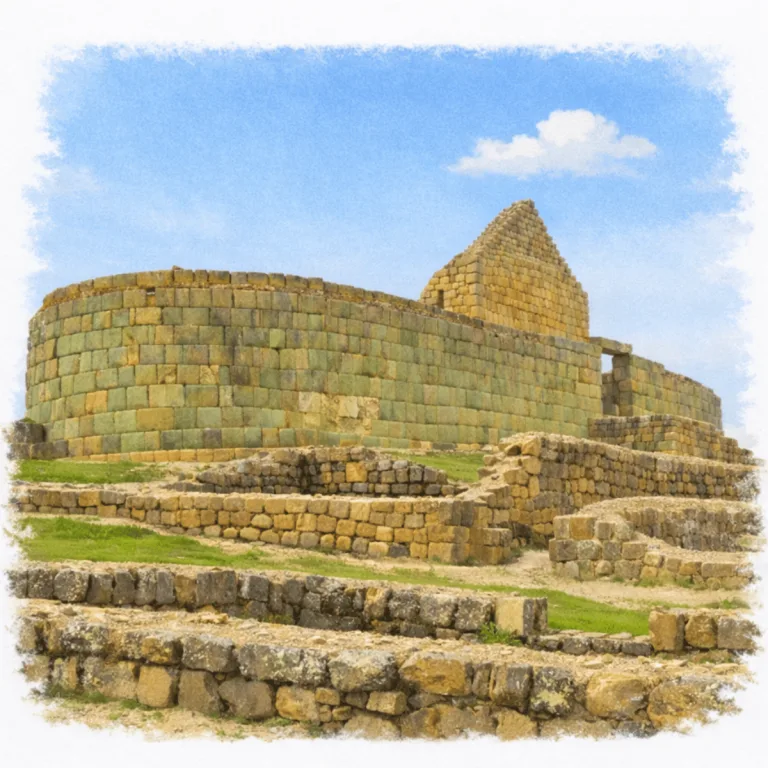
On a high Andean ridge in Cañar, Ingapirca centers on the elliptical Temple of the Sun, where Inca stonework wraps a sacred Cañari outcrop in the site’s clearest expression of shared ceremonial space.
| Name | Ingapirca |
| Civilization | Inca, Cañari |
| Location | Ingapirca Parish, Cañar Province, Ecuador |
| Years Active | c. 500 CE – 1530 CE |
| Elevation | 3,100 – 3,200 m (10,170 – 10,500 ft) |
| Primary Resources | Green andesite, maize, potatoes, camelid herding, highland agriculture |
| Site Type | Ceremonial, administrative, and military complex |
| Key Highlights | Temple of the Sun, Cañari-Inca hybrid architecture, highland views |
| INT Airport | Mariscal La Mar International Airport (CUE), Cuenca |
| Entry Fee | 2 USD (foreigners) |
| Best Time to Visit | Morning or late afternoon |
| Field Visit | Visited & photographed by Lost Ruins of the Americas |
Unique Features of the Ingapirca Ruins
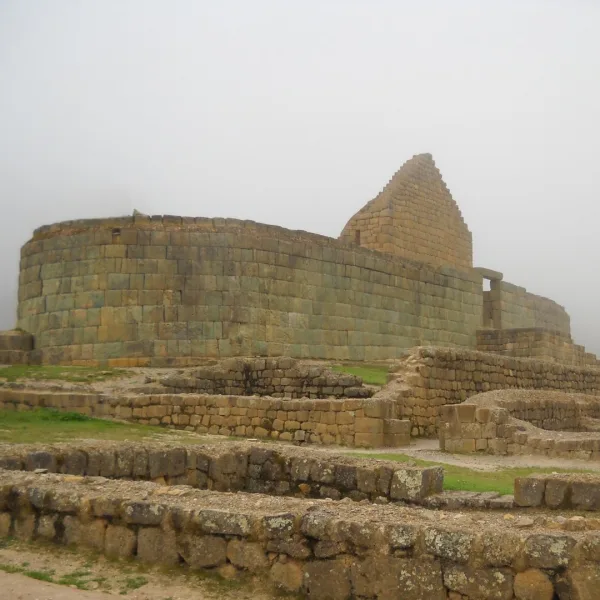
- Elliptical Temple Form: Rare oval-shaped Inca structure built with finely cut andesite stone.
- Finest Inca Masonry in Ecuador: Precision stonework here represents the highest level of imperial construction in the country.
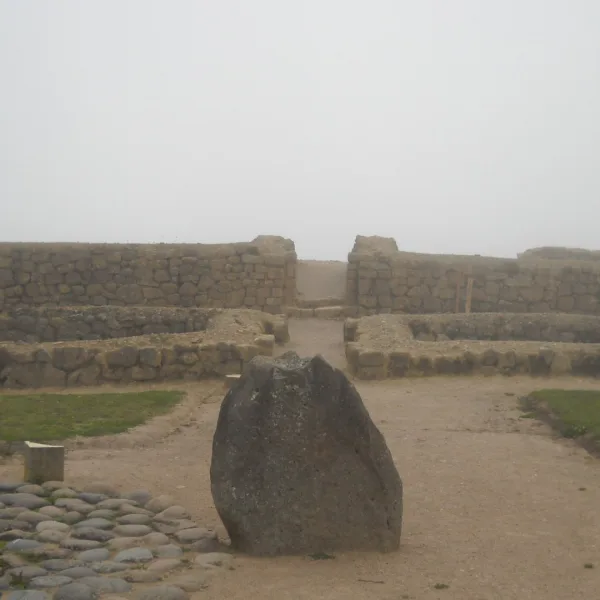
- Inca Face Rock Formation: Natural rock profile resembling a human face, tied to local interpretation and site identity.
- On-Site Museum: Displays ceramics, tools, and artifacts that provide context beyond the visible ruins.
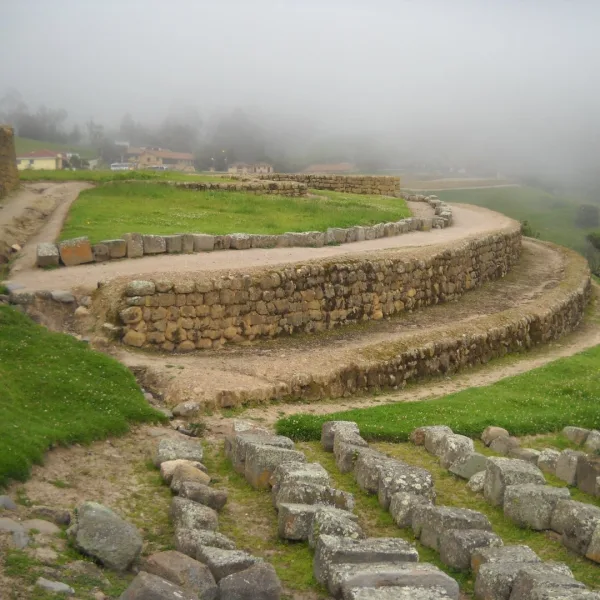
- Terraced Hilltop Layout: Stone terraces step down the slope, shaping the layout of the ceremonial center.
Location & Access
- Nearest Town: El Tambo
- Directions: From Cuenca, take a bus north along the Pan-American Highway to El Tambo, then continue approximately 10 kilometers by local bus or taxi to Ingapirca. Allow about 2.5 hours.
- Official Website: Instituto Nacional de Patrimonio Cultural, Complejo Arqueológico Ingapirca.
- Opening Hours: 9:00 AM – 4:30 PM
- Entry Fees: US$2 for visitors ages 12 to 64; US$1 for students. Admission is free for children under 11, adults over 65, and visitors with disabilities.
- Facilities: US$2 for visitors ages 12 to 64; US$1 for students. Admission is free for children under 11, adults over 65, and visitors with disabilities.
- Facilities: Interpretation center, institutional guides in Spanish and English, and lockers.
- Accessibility: Limited. Uneven grass, stone paths, and sloped terrain restrict access through the archaeological circuit.
- Pro Tip: Allow time to walk the outer trails and explore surrounding terraces
Highlights to Help Understand Your Visit
Ingapirca is not a single moment in time. It is a layered site where Cañari foundations and Inca design meet in stone. These clues help reveal how the place was shaped and used.
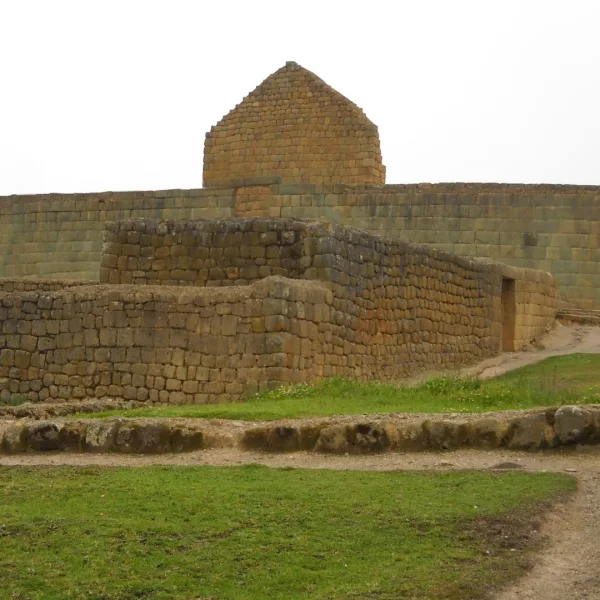
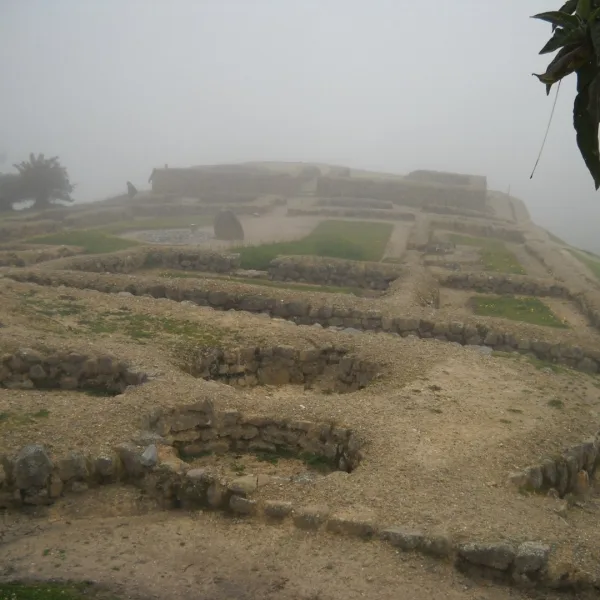
- Two Cultures, One Site: Look for circular foundations beneath or beside rectangular Inca walls. The Cañari built first, and the Inca built over and around them.
- The Temple Sets the Axis: The elliptical Temple of the Sun is not just a structure, it organizes the space around it. Movement and sightlines lead back to it.
- Stone Tells Status: The finest cut stone appears at the Temple. Rougher masonry spreads outward, showing where power and effort were concentrated.
- Walls That Guide Movement: Low walls and pathways quietly direct how visitors move through the site, shaping approach rather than blocking it.
- Terraces as Structure: The stepped landscape is not only agricultural. It defines levels of access, separating ceremonial space from daily activity.
- A High Place of Ceremony: The elevation is part of the design. The open sky, wind, and horizon reinforce the site’s role as a ceremonial center.
Key Structures of the Ingapirca Ruins
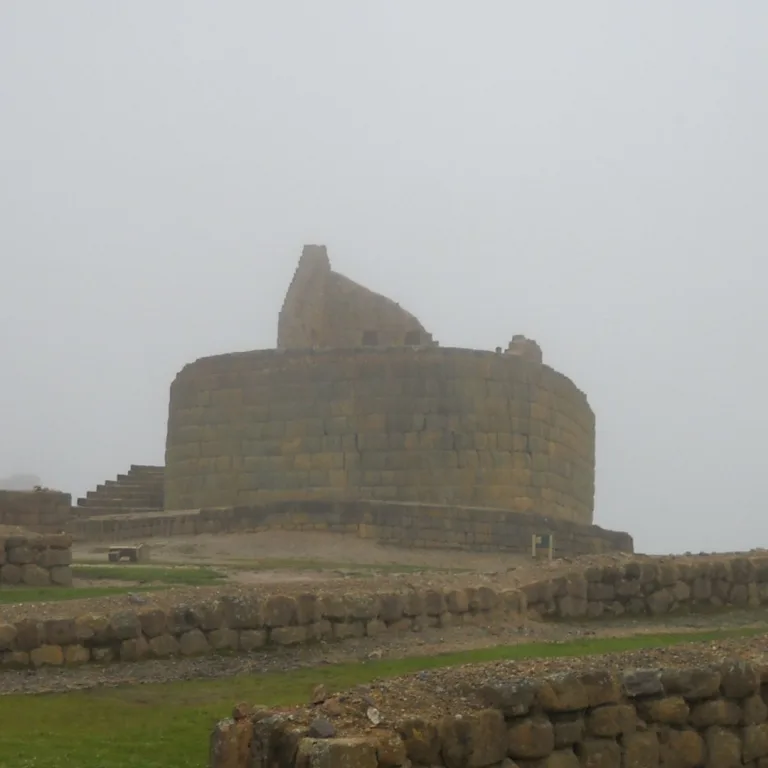
- Temple of the Sun: The site’s defining monument, this oval-shaped temple rises on a prominent outcrop and preserves some of the finest Inca masonry in Ecuador. Its carefully fitted stonework, niches, and solar alignment show that this was the ceremonial heart of Ingapirca.
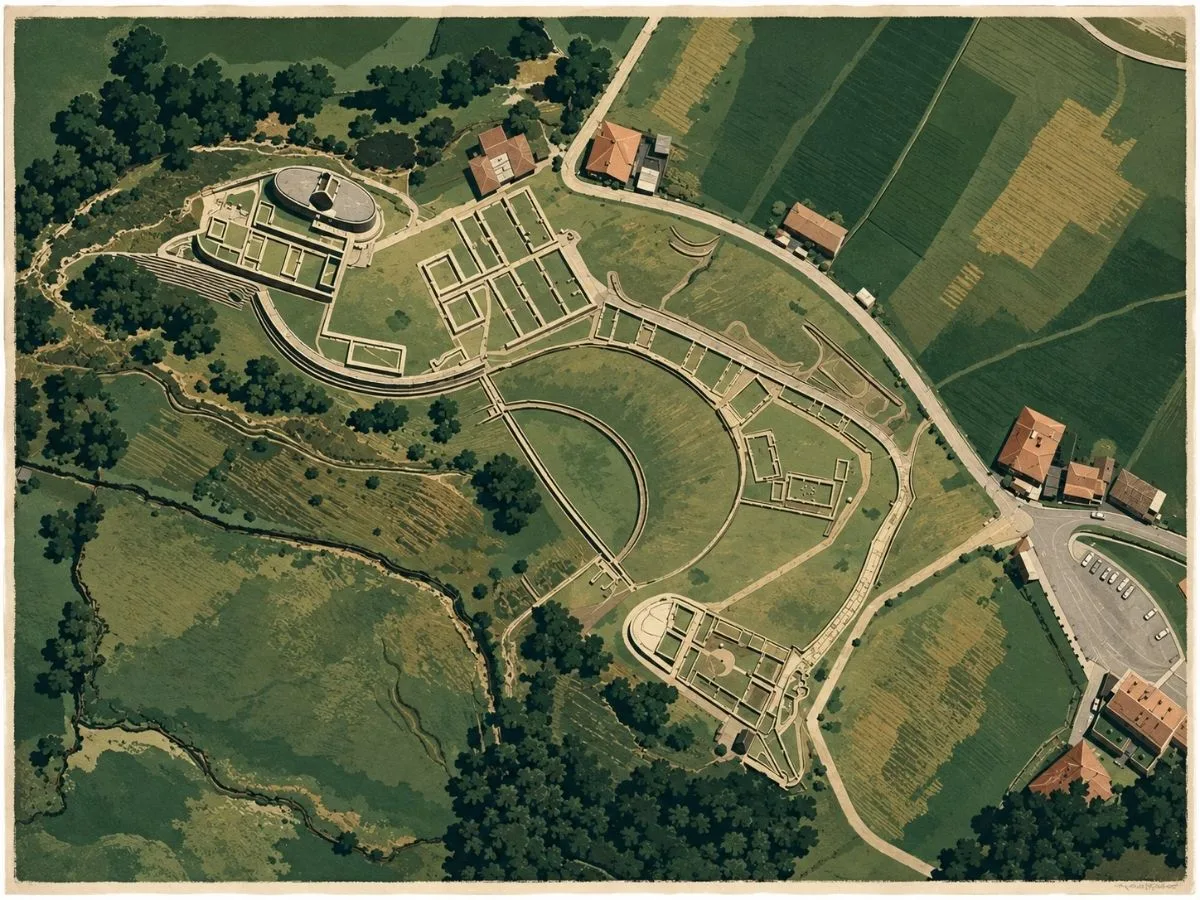
- Moon Plaza: This secondary ceremonial area is tied to the older Cañari phase of the site and is marked by circular foundations rather than the sharper geometry favored by the Inca. It helps reveal that Ingapirca was not built as a purely Inca center, but as a layered place shaped by two traditions.
- Inca Road Segment: A preserved stretch of the imperial road system survives near the complex, linking Ingapirca to the wider Qhapaq Ñan. Its presence shows that the site stood within a much larger Andean network of movement, communication, and state control.
- Storage Rooms (Qollqas): These rectangular storehouses reflect the practical side of imperial rule. Built to hold food and supplies, they supported both daily life and ceremonial activity while tying the site into the Inca system of organized redistribution.
- Residential Quarters: Excavated domestic sectors preserve the remains of rooms and activity areas used by the people who lived and worked here. Their mixed layout helps show how Cañari foundations and Inca construction overlapped within the same settlement.
History and Legends
Ingapirca stands on an older highland ceremonial center that mattered before the Inca arrived. Long before it became the best-known Inca ruin in Ecuador, This was Cañari territory, shaped by local building traditions and a sacred highland landscape, and ritual life tied to the surrounding hills and sky. Archaeology shows that the site was occupied before the Inca phase, and that later construction rose over earlier Cañari remains.
The Cañari presence still shows clearly in the site’s circular foundations and older construction patterns. These remains matter because they reveal that Ingapirca did not begin as an imported imperial monument. It began as a local ceremonial place rooted in the traditions of the southern Ecuadorian highlands. That earlier identity was never fully erased, even after the Inca expanded north.
When the Inca incorporated the region in the late fifteenth century, they reshaped that older sacred place with their own architectural order. Rectangular compounds, finely cut stonework, storehouses, and road links tied Ingapirca into the wider imperial world. But the site did not become purely Inca in character. Instead, it remained a layered place where imperial design sat directly on top of older Cañari meaning.
Who were the Cañari?
The Cañari were an indigenous culture of southern Ecuador who flourished before the Inca expansion, especially in the centuries leading up to the late 1400s. Centered in the highlands of present-day Cañar and Azuay, they built hilltop settlements, favored circular architecture, and maintained strong regional traditions in pottery, ritual, and sacred landscape use. Their political world was made up of local highland communities rather than a single centralized empire. At Ingapirca, their presence survives in the earlier foundations beneath the later Inca stonework.
The clearest expression of the Inca phase is the Temple of the Sun. Built in an unusual elliptical form on a prominent rock outcrop, it preserves some of the finest masonry at the site and reflects the Inca habit of linking architecture to ceremony, visibility, and celestial order. The outcrop itself may have held earlier sacred importance, which helps explain why the Inca chose this exact place for their most prominent structure.
That layered identity is what gives Ingapirca its force. Circular Cañari remains, local building traditions, and later Inca masonry all survive within the same complex, making the site one of the clearest places in Ecuador to see how imperial expansion worked in practice. Rather than wiping the older landscape clean, the Inca absorbed it, rebuilt it, and left traces of both worlds visible in the stone.
Experiences Around Ingapirca
The ruins are only part of the story. Ingapirca sits in a high Andean landscape of patchwork fields, steep green hills, and cold páramo above the Cañar valley.
In Cañar, browse the Mercado Central for local produce, traditional clothing, and dishes such as cuy, chiviles, and fritada.
Nearby Sisid Anejo adds a more rural Cañari experience, with a 1634 church and community activities centered on farming, crafts, food, and local traditions.
After the Spanish conquest, the site was gradually abandoned, and some of its stone was later reused elsewhere. What survives today matters not only because of its Inca architecture, but because the deeper Cañari foundation can still be read beneath it. Ingapirca is strongest when read that way, as a sacred highland place where one tradition was built over, but not fully erased.
How to Get There & Where to Go Next
How to Visit Ingapirca
– Step-by-step access to the site –
- Quito to Cuenca – Fly or take an overnight bus south (1 hour flight, or 10–12 hours by bus).
- Cuenca to Cañar / El Tambo – Bus from Terminal Terrestre (about 2–3 hours).
- El Tambo to Ingapirca – Local bus or taxi up to the ruins (15–20 minutes).
- Final Approach – Short walk from entrance through the site paths (5–10 minutes).
Tips: Check return bus times before heading up to the site, as service back to Cuenca can be limited later in the day.
Nearby Ruins You Can Visit
These sites reflect parallel traditions of ritual landscapes and elite power, stretching from the Andes into Peru’s north coast.

Sipán (Huaca Rajada) – Royal tombs of a Moche lord discovered intact, with burial treasures unmatched in the Americas.


San Agustín – Monumental stone figures and sacred tombs define a highland ritual landscape in the Andes of Colombia.
Traveler Tips
- Visit in the morning to avoid clouds and afternoon chill. The highland air can shift quickly.
- Take a guided tour if available. Local guides offer insight into both Cañari and Inca traditions.
- Wear sunscreen and bring water. Elevation can increase exposure.
- Allow time to explore outer trails beyond the main temple. The setting is peaceful and expansive.
- Buses run regularly on the Panamerican. You do not need a private driver..
Elsewhere in the Americas…
As Ingapirca rose in the northern Andes, other societies across the Americas were also shaping major centers of ritual, prestige, and political control.

In central Mexico, Aztec Empires (Mexica) power centered in Tenochtitlan with temple precincts, causeways, and imperial order.

In the Southwest, Ancestral Pueblo builders raised towers, masonry villages, and cliff dwellings at sites like Holly Group at Hovenweep.

Insider Explorer Advice
Ingapirca is best approached by public transport. Buses on the Panamerican will drop you near El Tambo. From there, it is a short and scenic ride up into the hills. The site feels open and calm, with space to wander slowly. Do not miss the view from behind the Temple of the Sun, where the green slopes fold away into valleys. It is a quiet place, and being there without crowds gives it real power. Bring layers. Even when the sun is out, the wind carries cold from the mountains.
Summary: Ingapirca is a highland shrine of dual heritage, where Inca precision and Cañari roots still echo through mountain air and carved stone.