
Tulum
MEXICO / YUCATAN / MAYA
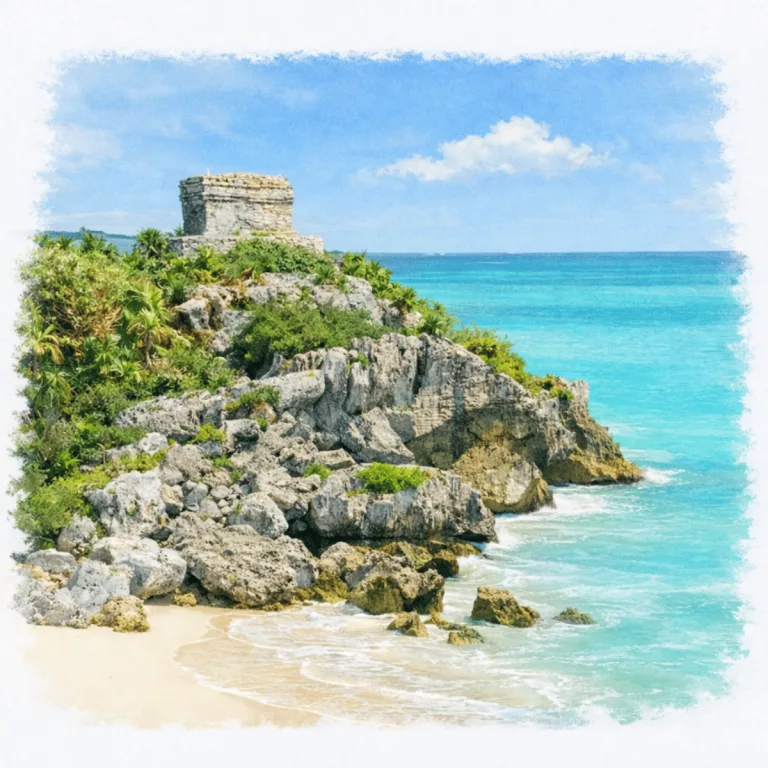
On limestone cliffs above the Caribbean, Tulum forms a walled Maya port, where seaborne trade and ceremonial architecture meet along the eastern edge of the Yucatán.
| Name | Tulum |
| Civilization | Maya |
| Location | Caribbean Coast, Quintana Roo, Mexico |
| Elevation | 12 m (39 ft) at the coastal bluff |
| Years Active | c. 1200 – 1500 CE |
| Primary Resources | Salt, obsidian, sea goods |
| Site Type | Walled trade port and coastal ceremonial center |
| Key Highlights | El Castillo, Temple of the Frescoes, Temple of the Descending God, sea views |
| INT Airport | Tulum International Airport “Felipe Carrillo Puerto” (TQO) |
| Entry Fee | 80 MXN:265 MXN for foreign visitors. |
| Best Time to Visit | Early morning for light and peace |
| Field Visit | Visited and documented by Lost Ruins of the Americas |
Unique Features of the Tulum Archaeological Site
- Temple of the Descending God: This deity is rare in Maya art and appears nowhere with more prominence than here.
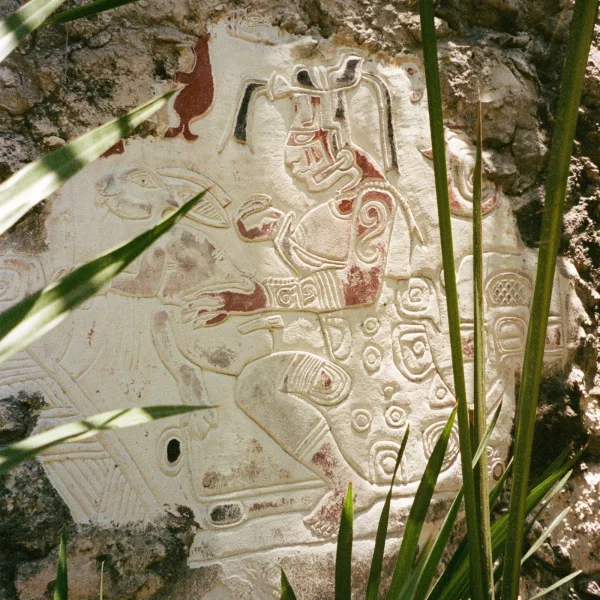
- Temple of the Frescoes: A civic and religious building with preserved murals, masks of Chaac, and layered iconography.
- Walled City Layout: Defensive stone walls encircle the site, a rarity among Maya coastal settlements.
- Beach Below the Ruins: A trail from the site descends to a cove, one of few ruins in the world with direct beach access.
Location & Access
- Nearest Town: Tulum Pueblo (5–10 min by bike or taxi)
- Directions: Easily reached from Cancún, Playa del Carmen, or Valladolid by bus or colectivo; site parking available
- Official Website: INAH, Zona Arqueológica de Tulum
- Opening Hours: Monday to Sunday, 8:00 AM to 5:00 PM, with last access at 3:30 PM.
- Entry Fees: 80 MXN for Mexican nationals from Monday to Saturday and 265 MXN for foreign visitors.
- Facilities: Restrooms, guided visits, accessibility services, visitor paths, electric transport, and the Museo de la Costa Oriental within Parque del Jaguar
- Accessibility: Partial. Uneven ground, narrow gateways, and changes in level limit access through parts of the walled city.
- Pro Tip: Bring swimwear and a towel. Beach access within Parque del Jaguar allows time for a swim after visiting the ruins, though access may change with sea conditions or conservation closures.

Highlights to Help Understand Your Visit
Before walking the site, keep these insights in mind. They’ll help you see Tulum not just as ruins, but as a message left in stone.
- Built to Impress from the Sea: El Castillo wasn’t just ceremonial. It doubled as a lighthouse. Its placement and shape signaled power to incoming canoes before they even made landfall.
- Walled but Open to Trade: Unlike jungle cities, Tulum has clear boundaries. The walls weren’t just for defense. They defined who could enter, who controlled access, and how goods flowed through the port.
- Divine on the Facade: The Temple of the Descending God doesn’t hide its message. Look for the upside-down figure carved over doorways, a rare deity linked to Venus, rebirth, or falling from the sky.
- Color Was the Message: The Temple of the Frescoes still holds traces of red and black paint. These weren’t just decorative. They communicated meaning in ways we’re only starting to understand.
- Every Iguana Has Its Place: The sun-warmed walls crawling with iguanas aren’t just charming. They reflect the site’s quiet, enduring life. Animals, stone, and sea remain entangled here.

Key Structures of Tulum
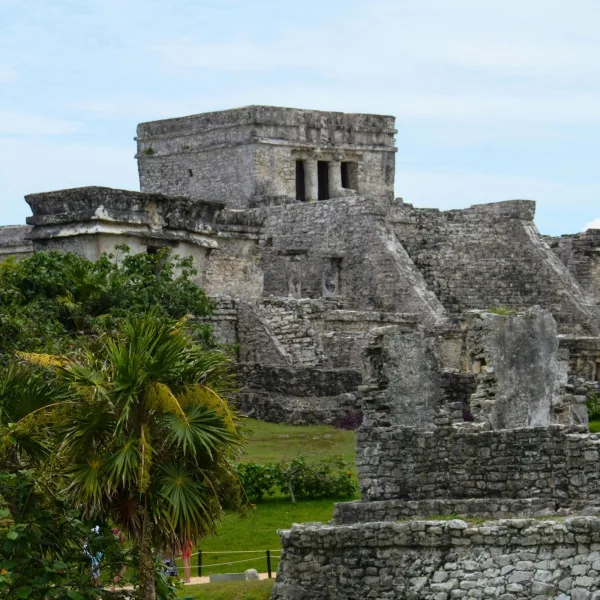
- El Castillo: The tallest structure in the city, perched on the cliff. It served both as a ceremonial temple and a navigational marker for incoming canoes.
- Temple of the Descending God: Known for its inverted winged figure above the entrance. One of the few known depictions of this deity in the Maya world.
- Temple of the Frescoes: A two-level civic temple featuring mural fragments, carved columns, and stucco masks of the rain god Chaac. Thought to house astronomers or elites.
- Casa del Halach Uinic: Likely the residence of a ruling official, this structure reflects the power structure embedded in Tulum’s layout.
- House of the Columns: A large building with multiple doorways and interior columns. Possibly used for elite administration or ceremonies.
- Temple of the Initial Series: One of the earliest dated buildings at the site. Possibly linked to astronomy or dynastic beginnings.
- North and South Gates: Primary controlled entry points through the defensive wall. Designed to regulate access and movement.
- Clifftop Watchtowers: Small round structures at the eastern corners of the wall. Believed to be used for coastal surveillance and signaling.
- Escaleras a la Playa: The steep stairway descending from the ceremonial zone to the beach below. Connecting ritual space with sacred water access.
History and Legends
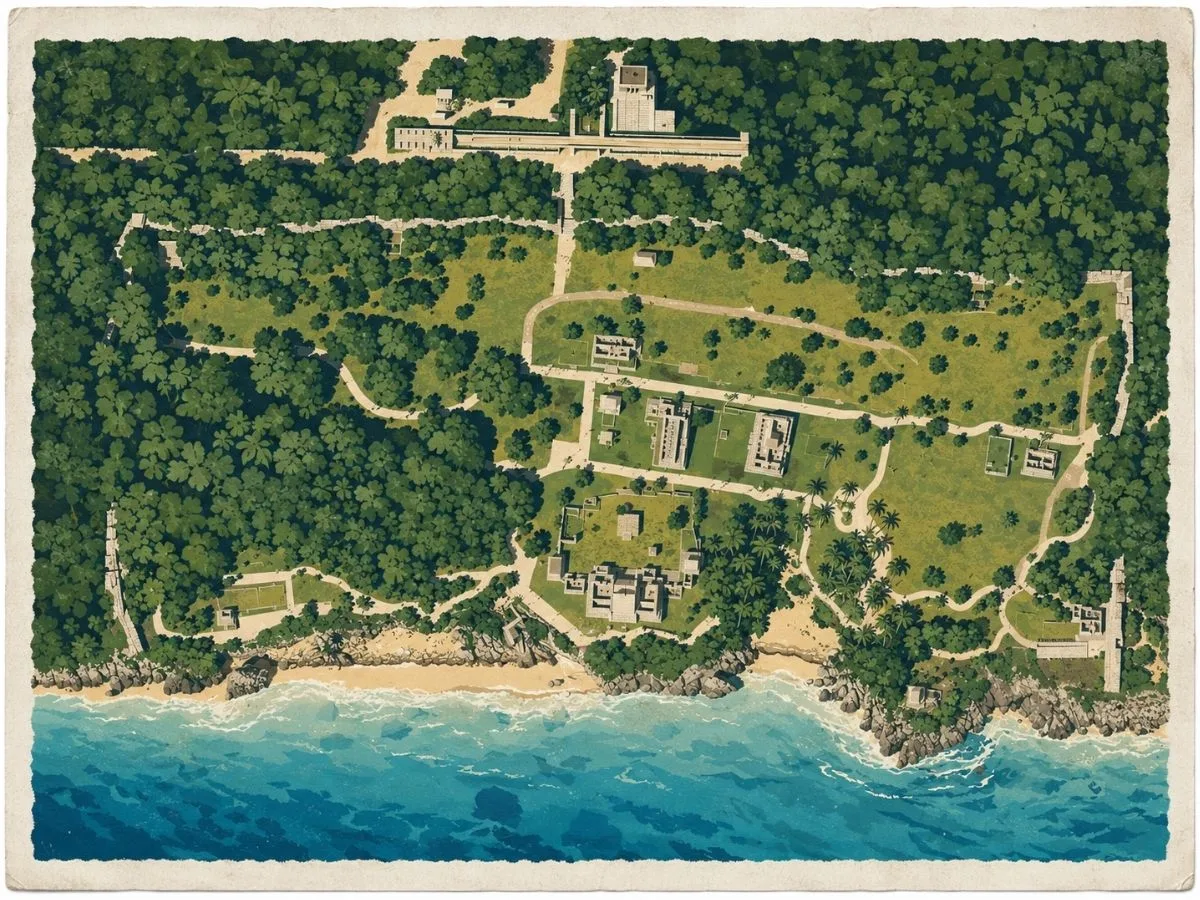
The earliest dated monument found at Tulum carries a date corresponding to 564 CE, and one surviving building preserves architectural traits from before the city’s main period of growth. Most of what stands today, however, belongs to a much later Maya city that expanded after about 1200 CE and flourished during the final centuries before Spanish conquest. Its position was unusually well chosen. Tulum occupied a limestone bluff above the Caribbean, between the Maya provinces of Cochuah and Cozumel, with access to rich coastal resources and the canoe routes running along the eastern Yucatán. The wall enclosed the city on the north, south, and west, while the cliff and sea formed its eastern edge. Five gateways and two watchtowers controlled movement into the monumental center.
Much of the building visible inside those walls was carried out after 1400. At the center, El Castillo rose directly above the cliff, its upper temple reached through three entrances divided by serpent-shaped columns. Below it, the rock opens into a small sandy cove, one of the few easy landing places along this stretch of coast and a probable arrival point for fishing and trading canoes. Around the Castillo stood an inner ceremonial enclosure of temples, platforms, and shrines, while palace-like buildings extended along the settlement’s main street. Tulum’s walls gave the city a formidable boundary, but its prosperity depended just as much on the water beyond them. Canoes moving along the Caribbean coast connected communities, ports, and island sanctuaries in a maritime network that remained active late into Maya history.
Experiences Around Tulum
The ruins are only part of the story. White-sand beaches, limestone jungle, and freshwater sinkholes shape this stretch of the Caribbean coast.
Snorkel at Cenote Dos Ojos, where clear water runs beneath low limestone ceilings hung with stalactites and opens into two connected cavern pools.
South of town, enter Sian Ka’an by boat and float through a freshwater channel bordered by mangroves and reeds.
Tulum’s builders developed the distinctive East Coast architectural style seen at other late sites along Quintana Roo, with flat-roofed rooms supported by columns, small shrines inserted into larger buildings, and façades once covered with painted plaster. The Temple of the Frescoes preserves the clearest surviving evidence of that painted city. Its walls carry complex scenes of supernatural figures, while serpentine masks decorate the corners. Elsewhere, the image of the Descending God appears above doorways at the Castillo, the Temple of the Descending God, and other buildings. In one surviving mural, paired deities appear beneath a starry band containing the Sun, stars, and Venus. Trade, ceremony, and pilgrimage may have overlapped here, with travelers reaching Tulum by coastal routes while its temples served a wider religious landscape along the eastern shore.
Sixteenth-century sources knew the city as Zamá, a Maya name meaning “morning” or “dawn.” The name Tulum, meaning “wall” or “palisade,” appears to have been attached to the place later, after the great enclosure had become its most obvious surviving feature. When Juan de Grijalva’s expedition sailed along this coast in 1518, the chaplain Juan Díaz described a large, densely inhabited city that may have been Tulum. Spanish conquest and colonization transformed the region within the following decades. By 1579, Juan de Reigosa described the settlement as ruined. The temples remained on the bluff, but the political and commercial city that had faced the Caribbean was no longer functioning.
Tulum entered Maya history again in the nineteenth century. During the Maya Social War, often called the Caste War of Yucatán, the ruins lay inside territory controlled by Maya rebels resisting Mexican authority. By 1871, Tulum had become one of the sanctuaries associated with the Talking Cross religious movement. Its leading figure was the Maya priestess María Uicab, whose political and religious influence extended well beyond Tulum and helped make the old walled city an important center of the rebel Maya world. Centuries after Zamá had ceased to function as a Postclassic port and ceremonial center, Maya communities had returned authority and ritual importance to the same ground.
How to Get There & Where to Go Next
How to Visit Tulum
Step-by-step access to the site
- Start in Cancún: Tren Maya to Tulum station – 2 hours
- From station: Taxi or colectivo to ruins – 10–15 min
- Arriving by car: Use main parking area – 2.5 hr drive
- Final access: Walk from entrance gate – 5–10 min
Tips: Tren Maya is fully operational, book early in high season.




Traveler Tips
- Get there early, right at 8:00 AM to beat the heat and the crowds, and to get soft golden light for photos.
- Swim below the cliffs: Bring a swimsuit for the beach, one of the few ruins where you can tan and swim after exploring.
- Bring snacks and water: Limited food on site, and it’s a sun-heavy walk across the grounds.
- Watch the iguanas: They’re photogenic, plentiful, and practically part of the architecture.
- Combine with nearby cenotes: Gran Cenote and Cenote Calavera are a short bike or taxi ride away.
Elsewhere in the Americas…
As the Maya port city of Tulum flourished along the Caribbean coast, other cultures across the Americas were reshaping their own highlands, coasts, and ceremonial landscapes:

Vilcashuamán became an important Inca provincial hub, complete with an Ushnu platform and sacred architecture layered over earlier traditions.

In the Andes, the Chachapoya center of Kuélap rose behind massive stone walls with circular buildings spread across a fortified mountaintop.
Insider Explorer Advice
My oh my has Tulum changed. The cheap cabanas at El Mirador, right on the beach next to the ruins, are long gone. But the magic of the place, cliffs, sea, sun, and stone, still hits you if you slow down. Don’t rush it. Spend time with the iguanas sunning themselves on the steps of El Castillo. Sit in the shade of a temple and imagine canoes sliding in over the reef. Work on your tan, get your toes in the water, and let the history come to you. Tulum rewards those who relax into it.
Summary: Tulum is where the Maya met the sea, and where travelers today can still meet beauty, time, and tide.