
Chinchero
PERU / SACRED VALLEY / INCA
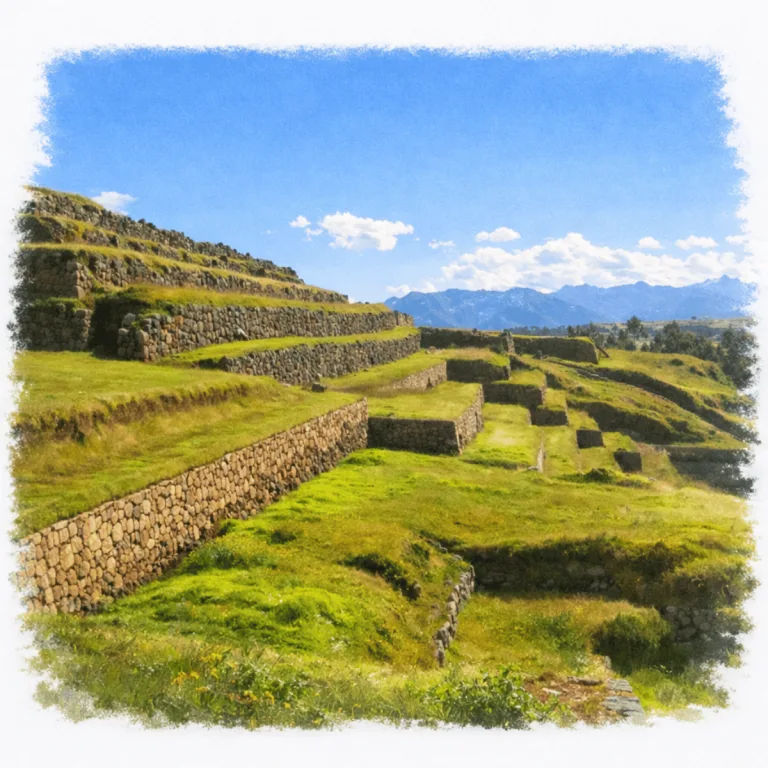
High on a windswept plateau above the Sacred Valley, Chinchero organizes terraced slopes and stone foundations, where Inca walls support a colonial church built directly over a former royal estate.
| Name | Chinchero |
| Civilization | Inca |
| Location | Chinchero District, Sacred Valley, Peru |
| Elevation | 3,762 meters (12,343 feet) |
| Years Active | c. 1400s – 1530s CE |
| Primary Resources | Stone, water channels, weaving |
| Site Type | Highland ceremonial and agricultural center |
| Key Highlights | Terracing, colonial church, carved waterworks |
| UNESCO | No |
| Entry Fee | Included in Boleto Turístico |
| Best Time to Visit | Early morning for clear skies |
| Field Visit | Visited & photographed by Lost Ruins of the Americas |
Unique Features of the Chinchero Archaeological Site
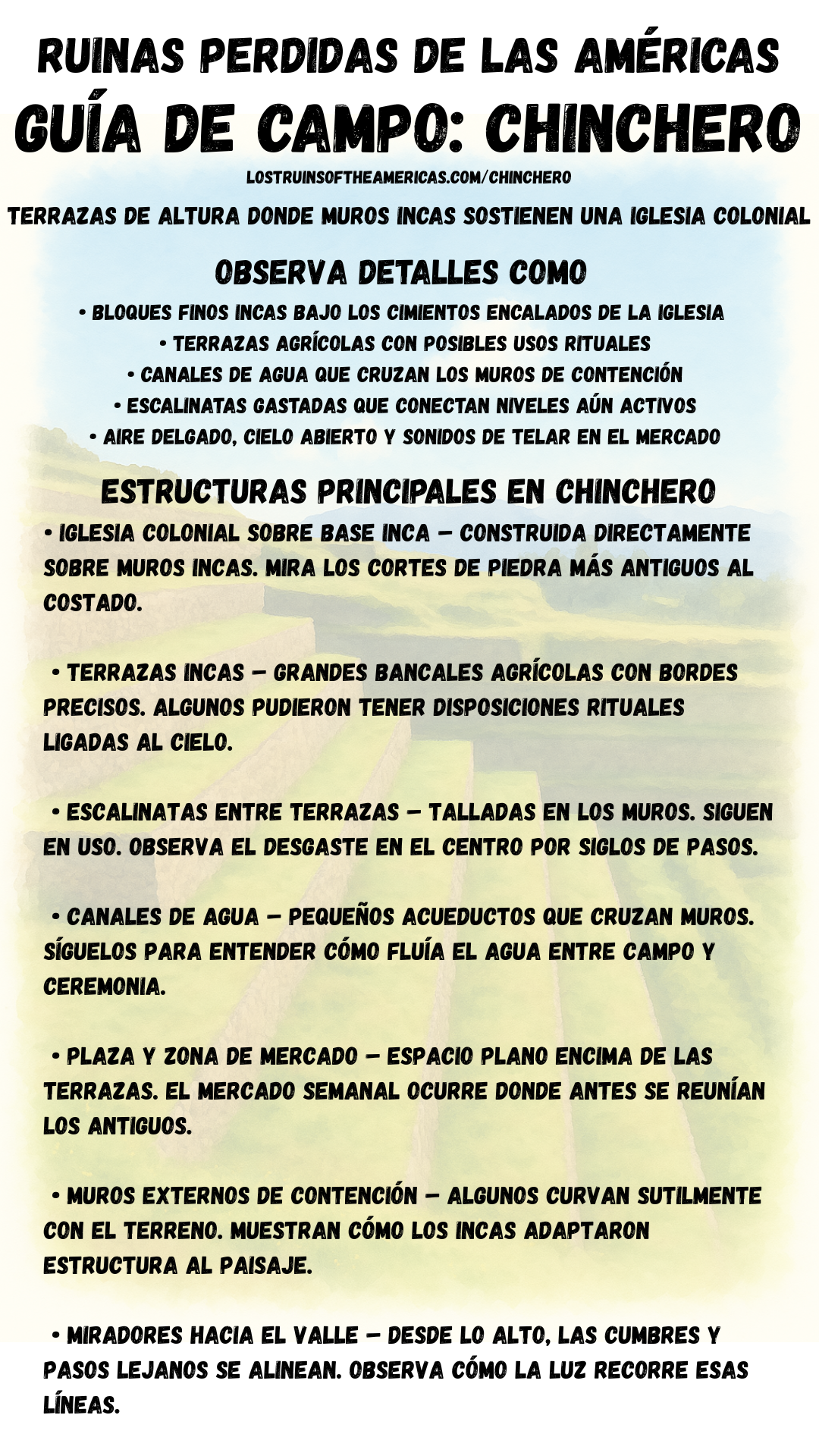
- High-altitude agricultural terraces: Signature Inca stonework cascades down steep hillsides in precisely cut layers.
- Water feature engineering: Integrated carved channels and basins suggest sacred hydrology as well as irrigation.
- Colonial church built atop Inca platform: Iglesia de Nuestra Señora de Monserrat imposes Spanish power over an indigenous ceremonial site.
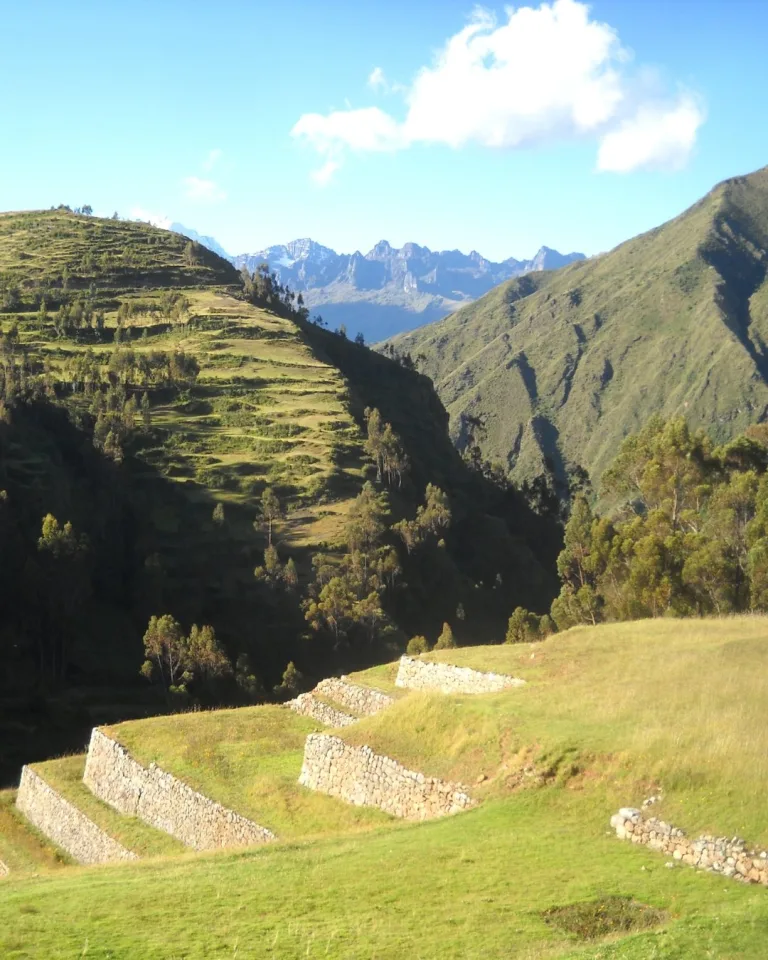
- Panoramic Sacred Valley vistas: Sweeping views from the ruins stretch across peaks and fields below.
- Living textile heritage: Adjacent workshops maintain Inca dyeing and weaving techniques passed down through generations.
Location & Access
- Nearest Town: Chinchero (on-site)
- Directions: Take a combi from Cusco toward Urubamba. Ask the driver to drop you at Chinchero; the ruins are a short uphill walk from the road.
- Opening Hours: 7:00 AM – 5:00 PM
- Entry Fees: Included in the Boleto Turístico (no single ticket)
- Facilities: Restrooms, local vendors, artisan market
- Accessibility: Moderate – altitude and slope present challenges
- Nearby Sites: Pisac, Ollantaytambo, Moray, Machu Picchu, Tipón
- Pro Tip: Bring sun protection and move slowly, the elevation is nearly 3,800m.
Highlights to Help You Understand Your Visit
Chinchero isn’t just built on stone. It’s layered with intent, memory, and control. Look closely and the site reveals itself as more than a village.
- Layers of Empire: The colonial church doesn’t erase the Inca. It exposes the imperial ambition of both civilizations. One sits literally atop the other.
- Terracing as Statement: These aren’t just agricultural platforms. Their size, symmetry, and prominence were designed to impress and to project order from the mountainside.
- Water as Ceremony: Watch how the stone channels flow. The water system wasn’t just practical. It was sacred engineering for purification, fertility, and control.
- Design in the Details: Inca walls here feature trapezoidal niches and subtle tapering. These aren’t ruins. They’re precision structures surviving centuries of upheaval.
- A Living Thread: The nearby weavers don’t just sell cloth. Their techniques echo Inca cosmology, patterning, and resource mastery, all rooted in this same landscape.
Key Structures of Chinchero
- Main Agricultural Terraces: Expansive stepped platforms built with large, finely fitted stones, used for both crop production and symbolic display of Inca engineering.
- Temple Platform (Under Church): A raised ceremonial base once associated with royal or sacred use, now partially buried beneath the colonial church that repurposed its stones.
- Stone Water Channels and Ritual Basins: Intricately carved conduits direct spring water through a sequence of basins, likely used for purification or offering ceremonies.
- Inca Walls and Niches: High-quality polygonal masonry walls with trapezoidal niches, consistent with elite ritual architecture found in major Inca centers.
- Market Plaza and Open Platforms: Flat gathering spaces possibly used for civic ceremonies or exchanges, bordered by retaining walls and scenic viewpoints.
- Residential Sector Foundations: Remnants of upper-class dwellings and storage structures, partially excavated and delineated by finer masonry techniques.
- Andean Cemetery and Crosses: A traditional burial ground near the church with white crosses and offerings, representing the blending of Christian and Indigenous funerary practice.
History and Legends
Chinchero was occupied before the Inca turned it into a royal center. Excavations at Capellanpampa have recovered Killke pottery, evidence of a pre-Inca population that farmed the plateau and raised camelids in the centuries before imperial expansion from Cusco. The location offered cultivable land and abundant water on the high ground northwest of the Inca capital, with routes descending toward the Urubamba Valley. These earlier remains form the first known phase of a settlement that was later reshaped on a much larger scale.
That transformation took place under Túpac Inca Yupanqui in the later 15th century. Juan de Betanzos, writing within a generation of the Spanish conquest, devoted a chapter of his Inca history to the construction of Chinchero. He described Túpac Yupanqui choosing a plain near a large lake, ordering a plan for the settlement, and having builders measure out its houses and streets before opening the foundations. Betanzos also says the ruler intended Chinchero as a place where he and the lords of Cusco could spend time away from the capital. The surviving architecture fits the scale of that royal project: large stone walls, elite residences, terraces, shrines, and carefully organized open spaces spread across the hillside.
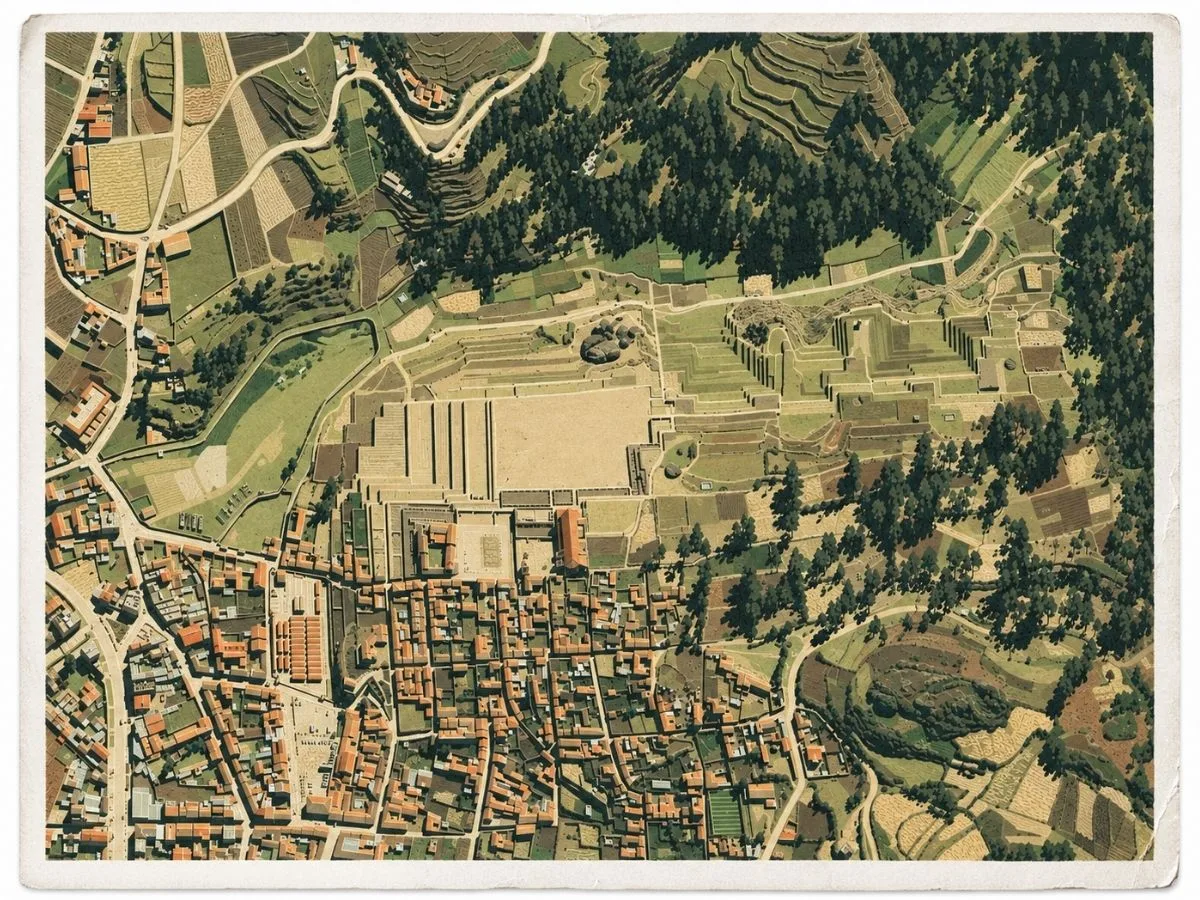
The terraces are central to understanding what Túpac Yupanqui built here. They step down below the upper settlement through sectors including Q’entepata, Patapatayoq, and Wataycarcel, supported by retaining walls and linked by stairs and channels. Roads connected Chinchero with the surrounding countryside, including the Inca route descending toward Urquillos. Above them stood the palatial buildings, constructed with massive fitted blocks and accompanied by smaller enclosures and huacas. Chinchero was both a royal residence and a working estate, with the ruler’s buildings set directly above the agricultural ground and road system that supported them.
Chinchero’s Inca royal phase ended violently during the struggle against the Spanish. In 1536, as Manco Inca’s forces withdrew toward Vilcabamba during the uprising against Spanish rule, Chinchero was burned. Colonial authorities later reorganized the settlement, but they did not erase its Inca core. The church of Chinchero was raised directly over walls of Túpac Yupanqui’s palace and completed in 1607. Inca masonry still forms part of its foundations, while the interior belongs to the colonial period, with mural painting and later Cusco-school works. A large painting of the Virgin of Monserrat, dated 1693 and signed by Francisco Chihuantito, includes a view of Chinchero itself, placing the colonial town directly into its own religious art.
Colonial government also reshaped local authority in a form that remains active in Chinchero. The Varayoq system was established through the Indigenous cabildos created during the reductions of Viceroy Francisco de Toledo in 1570, while drawing on older Andean traditions of communal leadership. Varayoq still serve Chinchero’s communities in administrative and ceremonial roles, carrying their staffs of office during community events and religious festivals. In 2025, Peru’s Ministry of Culture declared the Varayoq system of Chinchero part of the nation’s cultural heritage. Political and religious institutions changed after the conquest, but community life continued on the same high ground around the former Inca estate.
Modern excavation has filled in more of that sequence. The Spanish Archaeological Mission worked at Chinchero in 1968 and 1969, recovering Killke and imperial Inca ceramics along with metal objects, stone tools, an offering, and burials. Between 2007 and 2010, archaeological work restored the Inca road between Chinchero and Urquillos. Further work at Q’entepata between 2013 and 2019 recovered eleven terrace platforms and identified rectangular rooms, stairways, and channels associated with the Inca occupation. Those investigations have shown how far Túpac Yupanqui’s complex extended beyond the palace walls beneath the church, through the terraces, roads, rooms, and waterworks that still cover the slopes below Chinchero.
Experiences Around Chinchero
The ruins are only part of the story. Chinchero sits on a high Andean plateau of potato fields, grazing land, and broad views toward the snow-covered Cordillera Urubamba.
Watch local weavers spin wool, prepare natural dyes such as cochineal and indigo, and work traditional backstrap looms, then browse the town’s textile market for blankets, belts, and woven bags.
At nearby Laguna Piuray, kayaking or stand-up paddleboarding puts you out on the water among farmland, birdlife, and mountain views.
How to Get There & Where to Go Next
How to Visit Chinchero
Step-by-step access to the site
- Start in Cusco: Puente Grau combi stop
- Ride to Chinchero: Combi toward Urubamba – 45 min
- Get dropped roadside: Ask driver to stop at Chinchero
Tips: Bring soles for the ride. Go early for sun and space. The altitude hits fast.
Nearby Ruins You Can Visit
Chinchero’s precision terraces and sacred water channels echo through other Sacred Valley Inca sites, each shaped by altitude, empire, and enduring ritual design.


Machu Picchu – A royal Inca sanctuary built with the same elite masonry and cosmological precision.

Pisac – Hilltop citadel overlooking the Sacred Valley, where terraces trace the sky and ceremonial echoes remain.
Download Quick Guide
Español
English
Traveler Tips
- Altitude is serious here. Move slowly, hydrate often.
- Morning light offers best views and photo conditions.
- The textile market nearby makes for a great cultural add-on.
- Weather changes quickly. Carry a layer and sun protection.
- Boleto Turístico required. No standalone tickets sold on site..
Elsewhere in the Americas…
As the Inca expanded in the Andes, powerful states across North America were reaching their own political and cultural peaks:

The Aztec Empire dominated central Mexico, controlling tribute states and building sacred architecture in Tenochtitlan.


In the Central U.S., Mississippian cultures built mound centers like Angel Mounds, shaping trade and ceremonial networks.
.
Insider Explorer Advice
You can easily reach Chinchero as a half-day trip from Cusco. Take a combi toward Urubamba and ask the driver to stop at the Chinchero entrance. It’s a short walk to the ruins. The site delivers some of the finest Inca terracing anywhere, and the carved water features are quietly intricate. Don’t underestimate the elevation. It hits fast. The Sacred Valley views alone justify the trip. When done, just return to the roadside and flag any passing ride back. Simple and unforgettable.
Summary: Chinchero stands where stone meets sky in the Sacred Valley. A living highland legacy shaped by Inca engineering and colonial transformation.