
Chimney Rock
USA / COLORADO / ANCESTRAL PUEBLOAN
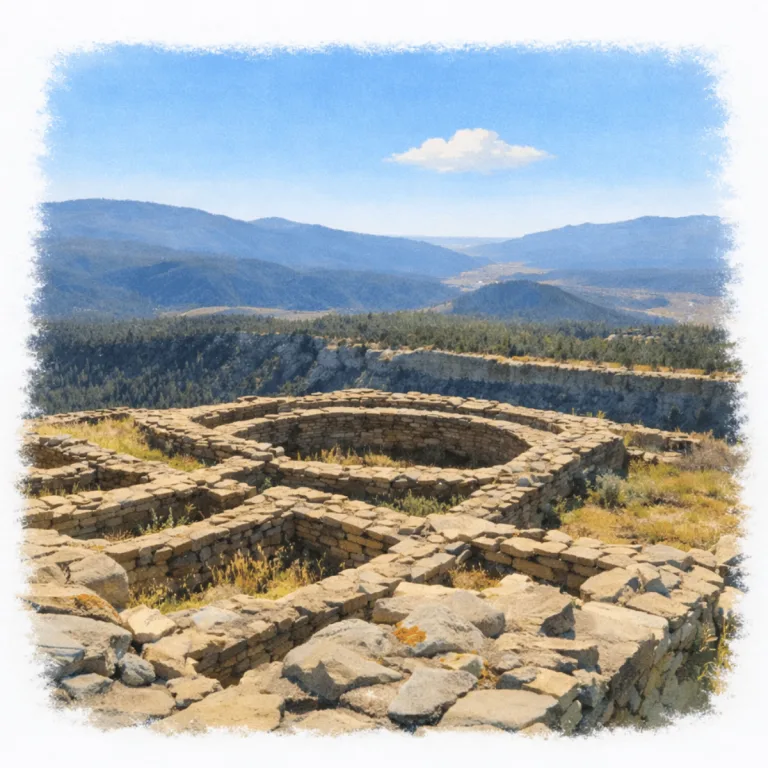
High atop a narrow sandstone ridge, Chimney Rock frames a lunar standstill between twin stone spires, where Ancestral Puebloan builders fixed one of the most precise astronomical alignments in North America.
| Name | Chimney Rock National Monument |
| Civilization | Ancestral Puebloan |
| Location | Colorado, USA |
| Elevation | 7,000 to over 7,600 ft (2,100–2,300+ m) above sea level |
| Years Active | c. 925 – 1125 CE |
| Primary Resources | Sandstone, timber, astronomical alignments |
| Site Type | Outlier great house and ceremonial center |
| Key Highlights | Great House Pueblo, lunar alignment, Chacoan roads |
| Entry Fee | $20 USD |
| Best Time to Visit | Late spring through early fall |
| Field Visit | Visited & photographed by Lost Ruins of the Americas |
Unique Features of the Chimney Rock Archaeological Site
- High-Ridge Location: One of the few Chacoan outliers built directly atop a narrow mountain ridge, offering unmatched views of the San Juan Mountains and Piedra Valley.
- Lunar Alignment: The site’s placement allowed observation of the moon rising between the twin spires during the major lunar standstill cycle every 18.6 years.
- Interconnected Network: Archaeological mapping shows Chimney Rock linked by ancient roads and shared ritual architecture with other Chacoan centers.
- Symbolic Isolation: Its distance from major settlements suggests a ceremonial destination rather than a permanent community.
- Modern Stewardship: Managed jointly by the U.S. Forest Service and Native partners, it remains an active place of cultural respect and interpretation.
Location & Access
- Nearest Town: Pagosa Springs, Colorado
- Directions: From Pagosa Springs, take US-160 west for 17 miles. Turn right onto CO-151 and follow signs to the monument entrance.
- National Monument Site: Chimney Rock National Monument
- Opening Hours: 9:00 AM – 4:30 PM (seasonal)
- Entry Fee: $20 per vehicle
- Facilities: Visitor center, small museum, restrooms, parking lot, shuttle
- Accessibility: Lower interpretive trails and museum accessible. Upper Great House trail involves steep hiking.
- Pro Tip: Take the shuttle if available, or hike the service road for a scenic uphill walk to the mesa ridge.
Highlights to Help Understand Your Visit
Before exploring the mesa and kiva, keep these perspectives in mind. They show how Chimney Rock fit within the greater Ancestral Puebloan world and why its placement mattered.
- Height with Purpose: The Great House stands 7,600 feet above sea level. This elevation was chosen not for defense but for observation, a place where sky, horizon, and ceremony met.
- The Twin Spires: These sandstone pillars rise beside the Great House, forming a natural marker for the moon’s northernmost rise during the 18.6-year lunar standstill.
- Adapted Chacoan Design: Builders brought Chaco’s core and veneer masonry style to extreme terrain, reshaping it to fit a narrow ridge instead of a plaza floor.
- Sound and Silence: From the upper trail, the wind carries across deep valleys. Imagine voices or drums echoing during ceremonies, carrying the sound of ritual far into the distance.
- Symbolic Isolation: The mesa’s remoteness likely heightened its spiritual role. Few lived here year round, making it a place to arrive, perform, and then return home.
- Echoes of Continuity: Modern Pueblo communities still honor high places like this as portals between worlds, a reflection of continuity that bridges a thousand years.
Key Structures of Chimney Rock
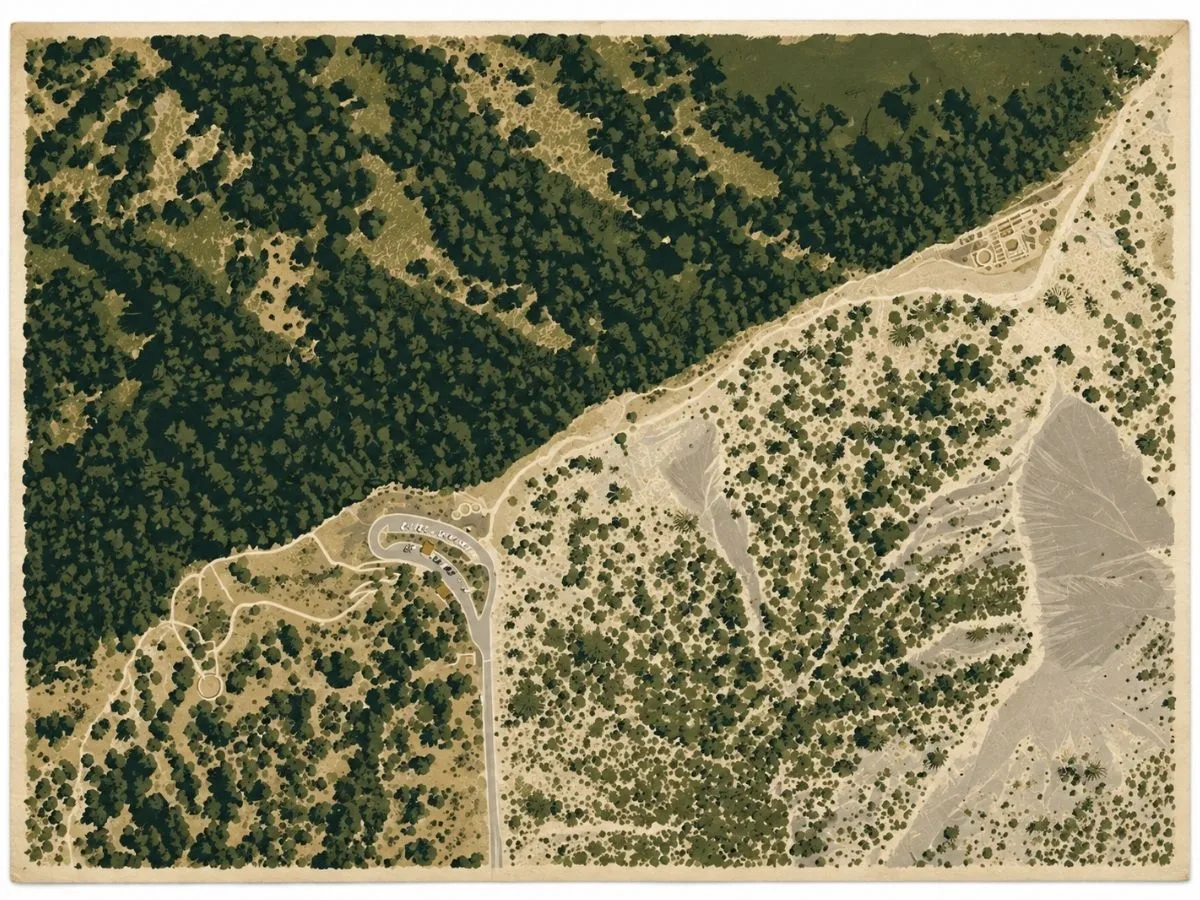
- Great House Pueblo: A Chaco-style ceremonial complex of more than thirty rooms built along the narrow ridge summit. Its thick sandstone walls and precise alignment suggest use for elite ritual, observation of celestial events, and gatherings linked to lunar cycles.
- Great Kiva: Located on the lower terrace near the visitor area, this massive circular chamber served as a communal gathering space. Its masonry benches, floor vaults, and central fire pit mirror the architectural tradition of larger Chacoan great kivas such as Casa Rinconada.
- Guardhouse: A rectangular structure positioned at the start of the upper trail. It likely functioned as a checkpoint or symbolic threshold marking entry to the sacred ridge and its restricted ceremonial zone.
- Pit Houses: A cluster of semi-subterranean dwellings near the lower trail, used by resident caretakers or seasonal occupants who supported ceremonies on the mesa above.
- Staircase Segment: A carved sandstone stairway connecting lower and upper levels of the ridge. The steps show evidence of repeated use and illustrate vertical movement within a ritual landscape.
- Storage Rooms and Work Areas: Several small chambers adjoining the Great House may have stored ceremonial materials, food, or ritual goods used during major events tied to lunar observation.
- Chacoan Road Remnants: Faint but straight alignments extend outward from Chimney Rock, linking it to other regional outliers within the broader Chaco communication and pilgrimage network.
History and Legends
Chimney Rock stands as one of the most striking ceremonial outposts of the Ancestral Puebloan world. Situated at the far northeastern edge of the Chacoan cultural sphere, its position high atop a narrow mesa offered both celestial views and earthly seclusion. Archaeologists date its peak activity to between 1020 and 1125 CE, during which it was home to skilled astronomer-builders and Chacoan affiliates who constructed the Great House precisely to track the rare lunar standstill.
This 18.6‑year lunar cycle, during which the moon rises between the twin spires, was so significant that the entire orientation of the ridge‑top structure may have been determined by it. Such celestial precision, far from Chaco Canyon itself, reveals the reach of a cosmological worldview that extended across the Four Corners region.
Unlike the grand plazas of Pueblo Bonito or Aztec Ruins, Chimney Rock’s layout is constrained by steep cliffs and narrow ridgelines. The builders adapted Chacoan architecture to fit the vertical terrain, suggesting that its placement had more symbolic than practical value. The site likely served as a seasonal ceremonial destination rather than a permanent village. Pottery and masonry styles confirm deep ties to Chaco Canyon while also reflecting local traditions and adaptations.
Experiences Around Chimney Rock
The ruins are only part of the story. Chimney Rock sits in a mountain landscape of pine forest, river valleys, and the high peaks of the San Juan Mountains.
Soaking in Pagosa Springs’ geothermal pools beside the San Juan River is an easy way to spend the rest of the day, followed by a walk along the riverside trail through downtown.
Closer to the monument, the Piedra River Trail follows a forested canyon above the river, with swimming holes, cliffs, and longer hiking options into the San Juan National Forest.
Oral traditions from descendant Pueblo peoples remember high places like Chimney Rock as portals between worlds, places where ritual contact could be made with celestial forces. Some stories associate twin spires with the emergence myth or with sacred twins from ancestral journeys. While caution is needed in interpretation, the sacredness of the mesa is widely acknowledged among modern tribes.
By the mid‑12th century, the site was abandoned along with many outlying Chacoan centers. Its ruins were left untouched for centuries, and only in the 20th century did formal excavation and interpretation begin. Today, Chimney Rock remains both a National Monument and a site of living cultural significance, where modern visitors can still watch the moon rise through stone.
How to Get There & Where to Go Next
How to Visit Chimney Rock
Step-by-step access to the site
- Las Vegas to Durango: I-40 east through Flagstaff and Gallup, then US-491 north (about 9 hours).
- Durango to Chimney Rock: US-160 east 47 miles, right on CO-151 for 3 miles.
- Visitor Center: Parking, museum, restrooms, and shuttle service available.
- Upper Trailhead: Shuttle or service road (about 10 minutes).
- Hike Time: 45–60 minutes round trip to the Great House ridge.
Tips: Open seasonally mid-May to mid-October. Start early, bring water, and expect limited shade along the upper trail.
Nearby Ruins You Can Visit
These ancestral sites across the Four Corners region share Chimney Rock’s Chacoan heritage, celestial alignments, and enduring ties to the high desert landscape.

Hovenweep – Towering sandstone structures perched on canyon rims reveal the same precision and planning seen at Chimney Rock.

Mesa Verde – Towering cliff dwellings and painted kivas that illustrate the architectural evolution and enduring spirituality of Ancestral Puebloan life.

Lowry Pueblo – A compact Chacoan outlier with a monumental Great Kiva, once linked by roads and ritual to Chimney Rock.
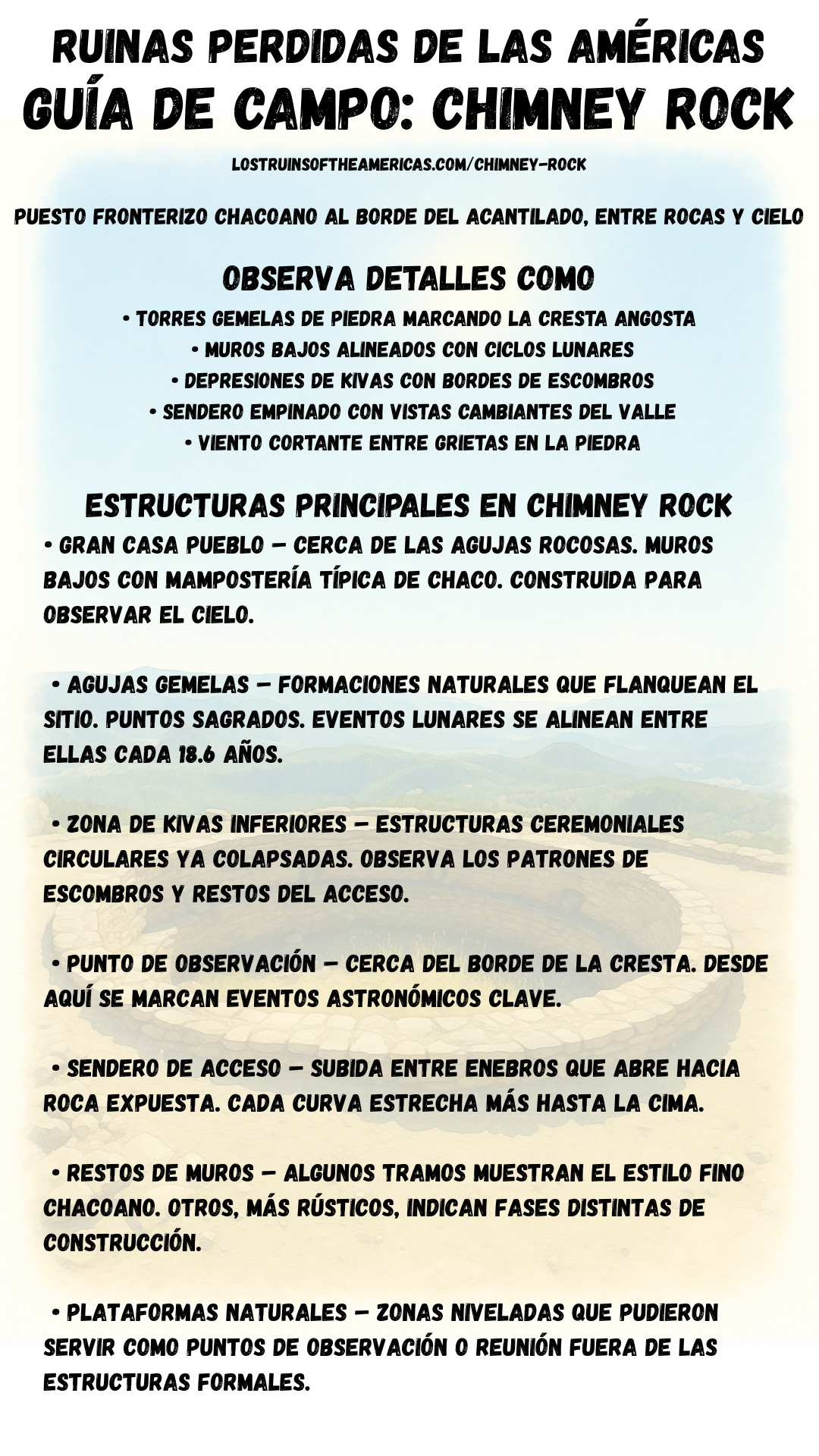
Download Quick Guide
Español
English

Traveler Tips
- Visit between May and September, when the upper trail is open and guided tours are available.
- Arrive early to avoid afternoon storms and to enjoy the best views from the ridge.
- The hike to the Great House is moderately strenuous; wear good shoes and bring water.
- The lower trail and museum offer excellent interpretation for those unable to hike up.
- Bathrooms and shade are available only near the parking area.
Elsewhere in the Americas…
While ancestral communities gathered beneath the twin spires of Chimney Rock, other civilizations across the continent were reaching their own creative heights and transformations:



Along the Gulf Coast of Mexico, the Totonac site of Yohualichan featured niche-lined pyramids.
Insider Explorer Advice
For those willing to hike, the trail up to the Great House offers not just ruins but revelation. The climb winds through piñon and juniper before cresting onto a narrow ridge with sweeping views of Colorado’s San Juan Mountains. The twin spires rise beside you, and if you catch it near dusk, the light turns everything to gold. Do not skip the lower loop either. Its well‑marked walk and small museum provide context that deepens the experience above.
Summary: Chimney Rock offers a summit where stone meets sky. Its altitude, alignments, and ancestral echoes make it one of the most spiritually charged sites in the American Southwest.