
Painted Hand Pueblo
USA / COLORADO / ANCESTRAL PUEBLOAN
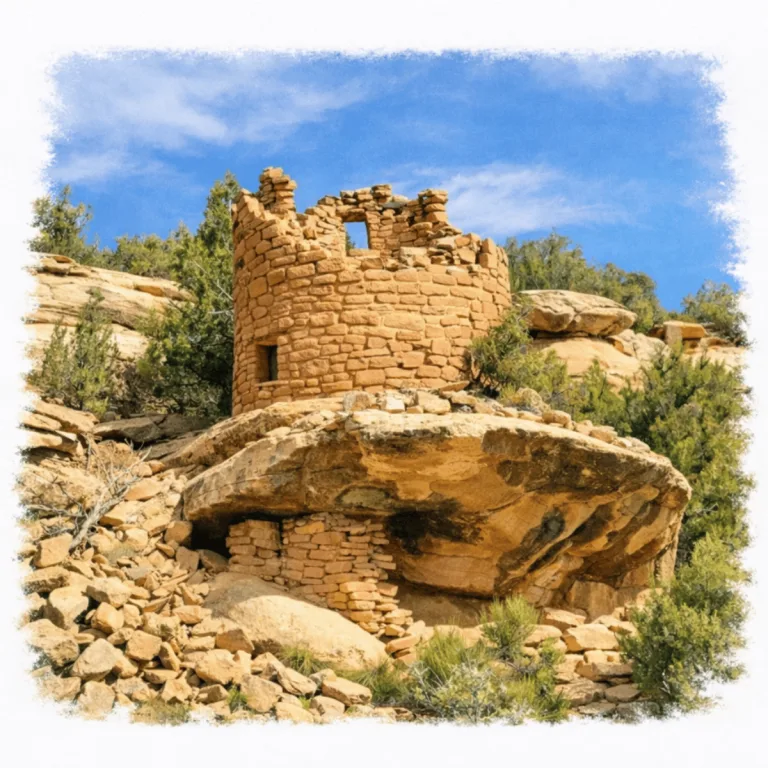
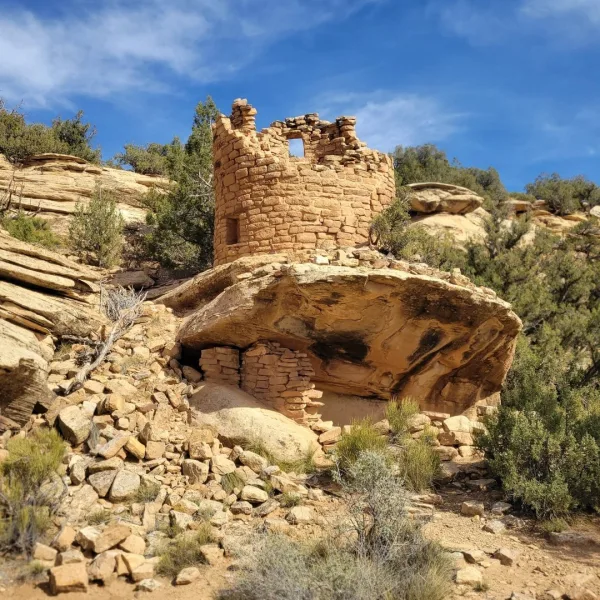
Within a sandstone alcove in Canyons of the Ancients, Painted Hand Pueblo builds masonry rooms against the cliff wall, where painted handprints mark the rock surface behind the structures.
| Name | Painted Hand Pueblo |
| Civilization | Ancestral Puebloan |
| Location | Canyons of the Ancients region, southwest Colorado |
| Elevation | 5,000–6,000 ft (approx. 1,500–1,800+ m) |
| Years Active | c. 1150 to 1300 CE |
| Primary Resources | Sandstone masonry, dryland farming, piñon and juniper woodland |
| Site Type | Tower and cliffside settlement with rock art |
| Key Highlights | Tower on top of a boulder, handprints, ledge based rooms, canyon views |
| Entry Fee | No fee at trailhead |
| Best Time to Visit | Spring or fall, late afternoon for best light on the tower and hands |
Unique Features of Painted Hand Pueblo
- Dual Handprint Styles: Dark outlined hands beneath the tower and lighter white prints in separate spots at the site.
- Tower on an Overhang: A circular tower built on the crown of a boulder with a deep natural undercut.
- Multiple Boulder Zones: Structural traces spread across more than one major boulder.
- Sheltered Rock Art: Painted imagery placed on protected surfaces that limit weathering.
- High Vantage Points: Elevated positions that open long views across the surrounding drainages.
Location & Access
- Nearest Town: Cortez, Colorado
- Trailhead: Small signed dirt pullout within Canyons of the Ancients National Monument
- Official Info: BLM Canyon of the Ancients
- Directions: From Cortez, CO 184 west to County Road 10. Continue on monument access roads using posted signs for Painted Hand Pueblo.
- Hike Length: Short walk of about twenty minutes at a moderate pace
- Opening Hours: Day use only
- Entry Fees: None
- Facilities: No restrooms, water, or shade structures. Bring all supplies.
- Accessibility: Uneven surfaces, rock shelves, and short ledges. Not suitable for wheelchairs or strollers.
- Pro Tip: Check road and weather conditions in Cortez before driving dirt access roads, especially after rain or snow.

Highlights to Help Understand Your Visit
Hovenweep is best read as a frontier landscape, where towers, water control, and careful stonework shaped small communities along the canyon rims.
- The tower sits on a natural stage: Its placement on the crown of a massive boulder is intentional, creating a vertical landmark that stands out across the canyon.
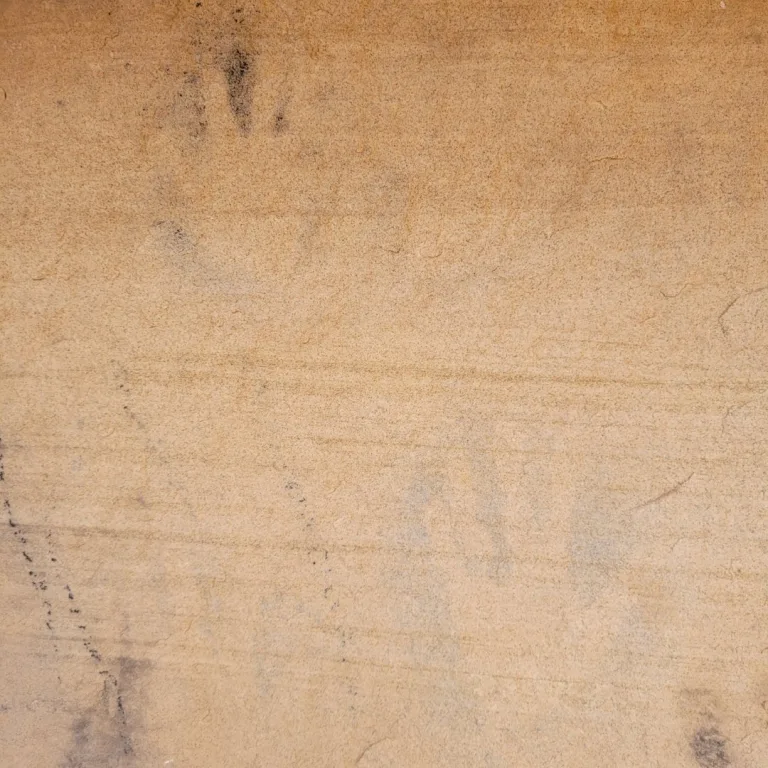
- Look closely at the rock art below the tower: The dark outlined hand shapes were made by applying pigment around a placed hand. This technique differs from the lighter positive prints found elsewhere at the site.
- The village occupied multiple boulders: Masonry traces on separate rock formations show that rooms and work areas were spread across uneven ground rather than arranged in a single block.
- Most architecture now lies in fragments: The low wall lines and scattered stones around the boulders mark room edges that once formed a small settlement.
- The canyon setting shaped daily life: Narrow shelves, sloping rock platforms, and long sightlines help explain why this location worked as a lookout and habitation area.
Key Structures of Painted Hand Pueblo
- Tower Boulder: A circular masonry tower built on top of a massive sandstone boulder. The tower remains the most visible structure at the site and rises clearly above the canyon edge.
- Handprint Panel: A protected wall surface beneath the tower that preserves dark outlined hand imagery. These impressions were made by placing a hand on the rock and applying pigment around it, leaving the hand shape in negative form.
- Additional Handprints: Faint white handprints found on separate walls elsewhere at the site. These prints were created by applying pigment directly to the hand and pressing it to the stone, producing a lighter positive image.
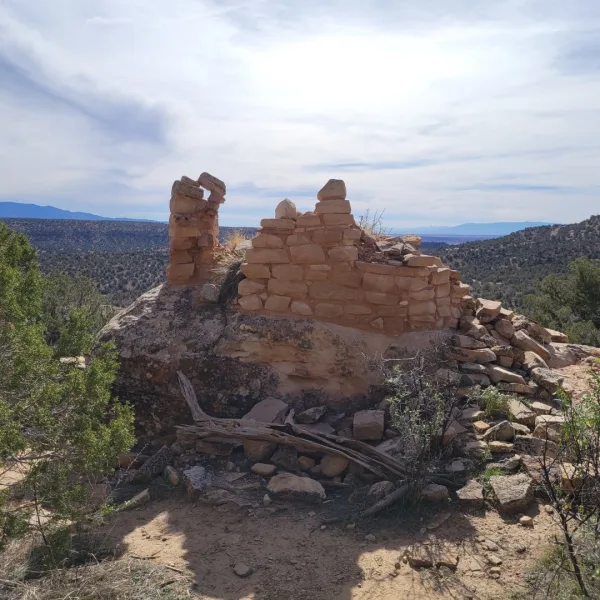
- Second Boulder with Masonry Traces: A separate large boulder near the tower that preserves short wall segments and masonry outlines along its upper edge. These remains show that parts of the village extended across multiple rock formations.
- Room Rubble: Low stone fragments scattered between and around the boulders. These collapsed walls mark the footprints of several small rooms built into the uneven terrain.
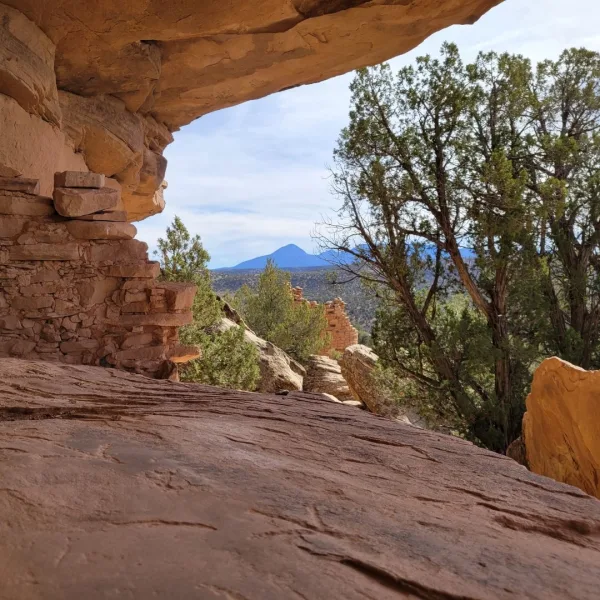
- Cliffside Position: The structures occupy narrow shelves and sloping rock platforms above surrounding drainages. This natural setting shapes the compact layout of the tower, the painted panels, and the room traces.

History and Legends
Painted Hand Pueblo occupies a narrow ridge within the Canyons of the Ancients region where small Ancestral Puebloan households once made efficient use of ledges, boulders, and natural shelves. These settings offered shelter from sun and wind, access to fields on nearby mesa tops, and wide views down the branching canyons below. The community here was part of a larger cultural landscape linked by shared masonry styles, daily practices, and local networks of movement.
The circular tower on the crest of a massive boulder is the most prominent structure at the site. Its elevated position suggests a role connected to visibility, presence, and communication across the surrounding terrain. From the top of the tower boulder, long views reach across nearby drainages toward other high points, reinforcing the idea that this ridge was one of several watchful places along the canyon edges.
A single protected wall on a neighboring boulder preserves the white handprints that give the site its name. Placed on a sheltered surface, the prints sit at a natural standing height and remain clearly visible. Similar hand imagery appears throughout the Puebloan world, often marking important walls or signaling movement through a place. At Painted Hand Pueblo, the prints likely carried meaning related to presence, passage, or community memory rather than decoration.
Rooms and work areas built along narrow shelves complete the outline of daily life. Low walls define small spaces where families slept, prepared food, stored supplies, and carried out routine tasks. Rock surfaces on these ledges would have supported grinding, cooking, and tool making. Pottery fragments and regional debris patterns show that the residents participated in broader trade and exchange with neighboring settlements across the mesas and canyons.
By the thirteenth century, many communities in the region were relocating in response to changing environmental and social conditions. Painted Hand Pueblo, like other small tower and ledge sites along the canyon rims, was eventually left unoccupied. Today the tower, wall lines, and surviving handprints remain as a quiet record of that time. Visitors are encouraged to walk carefully, avoid touching the painted or masonry surfaces, and view the site as part of a living heritage connected to present day Pueblo peoples.
How to Get There & Where to Go Next
How to Visit Painted Hand Pueblo
Step-by-step access to the site
- From Las Vegas Drive northeast on I-15 then east on US-160 and US-191 for about 7 hours.
- Gateway Town: Continue to Cortez, Colorado, the closest supply point.
- Final Stretch:Take County Road G and BLM access roads for roughly 35 to 40 minutes.
- On Site: Park at the small trailhead and walk the loop trail for about 45 minutes.
Tips: Check road conditions before heading out, since rain can affect the BLM roads.
Nearby Ruins You Can Visit
These Ancestral Puebloan sites share tower architecture, cliffside building, and canyon edge settings that echo the feel of Painted Hand Pueblo.

Hovenweep: Stone towers perched on canyon rims that show how similar masonry rose directly from bedrock across this desert landscape.

Sand Canyon Trail: A long cliffside route with towers, room blocks, and kiva traces scattered along ledges and alcoves above the canyon.

Lowry Pueblo – A compact village with a Great Kiva, showing how community and ceremony blended in Chaco’s northern sphere.
Traveler Tips
- Bring water and sun protection since the trail is exposed and there are no services.
- Expect uneven steps and loose gravel, so supportive shoes are recommended.
- Stay on marked paths to avoid fragile room outlines around the boulders.
- View the painted handprints without touching the wall to protect the pigment.
Elsewhere in the Americas…
During the same centuries when Painted Hand Pueblo was active, other regions of the Americas were experiencing major cultural developments:


Insider Explorer Advice
The short walk from the trailhead makes Painted Hand Pueblo an ideal stop at the end of a day in the monument. The approach is just long enough to leave the road behind and arrive in a quieter space where the tower and boulder forms begin to stand out against the horizon.
Standing where the white handprints come into view can make the past feel close. The combination of tower, painted rock, and open canyon invites a slow pace. Take time to look, keep to the trail, and leave only footprints in the soil so that this small, sacred place remains intact for future visitors.
Summary: Painted Hand Pueblo is a compact cliffside ruin where a tower on a boulder, a separate handprint wall, and ledge based rooms offer a concentrated glimpse into the Ancestral Puebloan world.