
Cahokia Mounds
USA / ILLINOIS / MISSISSIPPIAN
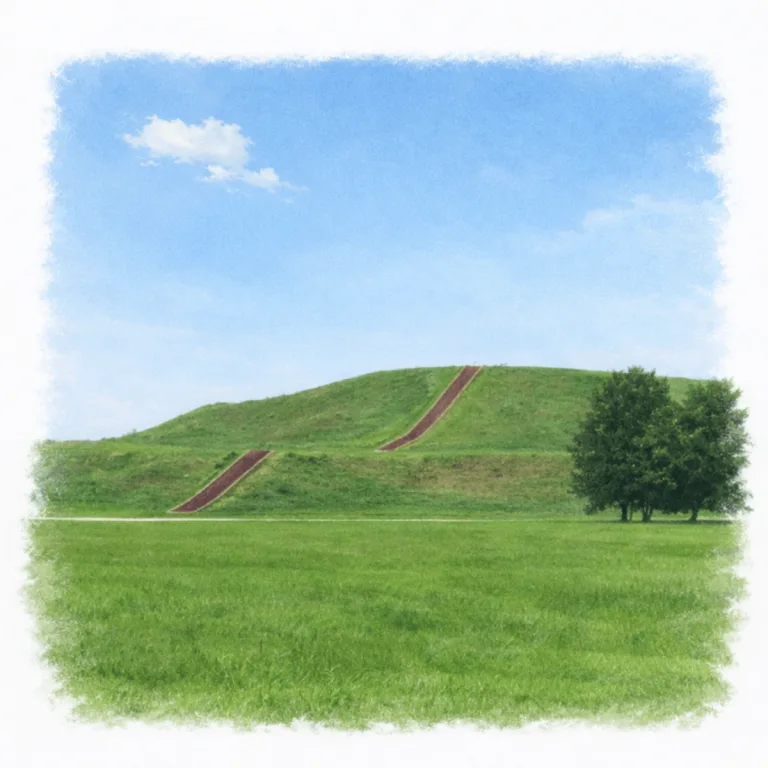
Just a few miles from St. Louis, Cahokia Mounds rises not in stone but in sweeping earthen mounds, forming the largest pre-Columbian city north of Mexico, where Woodhenge still marks the movement of the sun.
| Name | Cahokia |
| Civilization | Mississippian |
| Location | Collinsville, Illinois, USA |
| Elevation | 128 meters (420 feet) |
| Years Active | c. 1050–1350 AD |
| Primary Resources | Maize, river trade, copper |
| Site Type | Ceremonial and urban center |
| Key Highlights | Monks Mound, Grand Plaza, Woodhenge |
| UNESCO | Cahokia Mounds State Historic Site |
| Entry Fee | Free (Donations encouraged) |
| Best Time to Visit | Spring and Fall for mild weather |
| Field Visit | Visited and documented by Lost Ruins of the Americas |
Unique Features of Cahokia Archaeological Site
- Architectural Highlights: Monks Mound, Grand Plaza, stockades
- Notable Artifacts: Shell-tempered pottery, copper plates, engraved stone tablets
- Natural Surroundings: Mississippi floodplain, sweeping views from Monks Mound
- Comparative Notes: Largest prehistoric earthen complex in North America
Location & Access
- Nearest City: Collinsville, Illinois
- Directions: Easily accessible from I-55/I-70. Follow signs for Cahokia Mounds State Historic Site; ample parking is available near the Interpretive Center.
- NPS: Cahokia Mounds State Historic Site
- Opening Hours: 9:00 AM – 5:00 PM (Closed Mondays and holidays)
- Entry Fees: Free (Donations encouraged)
- Facilities: Visitor center, restrooms, exhibits, walking paths, and picnic areas
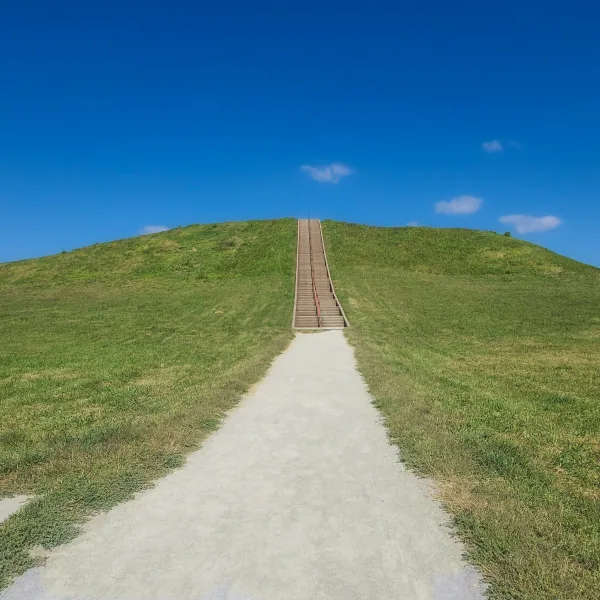
- Accessibility: Most areas are flat with paved walkways, though Monks Mound requires stair climbing
- Pro Tip: Visit early for cooler temperatures and a chance to see sunrise alignments at Woodhenge during equinoxes

Highlights to Help Understand Your Visit
Cahokia is less about standing ruins and more about understanding space, scale, and alignment. These highlights will help you read the land like the people who built it.
- Built to Be Seen: Monks Mound dominates the landscape. Its height and visibility were part of its message. Power elevated above all else.
- Movement Was Meaning: Wide plazas and narrow passages shaped how people approached sacred spaces. Every step toward the mound was a ritual.
- Solar Timekeepers: Woodhenge wasn’t decorative. Its alignments marked solstices and equinoxes, guiding agriculture and ceremony.
- Earth as Architecture: These aren’t random hills. Every mound was placed, shaped, and layered with intention. Some held burials, others foundations for buildings.
- Not Just a City. A System: Cahokia was a node in a continent-spanning trade and cultural network. What you see here radiated outward.
Key Structures of the Cahokia Mounds Ruins
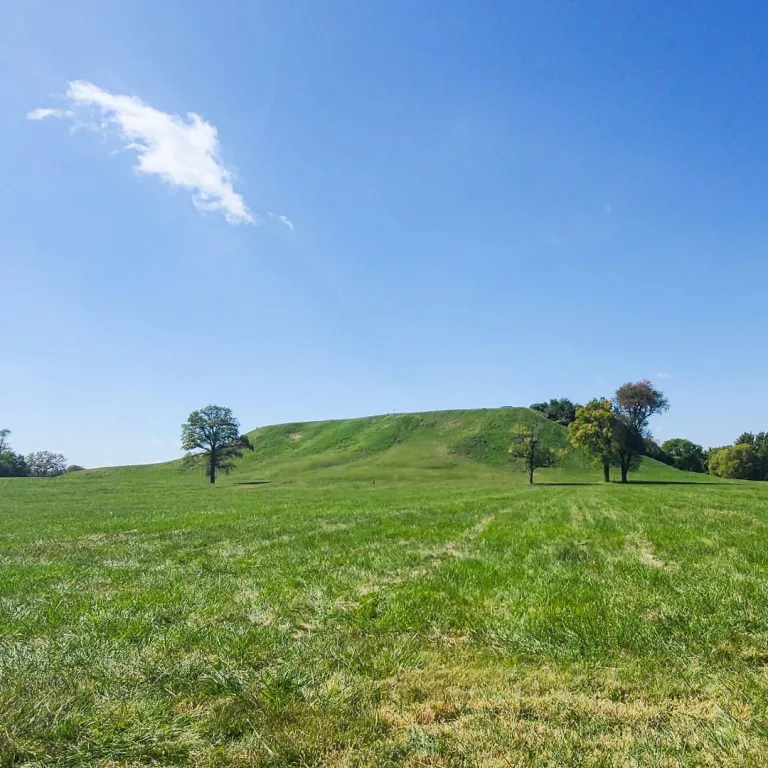
- Monks Mound: The central and tallest structure at Cahokia, rising over 100 feet. Likely served as a platform for elite residences or ceremonial buildings.
- Grand Plaza: A vast open area at the site’s core, used for public gatherings, rituals, or markets. Thought to symbolize political and cosmological order.
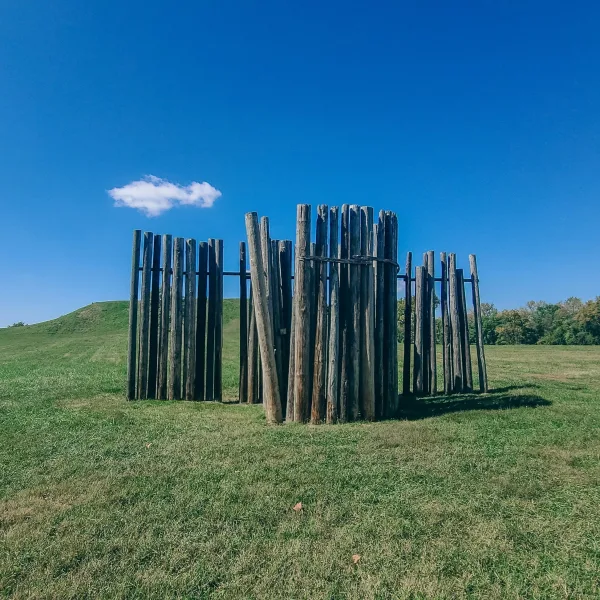
- Woodhenge: Circular timber post arrangement functioning as a solar calendar. Aligned to solstices and equinoxes for ceremonial timekeeping.
- Mound 72: Burial mound with elite grave goods and sacrificial burials, suggesting high-status individuals and ritual significance.
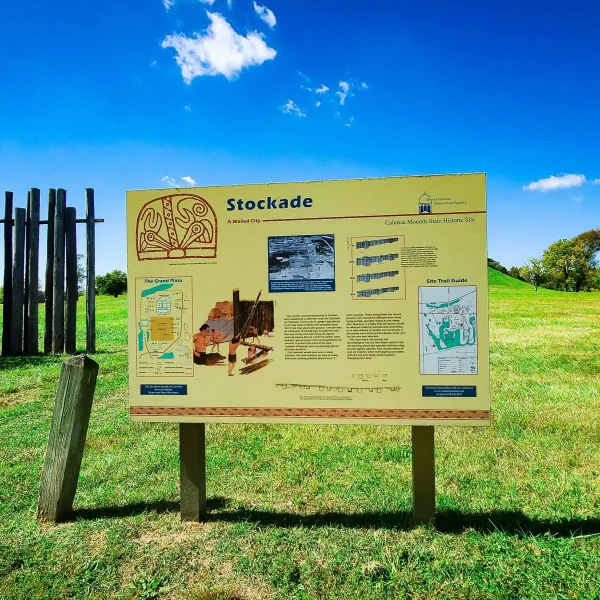
- Stockade Wall: Defensive wooden palisade that once surrounded the central precinct. Implies organized labor and concerns over protection or control.
- Twin Mounds (60 & 59): Smaller platform mounds thought to be used for housing elites or officials near the main plaza.
- Interpretive Center: Modern structure offering exhibits and context on Cahokia’s architecture, trade, and social complexity.
History and Legends
Cahokia was once the heartbeat of a powerful Mississippian civilization that spanned the southeastern and midwestern United States. From around 1050 to 1350 AD, it rose as one of the largest cities in ancient North America. At its peak, its population may have rivaled London.
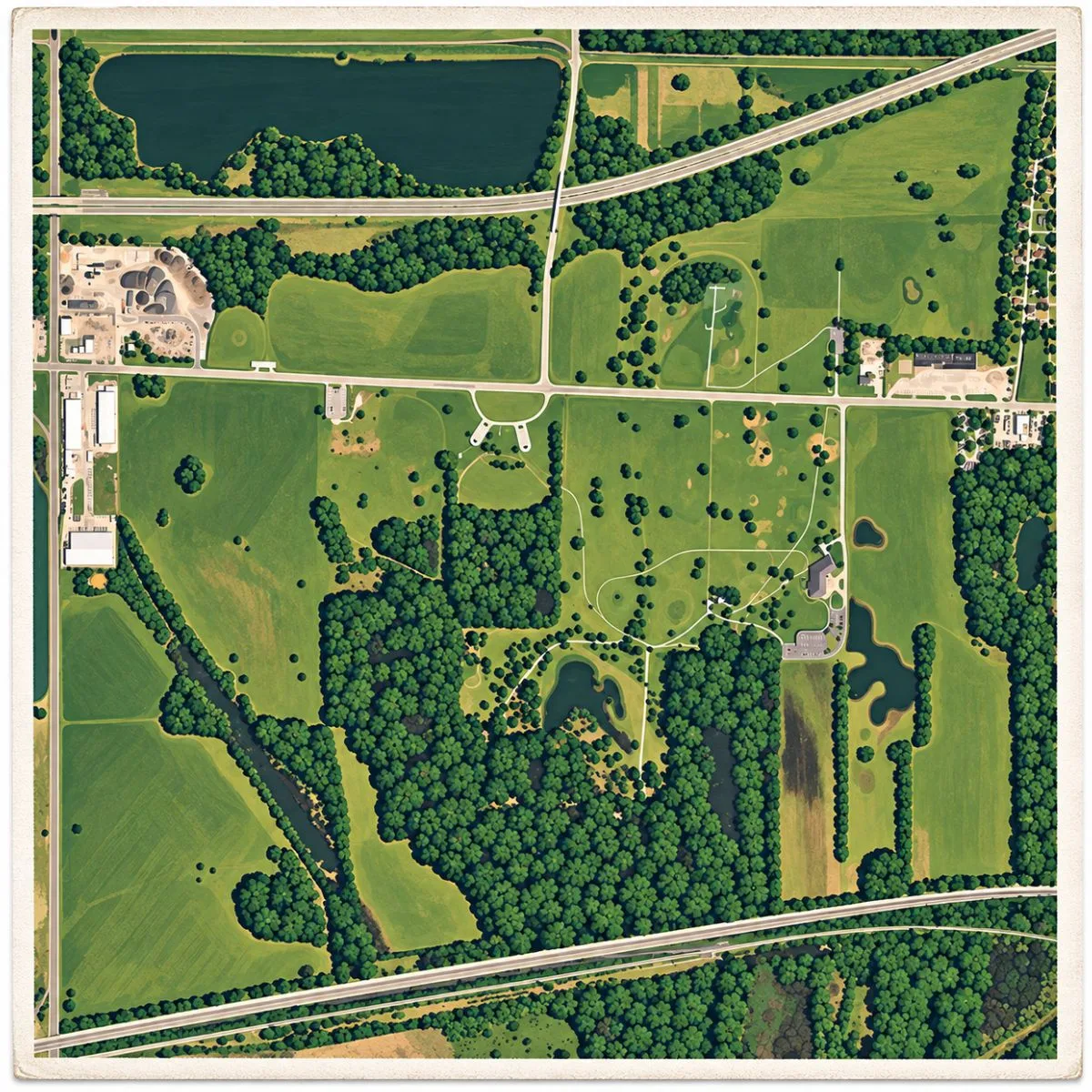
The site covers more than six square miles and contains over 120 earthen mounds, arranged across plazas, causeways, and ceremonial corridors. These include flat-topped platform mounds for buildings, conical mounds for burials, and ridge-top mounds that marked boundaries or processional routes. Every one was shaped by hand using basketloads of soil, hauled from borrow pits and compacted in layers. At the center stands Monks Mound, the largest earthwork in the Americas. This four-terraced platform rises over 100 feet and covers more than 14 acres at its base. It likely supported a great wooden temple or elite residence, visible for miles across the Mississippi floodplain.
South of Monks Mound lies the Grand Plaza, a leveled expanse spanning nearly 50 acres. It once served as Cahokia’s ceremonial core, hosting mass gatherings, feasts, public rituals, and perhaps games. The plaza’s flatness was engineered through earthmoving on a monumental scale, cutting into ridges and filling low ground to create a unified civic space. Nearby, Mound 72 holds one of the site’s most revealing burials. Beneath it, archaeologists uncovered a high-status male interred with thousands of shell beads arranged in the shape of a bird, along with dozens of sacrificial burials. These remains suggest layered rituals of death, power, and cosmic symbolism tied to Cahokia’s elite class.
Encircling the central precinct was a wooden stockade, rebuilt multiple times and likely used more for ceremonial boundary than defense. Walkways and gateways directed movement through sacred space, with access shaped by status, role, and ritual. To the west, Woodhenge marked the solar calendar using a ring of red cedar posts aligned to solstices and equinoxes. Its placement in relation to Monks Mound suggests a city planned not just for control, but for cosmology. This was a landscape where architecture, power, and time were deeply intertwined.
Experiences Around Cahokia
The ruins are only part of the story. Cahokia sits in a wider Mississippi River landscape of floodplain, wetlands, open fields, and the St. Louis skyline.
St. Louis adds museums, riverfront walks, markets, barbecue, and plenty of city energy. Collinsville brings a smaller-town base close to the mounds, with local restaurants and an easy connection to the surrounding Illinois side of the metro area.
Nearby levees, wetlands, and river overlooks extend the trip into the landscape that shaped Cahokia, giving the site a broader sense of place beyond the mounds.
Cahokia was also a regional center of trade, drawing materials and ideas from distant lands. Goods from the Gulf Coast, Great Lakes, and Appalachians, including copper, shell, and mica, have all been uncovered at the site. Its location at the crossroads of major river systems made it a hub of exchange, where resources, beliefs, and power converged.
Such complexity did not emerge by chance. The scale of Cahokia’s mounds, plazas, and stockades points to strong centralized leadership and a belief system that made earthwork sacred. Labor was ritual. Architecture was meaning. Moving soil became an act of devotion. Each platform lifted a ruler. Each burial mound honored the dead. Each wall shaped how people moved through space and ceremony. The city was a landscape of control, belief, and cosmic balance.
By the 1300s, Cahokia began to decline. Environmental shifts, resource pressures, or internal conflict may have contributed. When Europeans entered the region, the city was long abandoned. But its memory persisted in the oral traditions of groups like the Osage and Natchez.
Designated a UNESCO World Heritage Site in 1982, Cahokia stands today as the most complex pre-Columbian archaeological site north of Mexico. Its scale, planning, and spiritual vision challenge old assumptions about what Indigenous peoples of North America achieved before European contact.
It was not built in stone, but in layered earth, shaped by hands and guided by sky. Not forgotten, but waiting to be seen. A city that still speaks through its silence.
How to Get There & Where to Go Next
How to Visit Cahokia Mounds
Step-by-step access to the site
- From St. Louis, MO: Drive east on I-55/I-70 across the Mississippi River – approx. 15–20 min.
- Take Exit 6: Follow signs for IL-111 north and Cahokia Mounds State Historic Site – 5 min.
- Arrive at the Interpretive Center: Large parking lot available – access to main trails and museum.
- Walk to Monks Mound: Paved trails from the visitor center – approx. 10–12 min on foot.
Tips: Arrive early to avoid heat on the mound stairs. Check the site’s calendar for solstice events at Woodhenge.
Nearby Ruins You Can Visit
These Mississippian mound centers shared Cahokia’s scale, symbolism, and celestial alignment. Linked by rivers, rituals, and the rise of native cities long before European contact.

Angel Mounds – A planned Mississippian town beside the Ohio, where platform mounds and plazas shaped community and ceremony.

Millstone Bluff – A Mississippian hilltop village in southern Illinois, with faint petroglyphs along a forested loop trail.

Kincaid Mounds – A multi mound settlement and regional hub at the southern edge of the Mississippian world.

Download Quick Guide
Español
English


Traveler Tips
- What to Bring: Water, sunscreen, hat, walking shoes
- Best Time to Visit: Spring or Fall
- Nearby Attractions: Gateway Arch, Cahokia Courthouse, Lewis and Clark Historic Site
- Safety Notes: Use caution on mound steps and hydrate during warmer months
In South America…
While Cahokia rose in the North American floodplains, other cultures across the Americas were reaching new heights of power and influence:


At Viracochapampa, geometric compounds and walled plazas reflected Wari influence in the northern Andes.

In the Maya world, Chichén Itzá and Uxmal flourished as powerful centers of trade, ritual, and political life.
Insider Explorer Advice
Cahokia Mounds is just minutes from downtown St. Louis, but it feels worlds away. The visitor center offers helpful context, but the real experience is walking the grounds. Climbing Monks Mound gives a panoramic view that connects past and present. The St. Louis skyline in the distance, and beneath your feet, layers of earth placed one basket at a time. Woodhenge is a short, flat walk from the main parking area and adds a layer of mystery and precision to the site. It’s less about ruins and more about landscape and presence, and it absolutely delivers.
Summary: Cahokia was the beating heart of a Mesoamerican superpower. A sprawling Mississippian city sculpted from earth and aligned with the stars.