
Batán Grande
PURU / LAMBAYEQUE / SICÁN
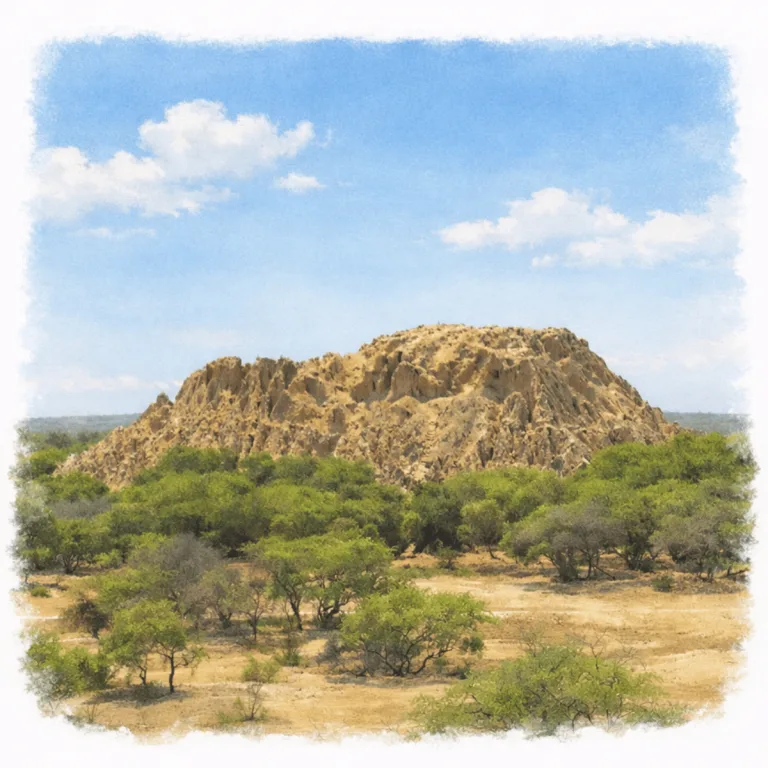
Across the dry forests of the Lambayeque Valley, Batán Grande organizes a dense field of adobe pyramids, where Sicán elites constructed towering huacas as centers of ritual, burial, and political authority.
| Name | Batán Grande |
| Civilization | Sicán (Lambayeque) |
| Location | Santuario Histórico Bosque de Pómac, Lambayeque Region, Peru |
| Elevation | 60 to 80 meters (197 to 262 feet) |
| Years Active | c. 750 – 1375 CE |
| Primary Resources | Adobe, gold, copper, marine goods |
| Site Type | Capital city and necropolis |
| Key Highlights | Huaca El Oro, forested desert setting, site museum |
| INT Airport: | Chiclayo Airport (CIX) |
| Entry Fee | S/5 local adult, S/11 Peruvian adult, S/30 foreign adult |
| Best Time to Visit | Dry season (May–October) |
| Field Visit | Visited & photographed by Lost Ruins of the Americas |
Unique Features of the Batán Grande Archaeological Site
- Huaca El Oro: Burial mound and central structure, possibly royal or religious in nature, site of important tomb discoveries.
- Forested Landscape: Unusual blend of arid terrain and dense algarrobo woodland, rare among northern Peruvian sites.
- Scale and Spread: Batán Grande spans over 2000 hectares, making it one of the largest Sicán sites ever excavated.
- On-site Museum: Houses elite burial goods, metallurgical samples, and Sicán iconography tied to the site’s ceremonial role.
Location & Access
- Nearest Town: Chiclayo, Peru
- Directions: Chiclayo, travel by road through Ferreñafe, Pítipo, and La Curva to the Bosque de Pómac Interpretation Center, about 45 minutes by car.
- Opening Hours: 8:00 AM – 4:30 PM
- Entry Fees: S/5 local adult, S/11 Peruvian adult, S/30 foreign adult for a one-day ticket
- Facilities: Interpretation center, marked routes, viewpoints, local product sales, authorized tour operators, and basic visitor services
- Accessibility: Moderate; expect sandy tracks, dry-forest trails, exposed sun, and longer distances between huacas
- Pro Tip: Bring sun protection and water. Site is broad and unshaded in most areas.
Highlights to Help You Understand Your Visit
The silence here carries structure. Every mound, wall, and trail once held meaning.
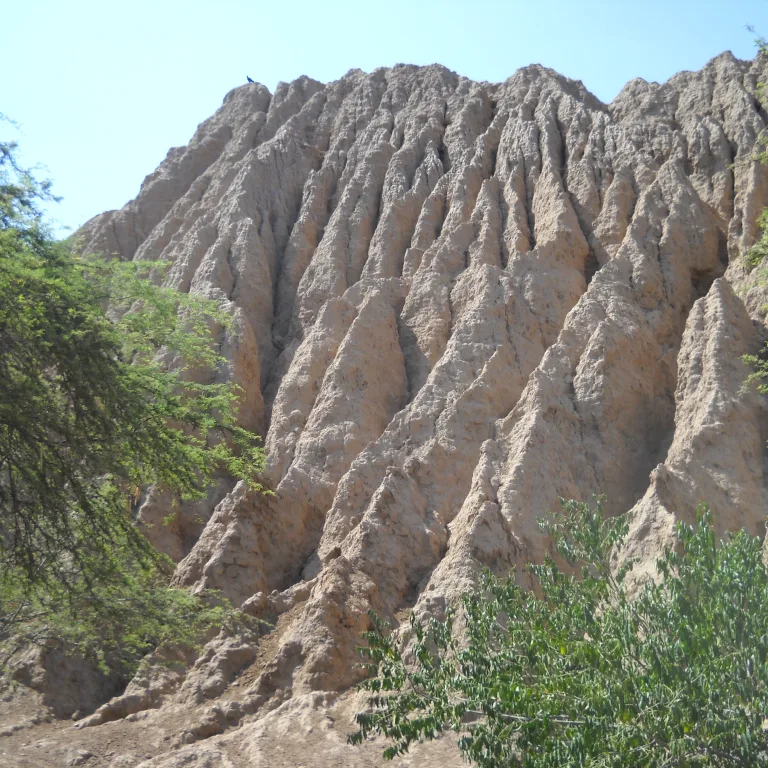
- A City Without Stone: Everything here is adobe, shaped, staked, and sun-dried. That’s why it looks like earth itself. The Sicán built empires from dust and design.
- Burials Beneath the Pyramids: Many of the huacas at Batán Grande weren’t temples, they were tombs. Elites were buried in layers, each offering a message to the next world.
- Not One Pyramid, but Many: The site stretches far beyond what’s visible. Huaca El Oro is just one of dozens, scattered across a dry forest and connected by memory more than paths.
- The Forest is Part of the Site: The algarrobo trees aren’t decoration. They’ve reclaimed space, but also preserved it. Much of Batán Grande’s layout is still hidden in the undergrowth.
- Ceremony Without Crowds: There’s no grand plaza or central axis here. Power was private, ceremonial, elite. This city spoke to spirits more than it did to the masses.
Key Structures of the Batán Grande Ruins
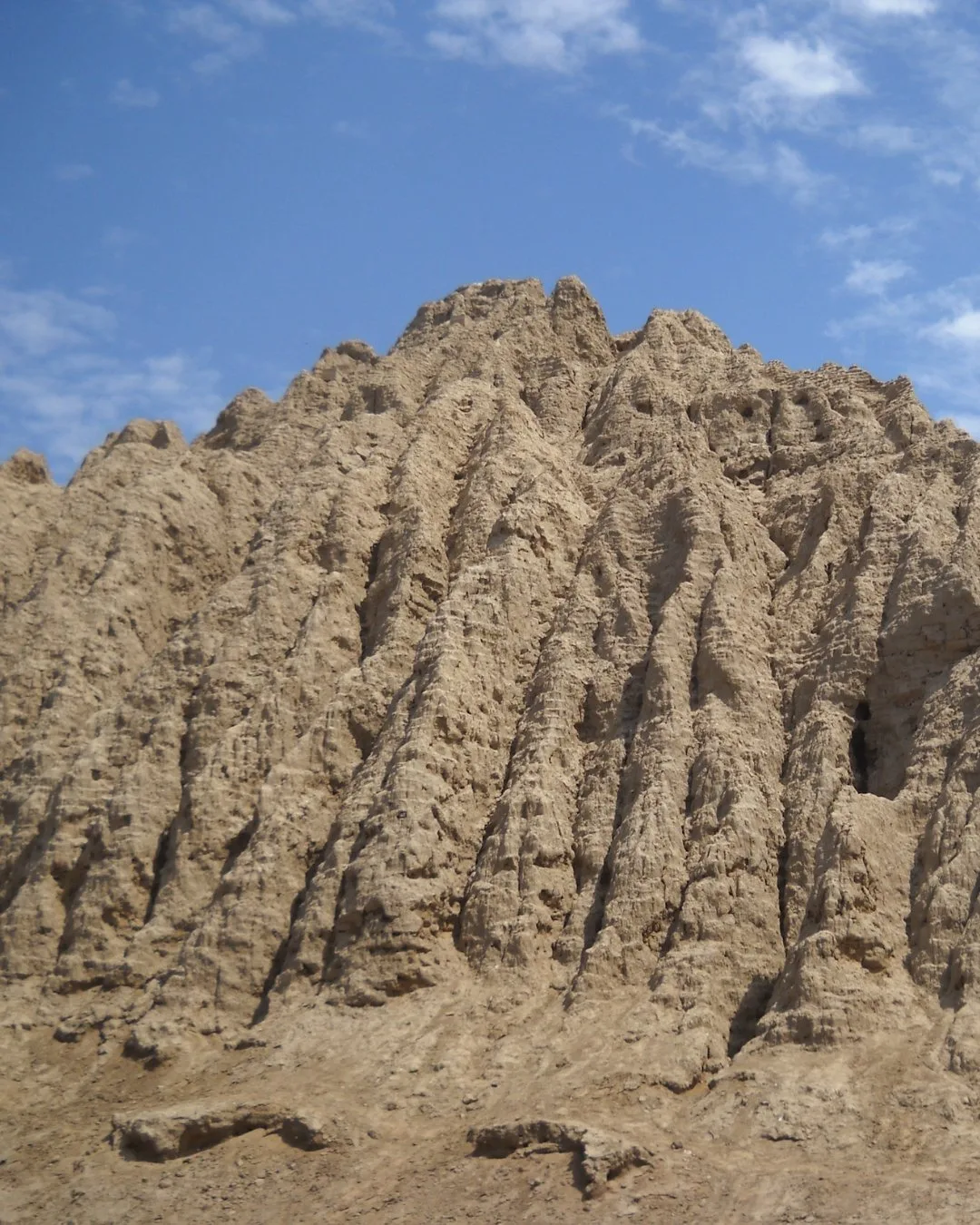
- Huaca El Oro: The most prominent pyramid, central to the site’s layout and excavation history. Named for the high-status tombs found within, including gold masks, ceremonial knives, and offerings tied to the Sicán deity.
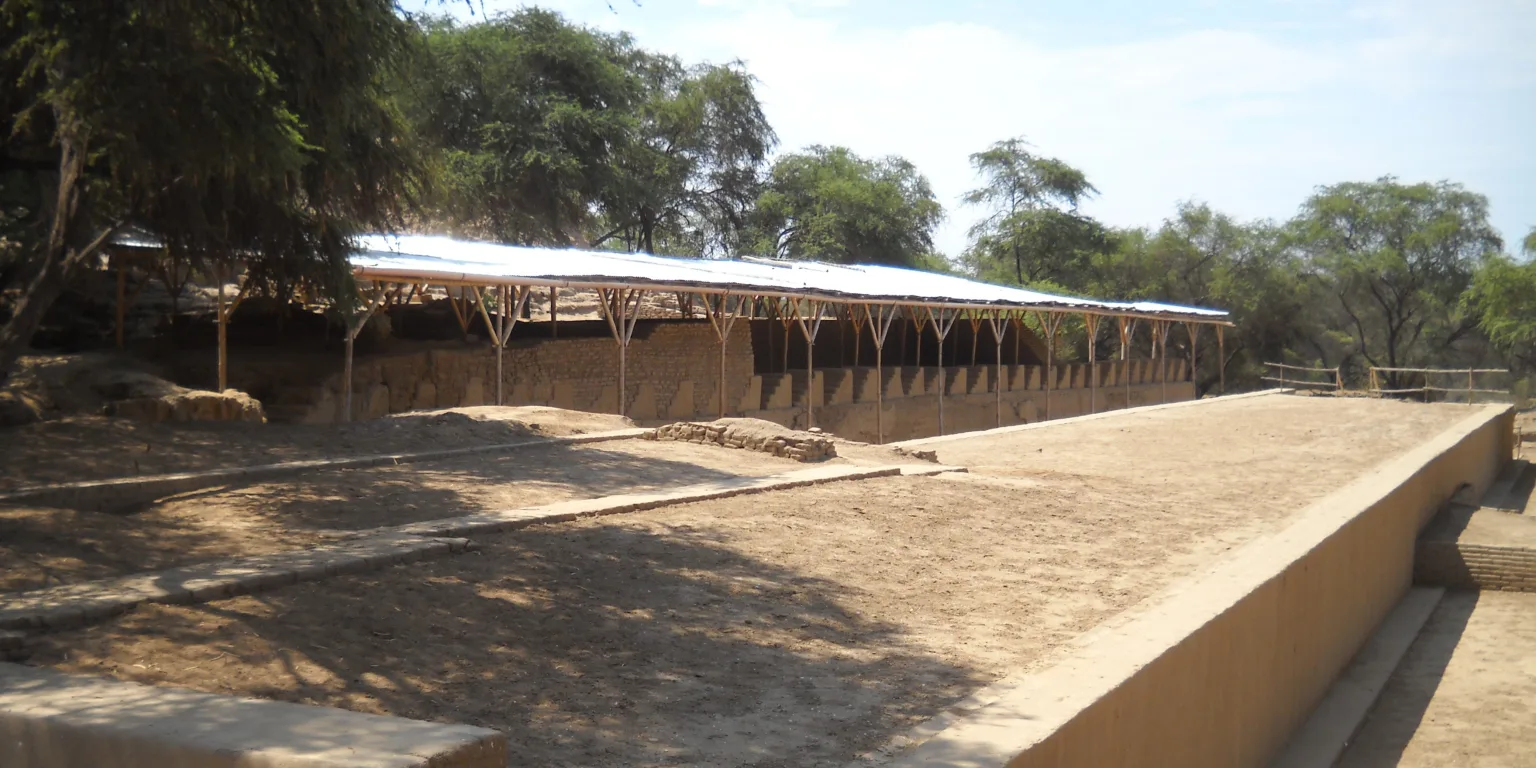
- Huaca La Merced: A large adobe platform mound with multiple construction phases, believed to be used for elite burials and possibly ancestor worship over generations.
- Huaca Las Ventanas: Distinctive for its segmented layout and adobe wall structures. Interpreted as administrative or elite residential space connected to Huaca El Oro.
- Huaca de la Cruz: Situated on the western edge of the site near a canal crossing, likely ceremonial in function with potential ties to water rituals and landscape alignment.
- Central Civic Plaza: A wide, open plaza framed by huacas and long adobe ridges may have served as a civic or ritual gathering space for processions or public ceremonies.
- Algarrobo Forest Zone: Dense groves of Prosopis trees now shade much of the site, but underlying this are scattered mound groups and lesser-known ceremonial ridges still under study.
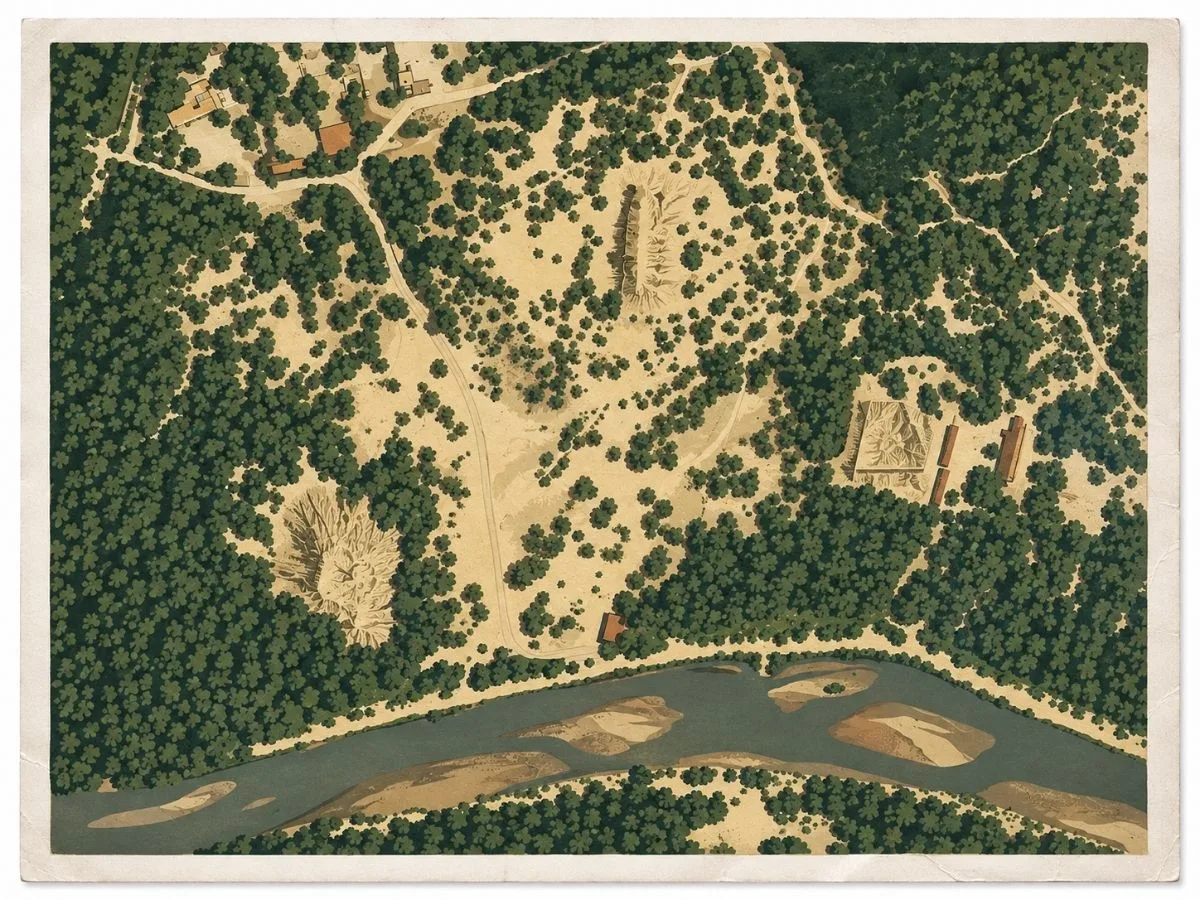
- Perimeter Adobe Rows: Staked adobe structures demarcate site boundaries and channel movement through the ceremonial core. Many are weathered but visible in aerial imaging.
- Irrigation Canals: Remnants of ancient water channels feed out from the La Leche River, integrating hydrological planning with the city’s cosmology and agriculture.
- Trail System: A maintained network of walking trails links major huacas with observation points and access gates across the forest interior.
History and Legends
Batán Grande was the political and ceremonial heart of the Sicán civilization, which emerged on Peru’s north coast after the decline of the Moche and was later absorbed into the expanding Chimú state. In the dry forest of the La Leche Valley, Sicán rulers created one of the great ceremonial and funerary centers of the region. During the Middle Sicán period, about 900 to 1100 CE, enormous adobe platforms rose among the algarrobo trees of what is now the Bosque de Pómac. The wider sanctuary preserves dozens of Sicán pyramids, while the core of Batán Grande centered on major huacas including Huaca Loro, Las Ventanas, El Corte, La Merced, Botija, and Rodillona. These monuments served as temples, elite mausoleums, and focal points of political authority within a kingdom whose influence extended across much of the northern coast.
Batán Grande reached its greatest power during these two centuries. Sicán rulers drew wealth from agricultural production, irrigation systems, specialized craft industries, and access to metals obtained across a wide region. Copper ores were smelted on a large scale and alloyed with arsenic, while specialist metalworkers produced tools, standardized objects known as naipes, and extraordinary sheets and ornaments of gold, silver, and copper alloy. Across ceramics and metalwork, the Sicán Deity appeared again and again as a frontal figure with distinctive eyes and an elaborate headdress. The same society capable of producing everyday metal tools also supported some of the most technically sophisticated precious-metal work in the ancient Andes.
The concentration of wealth beneath Huaca Loro shows how closely elite burial and monumental architecture were tied together. A shaft nearly 12 meters deep led to the tomb of a Sicán lord whose face had been covered with a gold mask painted red with cinnabar. The burial contained roughly 1.2 tons of grave goods, including crowns, ear ornaments, headdresses, gold-alloy sheets, arsenical bronze, ceramics, and other offerings. This wealth was deliberately removed from circulation and placed beneath one of Batán Grande’s principal temple platforms, tying elite death, ancestry, and monumental architecture together at the center of the ceremonial complex.
The huacas stood within a much broader inhabited landscape. Farmers worked the La Leche Valley and maintained canals through an arid environment, while miners and metalworkers supplied the materials that fed Sicán workshops. Settlements, cemeteries, production areas, and agricultural land spread around the pyramids instead of forming one tightly packed urban core. Batán Grande drew those activities together. Its great platforms provided places where rulers were buried, ceremonies were carried out, valuable objects were deposited, and the wealth of communities spread across the surrounding valleys was gathered into a visible center of Sicán power.
That order broke sharply near the end of the eleventh century. Major Middle Sicán temples at Batán Grande were burned and abandoned between roughly 1050 and 1100, after decades that included severe drought and growing disruption to the political and religious system centered there. The exact agents and motives behind the burning remain debated, but the change was larger than the destruction of individual buildings. The old Sicán Deity disappeared from the dominant religious imagery, and political authority shifted toward Túcume, where a new capital developed during the Late Sicán period. Sicán communities and their metallurgical traditions continued, but the forest of pyramids along the La Leche River no longer served as the kingdom’s principal ceremonial center.
Experiences Around Batán Grande
Batán Grande sits in a wider Lambayeque landscape of dry forest, cane fields, valley towns, and Pacific coast.
–
Ferreñafe adds markets, simple food, and a slower northern Peru rhythm. Chiclayo brings restaurants, street life, and regional energy.
–
Farther west, Pimentel and Puerto Eten add seafood, beach walks, fishing-town atmosphere, and Pacific sunsets. Together, they make Batán Grande part of a broader northern Peru experience.
How to Get There & Where to Go Next
How to Visit Batán Grande
Step-by-step access to the site
- From Lima take a night bus to Chiclayo – ~14–16 hours.
- fly from Lima to Chiclayo – ~1.5 hours.
- From Chiclayo catch a local bus or combi to Ferreñafe – ~30 minutes.
- From Ferreñafe hire a mototaxi to the Batán Grande entrance – ~20 – 25 minutes.
Tips: Flights are faster, but buses can save money and run overnight. Bring water and snacks. The site is broad and has minimal facilities inside.
Nearby Ruins You Can Visit
Staying near Chiclayo opens access to a dense cluster of ancient Sicán, Moche, and Chimú sites scattered across northern Peru’s dry forest and coastal valleys.
Sipán (Huaca Rajada) – Royal tombs of a Moche lord discovered intact, with burial treasures unmatched in the Americas.


Huaca de la Luna – Moche religious center with vivid murals and towering adobe temples below Cerro Blanco.
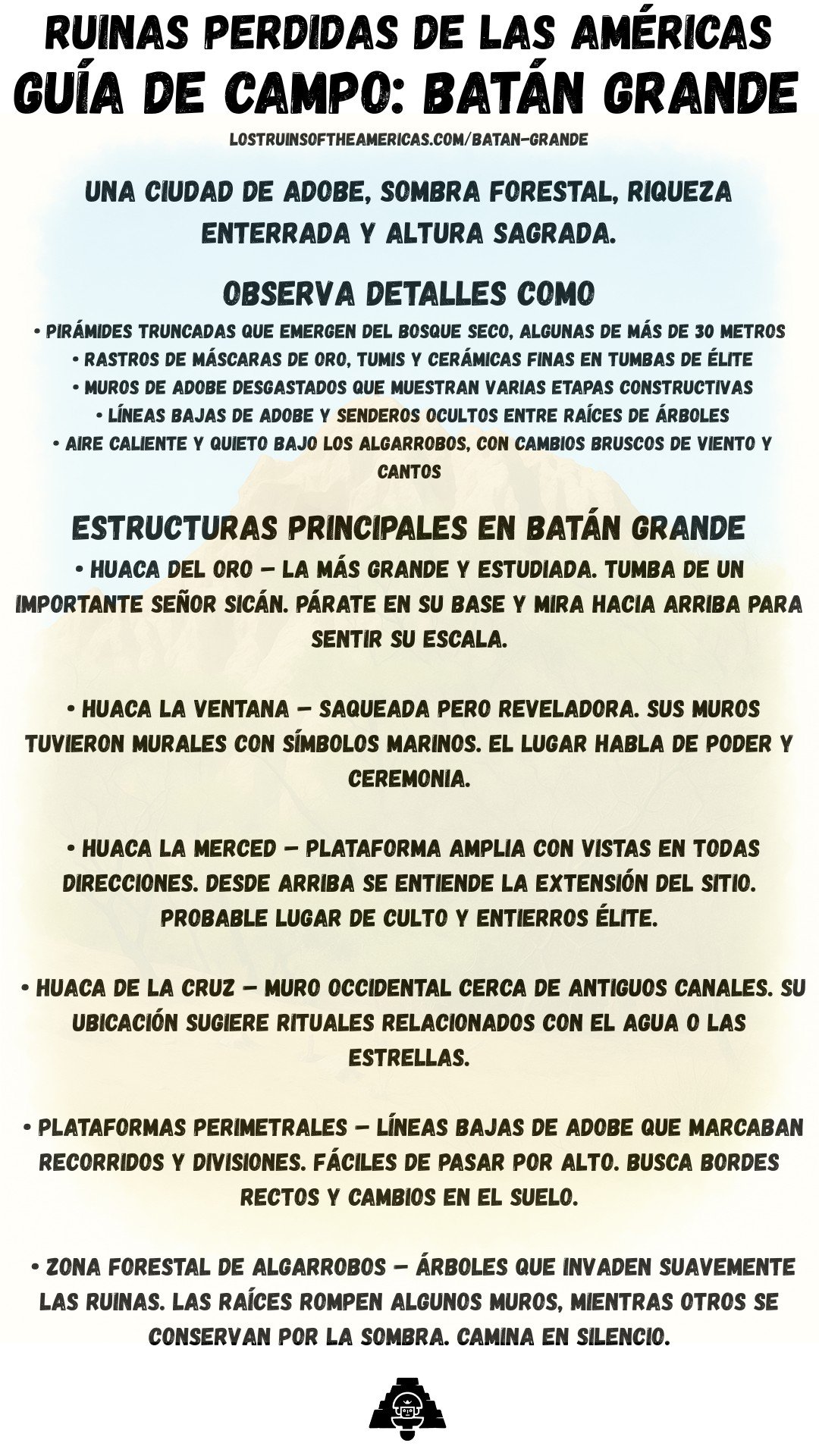
Download Field Guide
Español
English
Traveler Tips
- Visit early to avoid mid-day sun, the forest offers partial shade but trails are hot.
- Bring water and snacks; facilities are minimal and vending is inconsistent.
- The on-site museum is excellent and air-conditioned, allow at least 30 minutes.
- Good walking shoes are advised, terrain is sandy and occasionally loose.
- Combine with nearby Sipán or Túcume for a broader Sicán cultural picture.
Elsewhere in the Americas…
While Batán Grande was thriving under Sicán rule, other civilizations in the Americas were reshaping their centers of power.


In the Mississippi Valley, early Mississippian culture was emerging, with sites like Angel Mounds taking shape.

In the North American Southwest, Ancestral Puebloans built cliff dwellings and ceremonial spaces at Mesa Verde.
Insider Explorer Advice
Chiclayo is the ideal base for a full-day ruin run, bus from Chiclayo to start at the Museo Tumbas Reales de Sipán, then hire a mototaxi out front and negotiate a price before departure for Sipán, Túcume, Batán Grande, and anything else along the way. With the right driver, you’ll cut through cane fields and desert scrub, tracing a line of ruins older than empire. Bring lunch and water for two, as sharing with your guide turns transport into camaraderie. Batán Grande surprises most, it’s broad, quiet, shaded by algarrobo trees, and its silence speaks louder than any tour.
Summary: Batán Grande is a capital in the forest. Ancient adobe above the algarrobo canopy, still sacred, still standing.