
Cerro Sechín
PERU / CASMA / CASMA-SECHÍN
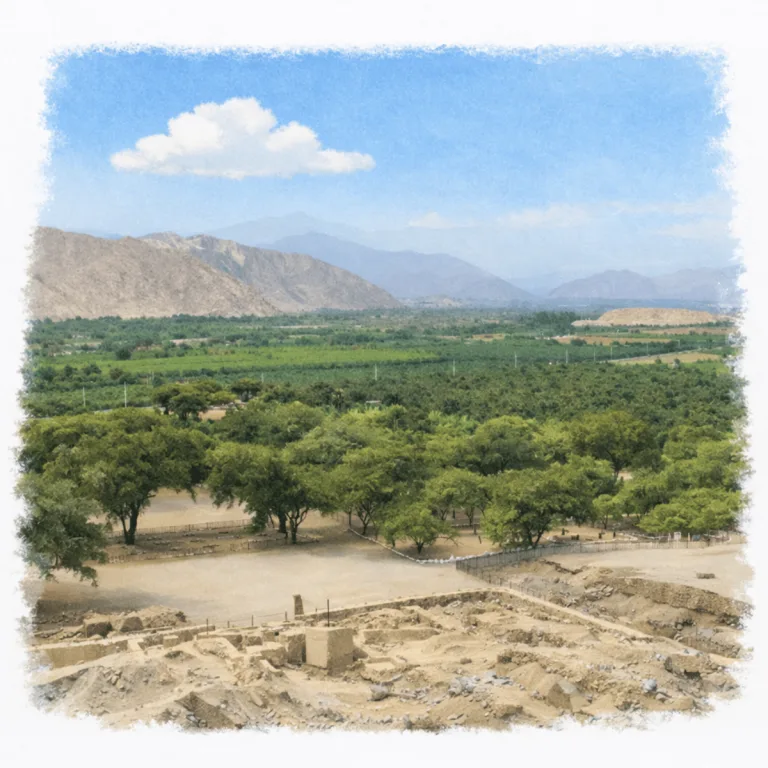
At the foot of Peru’s Casma Valley hills, Sechín confronts visitors with carved stone warriors and dismembered bodies, where early ceremonial architecture turned violence, power, and public memory into monument
| Name | Cerro Sechín |
| Civilization | Casma–Sechín |
| Location | Casma Valley, Casma Province, Áncash, Peru |
| Years Active | 2200 to 1500 BCE |
| Primary Resources | Irrigated crops, river water, marine foods, local stone |
| Site Type | Temple and ceremonial platform |
| Key Highlights | Stone façade with over 300 carved warrior-priest panels |
| INT Airport | Capitán FAP Carlos Martínez de Pinillos International Airport (TRU), Trujillo |
| Entry Fee | S/10 general admission |
| Best Time to Visit | Year-round, early morning |
| Field Visit | Visited & photographed by Lost Ruins of the Americas |
Unique Features of the Sechín Archaeological Site
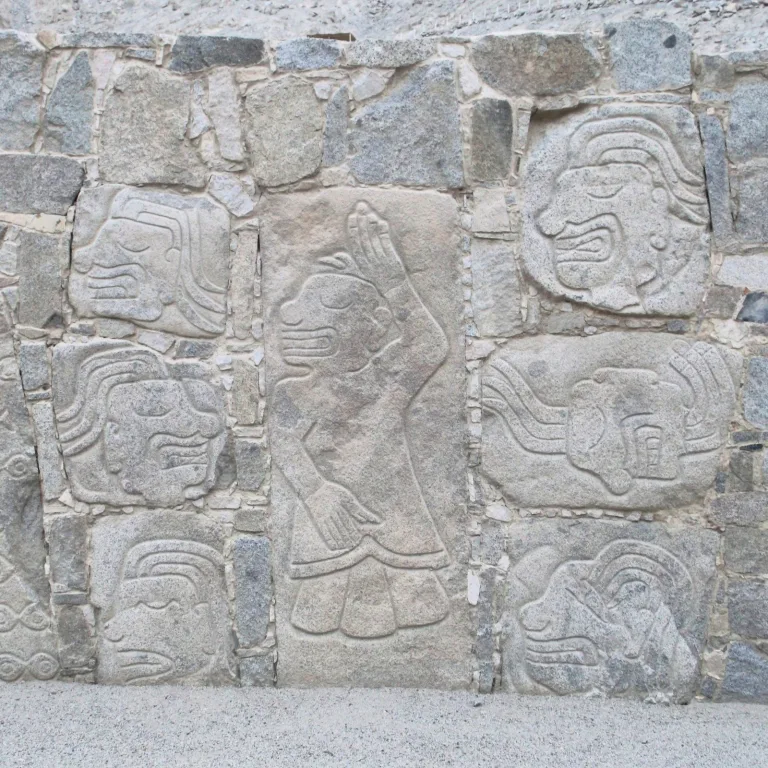
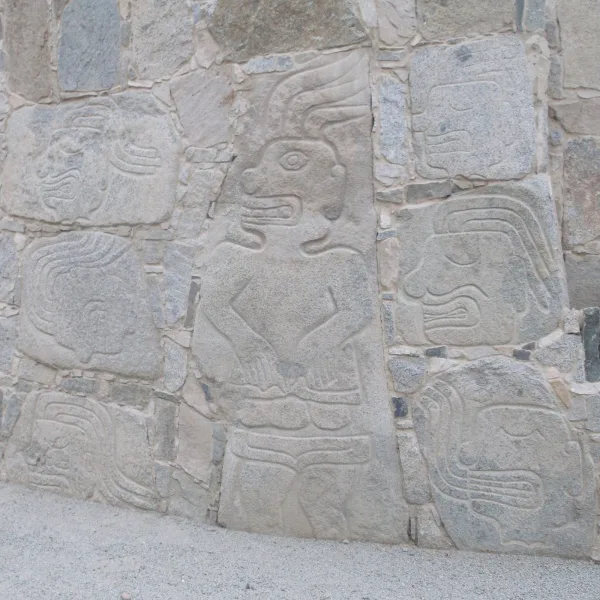
- Graphic Stone Carvings: More than 300 carved stone panels showing dismembered figures, warrior-priests, and ritual executions. Among the most vivid in ancient Peru.
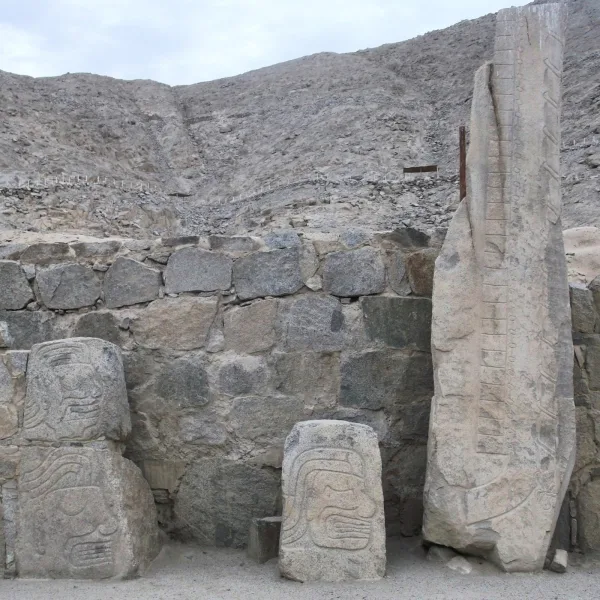
- Monolithic Façade: The temple is ringed by upright engraved stones. A massive narrative wall unmatched in scale and intensity.
- Architectural Contrast: Combination of adobe platform core with riverstone veneer creates a striking aesthetic.
- Historical Layering: Close proximity to Sechín Alto, Sechín Bajo, and Las Aldas allows for comparison across centuries of regional power.
Location & Access
- Nearest Town: Casma, Áncash
- Directions: Hop off a northbound or southbound bus on the Panamerican Highway in Casma, then walk or take a mototaxi (~5–10 minutes) to the site.
- Official Website: Ministry of Culture, Museo Regional de Casma “Max Uhle.”
- Opening Hours: Tuesday to Sunday, 9:00 AM to 4:30 PM. Closed Mondays.
- Entry Fees: S/10 general; S/6 higher-education students; S/3 minors. The ticket includes both Cerro Sechín and the Museo Regional de Casma Max Uhle.
- Facilities: Site museum, restrooms, parking, ticket office, and marked walking paths.
- Accessibility: Limited. Outdoor paths and changes in level restrict access around the temple platform.
- Pro Tip: You can see the entire site in under two hours, ideal for travelers on the move along the coast.
Highlights to Help You Understand Your Visit
This isn’t just an old ruin. It’s a carved warning. Sechín communicates through stone, silence, and the deliberate staging of violence.
- A Temple of Intimidation: The entire structure is wrapped in stone panels that depict ritual dismemberment. Not decoration, but psychological power.
- Read the Walls: Notice the sequence of carvings. Bodies, heads, internal organs. The layout follows a ceremonial rhythm, like an ancient storyboard.
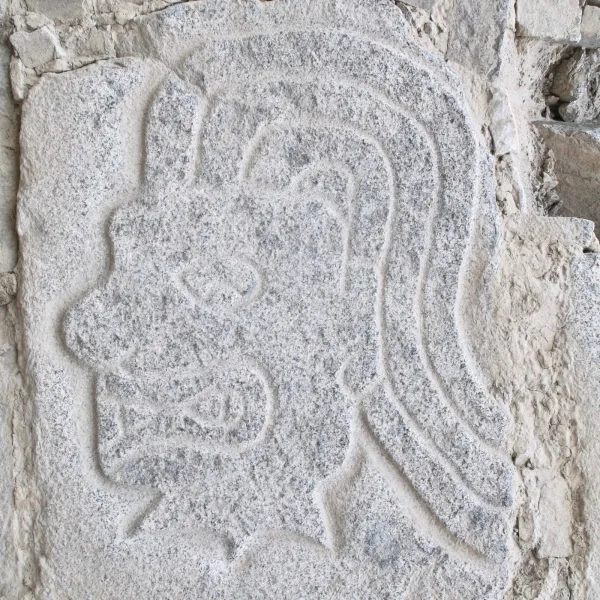
- Face Carving Styles: Many figures show exaggerated teeth, cropped hair, and wide eyes. These aren’t portraits. They’re archetypes of submission or dominance.
- Soft Inside, Hard Outside: That contrast isn’t just physical. It speaks to how power was staged in Andean ritual.
- One Site, Many Eras: Sechín isn’t isolated. It links to nearby Sechín Alto and Sechín Bajo, forming a ceremonial corridor that evolved over centuries.
Key Structures of the Cerro Sechín Ruins
- Main Temple Platform: Central adobe mound framed by engraved stone slabs. Likely a ceremonial platform used for processions and ritual display.
- South Façade Panels: The most complete sequence of narrative carvings at the site, including dismembered figures, warrior-priests, and symbolic body parts arranged in ceremonial order.
- West Wall Corridor: Narrow processional path flanked by upright stones. Possibly used to guide participants or restrict access to inner sanctums.
- North Perimeter Stones: Fragmentary and weathered, but important for their unique iconographic differences. Some show abstract figures and curvilinear forms not present on the main façade.
- Interior Adobe Staircase: Restored steps leading from ground level up the temple mound. Gives perspective on elevation and ancient approach patterns.
- Inner Ceremonial Chamber: Believed to be the core sacred space of the complex, though now mostly lost. Early excavators noted traces of pigment and burnt offerings.
- Cerro Sechín Site Museum: On-site facility housing enlarged photographs, artifact displays, carved slab reproductions, and comparative context for nearby sites like Sechín Bajo.
- Adjacent Sites: Sechín Bajo and Sechín Alto, both within walking distance. Feature large mounds, wall remains, and deeper cultural layering tied to the Casma–Sechín tradition.

History and Legends
Cerro Sechín was already an important ceremonial place in the Casma Valley by about 2200 to 2000 BCE. Its first major building was a temple of conical adobe bricks, plastered and decorated with painted reliefs. Builders returned to it repeatedly, repairing walls and adding new construction rather than abandoning the spot. Parts of those early painted surfaces still survive beneath the later stone monument, showing that the site had already passed through several generations of building before its most famous façade appeared.
Around 1800 BCE, a much larger building campaign changed Cerro Sechín. The earlier mud temple was covered by a new stepped platform, now known as the Central Building, and its exterior was faced with hundreds of carved stone slabs. Tall standing figures appear beside severed heads, limbs, eyes, vertebrae, intestines, and other human remains. The carvings were arranged around the building as part of the wall itself, so anyone approaching the platform would have encountered the images in sequence rather than as isolated sculptures.
Exactly what those carvings recorded is still uncertain. Some of the standing figures carry objects interpreted as clubs, staffs, or weapons, while the dismembered bodies have been read as defeated enemies, captives, or sacrificial victims. No inscription identifies a ruler, battle, or named event. What is clear is that violence and bodily dismemberment were placed at the center of Cerro Sechín’s public imagery, on a scale rarely preserved from such an early period in the Andes. The wall was not added as decoration to an ordinary building. It was part of the way the monument presented authority to the people who gathered around it.
Experiences Around Cerro Sechín
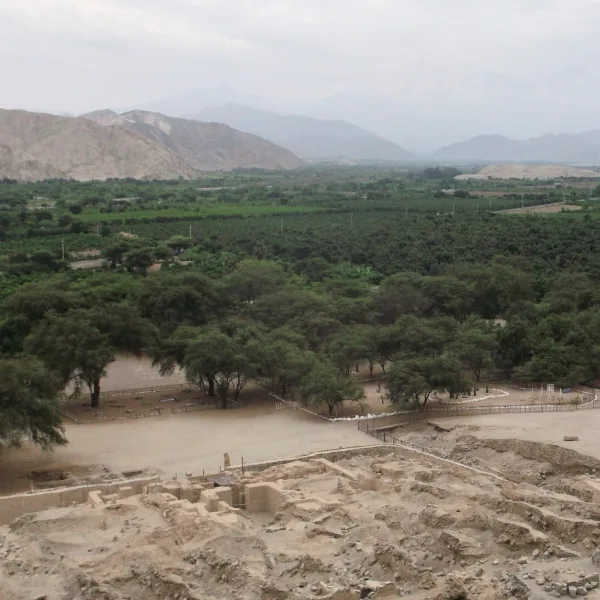
The ruins are only part of the story. Cerro Sechín sits in the Casma Valley, where mango orchards and irrigated fields cut through the dry coastal desert.
In Casma, try ceviche de pato casmeño, a warm duck dish sharpened with citrus, and look for Kent mangoes from the surrounding valley when they are in season.
At nearby Playa Tortugas, swim or take a boat across the calm bay, then stay for corvina or lenguado from the local fishing catch.
Construction continued after the carved façade was completed. Later platforms rose beside and south of the Central Building, including Building A, Building C, the Rafael Larco Hoyle Platform, and the Julio C. Tello Platform. Cerro Sechín also stood among several major ceremonial centers in the same valley. Sechín Bajo had an even earlier history of monumental construction, while Sechín Alto eventually grew into a far larger complex. Together, these sites show how much organized building was taking place in the Casma Valley long before Chavín de Huántar became a major center in the Andes.
Cerro Sechín appears to have been abandoned by about 800 BCE, after centuries of rebuilding on the same ground. Its mud-brick rooms and platforms eroded, but the stone facing of the Central Building survived well enough for the carved procession to remain one of the site’s defining features. The sequence preserved inside the monument is just as important as the carvings themselves. An early painted temple was remodeled, buried, and replaced by a larger stone-faced building, followed by still more construction around it as Cerro Sechín changed with the wider ceremonial landscape of the Casma Valley.
How to Get There & Where to Go Next
How to Visit Sechín
– Step-by-step access to the site –
- Depart from Lima – Take a northbound bus from terminals like Plaza Norte to Casma (6.5–7.5 hrs).
- Arrive in Casma – Most long-distance buses stop at or near the central terminal.
- Local transport – Hire a mototaxi to Cerro Sechín (5–10 min).
- Entry and exploration – The entire site and museum can be explored comfortably in 1–2 hours.
Tip: This site is ideal as a stopover on the Panamerican route, a few hours of ancient history then back on the bus.
Nearby Ruins You Can Visit
These ancient sites along the Peruvian coast share Sechín’s bold architecture, mythic memory, and deep roots in the rise of Andean civilization.
Caral – A vast desert city of pyramids and sunken plazas, one of the earliest urban centers in the Americas.

Huaca del Sol – One of the largest adobe pyramids in the Americas, built by the Moche for elite rule and ritual.

Huaca de la Luna – Moche religious center with vivid murals and towering adobe temples below Cerro Blanco
Traveler Tips
- Easy walk or mototaxi from Casma, perfect for travelers passing through on the Panamerican.
- Allow at least 1–2 hours to see the full site and museum.
- Photography is allowed, morning light brings out the carving shadows best.
- Pair with nearby Sechín Alto or onward visit to Chankillo for a deeper regional view.
- Carry water and sun protection, shade is minimal around the temple.
Elsewhere in the Americas…
As Sechín developed as an early ceremonial center on Peru’s north coast, other cultures across the Americas were forming some of the earliest monumental traditions:
In Mexico, the Olmec center of Chalcatzingo developed carved reliefs, platform mounds, and ceremonial spaces tied rulership and authority.

In Mexico, Teotihuacan would later rise with monumental pyramids and urban planning that shaped Mesoamerican influence for centuries.

Insider Explorer Advice
Sechín is one of the easiest ruin stops in Peru. Hop off the bus in Casma, grab a mototaxi or walk, and you’ll have the site nearly to yourself. What sets it apart is the art: row after row of stone panels in a style at once primal and eerily expressive, like an ancient storyboard pulled from a graphic novel. Most ruins fade with erosion, but Sechín is visual, visceral, and unblinking. It rewards slow movement and repeat looks. The site is well-kept and capped by a compact but sharp museum. Stop, walk, stare, and get back on the road.
Summary: Sechín is the oldest carved shockwave in the Andes. A wall of faces, blades, and ritual memory etched deep into stone.