
The Ancestral Puebloan Civilization: Architects of Canyon and Sky
Builders of the cliff dwellings, architects of Chaco Canyon, and keepers of a cosmic calendar etched in stone, the Ancestral Puebloans shaped the high desert with sun, sky, and stone.
For over a thousand years, the Ancestral Puebloans built thriving communities across the high desert plateaus of the American Southwest. Known for their cliff dwellings, ceremonial kivas, and sophisticated astronomical alignments, they left behind a legacy that still echoes in the living traditions of modern Pueblo peoples.
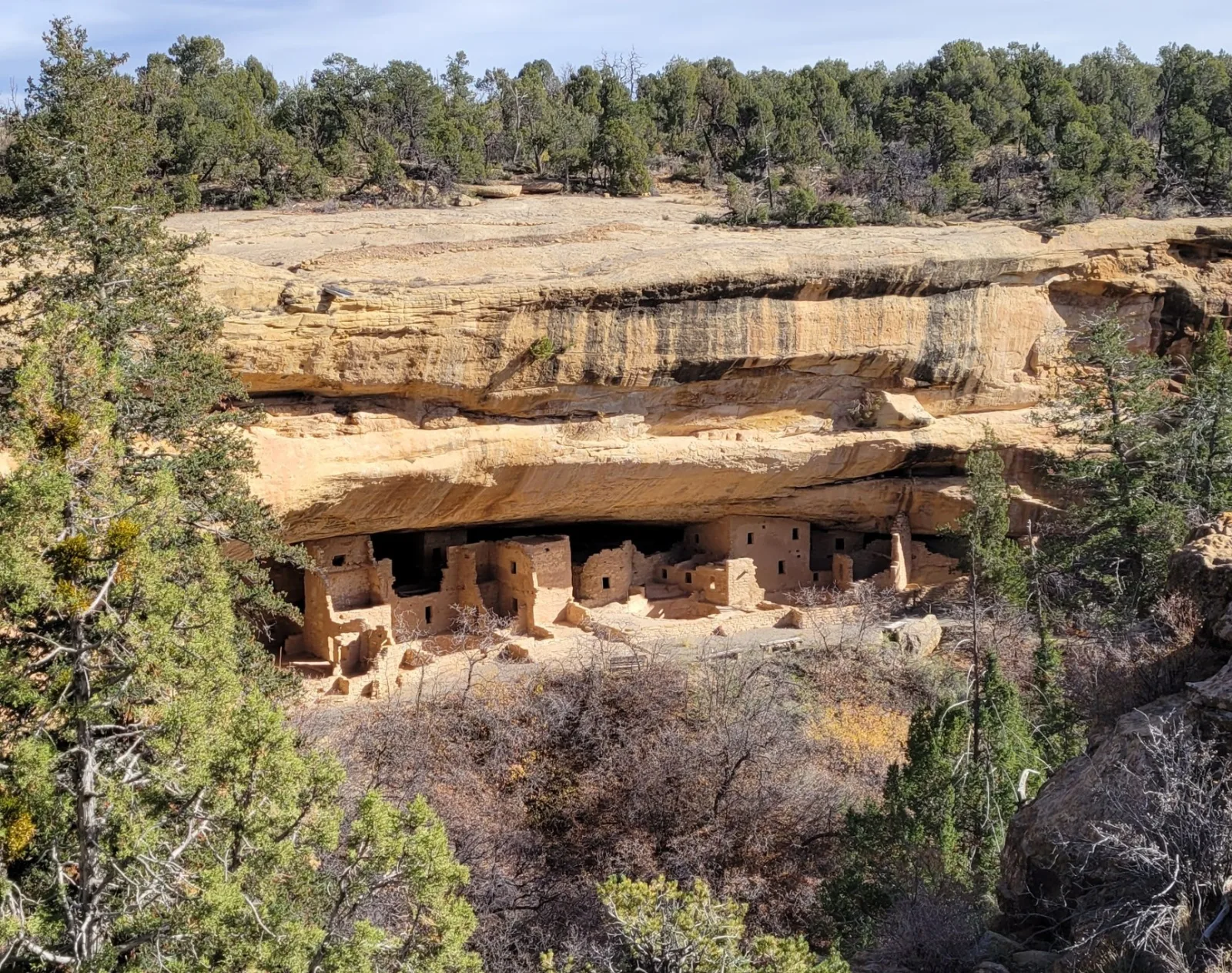
Civilization Snapshot
| Category | Info |
|---|---|
| Region | Southwestern United States, primarily the Four Corners region of Colorado, Utah, Arizona, and New Mexico |
| Timeframe | c. 100 CE – 1600 CE |
| Capital / Major Cities | Chaco Canyon, Mesa Verde, Aztec Ruins, Hovenweep, Bandelier |
| Peak Population | Estimated 30,000–40,000 across major settlements during peak periods |
| Language(s) | Tanoan, Keresan, Zuni, and Hopi (distinct language groups) |
| Known For | Cliff dwellings, kivas, astronomy, masonry, and road systems |
| Cultural Relatives | Mogollon, Hohokam, Patayan, and Mesoamerican exchange networks |
| UNESCO Sites | Mesa Verde National Park (Colorado); Chaco Culture National Historical Park (New Mexico) |
Why Visit the Puebloan Region
The ruins are only part of the story. The Four Corners is a living landscape where red rock, ancient roads, and modern pueblos meet under the same horizon.
Visitors can experience regional festivals, art markets, and seasonal dances that celebrate Pueblo identity and connection to the land. Towns like Cortez and Dolores host events featuring Native music, food, and traditional crafts, while nearby pueblos open their plazas for feast days and public ceremonies rooted in generations of continuity.
Throughout the year, Native cooperatives and small museums share Pueblo weaving, pottery, and jewelry, offering insight into the living artistry of the region.
The Puebloan region is where red earth, living tradition, and open sky still move together in balance.
Before the Pueblos: Canyons, Foragers, and Early Farmers
Long before stone towers and cliff dwellings, the high desert of the Southwest was home to foragers, seed collectors, and early farmers. These ancestors moved across what is now Colorado, Utah, Arizona, and New Mexico, following seasonal plants and game, and slowly learning to shape the land.
By around 2000 BCE, small groups had begun cultivating maize introduced from Mesoamerica, along with tending squash and storing seeds in woven baskets. Over centuries, they built pit houses near springs, gathered wild tobacco and amaranth, and returned to the same ridgelines year after year. These early communities left behind grinding stones, flaked tools, and evidence of the first cultivated crops in the Southwest.
Among them were the Archaic peoples and the early Basketmaker cultures, known for their intricate basketry and reliance on subterranean dwellings. Their pit structures would later evolve into the circular kivas of the Pueblo world. Their cornfields would expand into managed terraces and floodplain plots. Their seasonal paths became the foundation for future roads and settlements.
From these beginnings, a new way of life gradually took form. It joined architecture, astronomy, and sacred time into a single pattern of living.


Rise of the Ancestral Puebloans
The people now known as the Ancestral Puebloans created a world built from stone, shaped by ceremony, and organized around cycles of time. They did not form an empire or follow kings, but their settlements stretched across hundreds of miles. Each village followed a familiar pattern: stacked masonry homes, sunken kivas, and shared plazas, all aligned with the sky and the land around them.
They lived by the sun. Planting followed seasonal markers. Buildings faced the rising light. Solstices were tracked through doorways and rooftop alignments. Community life revolved around the kiva, where stories, songs, and rituals connected the present to the past.
From 500 to 1300 CE, the Puebloan world grew across the Four Corners region. Local styles varied, but the underlying design remained remarkably consistent. Sites large and small were linked through architecture, trade, and shared understanding.
- Chaco Canyon, in New Mexico, became a major ceremonial center. Its great houses were laid out on a monumental scale, with carefully engineered walls and roads that connected it to distant outliers.
- Mesa Verde, high in the Colorado cliffs, held compact villages tucked into natural alcoves. These homes offered both protection and symbolic connection to the surrounding landscape.
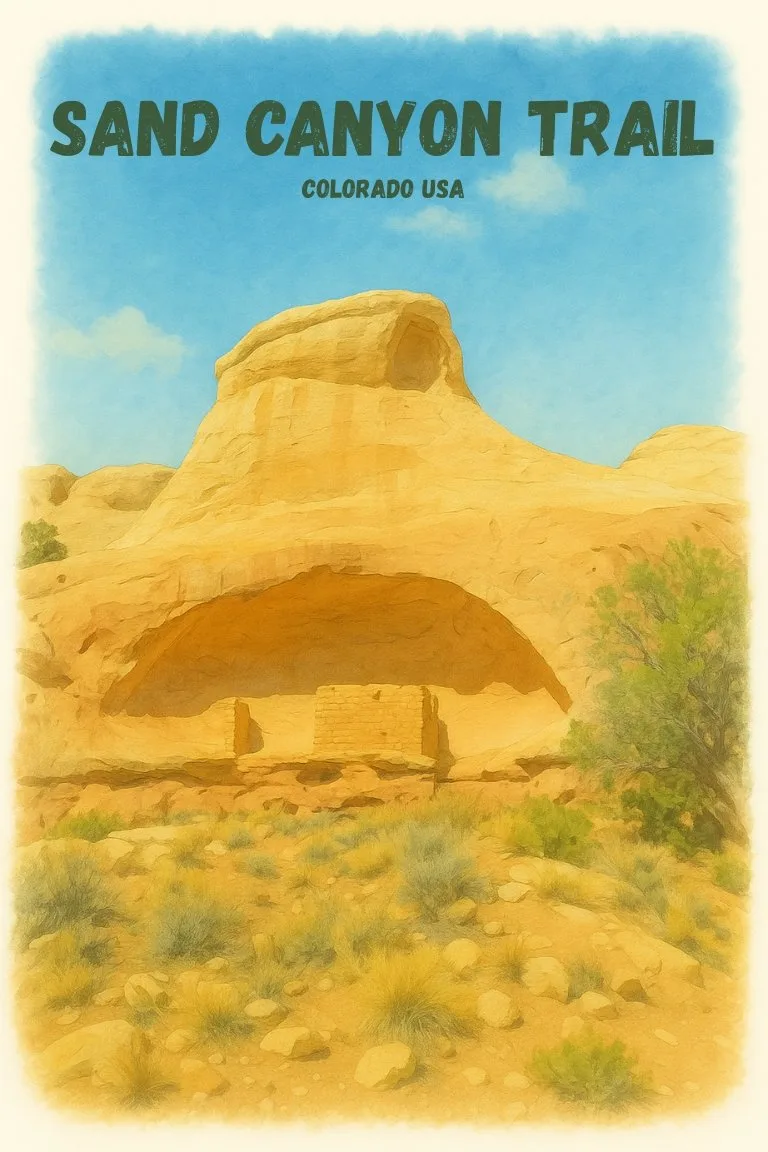
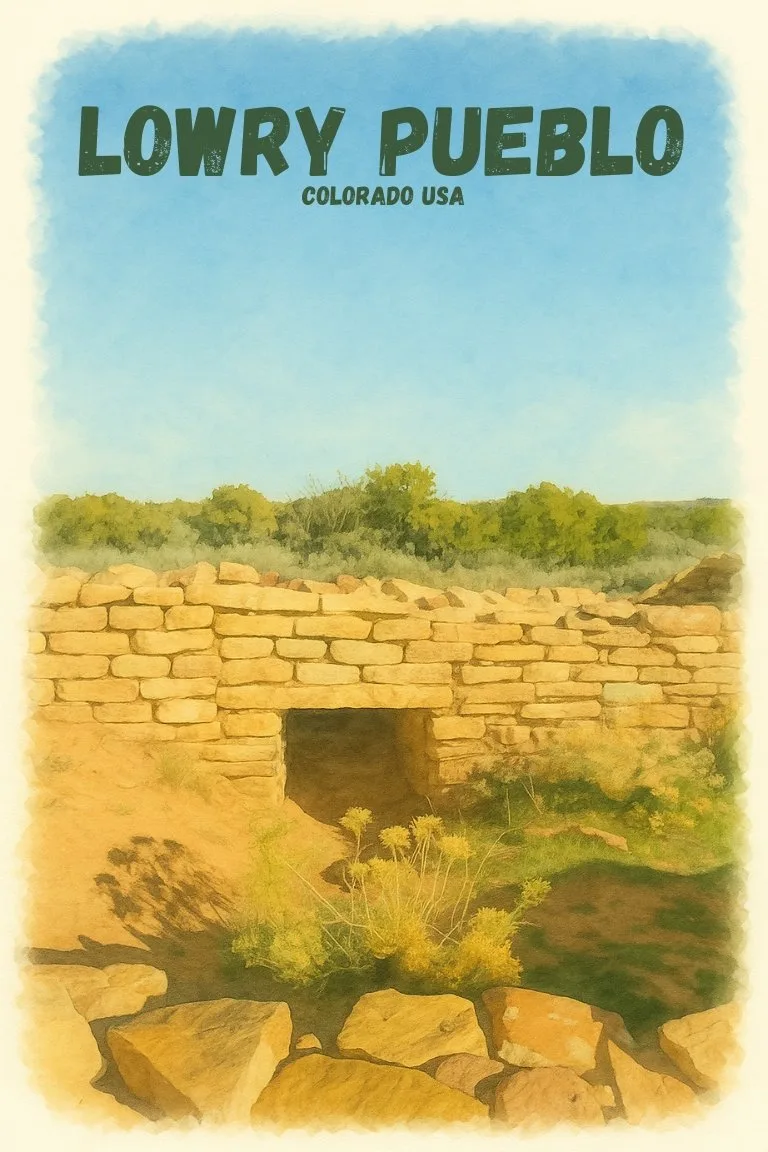
- Canyons of the Ancients, across the McElmo and Dolores drainages, preserves hundreds of sites including Lowry Pueblo, Sand Canyon, and Painted Hand. These communities built towers, shrines, reservoirs, and great kivas, all integrated into their terrain.
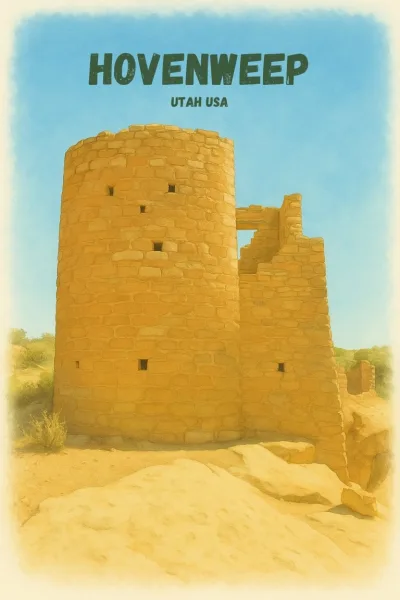
- Hovenweep, near the Utah border, holds some of the most visually striking towers in the region, placed along canyon rims with purpose and precision.
Their lives were not shaped by conquest, but by continuity. Roads followed memory paths. Ceremonial spaces echoed older forms. Agricultural knowledge was passed through generations by observation and repetition.
To understand the Ancestral Puebloans is to follow a pattern of balance. Between earth and sky, between home and ceremony, between what is built and what is remembered.
The Three Pueblo Periods
The story of the Ancestral Puebloans is not a single rise and fall. It is a slow unfolding across centuries, shaped by climate, movement, and sacred cycles. To help trace this path, archaeologists often divide Puebloan history into three broad cultural periods. These categories are not rigid. They are interpretive frames, used to understand how architecture, community life, and ceremonial traditions evolved.
- Pueblo I (750–900 CE): The first permanent villages began to appear, built from stone and adobe on mesa tops and in open valleys. Families constructed above‑ground rooms in rows or small clusters, often facing the sun to mark planting and seasonal change. Kivas became formal spaces for gathering and ceremony. Pottery developed distinct local styles, and farming expanded to include new varieties of maize and beans. In these early communities, social cooperation grew stronger, linking families through shared labor, water management, and ritual observance.
- Pueblo II (900–1150 CE): This was an era of expansion and connection. Villages grew larger, sometimes containing hundreds of rooms. Great kivas and tower structures appeared, built with finely shaped sandstone and timber. Chaco Canyon became a ceremonial and administrative heart, its great houses aligned with the movements of the sun and moon. Roads extended outward to smaller settlements, reaching deep into what is now the Four Corners region. In the McElmo drainage and surrounding canyons, communities built towers, reservoirs, and shrines that followed similar ceremonial logic. Trade networks stretched south into Mesoamerica, carrying turquoise, cacao, copper, and bright macaw feathers.
- Pueblo III (1150–1350 CE): Life became more concentrated and defensive. Many villages moved into cliff alcoves or high mesas, where water and farmland could be protected. Tower architecture became a defining feature, rising beside springs and at canyon rims. Sites such as Mesa Verde, Hovenweep, and Lowry Pueblo show this adaptation in full form, with complex roomblocks, watchtowers, and expanded kivas. Religious practice deepened, agricultural methods adjusted to drought, and populations began to migrate south and east into what would become the Rio Grande and Hopi regions.
These periods do not define the civilization, but they offer a window into its rhythm. Behind each phase were people planting corn, shaping stone walls, and marking time by the path of the sun. Together, they created a pattern of life that remains visible in the landscape and in the living pueblos of the Southwest today.
Sacred Cycles and Kivas: Religion in Puebloan Life
Religion for the Ancestral Puebloans was not separate from daily life. It was embedded in architecture, agriculture, and the movement of stars. Their belief system centered on balance, between people and place, sky and earth, ceremony and survival.
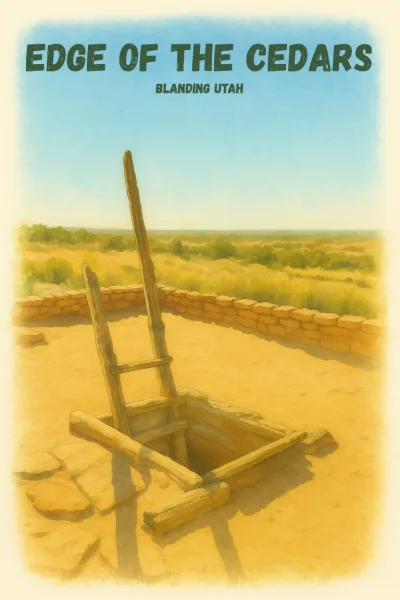
Spiritual life revolved around the kiva, a circular subterranean chamber used for ceremony, teaching, and governance. These spaces evolved from earlier pit houses but took on profound symbolic meaning. Entry was often through the roof, mimicking emergence from the underworld in Pueblo origin stories. The sipapu, a small hole in the floor of many kivas, represented this portal to the ancestral realm.
Puebloan cosmology was tied to natural cycles. Solstices and equinoxes, rain and drought, planting and harvest all marked sacred turning points. Alignments were built into doorways, sightlines, and plazas to track the movement of the sun. Sunwatchers likely played ceremonial roles, ensuring that seasonal rituals stayed in harmony with celestial time.
Religious leadership was communal and rooted in ritual societies, not controlled by priest-kings or hereditary rulers. These ceremonial groups guided planting seasons and feast days, often timed to the rhythms of the sky. Dancers wearing masks invoked the spirits of ancestors, clouds, animals, and elemental forces, blending performance, prayer, and cosmic balance.
Trade also carried sacred weight. Shells from the Pacific, copper bells from Mesoamerica, macaw feathers, and traces of cacao in Chaco Canyon all point to long-distance ceremonial exchange. These goods were not simply material, they held meaning, and helped bind the Puebloan world to spiritual networks that stretched far beyond the canyons.
Their religion was not fixed in temples. It was expressed in terraces, water catchments, plazas, and movement across the land. It was a system for living in balance, shared across generations, tied to the sky above and the ground beneath their feet.
Work, Ritual, and Daily Life
Life in Puebloan communities followed the rhythm of seasons, ceremony, and shared responsibility. Homes were clustered in roomblocks or arranged around open plazas, often with access to a nearby kiva. Days were shaped by agricultural cycles, food preparation, and communal labor, with rituals woven into the routine of daily life.
Common aspects of daily life included:
- Farming maize, beans, and squash using dry farming, check dams, and terraces adapted to the desert landscape
- Thatched-roof homes, pit houses, and later multi-room stone dwellings clustered into plazas or cliffside villages
- Weaving and textile production carried out by men, using yucca fiber, turkey feathers, and cotton where available
- Ceremony and seasonal ritual held in kivas or open plazas, often aligned with solar events and agricultural timing
- Cooking and food storage in pottery vessels, with grinding stones and clay ovens used in daily meal preparation
- Childhood education through participation in chores, storytelling, and observance of ritual and seasonal knowledge
Although regional variation existed, many core practices remained consistent across time. Food, family, and sacred cycles guided daily choices, linking households to each other and to the wider spiritual landscape.
Kivas: Sacred Space Below Ground
Kivas were central to Ancestral Puebloan community life. These circular, semi-subterranean chambers served as places of ceremony, storytelling, planning, and spiritual renewal. While kiva forms evolved over time, their presence across centuries and regions speaks to a shared cultural foundation.
Key characteristics of kivas:
- Sunken circular design, often entered by ladder through a roof opening or a side entrance
- A central fire pit with a ventilation shaft and deflector stone to manage smoke and airflow
- The sipapu, a small hole or depression in the floor symbolizing emergence from the underworld
- Climbing up the ladder through smoke was a symbolic act of emergence and transformation
- Bench seating around the inner wall, used during communal gatherings or ritual observance
- Alignment with celestial events, including solstices, used to track time and agricultural cycles
- Transition from small domestic kivas to larger, public great kivas during the Pueblo II period
- Circular depressions seen at many ruin sites mark the locations of kivas now lost to time
Kivas were not simply architectural features. They were portals to ancestral time, symbolic centers of the cosmos, and anchors of cultural identity. Circular in shape and often aligned with cardinal directions, they embodied the Puebloan worldview, linking sky, earth, and the underworld. The act of entering a kiva, climbing down a ladder through the smoke-filled hatch above, was more than physical. It echoed the first emergence from the previous world, a sacred reenactment of origin. Rituals held within often marked seasonal transitions, clan duties, or cosmic cycles. Even today, kivas remain active in Pueblo ceremonial life, preserved and protected as spaces of prayer, continuity, and identity. Their use links past and present in one unbroken lineage that still shapes the living cultures of the Southwest.
Trade, Networks, and Regional Connections
The Ancestral Puebloans built far-reaching networks that stretched across the deserts and mountains of the Southwest. Their settlements were not isolated villages, but parts of a wider system of movement, exchange, and shared tradition. Goods, materials, and ideas flowed through trails linking mesas, canyons, and distant lands.
Goods commonly traded included:
- Turquoise from mines in New Mexico, Nevada, and Arizona, prized for its color and spiritual value
- Obsidian from volcanic sources in the Jemez and Chuska Mountains, used for ritual and daily tools
- Macaw feathers and copper bells imported from Mesoamerica through Hohokam and Mogollon intermediaries
- Shells and salt from the Gulf of California and coastal lowlands
- Textiles, pottery, maize, and dried foods exchanged between Pueblo communities and neighboring groups
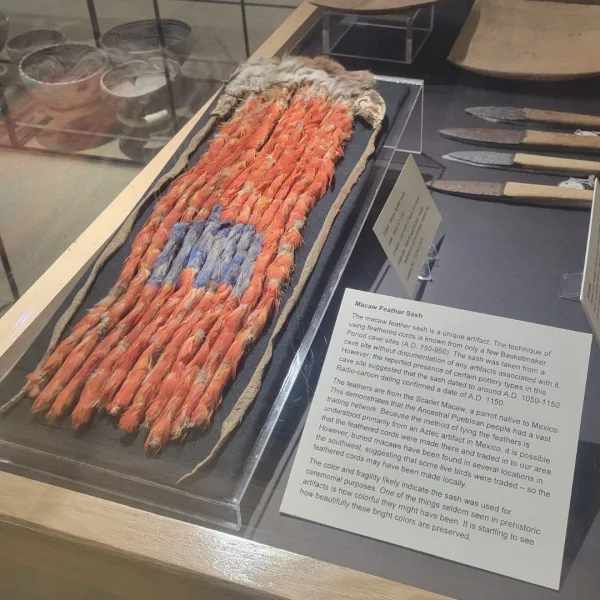
Trade routes connected the Pueblo world with surrounding cultures such as the Mogollon, Hohokam, and Patayan, forming a corridor that reached deep into northern Mexico. Chaco Canyon, in particular, became a center of long-distance exchange, where excavations have revealed macaw remains, copper bells, and cacao residue. Similar evidence, including a macaw found at Salmon Ruin, confirms that Chaco’s satellite communities also participated in the exchange of exotic goods. These finds link the Ancestral Puebloans to ancient Mesoamerican trade systems, showing that exchange was as much cultural as it was economic.
Across the Four Corners, these interactions carried stories, symbols, and techniques that shaped a shared heritage of architecture, agriculture, and ceremony. Through these trade routes, the Puebloan world became part of a greater web that connected the deserts of the Southwest to the jungles of the south.
Decline and Migration
By the late 1200s, the great centers of the Ancestral Puebloan world began to empty. Droughts grew longer, harvests failed, and forests once used for construction were stripped from nearby mesas. Communities at Chaco Canyon, Mesa Verde, Hovenweep, and Canyons of the Ancients faced dwindling water and growing social strain.
For the Puebloan world, movement was not an ending but part of a sacred cycle. Migration had always been built into their understanding of life and balance. Origin stories speak of emergence from the underworld and journeys across the land to find harmony with the natural world. Leaving one place for another was not abandonment, but renewal. It was a continuation of the journey their ancestors had begun.
As conditions changed, families followed river valleys south and east to the Rio Grande, while others resettled on the high mesas of what is now Hopi and Zuni territory. They carried their languages, rituals, and agricultural knowledge, blending with neighboring peoples and adapting to new environments.
These migrations linked the ancient and modern Pueblo worlds. The monumental centers were left behind, yet the people endured, guided by the same spiritual sense of movement and balance that had defined their civilization for centuries.
Legacy and Continuity
The Ancestral Puebloans never disappeared. Their descendants live across the Southwest today in the Hopi, Zuni, and Rio Grande pueblos of New Mexico and Arizona, where ancient traditions continue in daily life. Ceremonies still follow the movements of the sun and stars. Fields of maize, beans, and squash are still tended by hand, guided by prayers and the rhythm of the seasons. The same balance between people, land, and sky remains at the heart of Pueblo identity.
Ancestral sites such as Chaco Canyon, Mesa Verde, and Aztec Ruins are not relics of a vanished world. They are living sacred landscapes, still visited and honored through song, pilgrimage, and prayer. The people who once built in stone now preserve their heritage through language, ceremony, and stewardship of their ancestral lands.
Today, the Pueblo nations maintain a powerful cultural continuity. Their art, architecture, and community life carry forward knowledge shaped over thousands of years. Each village, each ritual, and each story stands as a living connection to the world of their ancestors. The civilization of the Ancestral Puebloans was not lost. It lives on in the people who still call the Southwest home.

Museums That Bring the Ancestral Puebloans to Life
Across the American Southwest, museums preserve the legacy of the Ancestral Puebloans through their architecture, pottery, textiles, and sacred traditions. Visiting these collections offers insight into how these desert communities built enduring connections between people, landscape, and the cycles of the sky.
- Edge of the Cedars State Park Museum (Blanding, Utah) – Built beside a preserved Pueblo village, this museum displays exceptional pottery, tools, and textiles, with an on-site kiva open for viewing.
- Salmon Ruins Museum (Bloomfield, New Mexico) – A Chacoan outlier and regional museum featuring macaw feathers, copper bells, and other artifacts that trace trade between Chaco Canyon and Mesoamerica.
- Canyons of the Ancients Visitor Center and Museum (Dolores, Colorado) – The interpretive center for Canyons of the Ancients National Monument, displaying basketry, pottery, and tools. The nearby Escalante Pueblo connects exhibits to the surrounding landscape.
- Maxwell Museum of Anthropology (Albuquerque, New Mexico) – Exhibits on the archaeology and cultures of the Southwest, including reconstructed pit houses, Chacoan pottery, and modern Pueblo connections.
Together, these museums form a living archive of the Pueblo world. From mesa-top villages to canyon sanctuaries, they reveal how a civilization rooted in the desert continues to shape art, identity, and community across the modern Southwest.
Ancestral Puebloan Ruins You Can Visit
Explore Related Civilizations
- Mississippian
- Norte Chico
- Maya
- Hopi
- Zuni